The Unexpected Conservative Surge
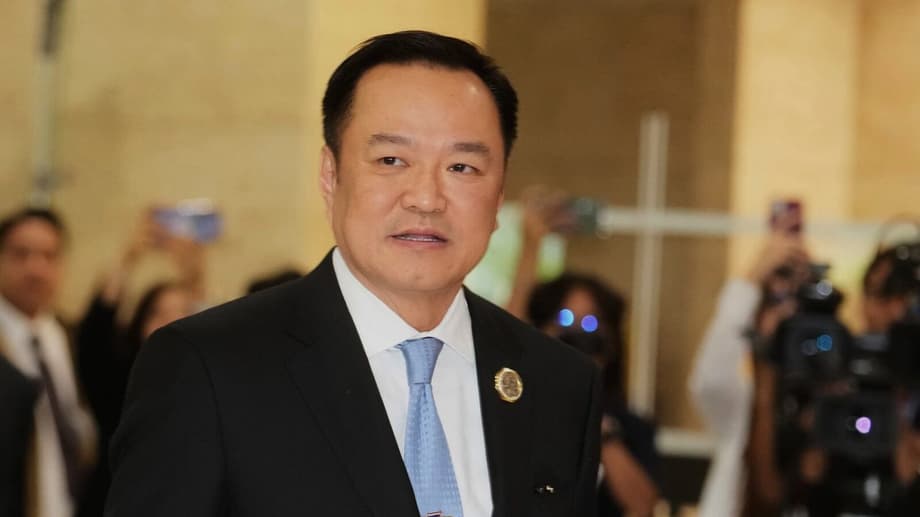
Thai Prime Minister Anutin Charnvirakul has claimed a stunning victory in Thailand’s snap general election, defying opinion polls that had predicted a win for the progressive opposition. With nearly 95 percent of polling stations reporting, Anutin’s Bhumjaithai Party secured approximately 192 seats in the 500-seat House of Representatives, more than double its 2023 total and far exceeding expectations.
The result marks a dramatic reversal from three years ago, when the reformist movement now represented by the People’s Party won a plurality but was blocked from power by unelected senators. This time, voters handed a clear mandate to the conservative establishment, with Bhumjaithai capturing nearly 40 percent of parliamentary seats while its main rivals suffered significant losses.
The election took place against a backdrop of economic anxiety and heightened nationalism following deadly border clashes with Cambodia late last year. Anutin called the snap poll in December after his coalition collapsed, gambling that voter concerns about national security and instability would outweigh desires for radical reform. The gamble paid off spectacularly, with Bhumjaithai not only retaining its traditional strongholds but capturing territory long dominated by rival political dynasties.
“Bhumjaithai’s victory today is a victory for all Thais, whether you voted for Bhumjaithai Party or not,” Anutin told reporters at his party headquarters in Bangkok. “We have to do the utmost to serve the Thai people to our full ability.”
The outcome represents the first decisive conservative electoral triumph in Thailand in years, ending a period of political volatility that saw three different prime ministers in as many years. Anutin, who dissolved parliament less than 100 days into his minority government to call Sunday’s vote, now stands poised to become the first Thai premier voted back to office in two decades.
Nationalism and Strategic Timing
The scale of Bhumjaithai’s victory caught political analysts off guard. Most pre-election surveys had placed the People’s Party in first position, building on its predecessor Move Forward Party’s success in 2023 when it won 151 seats. Instead, the progressive movement found itself relegated to second place with approximately 116 seats, while the once-dominant Pheu Thai party collapsed to around 74 seats.
Critical to Anutin’s success was his embrace of nationalism following months of fighting along the Thai-Cambodia border. The conflict, which claimed civilian lives and saw the military take control of disputed territories, allowed the prime minister to recast himself as a wartime leader defending sovereignty. Campaigning on promises to build a border wall and expand volunteer military programs, Anutin struck a belligerent tone that connected with voters anxious about external threats.
Tita Sanglee, an associate fellow with Singapore’s ISEAS-Yusof Ishak Institute, observed that voter priorities shifted markedly during the campaign. “People’s priorities have shifted from reform to the need for stability,” she said, noting that the erratic foreign policy of the United States under President Trump also influenced Thai voters seeking continuity.
Anutin described his party’s identity in starkly patriotic terms during the campaign. “Nationalism is in the heart of everybody in the Bhumjaithai party,” he said, referring to the party’s blue color shared with the Thai national flag. “You can look at the color.”
The strategy involved positioning Bhumjaithai as the natural home for conservative voters who previously supported military-aligned parties, while simultaneously recruiting respected technocrats and experienced local politicians to project competence on economic and security issues.
The Reformist Movement Reverses Course
The results delivered a severe blow to the People’s Party, which had expected to build on its 2023 performance under the leadership of 38-year-old businessman Natthaphong Ruengpanyawut. The party, which advocates curbing military influence and breaking up economic monopolies, maintained its grip on Bangkok where it swept all 33 constituencies. However, it lost significant ground in provincial areas and other urban centers like Chonburi, Phuket, and Nonthaburi.
Speaking to supporters at the party headquarters in Bang Kapi district, Natthaphong conceded defeat while urging followers to remain hopeful.
“Don’t lose hope. We’ve come so far.”
The party leader acknowledged that the People’s Party would not join a Bhumjaithai-led government and would instead serve as the opposition. “If Bhumjaithai can form a government, then we have to be the opposition,” Natthaphong told a press conference. “We stand by our principle of respecting the party that finishes first and its right to form the government.”
Analysts attributed the progressive decline to several factors. The party’s earlier decision to support Anutin as prime minister last September, after two Pheu Thai premiers were ousted by courts, handed the conservative leader the benefits of incumbency while undermining the reformists’ own ideological purity. Additionally, the party’s grassroots networks remained weaker than those of established rivals in rural constituencies, where 80 percent of parliamentary seats are decided through first-past-the-post voting.
“The scale of its victory was unanticipated, perhaps demonstrating that the more nationalist political environment and its ability to consolidate the conservative electorate all worked in its favour,” said Mathis Lohatepanont, an independent political analyst.
Napon Jatusripitak, a political scientist at the Bangkok-based Thailand Future think tank, noted that the People’s Party’s attempt to moderate its stance during the campaign may have diluted its brand. “From a purely ideological standpoint, there has been a brand dilution,” he said. “Its core supporters, primarily the youth, who were inclined to vote for the party on the basis of ideology, are just not as energized this time around.”
The Shinawatra Dynasty Crumbles
The Pheu Thai party, backed by the billionaire Shinawatra family that has dominated Thai politics for two decades, suffered its worst electoral performance in recent memory. The party, which fielded Thaksin Shinawatra’s nephew Yodchanan Wongsawat as its prime ministerial candidate, saw its seat count plummet from 141 in 2023 to approximately 74, losing its traditional strongholds in the north and northeast to Bhumjaithai and other rivals.
The collapse reflects both the damage from the previous government’s handling of the Cambodia conflict and the jailing of patriarch Thaksin Shinawatra last September. Paetongtarn Shinawatra, the party’s leader and Thaksin’s daughter, was forced from office over ethics violations related to the border crisis, triggering the chain of events that brought Anutin to power.
“We have to respect the voice of the people,” said Julapun Amornvivat, Pheu Thai’s current leader, at a press conference following the results. Despite the defeat, Yodchanan maintained an optimistic tone, saying he was encouraged by the support received.
The decline of the Shinawatra political machine marks a potential end to an era that saw six populist premiers from the family or its allies removed through coups and court rulings. Territory that had been reliably red for years turned blue, as Bhumjaithai successfully wooed local power brokers and political clans away from the former dominant force.
Klatham Party, led by Thamanat Prompow and aligned with conservative interests, emerged as a significant beneficiary of Pheu Thai’s collapse, picking up approximately 56 seats across the south and north. The party’s growth came partly from absorbing 20 former Palang Pracharath Party MPs who were expelled in late 2024, giving it a substantial parliamentary bloc going into the election cycle.
Voters Demand Constitutional Change
Alongside the parliamentary contest, Thais participated in a historic referendum on whether to replace the 2017 military-drafted constitution, which critics argue concentrates power in undemocratic institutions including an unelected senate. Despite handing a decisive victory to the conservative Bhumjaithai party, voters simultaneously endorsed constitutional reform by a margin of nearly two to one, with preliminary tallies showing approximately 65 percent in favor of drafting a new charter.
The result creates a complex dynamic for the incoming government. While Anutin campaigned on defending traditional institutions, the clear referendum mandate requires his administration to initiate a rewriting process that would need two additional referendums before adoption. Thailand has had 20 constitutions since the end of absolute monarchy in 1932, with most changes following military coups.
People’s Party leader Natthaphong urged the incoming parliament to honor the referendum outcome. “I urge all prospective 500 members of parliament to honor this decision by the people,” he said.
The 2017 constitution, written under military rule following the 2014 coup, gives extensive powers to unelected bodies including the constitutional court, which has previously dissolved parties and banned politicians from office. The reform process will likely become a central battleground between the conservative government and opposition progressives, who seek to amend sections concerning the senate and royal prerogatives.
Napon Jatusripitak noted that the party winning the election will have outsized influence over the direction of constitutional reform. “I believe that the party that wins in the next election will have an outsized influence on the direction of constitutional reform, whether we move away from the junta-drafted constitution or not,” he said prior to the vote.
Forming a Stable Government
Although Bhumjaithai fell short of an outright majority, its commanding lead provides Anutin with substantial advantage in coalition negotiations. With approximately 192 seats, the party needs only about 60 additional votes to reach the 251 required to elect a prime minister in the 500-member House. Unlike in 2023, the unelected senate no longer participates in selecting the premier, removing one traditional obstacle faced by elected governments.
Analysts expect Anutin to draw from a pool of smaller parties that collectively won approximately 117 seats, including Klatham with its 56 seats. A partnership with Pheu Thai remains possible despite Anutin maneuvering against the party last year, though such an alliance would require reconciling deep ideological differences.
Chaichanok Chidchob, secretary general of Bhumjaithai, expressed openness to working with various parties while setting conditions. “I like a lot of their ideas,” he said regarding the People’s Party, “but of course, we’ll have conditions. For me, I want them to be clear about their standpoint about the royal family. All this anti-monarchy stuff, it has to stop.”
The Election Commission has 60 days to certify results, after which parliament must convene within 15 days to elect a speaker and prime minister. With the People’s Party explicitly ruling out participation in a Bhumjaithai government, the new administration will face a vigorous opposition holding roughly 116 seats.
“For the first time in a long time, we will likely have a government that has sufficient effective power to govern,” said Napon Jatusripitak. “We are seeing what I would describe as a marriage of convenience between technocrats, conservative elites, and traditional politicians.”
Economic and Diplomatic Challenges
The incoming government faces formidable obstacles beyond coalition management. Thailand’s economy, once the growth engine of Southeast Asia, has stagnated with GDP expansion of just 1.5 percent last year, the weakest performance in the region. Household debt has reached record levels while tourism numbers remain below pre-pandemic highs, creating a climate of economic anxiety that influenced voter behavior.
Anutin campaigned on populist pledges including consumer subsidy programs and electricity price reductions, while also promising to break up economic monopolies controlled by family-linked conglomerates. However, implementing structural reforms against the interests of his elite backers may prove challenging, and economists warn that more aggressive measures are needed to prevent Thailand from becoming the “sick man of Asia.”
Foreign policy presents equally complex challenges. The border dispute with Cambodia remains unresolved despite a current ceasefire, with land crossings still closed and tensions simmering over disputed territories. Anutin has maintained a hard line, authorizing the military to take independent action on the border and promising retaliatory strikes if provoked.
Thailand also navigates great power competition between the United States, its oldest ally, and China, with which it shares deep economic ties including Anutin’s own ancestral connections to Guangdong province. The prime minister has stated that Thailand refuses to take sides, emphasizing commitment to a rules-based international order while maintaining pragmatic relations with all partners.
Additionally, the government must address transnational cyberscam networks operating from neighboring countries and the ongoing crisis in Myanmar, where the ruling junta recently held elections widely condemned as illegitimate. Anutin has indicated Thailand will pursue engagement with all sides in Myanmar while prioritizing humanitarian access and regional stability through ASEAN.
Key Points
- Bhumjaithai Party won approximately 192 seats in Thailand’s 500-member House of Representatives, giving Prime Minister Anutin Charnvirakul a decisive mandate to form the next government
- The progressive People’s Party finished second with roughly 116 seats, down from 151 in 2023, and will serve as the opposition
- Pheu Thai party, backed by the Shinawatra family, collapsed to about 74 seats, its worst performance in decades
- Voters approved a referendum to rewrite the military-drafted 2017 constitution by a margin of nearly two to one
- The election result defied pre-election polls that had favored the progressive movement, reflecting voter concerns about national security following border conflicts with Cambodia
- Anutin called the snap election less than 100 days into his minority government, gambling that nationalist sentiment would consolidate conservative support
- The new government faces economic challenges including 1.5 percent GDP growth and record household debt levels
- Coalition negotiations will likely involve smaller parties including Klatham, as Bhumjaithai needs approximately 60 additional seats to reach the 251-vote threshold for electing a prime minister