The Green Engine Powering the World’s Second-Largest Economy
China’s clean energy sector has become the dominant force driving the nation’s economic expansion, with new data revealing that solar panels, electric vehicles, and battery technology accounted for more than 90% of the country’s investment growth last year. The analysis, conducted by the Centre for Research on Energy and Clean Air and published in Carbon Brief, shows these industries generated a record 15.4 trillion yuan ($2.1 trillion) in business during 2025, representing 11.4% of China’s total gross domestic product.
- The Green Engine Powering the World’s Second-Largest Economy
- Record-Breaking Growth Across the Clean Energy Spectrum
- The Coal Paradox: Why China Still Builds Fossil Fuel Plants
- Global Ripples: How Chinese Technology Is Reshaping World Energy
- Economic Crossroads: From Manufacturing Boom to Infrastructure Pivot
- Geopolitical Implications in a Divided Climate Landscape
- The Essentials
To put this figure in perspective, China’s clean energy economy now rivals the entire output of Brazil or Canada. If treated as a standalone nation, it would rank as the world’s eighth-largest economy, roughly half the size of India’s total economic output. The sector’s value has nearly doubled since 2022, when it represented just 7.3% of GDP, marking one of the most rapid industrial expansions in modern economic history.
The economic significance extends beyond raw numbers. Without the clean energy boom, China would have expanded by just 3.5% in 2025, falling well short of the government’s target of around 5% growth. Instead, these industries contributed more than one-third of the nation’s total economic growth for the second time in three years, cementing their role as the primary engine of China’s post-pandemic recovery.
Record-Breaking Growth Across the Clean Energy Spectrum
The transformation spans multiple technologies simultaneously. Wind and solar generation capacity more than doubled between 2022 and 2024, surging from 635 gigawatts to 1,408 gigawatts, according to research from Ember. By early 2025, the combined capacity of wind and solar installations surpassed that of coal for the first time, a milestone that seemed distant just a few years ago.
Battery technology has experienced equally explosive growth. Investment in battery manufacturing jumped 35% year-on-year to 277 billion yuan, while battery storage capacity additions reached 66 gigawatts in 2025 alone, accounting for more than 40% of global capacity additions. Grid investment climbed to an all-time high of 639.5 billion yuan ($92 billion), addressing transmission bottlenecks that had previously limited renewable energy utilization.
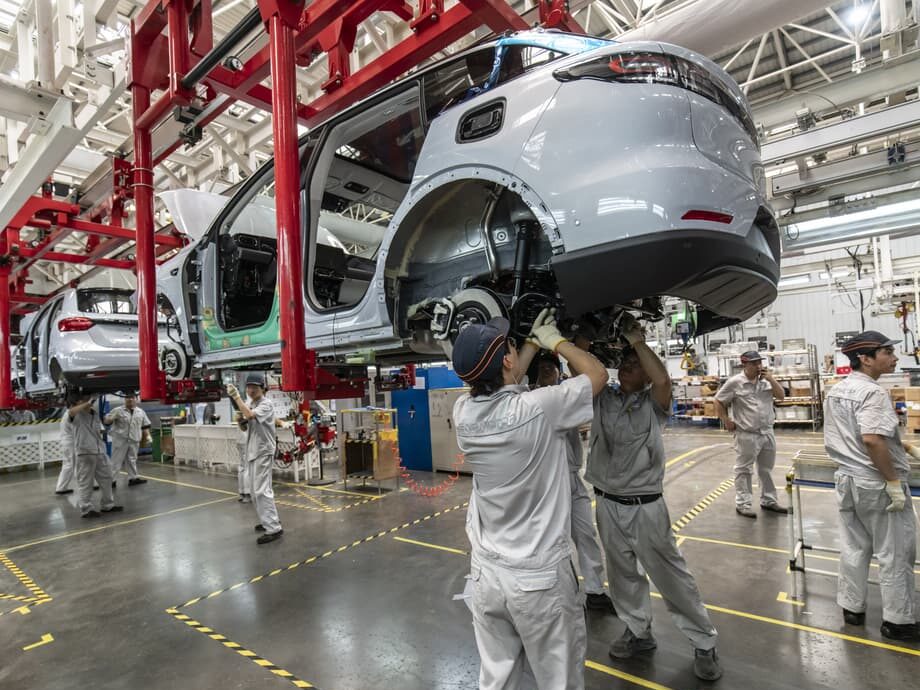
Electric vehicles represent perhaps the most visible consumer-facing transformation. China produced 16.6 million EVs in 2025, a 29% increase from the previous year. Electric vehicles now comprise 48% of all new vehicle sales, with that figure crossing 60% in November 2025. The share of EVs on Chinese roads reached 12% by year’s end, up from just 2% five years earlier. Even heavy industry is electrifying, with electric trucks capturing 23% of the market in 2025, up from just 8% the previous year.
China achieved its 2030 wind and solar capacity target in 2024, six years ahead of schedule, installing more solar capacity in 2025 alone than the rest of the world combined. Solar generation grew 33% year-on-year, while wind generation increased 13%, allowing clean sources to meet 84% of electricity demand growth in 2024 and actually exceed total demand growth in the first half of 2025, enabling a 2% reduction in fossil fuel generation.
The Coal Paradox: Why China Still Builds Fossil Fuel Plants
Despite this renewable energy revolution, China commissioned 78 gigawatts of new coal power capacity in 2025, the highest level in a decade. More than 50 large coal units exceeding 1 gigawatt each came online, up from fewer than 20 annually over the previous decade. Developers submitted proposals for an additional 161 gigawatts of new coal-fired plants, with around 290 gigawatts already permitted or under construction.
This apparent contradiction stems from energy security concerns and the political influence of state owned coal companies. Power shortages during droughts in 2021 and 2022, which temporarily halted factory production and imposed rolling blackouts, reinforced fears about grid reliability. Chinese government advisers now describe coal as serving as “training wheels” for the renewable transition, providing backup stability while the clean electricity system gains strength.
Andreas Sieber, head of political strategy at 350.org, characterized the moment as a historic inflection point.
“This is a historic turning point: solar power is set to overtake coal in China for the first time in 2026. This is maybe the clearest demonstration yet that clean energy has won – on cost, scale, and air quality.”
Major domestic coal companies such as CHN Energy and Shaanxi Coal and Chemical wield considerable political influence, promoting narratives that position coal as essential for reliability and independence. The National Development and Reform Commission has stated that coal-fired power will remain essential for power-system stability for years to come, even as other sources replace it.
However, this expansion creates economic risks. Analysts warn that continued coal construction could result in stranded assets and higher system costs, as renewable energy already provides cheaper electricity than fossil fuel alternatives in most contexts. The question remains whether these new plants will operate as baseload power or merely as backup during peak demand periods.
Global Ripples: How Chinese Technology Is Reshaping World Energy
China’s domestic clean energy boom is fundamentally altering global energy economics. Chinese factories now produce approximately 80% of the world’s solar panels and 60% of its wind turbines. This manufacturing dominance has driven technology costs down by 60% to 90% since 2010, enabling the “cheapest electricity in history” according to the International Energy Agency.
Lauri Myllyvirta, the report’s lead author at the Centre for Research on Energy and Clean Air, highlighted the global spread of these technologies.
“In a lot of other countries things are accelerating. Many of the African countries have imported a lot of solar. EVs are just starting to be bought in places where no one had an EV breakthrough on their bingo card for last year or maybe not even this decade.”
The benefits extend far beyond China’s borders. More than 90% of wind and solar projects commissioned worldwide in 2025 produced power more cheaply than the cheapest available fossil-fuel alternative. Across Africa, solar panel imports from China rose 60% in the last 12 months, with 20 countries importing record amounts. Countries including Mexico, Bangladesh, and Malaysia have surpassed the United States in renewable electricity adoption, enabled by affordable Chinese technology.
Economic Crossroads: From Manufacturing Boom to Infrastructure Pivot
Through the Belt and Road Initiative, Chinese energy engagement reached record levels in 2025, totaling $124 billion in the first half alone. Africa emerged as the largest market, receiving $61.2 billion worth of engagement, a 283% increase from 2024. While fossil fuel projects dominated this overseas investment, renewable energy engagement also reached new highs at $21.4 billion, up from $12.3 billion in 2024.
Chinese companies now account for 75% of global patent applications in clean energy technology, a dramatic increase from just 5% in 2000. This concentration of innovation capacity suggests that China will continue setting the pace for global cost reductions and technology deployment.
The rapid scaling of manufacturing capacity has created a structural challenge: overcapacity. China’s solar manufacturing capacity reached 1,200 gigawatts annually by late 2025, while global demand stood at approximately 650 gigawatts. This imbalance has triggered fierce price competition, with manufacturer operating income falling 200% between 2022 and 2024.
In response, Beijing has begun pivoting investment from manufacturing capacity to power grid infrastructure and storage systems. Grid investment, which lagged behind generation capacity additions in recent years, surged to address the 30% curtailment rates affecting some western provinces where renewable projects await transmission connections. Investment in pumped hydropower and battery storage accelerated sharply, with 15 gigawatts of new pumped hydro permitted in the first half of 2025 alone.
Geopolitical Implications in a Divided Climate Landscape
Policy changes introduced in 2025 altered the economics of renewable deployment. The government repealed fixed feed-in tariffs, forcing new renewable projects to compete on price against existing coal power in partially developed electricity markets. This change triggered frontloaded installation rushes but created uncertainty about future growth rates.
Richard Black, editor of the Ember report, explained China’s global influence.
“China is the engine. And it is changing the energy landscape not just domestically but in countries across the world.”
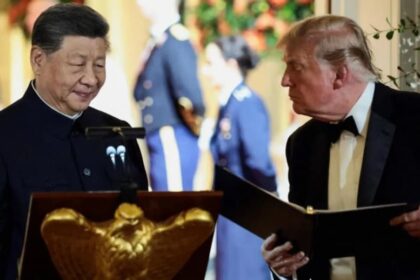
As China accelerates its energy transition, the United States has moved in the opposite direction under the Trump administration, eliminating federal support for renewables and promoting fossil fuel exports. This divergence creates a stark contrast in global climate leadership. While Washington has withdrawn from international climate negotiations as a participant and attends as an observer, Beijing has positioned itself as a reliable partner for multilateral cooperation.
European Commission President Ursula von der Leyen led a delegation to Beijing in summer 2025 to coordinate climate policy ahead of the Cop30 summit in Brazil. China has affirmed it will work with the European Union to achieve ambitious outcomes at the climate conference, even as trade tensions persist regarding Chinese EV and battery exports.
The question remains whether China will strengthen its climate commitments in its revised nationally determined contribution expected this year. Current policies would push global heating toward 4 degrees Celsius according to Climate Action Tracker, though emissions may have already peaked in 2025. For China to align with the Paris Agreement’s 1.5-degree target, it would need to cut emissions by 30% by 2035, a reduction experts consider unlikely based on current trajectories.
The Essentials
- China’s clean energy sector generated 15.4 trillion yuan ($2.1 trillion) in 2025, representing 11.4% of GDP and driving over 90% of investment growth
- Wind and solar capacity more than doubled from 2022 to 2024, reaching 1,408 gigawatts and surpassing coal capacity in early 2025
- China installed 315 gigawatts of solar and 119 gigawatts of wind in 2025, more than the rest of the world combined
- The country achieved its 2030 renewable capacity target six years early, in 2024
- Despite renewable growth, China commissioned 78 gigawatts of new coal power in 2025, with 290 gigawatts permitted or under construction
- Chinese manufacturers produce 80% of global solar panels and 60% of wind turbines, driving costs down 60-90% since 2010
- Clean energy investment reached $625 billion in 2024, representing 31% of the global total
- Without clean energy growth, China’s GDP would have expanded by only 3.5% rather than the reported 5.0% in 2025