A$506 Million Lease Becomes a Diplomatic Flashpoint
Australia wants to return the Port of Darwin to Australian control by the end of 2026, but a warning from China's ambassador has turned that election promise into a dispute with possible consequences for trade worth billions of dollars. At the centre is a 99-year lease awarded in 2015 to Landbridge Group, a Chinese infrastructure conglomerate based in Shandong province, for A$506 million, approximately US$354 million.
Contents
- A$506 Million Lease Becomes a Diplomatic Flashpoint
- What Landbridge Acquired in 2015
- Why the Military Location Matters
- How the Deal Passed the Rules Then in Force
- Security Reviews and the Political Commitment
- Beijing Challenges the Proposed Buyback
- Why Australian Exporters Have a Stake
- The Treaties That Could Shape a Forced Transfer
- Finding a Buyer and Agreeing on a Price
- Why the Panama Comparison Has Limits
- The Bottom Line
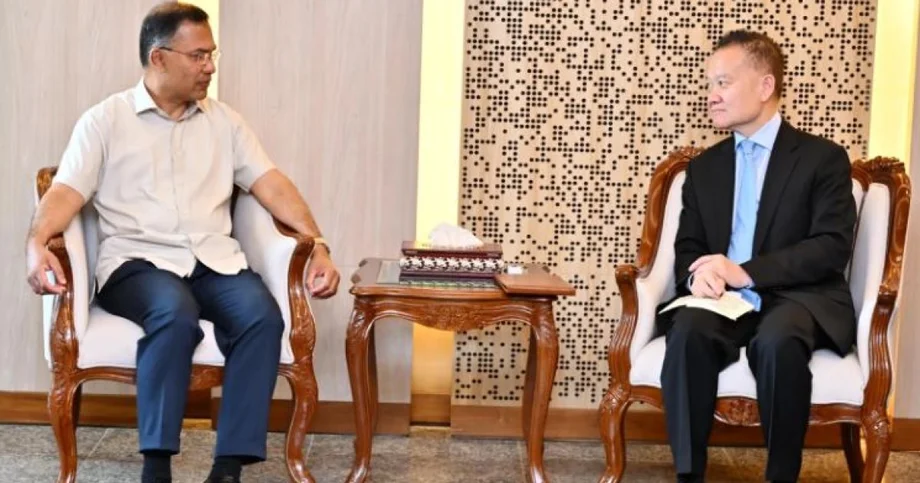
As of February 4, 2026, Prime Minister Anthony Albanese has reaffirmed his commitment to reclaiming the strategically important port, describing Australian control as essential to the national interest. Chinese ambassador Xiao Qian has warned that Beijing will "take measures" to protect Chinese commercial interests if Australia forcibly ends the arrangement.
The disagreement reaches beyond ownership of a commercial facility. Darwin Port is close to Australian military installations and the rotating presence of US Marines. It also handles live cattle, petroleum products and minerals, making its future important to businesses that depend on Australia's northern shipping routes.
Two Australian security assessments, in 2021 and 2023, found no need to cancel the lease. Nevertheless, both major political parties committed during the 2025 federal election campaign to bringing the port back under Australian ownership. Canberra now faces the practical task of finding a buyer, agreeing on a price and deciding what to do if Landbridge will not sell voluntarily.
China is Australia's largest trading partner. With bilateral trade totalling approximately $218 billion in 2024-25, any escalation could spread well beyond Darwin, affecting exporters and businesses that have only recently seen relations recover from an earlier round of Chinese trade restrictions.
What Landbridge Acquired in 2015
The Northern Territory government awarded Landbridge a lease that gave the company 100% operational control of Darwin Port and 80% ownership of the port land, including the East Arm wharf and Fort Hill wharf. The arrangement provided for the territory government to retain a 20% stake in the port land for the first five years of the lease.
The territory's financial pressures helped drive the decision. Its government faced substantial debt, while the federal government had declined to fund necessary port infrastructure upgrades. A competitive tender offered a way to bring in investment, provide immediate financial relief and support critical infrastructure projects.
Landbridge's investment was intended to turn the port into a thriving commercial hub and help revitalise the territory's economy. A decade later, the company points to the money it has spent on infrastructure and the port's move from losses to profitability as reasons to defend its ownership.
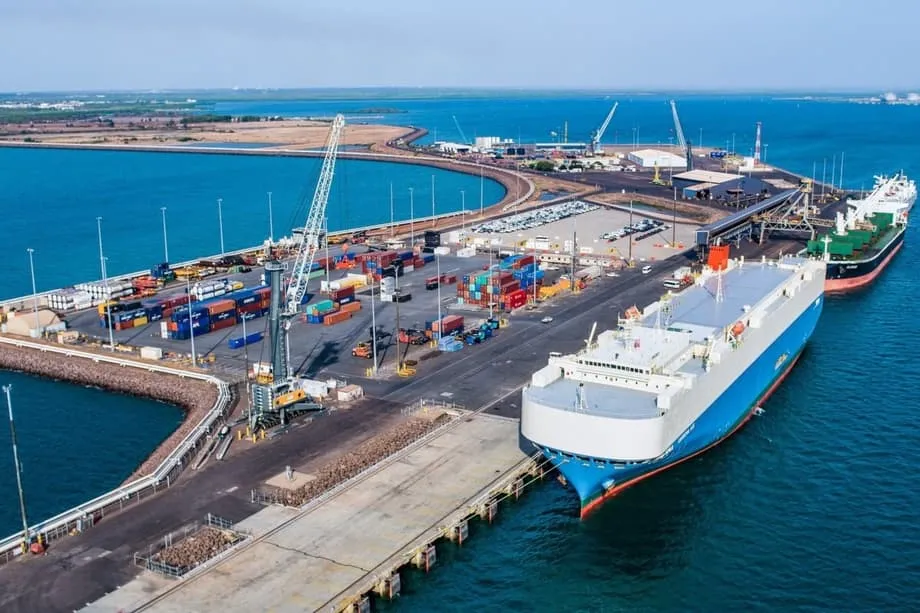
Darwin Port, Australia's northernmost maritime facility, lies south of the Indonesian border and forms an important link in regional supply chains. It handles approximately 25,500 container units and 4 million metric tons of cargo annually. Those figures cover a working trade gateway whose customers include livestock exporters and businesses moving fuel and minerals.
The port's location also makes it valuable for military logistics. Its commercial and strategic roles occupy the same stretch of Australia's northern coastline, which helps explain why a deal originally presented as an economic opportunity has remained politically contentious.
Why the Military Location Matters
US Marines began rotating through Darwin in 2012, three years before the lease was signed. The port sits directly opposite the Larrakeyah Defence Precinct and near Royal Australian Air Force Base Darwin. Approximately 2,000 US personnel rotate through Darwin annually, with plans to expand the American presence to host US bombers and fighter jets.
Former US president Barack Obama reportedly raised concerns with then Australian prime minister Malcolm Turnbull about the lack of advance warning of the Chinese acquisition. The proximity of the port to military facilities made the transaction sensitive to Australia's security relationship with the United States.
Australia's strategic assessment has also changed since 2015. The Defence Strategic Review, released in 2023, identified China as undertaking the largest military buildup of any country since World War II. Increased defence cooperation between Australia and the United States under the AUKUS security pact has added to sensitivities about Chinese involvement near military installations.
For Canberra, the issue brings together control of critical infrastructure, military access and relations with its largest trading partner. For Landbridge, it concerns a commercial investment made under a lease awarded by an Australian government. Those different priorities now shape the negotiations over the port's future.
How the Deal Passed the Rules Then in Force
The 2015 transaction did not require approval from Australia's Foreign Investment Review Board. At the time, the Foreign Acquisitions and Takeovers Act 1975 exempted acquisitions of urban land directly from state and territory governments. That exemption allowed the Darwin arrangement to proceed without the board's approval.
Australia later closed that loophole through amendments in 2020. The change is part of the legal setting surrounding the current dispute, although the original transaction took place under the earlier rules.
Andrew Robb, the federal trade minister when the lease was awarded, welcomed the agreement as a "powerful sign" of the stronger commercial relationship flowing from the China-Australia Free Trade Agreement. His description reflected the economic promise attached to Chinese investment at the time.
Canberra's position today is different. The government is seeking Australian ownership of an asset that an Australian territory previously leased to a Chinese company, even though subsequent security reviews supported keeping the existing arrangement.
Security Reviews and the Political Commitment
A security assessment in 2021 concluded that cancellation of the lease was unnecessary. A second review, conducted by the Albanese government in 2023, found that existing monitoring mechanisms were sufficient to safeguard Australian interests. Multiple reviews found no evidence that the lease posed a direct national security threat.
Both major political parties nevertheless made commitments during the 2025 federal election campaign to return the port to Australian ownership. Their promises placed the issue within a wider debate over foreign control of critical infrastructure.
The Albanese government aims to complete the transition by the end of 2026. The precise mechanism, a sale price, a final buyer and a detailed timetable have not been settled. Its preferred route involves working with the Northern Territory government to identify suitable buyers, while compulsory acquisition remains an option if a voluntary agreement cannot be reached.
The main developments span more than a decade:
- 2012: US Marines began rotating through Darwin.
- 2015: The Northern Territory awarded Landbridge the 99-year lease for A$506 million.
- 2020: Amendments closed the foreign investment exemption relevant to the original transaction.
- 2021: A security assessment concluded that cancelling the lease was unnecessary.
- 2022: Updates to the Security of Critical Infrastructure Act 2018 expanded the legal framework relevant to national security intervention.
- 2023: The Albanese government's review found existing monitoring sufficient, while the Defence Strategic Review highlighted China's military buildup.
- 2025: Both major parties promised during the federal election campaign to return the port to Australian ownership.
- January 2026: Ambassador Xiao warned against a forced takeover during a press briefing.
- End of 2026: The Australian government aims to complete the ownership transition.
Beijing Challenges the Proposed Buyback
Xiao Qian, China's ambassador to Australia, has described the proposed buyback as "ethically questionable" and contrary to business ethics. His argument centres on the timing: Landbridge accepted years of losses, invested in the port and now faces pressure to give it up after it became profitable.
During his January 2026 press briefing, Xiao challenged Australia's approach in these terms:
When you're losing money, you lease it to a foreign company, and when it's making money, you want to take it back? That's not the way to do business,
Landbridge recorded a net profit of approximately A$6.7 million in the 2024-25 financial year. That improvement matters both to China's diplomatic argument and to negotiations over how much the lease might be worth.
Xiao also distinguished between a decision Landbridge might make commercially and a takeover imposed by Australia. Explaining the Chinese government's position, he said:
We respect the decision of the Landbridge company either to continue or to take a different approach, but the Chinese government has an obligation to protect the interests, the legitimate interests of Chinese companies overseas. So if anything happens like the port will be taken back by force or forceful measures, then we have an obligation to take measures to protect the Chinese company's interest. This is our position.
The ambassador said Beijing would be "watching very closely". He also described how China might respond as the dispute developed:
We will see when it's time for us to say something, do something, to reflect the Chinese government's position.
Xiao declined to specify what retaliatory measures Beijing might take. His warning makes the method of any transfer central to the dispute: a sale agreed with Landbridge and a lease ended through government force would carry different diplomatic and legal risks.
Why Australian Exporters Have a Stake
China buys the bulk of Australia's iron ore exports and is a major market for agricultural products. Bilateral trade of approximately $218 billion in 2024-25 gives the Darwin dispute a much wider economic setting than the port's original A$506 million lease price.
Australia has already experienced a costly deterioration in that relationship. During the COVID-19 pandemic, China imposed restrictions on Australian barley, wine, coal, cotton, timber, hay, copper and red meat exports. The measures followed then prime minister Scott Morrison's call for an independent inquiry into the origins of the coronavirus.
Those restrictions cost the Australian economy an estimated $20 billion annually. Their recent removal marked a tentative improvement in relations, which the dispute over Darwin now threatens to disrupt.
Businesses selling commodities and agricultural goods to China therefore have an interest in how Canberra handles the port, even when their own shipments do not pass through Darwin. The diplomatic risk is that a disagreement over one infrastructure investment becomes a wider conflict over market access.
The Treaties That Could Shape a Forced Transfer
Landbridge could challenge a forced divestment through international investment agreements. The two relevant arrangements are the China-Australia Bilateral Investment Treaty, known as CABIT, and the China-Australia Free Trade Agreement, or ChAFTA.
These agreements contain investor-state dispute settlement mechanisms, often shortened to ISDS. In plain language, such mechanisms allow an investor to bring certain claims against a government before an international arbitration tribunal. In this dispute, potential claims concern the taking of an investment or unequal treatment of a Chinese investor.
Article 8 of CABIT requires compensation for expropriation and says such action must be non-discriminatory. Expropriation means a government taking an investment or depriving its owner of it. A forced order to give up the port lease could lead to a dispute over whether Australia had met those treaty requirements.
CABIT limits the disputes that can go to investor-state arbitration to disagreements about compensation amounts. However, tribunals have historically interpreted such clauses broadly, creating a possible argument over the scope of any claim as well as the amount owed.
ChAFTA Article 9.5 promises Chinese investors equal treatment to Australian investors, an obligation known as national treatment. Canberra's effort to find domestic buyers could become part of a claim that it was favouring Australian entities over Landbridge.
Australia also has domestic powers relevant to national security intervention. Amendments to the Foreign Acquisitions and Takeovers Act in 2020 and updates to the Security of Critical Infrastructure Act 2018 in 2022 provide grounds for forced divestment on national security grounds. Using those powers would still leave the government facing its international treaty obligations.
Compensation would be another major issue. International investment law requires payment reflecting an asset's fair market value when it is expropriated. Landbridge's investment, the port's improved financial performance and its strategic location would all matter to valuation. The cost to Australian taxpayers could reach hundreds of millions of dollars.
The lease's ownership arrangements, including the provision that the Northern Territory retained 20% of the port land for the first five years, add complexity to valuation and transfer negotiations. A buyback would require agreement about the interests being transferred as well as their price.
Finding a Buyer and Agreeing on a Price
The Albanese government is working with the Northern Territory government to identify buyers. Interest includes a joint bid involving freight company Toll Group and US private equity firm Cerberus Capital Management, which has connections to the Trump administration. Australian superannuation funds have also been approached about investing in the port.
Landbridge has, for the first time, indicated that it is open to a negotiated sale. The company continues to defend its investment and management record, making price a central issue in any potential agreement.
Terry O'Connor, Landbridge's non-executive director for Australia, has rejected allegations of links to China's People's Liberation Army as "myths and mistruths". He says the company operates purely as a commercial enterprise and complies with Australian law.
According to recent company statements, Landbridge had not received formal government engagement about a buyback. O'Connor nevertheless acknowledged the possibility of a commercial agreement, saying:
in everybody's mind, there is a right price.
A negotiated transfer could fulfil the government's ownership promise while reducing the risk of an international legal dispute and the costs associated with compulsory acquisition. Reaching such an agreement would require Landbridge and a buyer to settle on terms acceptable to both.
Canberra has indicated that it is ready to pursue compulsory acquisition if a voluntary deal proves impossible, accepting the associated financial and diplomatic costs. That leaves the government balancing its election commitment against the expense of compensation and the risk of renewed tension with Beijing.
Why the Panama Comparison Has Limits
Panama's recent decision to nullify a contract held by CK Hutchison Holdings has drawn comparisons with Darwin. The Hong Kong conglomerate held a contract to operate ports on the Panama Canal, and Panama's Supreme Court ruled against it on legal grounds.
The Panama case was widely interpreted through a national security lens amid pressure from the United States. Darwin also combines a port investment involving a Chinese company with concerns about strategic location and American interests.
Australia's judicial system and international treaty obligations differ substantially from Panama's. Directly copying that approach would therefore be legally problematic. For Canberra, the immediate choices remain a negotiated sale or government action that could bring compensation claims and a diplomatic response.
The dispute turns on a practical question of ownership and price. Australia wants control of a strategic northern gateway; Landbridge wants its commercial interests protected; and China has warned it may act if the company is forced out. The government's target remains the end of 2026, with the route to that outcome still under negotiation.
The Bottom Line
- Australia aims to return Darwin Port to Australian control by the end of 2026, following commitments by both major parties during the 2025 election campaign.
- Landbridge acquired the 99-year lease in 2015 for A$506 million, approximately US$354 million, with full operational control and 80% ownership of the port land.
- Security reviews in 2021 and 2023 supported keeping the lease, while political concerns continue over the port's strategic location.
- China's ambassador has warned Beijing will act to protect Landbridge's interests if Australia forces a takeover.
- The port recorded approximately A$6.7 million in net profit in 2024-25 after years of losses.
- A forced transfer could trigger treaty disputes and compensation costs reaching hundreds of millions of dollars.
- Potential buyers include a Toll Group and Cerberus joint bid, while Australian superannuation funds have been approached.
- Bilateral trade with China totalled approximately $218 billion in 2024-25, putting Australian exporters at risk if the dispute escalates.