China's Currency Ambitions Meet a Moment of Dollar Weakness
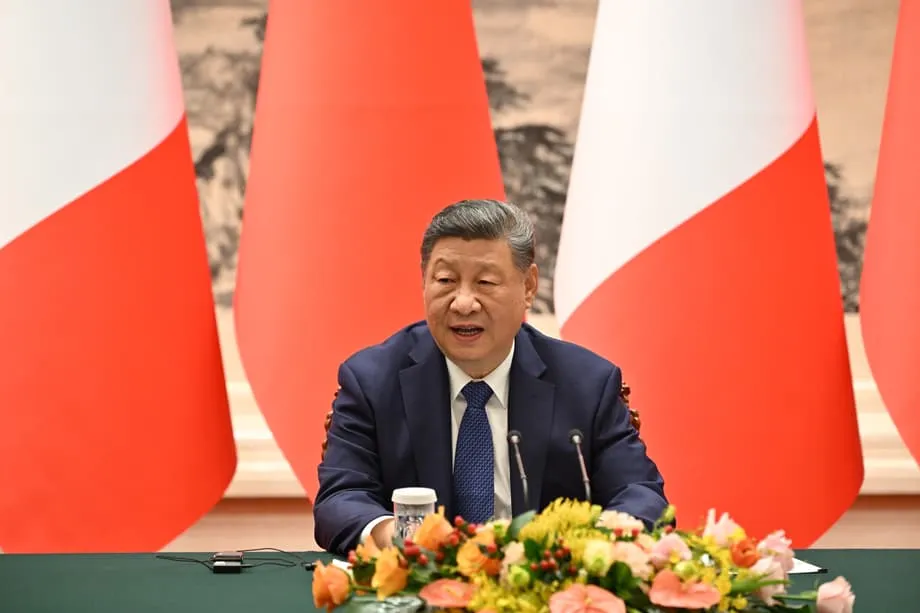
China's President Xi Jinping wants the renminbi to become a currency widely used for international trade, investment and central bank reserves. By February 4, 2026, that ambition was meeting an unusual opening: the dollar had fallen to its lowest level in four years against a basket of major currencies, while gold had climbed above $5,500 an ounce.
Contents
- China's Currency Ambitions Meet a Moment of Dollar Weakness
- What Xi Wants a Financial Power to Have
- Why American Policy Has Created an Opening
- The Numbers Show Gains and a Large Gap
- China's Own Trade Is Moving Toward Yuan Settlement
- CIPS, Digital Wallets and Currency Swaps
- Yuan Lending Extends the Currency's Reach
- The Tension Between Global Reach and Domestic Control
- A Network Built for Financial Fragmentation
- Warsh, a Possible Dollar Accord and BRICS
- Key Points
Qiushi, the Chinese Communist Party's flagship ideology journal, published remarks Xi originally delivered in 2024. Their publication brought renewed attention to Beijing's financial ambitions during turbulence linked to President Donald Trump's trade policies and pressure on the independence of American institutions.
The dollar had lost close to 11 percent against a basket of currencies belonging to major United States trading partners since Trump's inauguration. Investors seeking safety outside traditional American assets helped drive gold to record prices, while concerns about tariffs, economic growth and monetary policy fed a mood described as "Sell America".
Xi's central argument was that a strong financial nation needs a powerful currency: one used widely in international trade, investment and foreign exchange markets, and held as a global reserve currency. Reserve currencies are money that central banks keep to support their economies and meet international payment needs.
China has pursued wider international use of the renminbi, also called the yuan, since 2010. Its progress now presents a striking contrast. Nearly one-third of China's trade is settled in yuan, yet the currency's share of global foreign exchange reserves remains small. Beijing has made greater headway in getting businesses to pay with its currency than in persuading central banks to hold it.
What Xi Wants a Financial Power to Have
Xi's vision rests on three institutional foundations. China needs a powerful central bank capable of conducting effective monetary policy and attracting international capital. It also needs financial institutions able to compete across borders, and financial centres with enough influence to shape global pricing and draw sustained foreign investment.
Shanghai and Shenzhen are among the cities expected to develop that international role. The ambition reaches beyond having large domestic banks or busy markets. It involves making Chinese financial institutions and markets places where businesses and investors from other countries routinely turn for money, investment and prices.
The currency goal challenges the position the dollar has occupied since the Bretton Woods Agreement established its supremacy more than eight decades ago. Beijing benefited enormously from the existing global financial system, while becoming increasingly concerned about Washington's ability to use financial infrastructure to enforce sanctions.
The freezing of Russian foreign exchange reserves in 2022 made that concern more urgent. Reserves are meant to provide a country with financial protection, but Russia's experience demonstrated how access to assets could be restricted through sanctions. China accelerated its search for alternatives that could operate independently of systems controlled by the United States.
Xi's published remarks also mark a more explicit expression of an ambition Beijing previously pursued with greater restraint. The objective is to give China more influence over the financial arrangements supporting its trade and investment, while reducing its exposure to decisions taken in Washington.
Why American Policy Has Created an Opening
Trump's tariff policies have weakened confidence in American economic growth. His repeated clashes with Federal Reserve Chair Jerome Powell have also brought the independence of monetary policy into focus. A central bank's decisions about interest rates affect borrowing costs, inflation and the appeal of assets priced in its currency.
Trump's decision to nominate Kevin Warsh as the next Federal Reserve chair added another source of uncertainty. Warsh developed a reputation for taking a tough position on inflation during his earlier service at the Fed, although he has recently moderated his positions to align with demands for lower interest rates.
European Central Bank President Christine Lagarde has called for the euro to play a larger role in global finance. Her position reflects a wider interest in reducing dependence on the dollar. China is therefore pursuing its ambitions alongside other efforts to spread financial activity across more currencies.
Trump has welcomed dollar weakness on the grounds that it makes American exports more competitive. A weaker dollar can make goods priced in dollars cheaper for customers using other currencies. Treasury Secretary Scott Bessent subsequently reaffirmed a commitment to a strong dollar policy, leaving investors to assess conflicting signals from the administration.
The main developments span several years:
- Since 2010, Beijing has pursued the internationalisation of the renminbi.
- In 2022, the freezing of Russian foreign exchange reserves accelerated China's interest in alternative financial arrangements.
- In 2023, the yuan overtook the dollar in the broader measure of payments crossing China's borders.
- In 2024, Xi delivered the remarks later published by Qiushi.
- By February 4, 2026, the publication coincided with dollar weakness, record gold prices and uncertainty over the next Federal Reserve chair.
The Numbers Show Gains and a Large Gap
The dollar's share of global foreign exchange reserves has fallen from 71 percent in 2000 to roughly 57 percent. That is a decline of about 14 percentage points, but the dollar still accounts for more than half of the total. The euro holds approximately 20 percent.
International Monetary Fund data cited for the renminbi put its reserve share at approximately 1.93 percent, while another figure used for its share is 2.4 percent. The period and measurement basis behind those two yuan figures were not specified. Both place the currency far behind the dollar and euro.
Trade finance offers a different picture. The yuan briefly overtook the euro in 2025 to become the second most used currency in that market, with a share of 5.8 percent. The dollar's share was 82 percent. Trade finance covers arrangements that help buyers and sellers fund transactions and manage the risks involved in delivering goods and receiving payment.
A further measure places the renminbi's share of global trade payments at 8.4 percent, up from 1.9 percent in 2020. Trade payments, trade finance and central bank reserves measure different activities. Businesses may use a currency to settle a sale, banks may use it to finance that sale, and central banks may choose a different currency for their savings.
The figures describe a currency gaining practical uses while remaining a small reserve asset. China's strongest advances are concentrated in commerce and payments connected to its own economy, rather than in the international holdings of central banks.
China's Own Trade Is Moving Toward Yuan Settlement
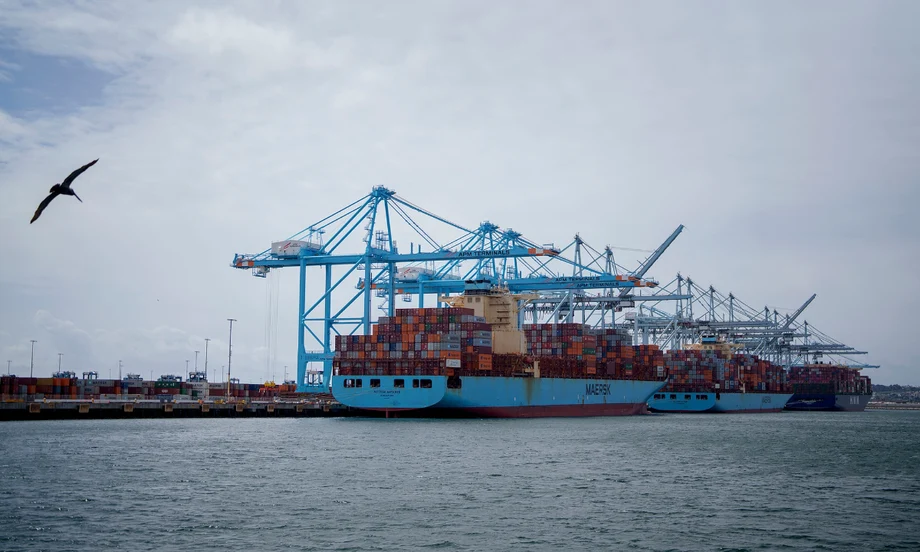
Nearly one-third of China's $6.2 trillion in global trade is now settled in yuan, compared with 20 percent in 2022. Settlement is the final payment that completes a transaction. Paying directly in yuan allows a trading partner to conduct business with China without first converting the payment into dollars.
The yuan's share reaches 53 percent when the measure includes all payments crossing China's borders, including bond purchases and foreign investment. On that broader measure, it overtook the dollar for the first time in 2023. The difference between the trade figure and the wider payments figure matters because investment transactions add substantial financial flows to purchases and sales of goods.
Brazil and China now settle soybean sales using the real and yuan. The United Arab Emirates and China trade liquefied natural gas in yuan. Energy trade between Russia and China takes place predominantly in renminbi, a shift driven by Western sanctions that also advances Beijing's currency goals.
India and Russia have increased their use of rupees and roubles for bilateral commerce. That development belongs to the wider movement toward paying in national currencies, alongside China's effort to expand the yuan's use.
For Beijing, these arrangements create repeated demand for renminbi in the everyday business of buying commodities and selling goods. They also build relationships in which trading partners have a practical reason to obtain and use Chinese currency.
CIPS, Digital Wallets and Currency Swaps
The Cross-Border Interbank Payment System, known as CIPS, is a central part of China's alternative financial infrastructure. It supports payments in renminbi and offers an alternative route alongside the SWIFT messaging network that dominates international banking. SWIFT carries banking instructions, while CIPS supports the processing of yuan payments.
CIPS has expanded in recent months to offshore centres across Africa, the Middle East and Central Asia. Standard Bank, Africa's largest lender by assets, became the first bank on the continent to connect directly to it. That connection allows businesses to settle payments with China in renminbi without converting through dollars.
The People's Bank of China has also conducted large trials of the digital yuan, known as Digital Currency Electronic Payment (DCEP). It uses a structure with two levels: the central bank provides the digital currency, while commercial banks distribute digital wallets to users.
The digital yuan supports transactions without an internet connection through near-field communication, a technology that allows devices close to each other to exchange information. It has also been made interoperable with Alipay and WeChat Pay, connecting the currency to payment platforms already used by consumers.
Currency swap agreements add another source of access to yuan. Beijing has signed arrangements with approximately 50 countries, allowing their central banks to exchange local currencies for renminbi on demand. A swap gives a country access to another currency when it needs money for payments.
These agreements provide liquidity for countries facing United States sanctions, including Russia and Iran, and support trade partners such as Argentina, Pakistan and Turkey. They allow bilateral trade to bypass dollar conversion and be settled in local currencies or renminbi.
Yuan Lending Extends the Currency's Reach
China's overseas lending has increasingly moved toward yuan denomination. External yuan holdings by Chinese banks have quadrupled in five years to $480 billion. That amount represents a growing slice of a Belt and Road Initiative lending portfolio of roughly $1 trillion.
Kenya, Angola and Ethiopia have converted existing dollar debts into yuan obligations to take advantage of lower interest rates. Yuan rates sit 200 to 300 basis points below dollar rates in the comparison given. A basis point is one hundredth of a percentage point, so the difference is equivalent to two to three percentage points.
Debt denomination determines the currency a borrower needs to make repayments. Moving a loan from dollars into yuan therefore extends the currency's role beyond paying for imports. It creates continuing demand for renminbi over the life of the debt.
Trade settlement, bank holdings and lending reinforce different parts of Beijing's effort. Businesses need yuan to pay Chinese suppliers, banks hold yuan to support transactions, and borrowers need it to meet debt obligations. Together, these activities give the currency a broader international presence.
The Tension Between Global Reach and Domestic Control
China maintains strict capital controls that restrict the movement of money across its borders. Transactions covered by those controls require government approval, while the People's Bank of China manages the exchange rate through a daily fixing and narrow trading bands.
A daily fixing sets a reference point for the currency's value. Trading bands limit how far the market rate can move around that point. This arrangement gives Beijing more control over the renminbi than a system in which its price moves freely with buying and selling.
Achieving the financial openness described in China's ambitions would require much greater freedom for capital to move across borders and for the exchange rate to respond to market forces. Investors seeking reserve assets value ready access to their money, large markets where assets can be bought and sold easily, and confidence in the rules protecting their holdings.
The Communist Party's aversion to financial risk makes those changes difficult. Full liberalisation would expose China's domestic financial system to speculative attacks and reduce Beijing's ability to direct credit. Banks owned by the state currently channel capital according to political priorities, a mechanism the party is unwilling to surrender.
Greater legal transparency, deeper financial markets and full convertibility remain central challenges for China's currency ambitions. Convertibility means being able to exchange a currency freely, rather than depending on permissions or restrictions. Market liquidity means being able to buy or sell an asset readily.
Beijing's controlled approach allows it to expand yuan use in trade while limiting the volatility associated with open capital markets. The present strategy gives priority to the currency's usefulness for transactions over the financial market depth needed for a much larger reserve role.
A Network Built for Financial Fragmentation
China's approach is directed toward a prolonged period of financial fragmentation rather than an immediate replacement of the dollar. By embedding the renminbi in trade with sanctioned countries and developing economies, Beijing is building bilateral relationships that could continue operating during a future break with Western financial systems.
Those arrangements also provide insurance against the possibility that China could face coordinated sanctions over Taiwan or another flashpoint. Payment systems, swap lines and trade conducted in yuan would give Beijing and its partners more ways to carry out transactions outside dollar channels.
Central banks have doubled gold purchases since 2022 as they diversify their holdings. China has reduced its United States Treasury holdings to below $731 billion, their lowest level since 2008. Treasury securities are American government debt, widely used as financial assets.
The United States national debt exceeds $38 trillion, with nearly half requiring refinancing within two years. Refinancing means replacing debt that is coming due with new borrowing. That financing need adds to investor attention on American political stability, fiscal management and confidence in dollar assets.
The dollar's erosion is described as a slow process rather than a sudden collapse. Its reserve share has fallen, and alternatives are gaining uses, while the scale of its position in reserves and trade finance continues to give it a dominant role.
Warsh, a Possible Dollar Accord and BRICS
Warsh's nomination brings the debate over interest rates and Federal Reserve independence into the next stage of American monetary leadership. His earlier reputation as an inflation hawk, meaning someone inclined to prioritise controlling price rises, sits alongside his more recent alignment with calls for lower rates.
Speculation also surrounds the Mar-a-Lago Accord, a theoretical framework for controlled dollar depreciation authored by Trump economic adviser Stephen Miran. The idea seeks to improve American competitiveness through a managed decline in the currency's value. Such a decline could also encourage capital to leave United States markets when the government faces substantial financing needs.
BRICS countries continue exploring shared payment systems and possible digital currencies that could bypass both dollars and SWIFT. China and Russia promote those alternatives. Trump has threatened tariffs of 100 percent against any BRICS currency initiative.
Beijing's immediate objective remains incremental expansion of the renminbi's reach. Its rising role in trade, lending and payments offers more room to operate independently of the dollar, while capital controls and the structure of China's financial markets limit its appeal as a reserve asset.
The resulting financial order has several competing centres of influence, with regional alternatives growing around a dollar that remains dominant. China's challenge is to turn increasing use of the yuan into lasting confidence among investors and central banks while retaining the economic control its leaders value.
Key Points
- Qiushi published Xi Jinping's remarks from 2024 calling for a powerful currency used in trade, investment and global reserves.
- By February 4, 2026, the dollar had fallen to lows last seen four years earlier, while gold exceeded $5,500 an ounce.
- Nearly one-third of China's $6.2 trillion in trade is settled in yuan; its share of all payments crossing China's borders is 53 percent.
- The dollar holds roughly 57 percent of global foreign exchange reserves and the euro about 20 percent; the yuan figures cited are 1.93 percent and 2.4 percent.
- CIPS, the digital yuan, currency swaps and overseas lending are expanding access to renminbi.
- Capital controls, a managed exchange rate and limits on financial openness constrain China's reserve currency ambitions.
- China's Treasury holdings have fallen below $731 billion, while central banks have doubled gold purchases since 2022.
- Beijing is building alternatives for trade and payments while the dollar retains its dominant global position.