One Indian Entry Across Eleven Subjects
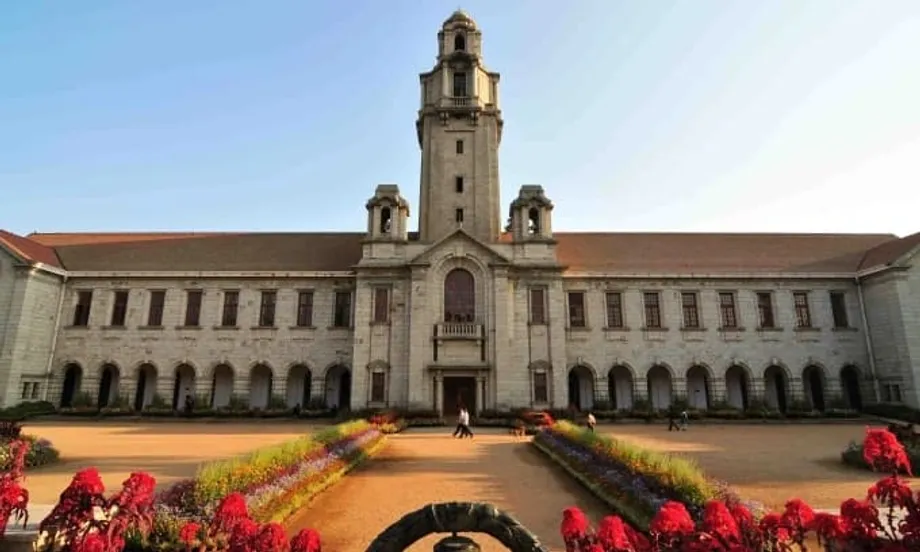
The Indian Institute of Science in Bengaluru ranked 96th in computer science in the Times Higher Education World University Rankings by Subject 2026. Across eleven subject areas, including engineering, business, law, psychology and the humanities, that was India's only appearance in the global top 100 when the rankings were released in late January.
Contents
- One Indian Entry Across Eleven Subjects
- A Gap Visible Since 2011
- China's Rise Extends Beyond Engineering
- Smaller Asian Systems Have Built Depth
- What the Rankings Reward
- India Leads on Some Research Measures
- How Leading Systems Concentrate Resources
- Expansion Has Not Produced Enough Leading Campuses
- Progress Offers a Model for Wider Change
- The Bottom Line
Mainland China recorded more than 120 entries across those subject lists. Hong Kong had over 70, Japan approximately 40, South Korea 35 and Singapore 30. Universities can appear in several subjects, so these totals describe positions across the rankings rather than a count of distinct campuses. Together, the four Asian systems outside mainland China accounted for more than 150 entries.
India's absence from most of these leading positions is especially striking because the country has a vast higher education system, celebrated technical talent and the population of the world's most populous democracy. Its universities are increasingly visible in international rankings, yet that visibility has produced very few places among the highest ranked institutions.
The Academic Ranking of World Universities 2025, also known as the Shanghai Ranking, presented an even sharper contrast. India had no university in its global top 500, while China had 101 and the United States had 111. Harvard University held first place for the 23rd consecutive year. Iran, despite being much smaller than India, also secured representation.
As of February 4, 2026, these results point to a gap between the size of India's university system and its standing in rankings that reward research strength, international connections and institutional resources. They also sit alongside a more encouraging result: Indian institutions lead Asia on some measures of research production and faculty qualifications.
A Gap Visible Since 2011
The QS Asian University Rankings already showed a substantial difference between China and India in 2011. China had 40 entries in the top tier, while India had 11. India's highest ranked institution stood at 36th.
Fifteen years later, the gap has widened rather than closed. The ranking systems and measures differ, but the earlier regional results and the latest global subject results both show India struggling to match the strength of its Asian competitors at the top.
India's political ambitions have increasingly included becoming a "Vishwaguru", or world teacher. The university results challenge the expectation that a large population, technical talent and widespread instruction in English would naturally produce institutions able to compete with the world's leading campuses.
Other Asian countries have made substantial academic gains while confronting similar development constraints. The central issue is how effectively national resources and individual talent become lasting institutional strength.
- 2011: The QS Asian University Rankings placed 40 Chinese institutions and 11 Indian institutions in the top tier. India's leading institution ranked 36th.
- 2020: India's National Education Policy introduced a policy framework that appears to have influenced research output.
- 2025: The Shanghai Ranking included 101 Chinese universities and 111 American universities in its top 500, with no Indian institution.
- Late January 2026: The Times Higher Education subject rankings gave India one global top 100 entry, IISc Bengaluru at 96th in computer science.
China's Rise Extends Beyond Engineering
China placed seven institutions in the global top 10 across different disciplines in the Times Higher Education Subject Rankings 2026. Peking University entered the top 10 for computer science for the first time, while Tsinghua University reached that group in physical sciences.
Engineering remains a particular area of Asian strength. More than 30 Asian universities rank among the world's best in the subject, with Chinese institutions making up the majority. These results reflect a wider shift in global higher education over the past two decades.
Business and economics also featured two Chinese universities in the global top 10. Education studies, law and social sciences showed strong performances by institutions in Hong Kong and mainland China. Their reach across these fields challenges the assumption that Asian universities excel mainly in a narrow range of scientific subjects.
Smaller Asian Systems Have Built Depth
Singapore's National University of Singapore and Nanyang Technological University compete with Western institutions established centuries ago, despite operating in a small city state. Singapore's approximately 30 subject entries in the global top 100 underline the strength of its universities relative to its geographic size.
Japan and South Korea showed both depth and stability across several disciplines. Their approximately 40 and 35 entries respectively, alongside Hong Kong's more than 70, mean that the region's strong performance extends well beyond mainland China.
Asian universities are becoming more prominent places for producing knowledge across science, technology, business and other subjects. That shift matters for innovation and economic competitiveness because universities train researchers, develop discoveries and connect academic work with industry. It also carries consequences for geopolitical influence as countries build institutions that attract international talent and shape research agendas.
What the Rankings Reward
Times Higher Education uses 18 performance indicators grouped around teaching, research, knowledge transfer and international outlook. Knowledge transfer concerns the movement of academic work into uses beyond the university, while international outlook concerns the institution's connections across borders.
The Shanghai Ranking places much greater weight on research achievements. Its measures include Nobel Prizes, Fields Medals, highly cited researchers and papers published in leading scientific journals. The Fields Medal is an award in mathematics; highly cited researchers produce work that other researchers frequently reference.
Both approaches reward sustained research that attracts attention and contributes to work beyond a single campus. Large student numbers and a high volume of graduates are different measures of a university system's activity from those used to judge its position in these tables.
India's results therefore need to be understood alongside what each ranking counts. A system can educate large numbers of people and produce many papers while still having few institutions with the research recognition, resources and global collaboration that help secure leading positions.
The general Times Higher Education World University Rankings 2026 show the same difficulty at the highest level. No Indian institution appears in the top 100. IISc leads India's institutions in the 201-250 band, even though its computer science department reaches the top 100 in the subject rankings.
India Leads on Some Research Measures
Indian institutions lead the continent in papers published per faculty member in the QS Asia University Rankings 2026. Sixteen Indian institutions occupy places in the top 30 for that measure, meaning they account for more than half of those positions.
India also leads on the proportion of academic staff holding PhDs, with 39 universities in the Asian top 100 for that measure. A PhD is a research qualification, so this result points to a substantial base of trained researchers within Indian institutions.
These strengths help explain why India's position cannot be reduced to a simple shortage of productive or qualified academics. Publication volume measures how much research is produced relative to faculty numbers. Citation impact concerns how much other researchers draw on that work. Institutional rankings combine these and other measures in different ways.
India's challenge lies partly in institutional scale, the concentration of funding and the ability to turn research volume into global visibility and influence. The National Education Policy 2020 appears to have influenced research output, contributing to the country's lead in publication volume per faculty member, although no precise measure of that contribution was given.
How Leading Systems Concentrate Resources
China directs sustained resources towards a selected group of universities, including Tsinghua, Peking University, Zhejiang and Fudan. Its approach concentrates investment in institutions capable of competing globally instead of spreading limited resources across hundreds of campuses.
Singapore follows a similar strategy through the National University of Singapore and Nanyang Technological University. Concentrated support helps build research environments with the staff, facilities and networks needed to sustain leading work.
Top Asian universities also recruit faculty with doctorates from leading institutions around the world. Joint international appointments and movement between countries keep their research programmes connected to wider academic networks. Researchers bring professional relationships as well as their own knowledge and skills.
Indian universities face rigid salary caps, slow hiring procedures, visa complications and heavy administrative control. These restrictions make international recruitment harder and can limit the ability of institutions to compete for scholars who have opportunities elsewhere.
Industry connections provide another advantage for institutions such as South Korea's KAIST and POSTECH, Singapore's NTU and China's Tsinghua. Corporate partnerships fund laboratories, support faculty positions through endowments and help move discoveries towards patents and commercial applications. Indian industry relationships often remain limited to guest lectures and memoranda of understanding, with little subsequent activity.
Expansion Has Not Produced Enough Leading Campuses
India now ranks second globally, behind only the United States, in the total number of universities appearing in international rankings. That broad presence reflects a system that has prioritised access and scale, giving more people opportunities to enter higher education.
The difference at the top remains stark. China has more than 100 universities in the Shanghai Ranking's top 500, while India has none. Expanding the number of ranked institutions has not yet delivered comparable depth among the highest ranked campuses.
India also loses academic talent to institutions abroad. Indian students win international Olympiads, Indian researchers lead teams overseas, and Indian talent is prominent in Silicon Valley. Their achievements abroad contrast with the limited representation of their home country's universities in the leading ranking groups.
China and Singapore actively recruit scholars working overseas and build institutions attractive enough to bring them home. India's continuing export of talent leaves its universities with the task of creating conditions that can retain researchers and draw them back.
A blunt assessment of the contrasting attitudes towards academic research captures the concern:
In Asian systems, research defines prestige. In India, it is often treated as optional.
Bureaucratic constraints add to the problem. Asian governments use rankings as diagnostic tools, redirecting funding and restructuring leadership when performance falls. India often dismisses rankings as biased or celebrates particular successes without addressing deeper weaknesses. University leadership appointments have also attracted criticism that ideological alignment has sometimes taken priority over academic excellence.
Progress Offers a Model for Wider Change
Chandigarh University became the highest ranked private Indian institution in Asia after climbing to 109th place. Panjab University made substantial gains in citation impact, international research networks and faculty qualifications. Newer Indian Institutes of Technology, including IIT Hyderabad and IIT Gandhinagar, also moved upwards in regional rankings.
These advances show movement in several of the areas that matter for international standing. Citation impact connects research with the work of other scholars. International research networks connect institutions with partners abroad, while faculty qualifications indicate the training available within a university.
IISc's 96th place in computer science provides a more direct example of an Indian institution reaching the global top 100. Its strong research culture, stable funding mechanisms, substantial international collaborations and meaningful institutional autonomy offer a model that other campuses could follow.
Autonomy gives an institution room to make academic and organisational decisions. Combined with dependable resources and international relationships, it can help a university sustain research programmes instead of relying on isolated achievements.
One university cannot carry a country's academic reputation alone. India's central challenge is to reproduce the conditions behind IISc's success across more of its higher education system while continuing to provide access at scale. The latest rankings show both the distance still to travel and specific strengths on which Indian institutions can build.
The Bottom Line
- IISc Bengaluru ranked 96th in computer science, India's only global top 100 entry across eleven subjects in the Times Higher Education Subject Rankings 2026.
- Mainland China had more than 120 subject entries in the top 100. Hong Kong, Japan, South Korea and Singapore together had more than 150.
- The Shanghai Ranking 2025 placed 101 Chinese universities and 111 American universities in its top 500, with none from India.
- India had 16 institutions in Asia's top 30 for papers per faculty member and 39 in the top 100 for the proportion of staff with PhDs.
- Leading Asian systems combine concentrated funding, international recruitment and substantial industry partnerships.
- Chandigarh University, Panjab University, IIT Hyderabad and IIT Gandhinagar showed progress, while IISc offers a model based on research culture, funding, collaboration and autonomy.
- India's broad expansion of higher education has yet to produce comparable strength among the world's leading universities.