A Truck Inspection Leads Police to a Coffee Warehouse
Police in Vietnam's Lam Dong province have seized 4.1 tons of counterfeit coffee products and 3 tons of raw materials after an inspection of a truck led them to a warehouse producing ground coffee with soybeans and chemical additives. Authorities have opened a criminal investigation into the operation, which supplied the local market in the country's main coffee growing region.
Contents
- A Truck Inspection Leads Police to a Coffee Warehouse
- Why Soybeans Make the Substitution Profitable
- How the Mixture Resembles Ground Coffee
- Missing Paperwork Makes Products Harder to Trace
- A Larger Counterfeit Coffee Case in June 2025
- Earlier Fraud Included Battery Chemicals
- What the Health Concerns Involve
- A Major Export Industry Has a Reputation to Protect
- Why Oversight Is Difficult Across the Highlands
- The Bottom Line
The investigation began when officers intercepted a truck carrying 1,056 bags of ground coffee with a total weight of 528 kilograms. The shipment had no accompanying documentation. Police traced it to a warehouse operated by Luong Viet Kiem, who admitted during questioning that his firm mixed soybeans and flavoring agents with genuine coffee beans to make counterfeit ground coffee.
The Ministry of Public Security announced the seizure on Thursday, saying the warehouse raid had taken place earlier that week. The ministry said further investigations were underway.
Lam Dong lies in the Central Highlands, the heart of Vietnam's coffee industry. Vietnam is the world's largest producer of Robusta, a coffee variety known for its strong, bitter taste and higher caffeine content than Arabica. The highlands, including Lam Dong and neighboring provinces, produce most of the beans supplying domestic buyers and international instant coffee manufacturers.
The discovery brings together two concerns for that industry: buyers receiving something different from the coffee they paid for, and uncertainty about the substances used to give cheaper ingredients the color, aroma and taste of coffee. It also follows earlier cases involving large quantities of counterfeit agricultural products in the same region.
Why Soybeans Make the Substitution Profitable
Coffee beans in the Central Highlands sell for approximately 100,000 to 100,500 Vietnamese dong per kilogram, equivalent to about $3.86. Soybeans cost roughly one third as much. That gap gives a processor a strong financial incentive to replace coffee with the cheaper ingredient while continuing to sell the finished mixture as coffee.
The calculation is straightforward. A producer using mostly soybeans spends much less on the main ingredient than a producer using genuine coffee beans. Small amounts of real coffee, combined with flavorings and colorants, can help the cheaper mixture resemble the more expensive product.
High coffee prices or shortages can increase that pressure. Processors seeking to protect their profit margins may turn to alternative ingredients, particularly in domestic markets where quality controls can be less rigorous than those applied to export operations.
Nguyen Quang Tho, a coffee trader in neighboring Dak Lak province, described adulteration as a recurring problem. He said counterfeit products could contain either soybeans or corn, or a mixture of both.
"Fake coffee products are not rare, and they can be made from soybean or corn, or even both," Tho explained.
Tho's concern extends beyond the substitution itself. Soybeans and corn are edible, but the safety of the chemicals used to imitate coffee's distinctive smell and dark color is uncertain.
How the Mixture Resembles Ground Coffee
Producers make counterfeit coffee through more than a simple exchange of one ground ingredient for another. Soybeans are roasted until they acquire a dark color resembling coffee beans. They are then mixed with small quantities of genuine coffee to supply some authentic flavor.
Chemical additives strengthen the aroma and taste, while colorants help the mixture match the appearance buyers expect. Together, those steps can produce a dark, aromatic powder with a texture close to that of ground coffee.
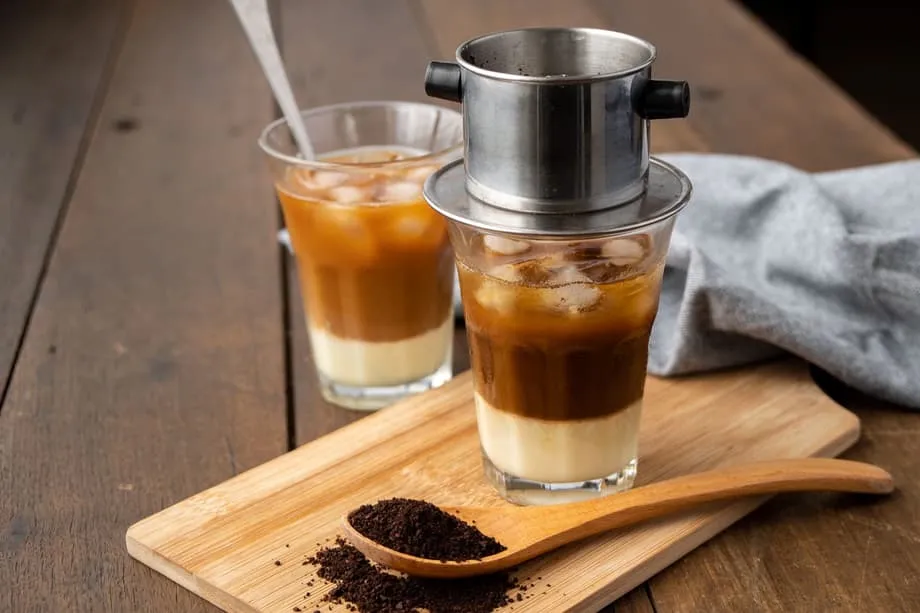
Consumers can find the substitution difficult to detect without laboratory analysis. Appearance and smell are limited guides when both can be reproduced with additives. Sugar or condensed milk, common ingredients in Vietnamese coffee preparations, can make the difference harder to notice in the finished drink.
Such products can reach local markets, small cafes and informal distribution channels before buyers learn what they contain. A package that looks and smells familiar may therefore conceal a mixture with much less coffee than expected.
The process also explains why the investigation concerns both authenticity and food safety. Replacing coffee with soybeans changes what customers receive. The substances used to make that replacement convincing create a further question about what people are drinking.
Missing Paperwork Makes Products Harder to Trace
The truck's lack of documentation was the immediate reason police pursued the shipment's origin. Following it back to Kiem's warehouse allowed officers to connect the transported bags with the facility accused of producing the counterfeit mixture.
Documentation matters because it helps establish where a product came from and who handled it. In this case, the missing paperwork suggested movement through an informal supply chain, outside the usual quality checks and systems used to trace products.
Informal distribution complicates enforcement when goods change hands several times before reaching the person who consumes them. Each transfer can make the original producer harder to identify, particularly when records are absent.
The ministry's continuing investigation may uncover other facilities or distribution networks connected with the Lam Dong operation. The scope of any wider network, the identity of the additives and a date for the next investigative step were not given.
A Larger Counterfeit Coffee Case in June 2025
Police in Dak Lak province dismantled another counterfeit coffee operation in June 2025. A married couple had distributed more than 20 tons of fake coffee across several provinces before authorities intervened.
Phan Danh Duong Bao, 52, and his wife, Ho Thuy Bich Dan, 47, admitted operating a manufacturing site in Khanh Hoa province. Their finished product contained only 3 to 9 kilograms of genuine coffee beans for every 100 kilograms produced.
That recipe meant real coffee accounted for just 3 to 9 percent of the finished mixture. The remaining ingredients were roasted soybean powder, sugar, coloring agents and flavor enhancers. Put another way, between 91 and 97 kilograms of each 100 kilograms of product consisted of ingredients other than coffee.
The couple supplied markets in Binh Dinh, Lam Dong and Dak Lak provinces during 2024 and 2025. The geographic spread shows how a manufacturing operation in one province could serve buyers across several others.
Health officials warned that products made primarily from burnt soybeans and chemical additives could irritate the digestive tract, damage the liver and kidneys, and potentially increase cancer risks with prolonged consumption. Those warnings placed the case beyond a dispute over price or product labeling.
Earlier Fraud Included Battery Chemicals
Police arrested five people in the Central Highlands in 2018 in an agricultural fraud case involving battery chemicals. The suspects allegedly used those chemicals to dye waste coffee beans and sold the resulting mixture as black pepper.
The alleged scheme involved disguising discarded material as a more valuable agricultural product. Industrial dyes unsuitable for human consumption were used to alter its appearance.
The cases described in the region span several years:
- 2018: Police arrested five people accused of using battery chemicals to dye waste coffee beans for sale as black pepper.
- 2024 and 2025: Bao and Dan supplied counterfeit coffee from their Khanh Hoa manufacturing site to markets in Binh Dinh, Lam Dong and Dak Lak.
- June 2025: Police in Dak Lak dismantled the couple's operation after more than 20 tons had been distributed.
- The latest Lam Dong investigation: An undocumented shipment of 528 kilograms led police to Kiem's warehouse, where they seized 4.1 tons of counterfeit products and 3 tons of raw materials.
The methods varied, from replacing most of the coffee with roasted soybean powder to using industrial chemicals to disguise agricultural waste. Each involved changing a product's appearance or composition so it could be sold as something else.
What the Health Concerns Involve
Soybeans themselves are edible. The health concern described in these cases centers on the chemical mixtures used to turn substitute ingredients into convincing coffee products, along with the warnings about heavily burnt ingredients.
Unregulated additives may include artificial dyes that are not approved for food use, industrial flavoring agents and preservatives that have undergone no safety testing for consumption in hot beverages. The effects of consuming such substances over a long period remain largely unstudied.
Tho, the Dak Lak coffee trader, expressed that uncertainty in direct terms:
"Who knows if it is safe for the health to drink these fake coffee products," Tho added.
Consumers face a practical difficulty because food grade colorants and flavoring agents can also reproduce familiar visual and aromatic cues. Looking at or smelling ground coffee may reveal little about its actual ingredients. Laboratory testing is needed to distinguish pure coffee from a product adulterated with soybean powder when those differences have been carefully disguised.
The health warnings attached to the June 2025 case concerned possible damage to the digestive system, liver and kidneys, as well as possible cancer risks with prolonged consumption. For the Lam Dong investigation, the immediate task is to identify the materials used and follow the products through the distribution chain.
A Major Export Industry Has a Reputation to Protect
Vietnam's coffee trade gives product quality a national economic importance. The export figures identified for 2024 were 1.6 million tons of coffee worth $8.9 billion, with volume increasing by 18.3 percent and value rising by 58.8 percent compared with the previous year.
The value of exports grew much faster than their volume. The difference between those growth rates was 40.5 percentage points, showing that the increase in export earnings went beyond simply shipping more coffee.
Vietnamese Robusta beans are a foundation for instant coffee products consumed around the world. Buyers range from European markets to manufacturing facilities in Asia, making reliable quality and safety central to international trading relationships.
Counterfeit products entering that supply chain could threaten consumer health and Vietnam's standing as a dependable agricultural exporter. Trading partners rely on consistent standards, and food fraud can put market access and the industry's ability to secure favorable prices at risk.
The Lam Dong warehouse supplied the local market. That domestic focus still matters to the wider industry: the same producing region supports local consumption and the international businesses that depend on Vietnamese beans.
Why Oversight Is Difficult Across the Highlands
Vietnam's coffee industry combines many small farms with industrial processing facilities operating under different levels of oversight. Academic analyses of its food safety protocols and processing standards describe continuing difficulties in regulating that fragmented production network.
Keeping coffee safe requires checks on chemical inputs and processing methods across thousands of farms and facilities. Financial pressure to lower costs adds to that challenge, particularly when cheaper ingredients can be made to resemble genuine coffee.
Remote production sites spread across highland provinces make monitoring more difficult. The industry also employs millions of Vietnamese workers, from farmers operating small plots to employees in processing plants. Enforcement that disrupts businesses can therefore affect livelihoods as well as commercial activity.
Regulatory bodies continue working to strengthen oversight. The criminal investigation into Kiem's warehouse is part of that enforcement effort, while Tho's description of counterfeit coffee as common points to a problem extending beyond a single seizure.
The latest case shows how an inspection of one undocumented load can lead police to a much larger stock of products and raw materials. Following the goods back to their producer is a central step in identifying how they were made and where they were intended to go.
The Bottom Line
- Police in Lam Dong seized 4.1 tons of counterfeit coffee products and 3 tons of raw materials.
- The investigation began with a truck carrying 1,056 bags weighing 528 kilograms without accompanying documentation.
- Warehouse operator Luong Viet Kiem admitted mixing soybeans and flavoring agents with genuine coffee for the local market.
- Coffee beans cost approximately 100,000 to 100,500 dong per kilogram, about three times the price of soybeans.
- A June 2025 case involved more than 20 tons of counterfeit coffee containing only 3 to 9 percent genuine coffee.
- Health officials warned of digestive irritation, liver and kidney damage, and possible cancer risks from prolonged consumption of products containing burnt soybeans and chemical additives.
- Vietnam's stated 2024 coffee exports totaled 1.6 million tons worth $8.9 billion.
- The Ministry of Public Security said the Lam Dong investigation was continuing.