A four day visit with a $100 billion ambition
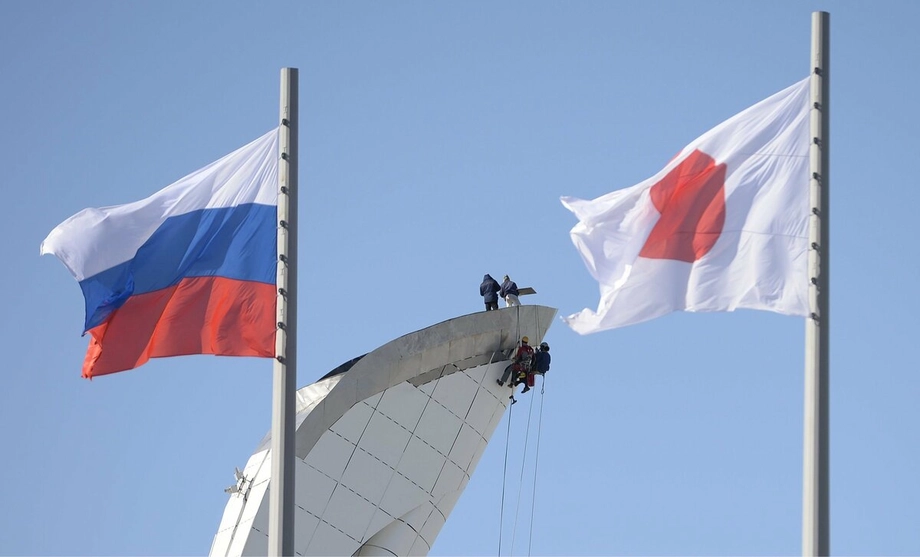
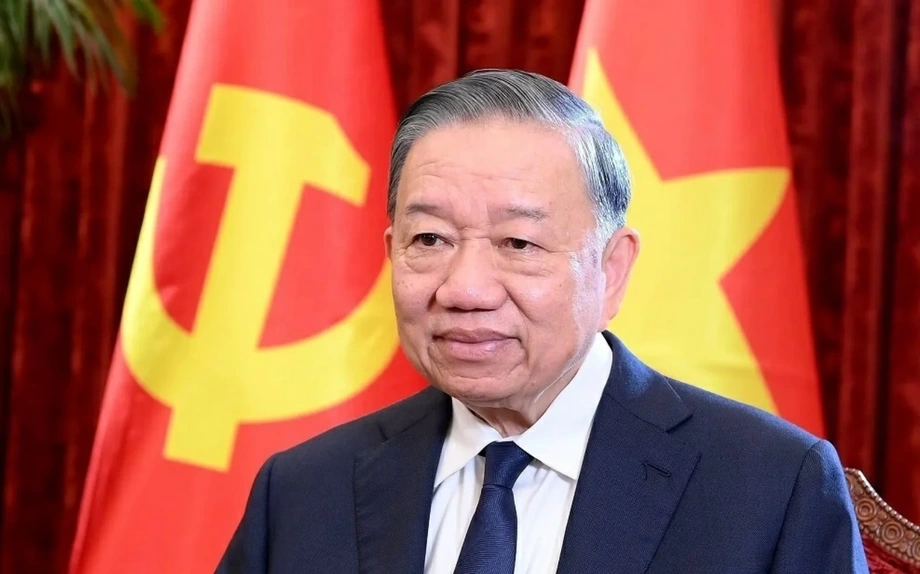
Vietnamese Communist Party General Secretary and President To Lam left Hanoi on November 8 for an official visit to Japan through November 11, 2026, seeking stronger technology partnerships and progress toward bilateral trade of $80 billion, with an ambition of $100 billion, by 2030.
Contents
- A four day visit with a $100 billion ambition
- Parliamentary address follows decades of closer ties
- Trade targets require another substantial expansion
- Japanese businesses see room to grow
- Technology cooperation must build Vietnamese expertise
- Energy projects link climate goals with supply security
- Infrastructure and exports need practical follow through
- Workers and families want tangible improvements
- Vietnam links closer ties to greater autonomy
- Turning priorities into projects
- Key Points
Trade between the countries reached nearly $50 billion in the first 10 months of 2026, Lam said before the visit. Japan also has approximately 5,800 investment projects in Vietnam with active capital of $80.4 billion, giving the talks a substantial economic foundation.
Lam, accompanied by his wife Ngo Phuong Ly and a senior delegation, is making his first official visit to Japan in his current roles. It is also the first visit to Japan by a Vietnamese Communist Party general secretary in 11 years. He is scheduled to address lawmakers from both chambers of Japan's parliament on November 9.
Vietnam wants Japanese investment to bring more research, technical knowledge, management skills and training into its economy. Japan, meanwhile, is seeking new sources of growth through science and technology and stronger security for energy and essential industrial supplies.
For the nearly 700,000 Vietnamese people living, studying and working in Japan, the priorities are more immediate: better jobs, stronger protection at work, opportunities to build careers and support for families settling there.
Lam, Vietnam's party leader and president, described the relationship he wants to build around stronger businesses and products jointly developed by the two countries:
I hope these achievements will be further strengthened by the growth of Vietnamese enterprises, the long-term commitment of Japanese businesses and the development of higher-value products jointly created by the two sides.
Parliamentary address follows decades of closer ties
Japan's parliament plans a formal welcome for Lam and his wife on the afternoon of November 9, attended by the speakers and deputy speakers of both chambers. The House of Representatives speaker is scheduled to introduce his address, followed by a response from the House of Councillors president.
The speech will take place three years after the countries upgraded their relationship to a Comprehensive Strategic Partnership for Peace and Prosperity in Asia and the World. That framework gives political backing to cooperation across trade, technology, education, security and international affairs.
Vietnam and Japan established diplomatic relations on September 21, 1973. Lam said exchanges between their peoples stretch back more than 400 years, making the social relationship much older than their modern diplomatic ties.
- September 21, 1973: Vietnam and Japan established diplomatic relations.
- 2002: The countries established a reliable and stable partnership for the long term.
- 2009: Relations became a strategic partnership for peace and prosperity in Asia.
- 2014: The relationship advanced to an extensive strategic partnership.
- November 2023: The countries adopted their current Comprehensive Strategic Partnership.
- November 8 to 11, 2026: Lam's official visit, including the parliamentary address scheduled for November 9.
Trade targets require another substantial expansion
Vietnam and Japan traded approximately $52 billion in 2025. Reaching $80 billion would mean adding $28 billion to that annual total, an increase of about 54%. The $100 billion ambition would require another $48 billion, or about 92%, compared with 2025.
Commerce is already growing. Bilateral trade reached $43.7 billion during the first nine months of 2026, about 15% above the same period in 2025. The nearly $50 billion figure Lam cited covers the first 10 months. Annual trade for 2026 has been projected at approximately $58 billion.
Lam wants Japanese companies to expand investment, research and product development inside Vietnam and work more closely with Vietnamese businesses. His focus is on helping local companies take on more valuable work within supply chains, the networks of firms that design, make and deliver a product.
For a Vietnamese supplier, that could mean progressing from a limited production task to making more sophisticated components or helping develop a product. The policy objective is to retain more skills and economic value in Vietnam while giving Japanese companies stronger local partners.
Japanese businesses see room to grow
Japan ranks third among countries and territories investing in Vietnam. Lam cited $80.4 billion in active investment capital; figures for September 30 put registered capital at more than $81 billion, with another investment total stated as $81.2 billion. Approximately 2,000 Japanese enterprises operate in Vietnam, particularly in manufacturing, electricity and real estate.
A survey by the Japan External Trade Organization found that 67.5% of Japanese businesses in Vietnam reported profits in 2025, the highest proportion in 15 years and the third highest in Southeast Asia. Another 56.9% planned to expand within one to two years.
Retail group AEON has invested approximately $1.5 billion in Vietnam. Its plans include four shopping mall openings in 2026 and expanding its Vietnamese business by 2030 to more than three times its 2025 scale.
AEON Group's chief representative in Vietnam and AEON Vietnam general director, Tezuka Daisuke, expressed the company's commitment to the market:
We believe in Vietnam's development and sincerely wish to contribute to the happiness of consumers and the progress of Vietnamese society.
Food producer Acecook also inaugurated a factory in Hoa Phu Industrial Park in Vinh Long in 2026. After more than 30 years in Vietnam, it operates 14 factories and six business branches, supplying domestic consumers and exporting to more than 40 countries.
Technology cooperation must build Vietnamese expertise
Semiconductors, artificial intelligence, advanced industry and clean energy are central to Lam's proposed agenda. He wants cooperation in those fields tied to workforce training and stronger technical and management capabilities.
Kenichi Ohno, a professor at Japan's National Graduate Institute for Policy Studies, argues that Vietnam's rising income and technical capabilities call for a more equal economic relationship. His proposed model involves both countries contributing to the development and operation of businesses and projects.
Ohno says Vietnam should master imported technologies and build domestic technical expertise. Buying equipment is one step; developing people who can operate, maintain, adapt and eventually improve it is another.
Vietnam's goals include growth at double digit rates and reaching high income status by 2045. Ohno identifies the quality of policymaking and implementation as crucial to achieving those ambitions, recommending that Vietnam study approaches used by Japan, South Korea and Singapore.
He also recommends developing several industries at the same time. Vietnam should maintain light industry exports while advancing in heavy industry, chemicals, information technology, artificial intelligence, finance and services. Potential joint projects with Japan include new energy, semiconductors and advanced materials.
Energy projects link climate goals with supply security
Vietnam and Japan have agreed to prioritize 15 green energy projects with combined capital of approximately $20 billion. Some projects involving power transmission networks and electricity generated from biomass are already underway.
Toshiro Nishizawa, a senior fellow at the University of Tokyo's Graduate School of Public Policy, sees energy security and critical minerals as major Japanese priorities. Economic security, in this setting, means keeping essential supplies and infrastructure dependable when markets or international relations become unstable.
Nishizawa identifies Japan's support for the Nghi Son Refinery and cooperation in critical minerals as parts of that approach. He also sees opportunities in rare earths, semiconductors, maritime security and more advanced forms of official development assistance.
Cooperation on reducing emissions includes the Asia Zero Emission Community and the Joint Crediting Mechanism, a framework for cooperation on projects that reduce greenhouse gas emissions. Nishizawa points to demand for efficient equipment and power grid technology, alongside possible projects involving ammonia, biomass, hydrogen and the reuse of materials.
Project fragmentation and shortages of highly skilled engineers remain practical problems, he says. He recommends sustained government roadmaps and major joint projects, with room for businesses to shape and carry out investment.
Infrastructure and exports need practical follow through
Japan's cumulative bilateral official development assistance to Vietnam exceeds $23 billion, according to economist and National Assembly representative Tran Hoang Ngan. He puts that support at more than 26% of Vietnam's total signed foreign loan agreements.
Ho Chi Minh City's Metro Line 1, connecting Ben Thanh and Suoi Tien, shows how that cooperation reaches daily life. The city's first metro line used Japanese government development loans, Japanese consulting services and trains made in Japan. Japanese contractors also built the Thu Thiem Tunnel.
Ohno advises Vietnam to assess infrastructure partners through construction quality, pricing, economic efficiency, maintenance, equipment support and staff training. The cost and reliability of operating a project over many years matter alongside its initial construction.
Vietnamese exporters also want easier access to Japanese buyers. Sao Ta Food Joint Stock Company exports about $80 million of shrimp to Japan annually and aims for $100 million. Its chairman, Ho Quoc Luc, says high raw material costs and competition make efficiency a priority rather than simply increasing sales.
Japan is the largest market for Saigon Garment Company No. 3, according to its chairman Pham Xuan Hong. For Vietnam's garment industry as a whole, it ranks third after the United States and the European Union. Hong points to Japanese customers' requirements for consistent quality and workplace safety, alongside commercial relationships that can last for decades.
Workers and families want tangible improvements
Vietnam's community in Japan includes trainees, workers admitted under specified skills arrangements, students, engineers, researchers and entrepreneurs. Nguyen Hong Son, president of the Union of Vietnamese Associations in Japan, says these groups share a desire for opportunities to develop their abilities and receive fair recognition.
Son hopes the visit will bring better employment opportunities, improved conditions for students and more practical support for Vietnamese families building lasting lives in Japan. His priorities include worker protections, education for Vietnamese children, advanced training, technology transfer, entrepreneurship and business connections.
Ohno also identifies responsibilities on both sides. He urges Japan to support the integration of Vietnamese workers and prevent xenophobia. Vietnam, he says, should improve overseas recruitment arrangements and protect workers from misinformation and excessive fees.
Lam has called for Vietnamese people in Japan to have opportunities to gain knowledge, improve professional skills and develop their careers with their legitimate rights protected. He also wants more Japanese experts, scientists and young people to work, research and start businesses in Vietnam.
Education already forms part of the relationship. Japanese is taught in Vietnamese schools, and Japan is among the largest donors to Vietnam's education and training sector. Son wants community associations in Japan to do more to connect knowledge, businesses and opportunities for younger generations, while helping families preserve Vietnamese language and culture.
Vietnam links closer ties to greater autonomy
Lam describes Vietnam's diplomatic approach as independence, diversified partnerships and peaceful dialogue, grounded in international law and the United Nations Charter. He has also stressed the role of the United Nations and the central role of the Association of Southeast Asian Nations.
The Vietnamese leader explained strategic autonomy as the ability to choose the country's development path and have the capacity to carry out those choices:
Strategic autonomy means having the capacity to independently determine our development path and the ability to implement those decisions.
Nishizawa places the Japan visit within Vietnam's wider effort to diversify partnerships while maintaining stable relations with China. Vietnam is also preparing to host APEC Economic Leaders' Week in 2027, bringing supply chains, energy and regional economic cooperation into a wider diplomatic calendar.
The delegation accompanying Lam reflects the breadth of the agenda. It includes Deputy Prime Minister and Defence Minister Phan Van Giang, Public Security Minister Luong Tam Quang, Foreign Minister Le Hoai Trung, Finance Minister Ngo Van Tuan, Industry and Trade Minister Le Manh Hung, Science and Technology Minister Vu Hai Quan, and Agriculture and Environment Minister Trinh Viet Hung. Party officials and the party secretaries of Hanoi and Ho Chi Minh City are also participating.
Turning priorities into projects
Vietnam's development priorities following its 14th National Party Congress include better institutions, science and technology, digital transformation and a workforce with stronger skills. The Japan agenda brings those priorities together: investment requires reliable rules, advanced factories require engineers, and technology partnerships require Vietnamese firms capable of learning and contributing.
The Japan International Cooperation Agency has identified four support pillars for Vietnam's new growth model: science and technology human resources, stronger Vietnamese enterprises, a better investment environment and strategic infrastructure.
Dr. Nguyen Si Dung has called for agreed priorities to have designated implementation leads, a roadmap and a mechanism to monitor results. Ohno similarly wants major joint projects with clear outcomes that matter to both countries.
Lam has promised attention to a transparent, stable and predictable business environment and timely responses to legitimate business concerns. At the 33rd Diplomatic Conference in early August 2026, he also urged preparation to receive investment, arguing that external opportunities become usable resources when domestic conditions are ready.
No detailed package of new agreements or implementation deadlines has yet been announced. The next scheduled public event is Lam's November 9 parliamentary address, before the visit concludes on November 11. The practical objectives are already identifiable: more capable suppliers, successful joint research, dependable energy and infrastructure, and better career prospects for workers.
Key Points
- To Lam's official visit to Japan runs from November 8 to 11, 2026, with a parliamentary address scheduled for November 9.
- Bilateral trade reached nearly $50 billion in the first 10 months of 2026. The countries seek $80 billion, with an ambition of $100 billion, by 2030.
- Japan is Vietnam's third largest foreign investor, with approximately 5,800 active projects.
- Priority areas include semiconductors, artificial intelligence, clean energy, research and workforce training.
- The countries have prioritized 15 green energy projects worth approximately $20 billion.
- Worker protections, education and career opportunities are central concerns for the nearly 700,000 Vietnamese people in Japan.
- Proposals for stronger cooperation focus on clear implementation responsibilities, sustained training and projects with measurable results.