Taiwan Warning Shadows Preparations for Beijing Talks
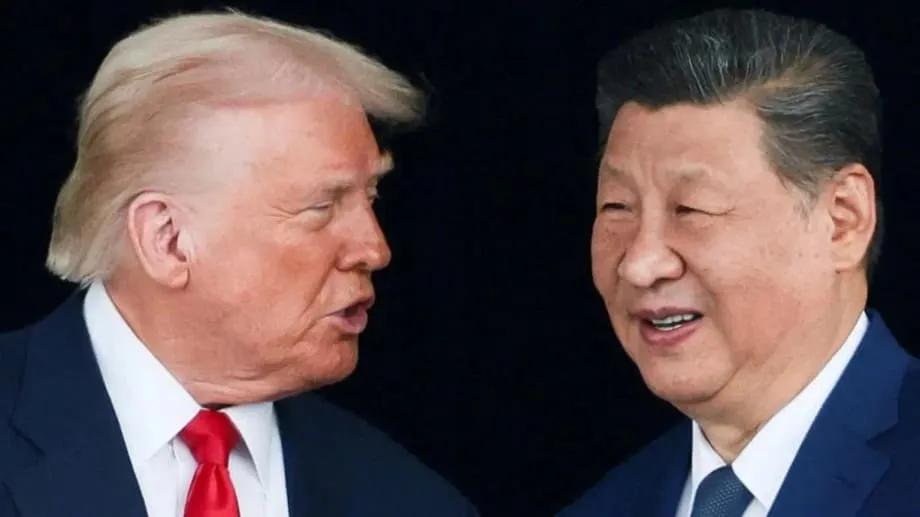
Chinese President Xi Jinping has warned U.S. President Donald Trump to exercise caution over arms sales to Taiwan, placing an American weapons package worth approximately $11.1 billion at the center of tensions as the leaders prepare for Trump's planned April visit to Beijing. Xi called the self-governing island "the most important issue" in relations between the two countries and said Beijing "will never allow Taiwan to be separated from China."
Contents
- Taiwan Warning Shadows Preparations for Beijing Talks
- What Xi Said About the Risk of Conflict
- The $11.1 Billion Weapons Package
- Trump Puts Soybeans and Trade at the Forefront
- Why Taipei Is Watching Trump's Decisions Closely
- Taiwan Reassures Its Public While Welcoming Dialogue
- A Defense Budget Dispute Adds Pressure at Home
- Japan and Russia Widen the Diplomatic Setting
- The Timeline Leading to April
- What the April Summit Could Address
- The Bottom Line
Trump described the telephone conversation as "excellent" and "long and thorough," highlighting possible Chinese purchases of American soybeans, energy and aircraft engines. The different priorities were striking: Xi focused on sovereignty and the risk of confrontation, while Trump stressed commercial gains and the strength of his personal relationship with the Chinese leader.
The conversation was their first direct communication since November. It came amid military tensions in the Taiwan Strait, negotiations over trade and preparations for Trump's first state visit to China since returning to office. The leaders also discussed the war in Ukraine, Iran, regional security, fentanyl control and TikTok, although the accounts from the two capitals gave different levels of detail.
Hours before speaking with Trump, Xi held a virtual summit with Russian President Vladimir Putin. That sequence placed Beijing's relationship with Moscow alongside its efforts to keep negotiations with Washington moving. For Taiwan, the immediate concern is whether American military support will continue while the United States and China seek agreements on trade and other international issues.
As of February 5, 2026, Taiwanese officials were publicly expressing confidence in their relationship with Washington. At home, however, a dispute over a proposed $40 billion special defense budget threatened to delay funding for weapons purchases, including the American package that has angered Beijing.
What Xi Said About the Risk of Conflict
Xi's warning made Taiwan the central security issue in the call. Beijing regards the island as an inseparable part of Chinese territory and opposes American weapons transfers that strengthen its ability to resist military pressure. Xi's direct intervention showed the importance China attaches to limiting Taiwan's acquisition of advanced defensive equipment.
Chinese state media quoted Xi, China's president, telling Trump that Washington needed to act carefully over weapons sales and warning that supporters of Taiwan independence could draw the two powers into a confrontation.
The United States must handle the issue of arms sales to Taiwan with prudence, so that the fringe separatists bent on "Taiwan independence" will not be able to drag China and America into the dangerous terrain of confrontation and even conflict.
Beijing's "One-China Principle" holds that Taiwan is part of China. Washington's "One-China Policy" acknowledges Beijing's position without explicitly endorsing it. The similar names describe different positions, which helps explain why the two governments can maintain diplomatic relations while continuing to disagree over American support for Taiwan.
Xi also said that both countries had legitimate concerns and that solutions required "equality, respect and mutual benefit." His message combined an invitation to negotiate with a firm demand on Taiwan: commercial cooperation should take place alongside respect for what Beijing considers its territorial integrity.
The $11.1 Billion Weapons Package
The Trump administration announced the proposed arms package in December. Worth approximately $11.1 billion, it includes advanced rocket launchers, howitzers that can move under their own power, missiles and fighter jet components. The package represents one of the largest single military assistance programs for Taiwan in recent history and remains pending congressional approval.
Beijing responded with two days of military drills around Taiwan involving air, naval and missile units. Those exercises added military pressure to China's diplomatic objections and formed part of the tense backdrop to the leaders' conversation.
Washington's weapons support is intended to help Taiwan deter an attack by increasing the island's defensive capabilities. For Beijing, the same support strengthens an island it claims as its own. This disagreement links the practical question of supplying launchers, ammunition and aircraft parts to the larger dispute over Taiwan's status.
A reported pause in another American assistance package had already raised concerns in Taipei. In September, the Trump administration briefly paused $400 million in weapons aid, including lethal munitions and autonomous drones, potentially as a temporary measure in broader trade negotiations with China. The pause was subsequently lifted or modified, but it fueled fears that Taiwan could become a bargaining chip.
William Yang, a senior analyst for the Crisis Group, warned that Trump might regard concessions on Taiwan as temporary tactical adjustments while Beijing could use the resulting gaps to create "a new reality" around the island's defense capabilities. His concern was that a temporary decision in trade diplomacy could have effects on Taiwan's security that last beyond the negotiations.
Trump Puts Soybeans and Trade at the Forefront
Trump's account on Truth Social focused on economic results. He said China would consider buying 20 million tons of American soybeans, up from the previous 12 million tons. The proposed increase is 8 million tons, or about two thirds above the earlier figure, making it a substantial potential gain for American farmers.
The soybean purchase remained under consideration. Trump also highlighted discussions about oil, gas and aircraft engine deliveries, alongside cooperation on fentanyl control and TikTok. His account presented the call as an opportunity to keep commercial negotiations advancing across several areas.
Trump, the U.S. president, described his relationship with Xi in positive terms in his Truth Social statement.
The relationship with China, and my personal relationship with President Xi, is an extremely good one, and we both realize how important it is to keep it that way.
Beijing's account put sovereignty and territorial integrity first, with Taiwan occupying the main position in its description of the conversation. Washington's account gave greater attention to purchases and cooperation. Those priorities show the challenge for the April talks: the leaders are seeking progress in the same relationship while placing different issues at its center.
Why Taipei Is Watching Trump's Decisions Closely
Trump's second term has combined major weapons approvals with statements questioning the value of American protection for Taiwan. On the campaign trail, he suggested that Taiwan should pay for U.S. defense support, comparing American security commitments to insurance policies.
Trump also accused Taiwan of taking the American semiconductor business, even though the island plays a critical role in supplying advanced chips to U.S. technology companies. Semiconductors are the chips used in electronic equipment, and Taiwan's role in their supply makes its security closely connected to American commercial interests.
Taipei therefore faces two messages from Washington: continued military cooperation through arms sales, and a president who has spoken about security support in financial terms. That combination has created uncertainty about the reliability of American backing as Trump negotiates with Beijing.
Lev Nachman, a political scientist at National Taiwan University, said Taiwan needed to prepare for greater rhetorical attention from both Washington and Beijing throughout 2026. He also pointed to the island's importance to the American economy when assessing Trump's likely calculations.
I think Trump is keenly aware of how important Taiwan is to the United States' current economic growth, and I do not think he would do anything to put that in jeopardy.
The possibility that security guarantees could be exchanged for economic benefits nevertheless keeps Taiwanese officials alert ahead of the April summit. Taiwan's importance to American technology companies, continued weapons approvals and Trump's approach to negotiations all shape that uncertainty.
Taiwan Reassures Its Public While Welcoming Dialogue
Taiwanese President Lai Ching-te responded hours after the Trump-Xi call, seeking to reassure people in Taiwan and observers abroad that cooperation with Washington would continue.
The Taiwan-U.S. relationship is rock solid, and all cooperation projects will continue uninterrupted.
Deputy Foreign Minister Chen Ming-chi welcomed communication between Washington and Beijing as a way to reduce the risk of miscalculation. His response treated direct dialogue as useful for regional stability even as Taiwan continued to face Chinese pressure.
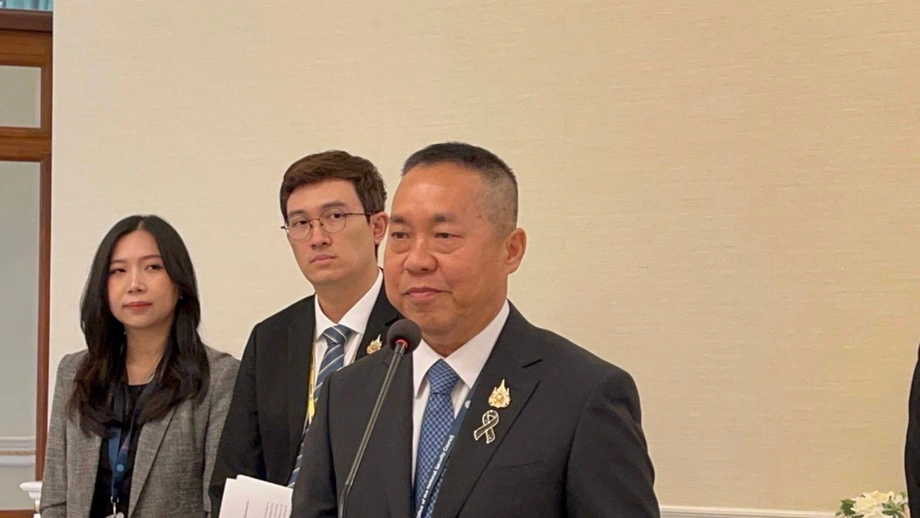
Chen, Taiwan's deputy foreign minister, told reporters that Taipei was not deeply concerned about the call itself.
We do not worry too much about this whole telephone communication.
Chen explained that he expected the conversation to help stabilize the situation, linking that assessment to China's actions in the Taiwan Strait.
In fact, we believe that it will contribute to stabilise the situation, especially given the fact that China keeps on escalating the tension in the Taiwan Strait.
Lai and Chen addressed different parts of the same concern. Lai stressed continuity in American cooperation, while Chen described talks between the two major powers as a way to lower the danger of a mistaken move. Taiwan's response combined reassurance about its own partnerships with support for communication between Washington and Beijing.
A Defense Budget Dispute Adds Pressure at Home
Chen also acknowledged a domestic obstacle to Taiwan's military preparations: the legislature, controlled by opposition parties, has blocked the $40 billion special defense budget proposed by Lai's administration. The dispute threatens to delay financing for the arms purchases at the heart of the argument with Beijing.
The Kuomintang, or KMT, has resisted dramatic increases in military spending and proposed more modest budgets than the administration seeks. Lai's government has set a target of defense spending reaching 5% of gross domestic product by 2030. Gross domestic product, usually shortened to GDP, measures the value of goods and services produced by an economy.
Taiwan's proposed special budget and the American weapons package are separate parts of the same purchasing process. Washington must approve the proposed transfer, while Taipei needs funding to pay for its purchases. The parliamentary dispute therefore matters even if American officials continue to support the sale.
The funding blockage also creates a vulnerability independent of Trump's intentions. A promise of military cooperation can proceed alongside delays in acquiring equipment when domestic lawmakers disagree over spending. For Lai, maintaining confidence in Washington and securing support in the legislature are both immediate defense challenges.
Japan and Russia Widen the Diplomatic Setting
Japanese Prime Minister Sanae Takaichi recently suggested that Japan's military could become involved if China took action against Taiwan. Japan is a major U.S. ally and hosts American military bases, making its position relevant to any conflict around the island.
Japan has historically maintained ambiguity about direct intervention in a Taiwan contingency. Takaichi's comments marked an escalation in regional rhetoric, and Beijing denounced them as crossing a "red line." Relations between China and Japan fell to new lows following the remarks.
Xi's use of World War II history during his conversation with Trump appeared aimed at countering Japan's positioning. He described Taiwan's return to mainland control as "an integral part of the post-war international order" and recalled that the United States and China had fought together against fascism and militarism.
Xi used that history to argue that Washington and Beijing should jointly safeguard the international order that followed the war. The framing connected China's current position on Taiwan with its historical argument, while implicitly challenging Japan's expanding military role and appealing to American memories of the Pacific War.
Russia formed another part of the day's diplomacy. During their video conference, Xi and Putin pledged to strengthen ties amid a "turbulent" international environment. Putin accepted an invitation to visit China in the first half of the year, reinforcing a strategic partnership that has deepened since Moscow's invasion of Ukraine.
The conversations with Putin and Trump allowed Beijing to present itself as a global mediator while maintaining its partnership with Moscow and other authoritarian allies. Chinese state media portrayed the diplomacy as evidence that Beijing was acting as a stabilising force against confrontation and unilateralism. The sequence also projected China's strategic partnerships as it engaged Washington.
The Timeline Leading to April
The current dispute developed through several rounds of negotiations, military decisions and diplomatic exchanges. Trump's planned April trip follows an October meeting with Xi in Busan, South Korea, where the two leaders established a trade truce lasting one year.
- September: The Trump administration reportedly paused $400 million in weapons aid to Taiwan, including lethal munitions and autonomous drones. The pause was subsequently lifted or modified.
- October: Trump and Xi met in Busan and established a trade truce lasting one year.
- November: The leaders had their previous direct communication before the latest telephone call.
- December: Washington announced the proposed $11.1 billion Taiwan arms package. Beijing responded with two days of military drills around the island.
- By February 5, 2026: Xi had spoken with Putin by video and, hours later, with Trump by telephone. Taiwanese officials responded with assurances about cooperation with Washington.
- April: Trump is expected to visit China for the first state visit of his current term.
- First half of 2026: Putin is expected to visit China after accepting Xi's invitation.
The timeline shows how trade negotiations and Taiwan's defense have moved alongside each other. The October truce created room for economic talks, while the December weapons announcement and China's drills kept security tensions active as summit preparations continued.
What the April Summit Could Address
Preparations for Trump's anticipated visit have already influenced bilateral negotiations. Boeing may finalize deals involving deliveries of up to 500 aircraft to coincide with the visit, potentially giving Trump another major commercial announcement alongside soybean and energy purchases.
Analysts expect Trump to seek removal of the remaining tariffs related to fentanyl on Chinese exports during or shortly after the meeting. Tariffs are taxes charged on imported goods. In these negotiations, their removal could be exchanged for continued Chinese cooperation on soybean and energy purchases.
Taiwan is likely to dominate the security agenda following Xi's explicit warning. Trump has maintained strategic ambiguity about whether American forces would defend the island against a Chinese invasion. That approach leaves the possible military response uncertain, while his administration continues approving weapons sales intended to help Taiwan deter aggression.
American negotiators also face the Taiwan Relations Act, which requires the United States to provide Taiwan with sufficient defensive capabilities. Reconciling that obligation with Beijing's demands for an end to military support will be a central challenge for the talks.
The April visit is planned, but no exact date was given. The proposed soybean increase, possible Boeing agreement and expected tariff negotiations remain subjects for discussion rather than completed agreements. Meanwhile, the weapons package awaits congressional approval and Taiwan's special defense funding remains blocked in its legislature.
Xi's warning and Trump's upbeat response leave the relationship moving on two tracks. Both leaders are seeking economic cooperation, while Taiwan remains the issue Beijing places first and Taipei continues to seek confidence in American support. The summit preparations bring those priorities together without resolving the disputes that separate them.
The Bottom Line
- Xi called Taiwan the most important issue in relations with Washington and warned that arms sales could contribute to confrontation or conflict.
- The proposed American weapons package totals approximately $11.1 billion and remains pending congressional approval.
- Trump highlighted possible Chinese purchases of 20 million tons of U.S. soybeans, compared with the previous 12 million tons.
- Lai said cooperation with Washington would continue uninterrupted, while Chen welcomed direct U.S.-China dialogue.
- Taiwan's opposition legislature has blocked a proposed $40 billion special defense budget. Lai's administration targets defense spending of 5% of GDP by 2030.
- Takaichi's comments about possible Japanese military involvement over Taiwan drew a sharp response from Beijing.
- Xi spoke with Putin hours before Trump, and Putin accepted an invitation to visit China in the first half of 2026.
- Trump's planned April visit could include talks on Taiwan, tariffs, energy, soybeans and possible Boeing deals for up to 500 aircraft.