A Major Step for Bilateral Industrial Cooperation
Indonesia and China have agreed on 16 new investment projects worth a combined $2.19 billion (Rp36.4 trillion), spanning sectors from basic metals and seafood processing to advanced technologies such as drones, batteries, and artificial intelligence. The projects form part of efforts to deepen bilateral industrial cooperation under the Twin Country-Two Park (TCTP) framework, Coordinating Minister for Economic Affairs Airlangga Hartarto said on Monday. The projects cover a range of strategic sectors, including basic metals, meat and seafood processing, textiles, tea, furniture, drones, batteries, and artificial intelligence, Airlangga said in a statement. He said the Indonesia–China partnership holds significant economic potential, given the scale of both markets and their industrial capabilities.
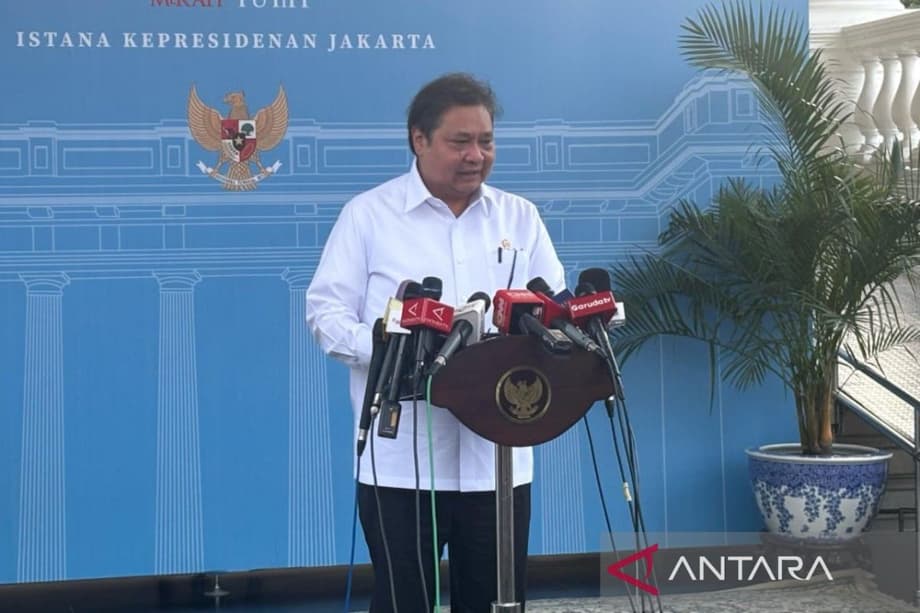
Coordinating Minister for Economic Affairs Airlangga Hartarto emphasized the scale of this collaboration during the announcement.
“This is truly an important milestone that demonstrates how open and expansive collaboration between the two countries can be. It is a large market that offers opportunities for companies and for both nations.”
The 16 projects follow up on a memorandum of understanding under the TCTP scheme, witnessed by Indonesian President Prabowo Subianto and Chinese Premier Li Qiang, and signed in May 2025 by Airlangga and China’s Commerce Minister Wang Wentao. The TCTP framework is designed to promote downstream industrial development, help cross-border investment, and integrate Indonesian and Chinese supply chains, particularly in manufacturing and resource-based industries. Looking ahead, Airlangga said Indonesia is open to deeper collaboration in higher-value-added sectors. Indonesia welcomes broader cooperation in infrastructure, logistics, downstream industries, manufacturing, renewable energy, the digital economy, artificial intelligence, quantum computing, food security, healthcare, and human capital development, he said.
Diverse Sectors Drive New Investment
The selection of sectors in the $2.19 billion package reflects a strategic blend of traditional industries and modern technology. Basic metals and processing industries like meat, seafood, textiles, and furniture represent the foundation of Indonesia’s export economy. These investments will help increase the value of raw materials within Indonesia before they are exported to international markets. This aligns with the government’s long-standing policy of downstreaming, which aims to capture more value from the country’s abundant natural resources.
On the technology front, investments in drones, batteries, and artificial intelligence signal a shift toward higher-value manufacturing. Indonesia has ambitions to become a key player in the global electric vehicle supply chain. The country holds the world’s largest nickel reserves, a critical component for batteries. By attracting investment for battery production, Indonesia can move up the value chain from simply exporting raw nickel ore to producing finished battery cells for electric vehicles. This transition is essential for the country’s goal of becoming a developed economy by 2045.
The inclusion of artificial intelligence and drone technology also points to a growing focus on the digital economy. These sectors require specialized skills and research capabilities. Partnerships with Chinese firms may help technology transfer and build a local talent pool proficient in advanced technologies. This diversification helps reduce reliance on commodity cycles, which can be volatile, and positions Indonesia as a hub for innovation in Southeast Asia.
The Two Countries Twin Parks Framework
Central to this new wave of investment is the Two Countries Twin Parks (TCTP) framework. Launched in 2021, this initiative connects industrial areas in Indonesia, specifically in Batang, Bintan, and Semarang, with the Yuanhong Investment Zone in Fujian Province, China. The framework aims to create industrial parks that benefit from the complementary strengths of both economies. Indonesian parks offer resources, labor, and access to the ASEAN market, while Chinese parks provide technology, capital, and supply chain integration.
A significant component of this framework is the Batang Industropolis Special Economic Zone (SEZ). In March 2025, the Indonesian government signed a deal with China State Construction Engineering Corporation to develop this zone. The projected investment for the Batang SEZ alone is estimated at Rp60 trillion, far exceeding the value of the individual project agreements announced recently. This large-scale infrastructure project will prepare 500 hectares for the Indonesia-China TCTP framework, serving as an initial step to accelerate investment in manufacturing and high technology.
The Batang SEZ is expected to attract companies from sectors including banking, infrastructure, logistics, energy, automotive, agriculture, battery manufacturing, telecommunications, electronics, and aviation maintenance. A Joint Committee convened in April 2025 to discuss cooperation policies for the zone. This level of government coordination suggests strong political will to ensure the success of the industrial parks. The TCTP initiative effectively links Indonesia’s Global Maritime Fulcrum initiative with China’s Belt and Road Initiative, creating a unified vision for regional economic development.
Deepening Economic and Diplomatic Ties
The recent investment deal must be viewed against the backdrop of the 75th anniversary of diplomatic relations between Indonesia and China. Established on April 13, 1950, the relationship has evolved through various phases. In recent years, it has matured into a comprehensive strategic partnership. China is currently Indonesia’s largest trading partner, with bilateral trade reaching approximately $135.2 billion in 2024. Indonesia exports primarily raw commodities to China, such as nickel, coal, and palm oil, while importing machinery, electronics, and consumer goods.
The relationship gained new momentum following President Prabowo Subianto’s state visit to Beijing in November 2024. This visit set the stage for enhanced business and trade cooperation, guided by the “Spirit of Bandung.” Both governments emphasize the crucial role of businesses in furthering this relationship, especially in the context of global instability. Indonesia, under President Prabowo, seeks significant foreign direct investment to achieve its ambitious 8% economic growth target. This target requires massive capital inflows into infrastructure, industry, and digitalization, areas where Chinese companies have substantial expertise and capacity.
Indonesian Ambassador to China Djauhari Oratmangun described the relationship as a dynamic journey.
“I envision a relationship that continues to mature, deepening its roots in mutual respect and understanding amid the growing global challenges and uncertainties.”
This maturing relationship is built on pragmatic economic cooperation rather than just political rhetoric. For China, Indonesia offers a strategic location within ASEAN, a large domestic market, and critical resources needed for its own industries. For Indonesia, China provides a source of investment and technology that is crucial for modernization. The two countries have also upgraded their cooperation framework to include a fifth pillar on security, in addition to politics, economy, maritime, and people-to-people exchanges. This broader scope indicates a desire to manage the relationship fully.
Future Horizons in Cooperation
Beyond the current $2.19 billion package, both nations are looking toward future areas of collaboration. The transition to green energy represents a major opportunity. Indonesia possesses abundant solar, geothermal, and hydro resources, making it a suitable partner for China, a leader in renewable technology. Joint ventures in solar panel manufacturing and renewable energy power generation are already underway. These projects not only support Indonesia’s energy transition but also contribute to global emission reduction goals.
Food security is another critical area. As the global population grows and climate patterns shift, ensuring a stable food supply becomes increasingly difficult. Indonesia and China are collaborating to improve agricultural productivity and food processing technologies. For instance, Indonesia is the world’s largest producer of edible bird’s nests, a luxury health product highly prized in China. Trade in this commodity has flourished, reaching hundreds of millions of dollars annually, and serves as a model for how bilateral trade can benefit both nations.
Healthcare cooperation has also become highly relevant in the post-pandemic era. China is a major producer of vaccines, biopharmaceuticals, and medical devices. Strengthening ties in this sector involves training medical personnel, establishing sister hospitals, and increasing investment in pharmaceutical manufacturing. This cooperation helps Indonesia improve its healthcare resilience while providing Chinese companies with access to a large market.
Finally, the digital economy and artificial intelligence remain frontiers for expansion. With internet penetration in Indonesia reaching 77% of the population, the market for digital services is vast. Chinese companies are already active in e-commerce, ride-hailing, and financial technology in Indonesia. Future collaboration will likely focus on smart city solutions, data centers, and cloud computing infrastructure. These investments will support Indonesia’s vision of a digital society and provide Chinese tech firms with a platform for growth in Southeast Asia.
The Essentials
- Indonesia and China signed agreements for 16 new investment projects worth $2.19 billion.
- The projects cover sectors including basic metals, seafood processing, textiles, drones, batteries, and AI.
- The deal operates under the Two Countries Twin Parks (TCTP) framework connecting industrial zones in both countries.
- China remains Indonesia’s largest trading partner, with bilateral trade totaling $135.2 billion in 2024.
- The Batang Industropolis Special Economic Zone is a key part of the TCTP initiative with an estimated investment of Rp60 trillion.
- Indonesia aims for 8% economic growth, requiring significant foreign direct investment from partners like China.
- Future cooperation will focus on green energy, food security, healthcare, and the digital economy.
- The relationship marks 75 years of diplomatic ties between the two nations.