Market Rally: Financial Stocks Surge on Geopolitical Currency Shift
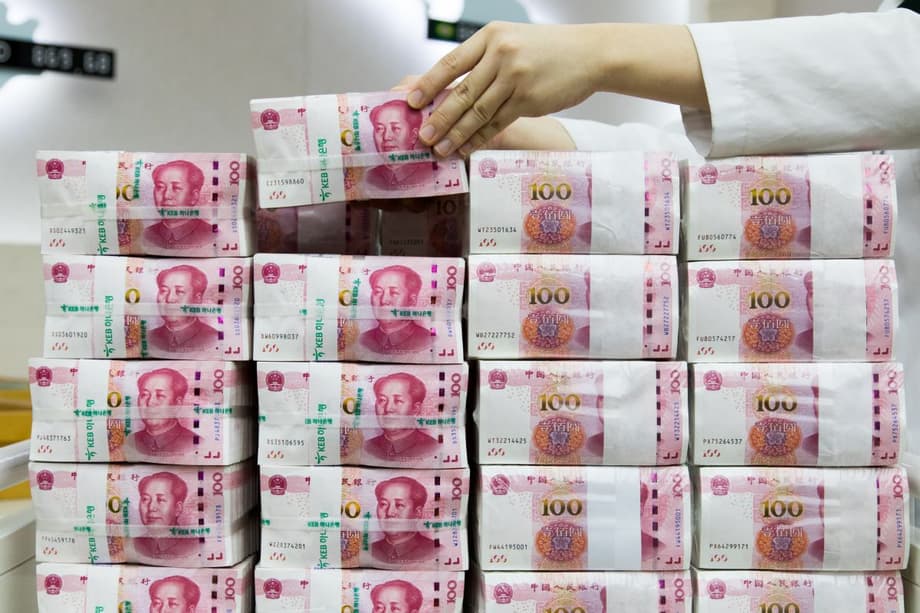
Shares of Chinese companies specializing in cross-border payments surged dramatically this week following confirmation that the Chinese yuan is being used to settle transit fees through the Strait of Hormuz, one of the world’s most critical energy chokepoints. CNPC Capital Co, the financial services unit of China National Petroleum Corp, jumped by as much as the 10% daily limit on the Shenzhen exchange. Lakala Payment Co, a leading third-party payments provider, climbed as much as 7.9%, while financial technology firm Shenzhen Forms Syntron Information Co rose 9.4% before paring gains.
- Market Rally: Financial Stocks Surge on Geopolitical Currency Shift
- The Hormuz Toll System: A New Maritime Taxation Regime
- Selective Passage: Geography, Alliances, and Exemptions
- Digital Currency Integration: Yuan, Stablecoins, and Bitcoin
- Legal Challenges and Freedom of Navigation
- Economic Impact and Revenue Calculations
- Challenging Dollar Hegemony: The Geopolitical Dimension
- The Future of Maritime Trade and Great Power Competition
- Key Points
The rally followed a notice posted on China’s Ministry of Commerce website, which cited a recent Lloyd’s List report confirming that vessels are paying fees reaching $2 million to Iran for transit through the vital waterway, with payments accepted in Chinese currency. While China has pursued yuan internationalization for years, the practical application in Hormuz represents the first concrete use case in a major global trade corridor that markets have been waiting to see.
Shen Meng, a director at Beijing-based investment bank Chanson & Co, explained the investment thesis driving the stock surge.
As the Iran war continues, the yuan is emerging as a key alternative for global capital due to China’s good relationship with Iran. Thus, related sectors such as oil and gas capital companies and electronic payment stocks will receive more capital flows.
Shen noted that China’s push for yuan internationalization has been a key driver for promoting the currency’s use in Hormuz, creating a direct link between geopolitical conflict and financial market opportunities.
The Hormuz Toll System: A New Maritime Taxation Regime
Iran has effectively established a formalized toll collection system at the Strait of Hormuz, transforming the critical shipping lane into a controlled revenue extraction point. According to multiple reports, the Islamic Revolutionary Guard Corps (IRGC) administers the system through an intermediary structure that assigns each nation a friendliness ranking from one to five, requiring vessel operators to submit extensive documentation for geopolitical vetting before receiving clearance.
Ship operators seeking passage must provide vessel ownership records, flag registration, cargo manifests, destination ports, crew lists, and AIS tracking data to IRGC-linked intermediaries. The IRGC Navy’s Hormozgan Provincial Command then conducts sanctions screening, checking for ownership or cargo ties to the United States, Israel, or nations classified as adversaries under Iran’s ranking system. Once approved, vessels receive a passcode broadcast over VHF radio, followed by a naval escort through the strait.
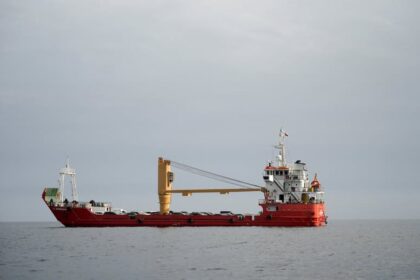
The financial structure is deliberate and sophisticated. Oil tankers face opening fees of approximately $1 per barrel, meaning a Very Large Crude Carrier (VLCC) with a typical capacity of 2 million barrels could generate a $2 million toll per transit. This pricing mechanism targets the roughly 20% of globally traded oil and natural gas that normally transits the strait, creating a potentially massive revenue stream for Tehran while bypassing traditional financial systems.
Selective Passage: Geography, Alliances, and Exemptions
The toll system operates on a differential basis, rewarding friendly nations while restricting access for adversaries. Iran has indicated that vessels from countries including India, China, Russia, Pakistan, and Iraq receive preferential treatment or exemptions, while ships linked to the US, Israel, and their allies face denial or higher fees.
A recent case involving Pakistan illustrates the operational mechanics. Iran agreed to allow 20 Pakistani vessels to transit through the strait, but Pakistan possessed only a few flagged ships in the Gulf. Islamabad subsequently approached major commodity traders to inquire whether they had vessels that could temporarily sail under Pakistani flags to qualify for the preferential arrangement.
Iran has actively reassured specific trading partners of safe passage. The Iranian Embassy in New Delhi posted on social media platform X, accompanied by a wink emoji, that Indian friends are in safe hands, signaling preferential treatment for one of the world’s largest oil importers. Several Indian-flagged vessels have already passed through after coordination with Iranian authorities.
Digital Currency Integration: Yuan, Stablecoins, and Bitcoin
The payment architecture extends beyond traditional currency markets into digital assets, creating a multi-layered sanctions evasion mechanism. While the yuan settles outside the SWIFT-dependent dollar clearing system entirely, Iran has also embraced cryptocurrency payments including stablecoins pegged to fiat currencies and, according to some reports, Bitcoin itself.
The preference for stablecoins over volatile cryptocurrencies like Bitcoin or Ethereum reflects operational pragmatism. Stablecoins eliminate price volatility between invoice and settlement, making them functionally equivalent to dollar wire transfers for the receiving party while remaining nominally outside the dollar clearing system. This architecture creates direct enforcement pressure on major stablecoin issuers including Tether and Circle, as the Office of Foreign Assets Control (OFAC) has been attempting to close these channels through regulatory pressure.
Chinese experts have proposed expanding the system further. Wang Yiwei, director of the Institute of International Affairs at Renmin University, suggested that tolls and settlements could be tied to oil prices or use exportable digital tokens from China, creating what he termed innovative settlement mechanisms that coordinate across computing power, oil, dollars, and security.
Legal Challenges and Freedom of Navigation
The toll system faces significant legal challenges under international maritime law. The Strait of Hormuz is classified as an international strait under the United Nations Convention on the Law of the Sea (UNCLOS), which upholds the right of transit passage and prohibits charging fees for mere navigation through such waterways. Article 17 of the treaty guarantees innocent passage for ships that do not threaten coastal states.
Philippe Delebecque, a professor and maritime law expert at Paris’ Sorbonne University, emphasized the foundational principles at stake.
Freedom of navigation has always been recognised, including specifically in straits. The sea doesn’t belong to anyone.
Neither Iran nor the United States has ratified UNCLOS, though 172 countries have. Legal experts note that not having ratified the convention does not grant total freedom of action, as customary international law still applies. Julien Raynaut, who heads the French Association of Maritime Law, warned that an Iranian tollbooth could set dangerous precedents, potentially leading China to conclude it could restrict movement in the Taiwan Strait or encouraging other nations to block the Strait of Gibraltar or the Strait of Malacca.
Economic Impact and Revenue Calculations
If fully implemented at scale, the toll system could generate substantial revenue for Iran while simultaneously constraining global oil flows. Based on pre-conflict traffic levels, when approximately 53 tankers arrived daily carrying roughly 21.5 million barrels of oil, a $1-per-barrel toll would generate $21.5 million daily, or approximately $7.74 billion annually. This would represent a significant income stream, though still below Iran’s recent annual oil export revenue of roughly $50 billion to $55 billion.
Currently, with Strait of Hormuz traffic near zero due to security concerns, Iran may be collecting roughly $5 million daily in tolls, or about $150 million monthly, according to Frontier Investments CEO Louis LaValle. Rebecca Babin, senior energy trader at CIBC Private Wealth, noted that a toll structure effectively puts a straightjacket on flows, constraining throughput even when vessels are willing to pay.
The economic ramifications extend to oil pricing. S&P Global reported that the spot price for physical Brent crude cargoes jumped to $141.36, the highest level since the 2008 financial crisis, reflecting tight physical supply after the disruption. President Donald Trump has alternatively proposed establishing tolls as a joint venture between Washington and Tehran, though White House officials later stated opposition to Iranian-controlled tolls.
Challenging Dollar Hegemony: The Geopolitical Dimension
Beyond immediate revenue and shipping logistics, the yuan-based toll system represents a strategic challenge to the dominance of the US dollar in global energy markets. For decades, approximately 80% of international oil transactions have been settled in dollars, creating the petrodollar system that underpins American financial influence. By institutionalizing yuan settlement for critical energy transit, Iran and China are actively working to create a multipolar financial world.
Kenneth Rogoff, an economics professor at Harvard University and former chief economist at the International Monetary Fund, analyzed the dual motivations driving Tehran.
At one level, Iran is aiming to poke its thumb in the United States’s eye, adding insult to injury. At another level, Iran is dead serious about preferring yuan to avoid US sanctions and to cultivate its ally, China, which has been moving steadily to redenominate its own trade, and that of the BRICS nations into yuan.
Alicia Garcia-Herrero, chief economist for the Asia Pacific at Natixis in Hong Kong, cautioned that this development alone will not de-dollarize the world, but adds incremental pressure and normalizes alternatives in energy flows. She emphasized that far-reaching de-dollarization would require participation from Gulf states, which have priced oil in dollars since the 1970s when Saudi Arabia agreed to exclusive dollar use in exchange for US security guarantees.
The Future of Maritime Trade and Great Power Competition
The institutionalization of the Hormuz toll system, whether temporary or permanent, signals a fundamental shift in how strategic chokepoints might be managed in an era of great power competition. Dan Steinbock, founder of the consultancy Difference Group, suggested that while dollar supremacy will not change in the short term, the growing use of yuan could chip away at US dominance in specific sectors over time through gradual erosion rather than abrupt substitution.
Analysts note that the system creates a dilemma for global powers. Countries dependent on Gulf energy face a balancing act between securing passage for their vessels and avoiding backlash from Washington, which has shown willingness to upend longstanding relationships. The IRGC Navy has stated that the strait will never return to its former state, particularly regarding US and Israeli access, suggesting Tehran views this as a long-term strategic asset rather than a temporary wartime measure.
The coming weeks will determine whether the toll system becomes a durable feature of global energy markets or collapses under international pressure and legal challenges. Either outcome will shape global oil pricing, shipping costs, and the balance of currency power in energy markets for years to come.
Key Points
- Chinese payment stocks including CNPC Capital and Lakala Payment surged up to 10% after confirmation that yuan is being accepted for Strait of Hormuz transit fees
- Iran has established a formalized toll system charging approximately $1 per barrel (roughly $2 million per large tanker) administered by IRGC-linked intermediaries
- Vessels must submit detailed documentation for geopolitical vetting and receive VHF passcodes for naval escort through the strait
- Payments accepted in Chinese yuan, stablecoins, and potentially Bitcoin, bypassing the SWIFT dollar clearing system
- Friendly nations including India, Pakistan, China, and Russia receive preferential treatment while US and Israeli-linked vessels face restrictions
- The system challenges international maritime law under UNCLOS and threatens dollar hegemony in global energy markets
- Potential annual revenue could reach $7.7 billion if traffic normalizes, though current collections are estimated at $150 million monthly
- Despite a US-Iran ceasefire, over 800 vessels remain stranded in the Gulf as insurance costs surge and military risks persist