Historic Legal Challenge Filed in Jakarta
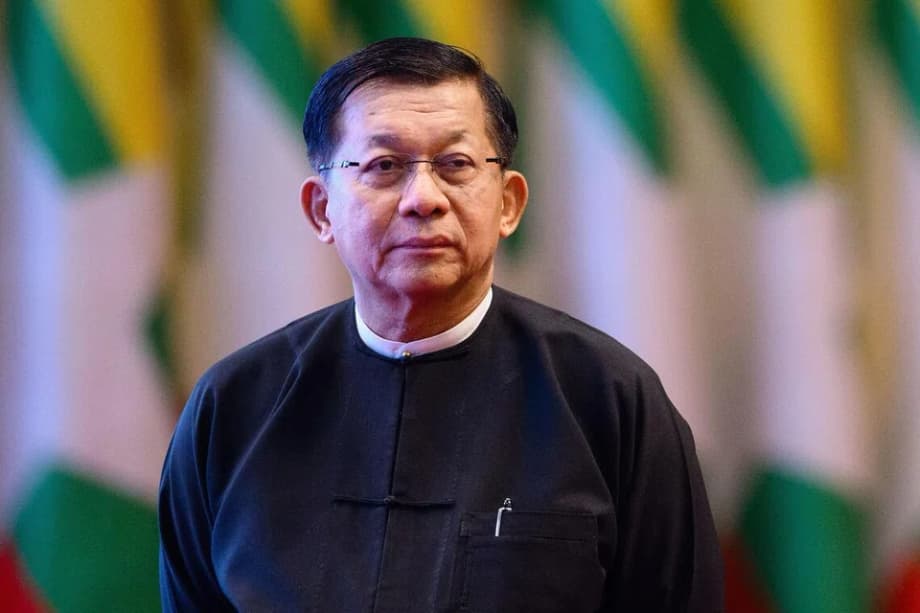
On April 6, 2026, Indonesian prosecutors formally received a criminal complaint accusing Myanmar’s newly elected President Min Aung Hlaing of genocide against the Rohingya people, marking the first application of the country’s expanded universal jurisdiction laws. The filing, submitted by Rohingya genocide survivor Yasmin Ullah alongside prominent Indonesian legal figures and human rights advocates, alleges that the military leader orchestrated systematic atrocities including mass killings, sexual violence, and forced displacement that drove more than 730,000 Rohingya Muslims from their homes in 2017.
The complaint arrives just days after Min Aung Hlaing consolidated his grip on power through a parliamentary vote on April 3, an election Western governments described as fraudulent. The 69-year-old former general, who led the February 2021 coup that overthrew Myanmar’s elected government, now faces mounting legal pressure across multiple jurisdictions while attempting to legitimize his rule through a transition from military dictator to civilian head of state.
The Architects of the Complaint
The complaint to Indonesia’s Attorney-General’s Office represents a coalition of civil society organizations determined to hold Myanmar’s military leadership accountable. Yasmin Ullah, executive director of the Rohingya Women Collaborative, joined former Attorney General Marzuki Darusman and Feri Amsari of Themis Indonesia in submitting evidence gathered by frontline investigators operating inside Myanmar. The filing includes documentation of the military’s clearance operations in northern Rakhine State, where battalions from the 33rd and 99th Light Infantry Divisions allegedly carried out coordinated attacks on Rohingya villages beginning August 25, 2017.
Ullah, who fled Myanmar as a three-year-old child in 1995 and spent sixteen years in Thailand before resettling in Canada, provided personal testimony detailing the plight of family members still in Rakhine State. Her mother worked sixteen-hour days selling street food to survive in Thailand, and Ullah described the 2017 violence as reaching a genocidal intensity that directly affected her relatives.
It is the first time under Indonesia’s new penal code that a case has been officially received, and I warmly welcome this historic development as a milestone for all Rohingya people on their long march to justice and accountability.
Ullah also stressed the personal nature of the accountability sought, describing the pain of watching the alleged perpetrator of her people’s suffering assume presidential office.
The architect of our extermination and other mass atrocities across Myanmar cannot be allowed to sit comfortably in the presidential palace without facing the consequences of his heinous crimes.
Legal Basis and Universal Jurisdiction
The legal action relies upon Indonesia’s revised penal code, which entered into force in January 2026 and explicitly incorporates the principle of universal jurisdiction for the crime of genocide. This legal doctrine permits national courts to prosecute individuals for the most serious international crimes regardless of where the offenses occurred or the nationality of victims and perpetrators. Feri Amsari explained that the new law unambiguously asserts Indonesia’s authority to act even when neither victims nor accused are Indonesian citizens.
Marzuki Darusman, who previously led the UN Independent International Fact-Finding Mission on Myanmar, emphasized Indonesia’s obligations under the 1948 Genocide Convention. He argued that the international community has a duty to prevent ongoing atrocities, pointing to evidence of current systematic displacement and degrading denial of rights affecting hundreds of thousands of Rohingya still in Myanmar or languishing in refugee camps.
The principle of universal jurisdiction has gained traction as a tool to combat impunity when national justice systems fail or when international criminal courts face jurisdictional limitations. Indonesia’s acceptance of this case represents a substantial development in Southeast Asia, where regional mechanisms have traditionally prioritized non-interference over accountability.
The 2017 Military Offensive and Its Aftermath
The allegations center on the so-called clearance operations launched by Myanmar’s armed forces in August 2017, following attacks on security outposts by the Arakan Rohingya Salvation Army. Under Min Aung Hlaing’s leadership, the military responded with overwhelming force across northern Rakhine State. Survivors fleeing to Bangladesh described soldiers conducting mass rape, burning villages to the ground, and throwing babies into fires. The offensive displaced at least 730,000 Rohingya into Cox’s Bazar district, where approximately 1.2 million refugees now reside in overcrowded camps dependent on humanitarian aid.
The Rohingya, denied citizenship under Myanmar’s 1982 nationality law, constitute the world’s largest stateless population. Those remaining in Rakhine State face severe restrictions on movement, access to education and healthcare, and economic opportunities. Advocacy groups describe these conditions as calculated to destroy the group through deliberate state policies of racial discrimination and segregation, amounting to an ongoing genocide.
Since the 2021 coup, the humanitarian crisis has deepened. According to the UN Human Rights Office, airstrikes by Myanmar armed forces killed at least 982 civilians in 2025 alone, representing a 53 percent increase from the previous year. More than 400 aerial attacks occurred during the electoral period between December 2025 and January 2026, killing over 170 civilians. At least 287 children were killed in 2025, making it the deadliest year for minors since the coup began.
Mounting International Legal Pressure
The Indonesian filing adds to a growing web of international legal actions targeting Min Aung Hlaing and the Myanmar military leadership. At the International Court of Justice in The Hague, Gambia has pursued a genocide case since 2019, with proceedings ongoing and a verdict expected in coming months. In November 2024, International Criminal Court Prosecutor Karim Khan requested an arrest warrant for Min Aung Hlaing regarding crimes against humanity committed against the Rohingya during 2016 and 2017.
National jurisdictions have increasingly exercised universal jurisdiction. An Argentine court issued arrest warrants in February 2025 for Min Aung Hlaing and 24 other senior officials following a complaint by the Burmese Rohingya Organisation UK. Earlier this year, Timor-Leste became the first ASEAN member to initiate legal action against another member state when it appointed a prosecutor to examine war crimes in Chin State, prompting Myanmar to expel Timor-Leste’s diplomatic head within seven days. A previous attempt to file charges in the Philippines in October 2023 preceded these successful filings.
Chris Gunness, director of the Myanmar Accountability Project, characterized the accumulation of cases as signaling the dawn of universal jurisdiction within ASEAN. He noted that Myanmar has become a regional epicenter for transnational criminal enterprises including scam operations, drug trafficking, and human trafficking that affect all of Southeast Asia. Gunness described the Indonesian filing as unprecedented, noting that fresh genocide allegations emerged just as Min Aung Hlaing claimed what he called a fake presidency following sham elections. He characterized the leader as a Mickey Mouse dictator committing genocide against his own people while simultaneously claiming to be their president.
Consolidation of Power Through Sham Elections
The genocide complaint arrived three days after Myanmar’s military-dominated parliament elected Min Aung Hlaing as president on April 3, 2026, completing a transition from military dictator to civilian head of state that Western governments immediately condemned as fraudulent. The election, conducted in December 2025 and January 2026, saw the military-backed Union Solidarity and Development Party claim victories after authorities banned at least 40 political parties, imprisoned pro-democracy leaders including Aung San Suu Kyi, and restricted voting to just 145 of 330 townships in areas under regime control.
The military reserved a quarter of parliamentary seats for itself, making Min Aung Hlaing’s election to the top office a foregone conclusion. Only eleven percent of the population participated in the vote, with many casting ballots out of fear rather than enthusiasm amid a climate of terror created by the military.
His inauguration on April 10 drew congratulatory messages from officials in China, Thailand, Cambodia, Kazakhstan, Belarus, Nicaragua, and Russia, effectively recognizing the new civilian government. India’s Minister of State for External Affairs Kirti Vardhan Singh attended the swearing-in ceremony in Naypyidaw, though New Delhi has not formally congratulated the general. ASEAN as a bloc has refused to recognize the election results, though Philippine Foreign Secretary Maria Theresa Lazaro expressed optimism that something positive might emerge from the process.
Indonesia’s Unique Position
As the world’s most populous Muslim-majority nation and host to ASEAN’s headquarters, Indonesia occupies a unique position in this legal drama. Approximately 7,000 Rohingya refugees currently reside in Indonesia, primarily in western Aceh province, where they have arrived by boat after perilous sea journeys from Myanmar or Bangladesh camps. These survivors live in difficult conditions, particularly following reductions in international aid funding, with many facing tough circumstances in refugee shelters.
Yasmin Ullah specifically appealed to Indonesia’s Islamic principles of accountability and solidarity with persecuted Muslim populations. She urged Indonesian authorities to uphold the rule of law, arguing that continued business as usual with the Myanmar junta perpetuates instability across the region. She implored the leadership of ASEAN to consider the future they want for the region, suggesting that economic prosperity requires addressing the root cause of instability embodied by the Myanmar military.
Indonesia currently holds the presidency of the UN Human Rights Council, adding diplomatic weight to its legal obligations under the Genocide Convention. The country faces pressure to balance its leadership role in human rights forums against traditional ASEAN preferences for non-interference in member states’ internal affairs.
The complaint has been forwarded to a specialized division within the Attorney-General’s Office for review. While acceptance does not guarantee prosecution, legal experts note that even a formal investigation or arrest warrant issued in absentia would severely constrain Min Aung Hlaing’s ability to travel and engage with international partners. The case represents a rare opportunity to establish accountability within Southeast Asia, where regional mechanisms have largely failed to produce tangible results for victims of the Myanmar crisis.
The Bottom Line
- Indonesian prosecutors formally accepted a genocide complaint against Myanmar President Min Aung Hlaing on April 6, 2026, the first case under the country’s new universal jurisdiction law
- The filing accuses the military leader of orchestrating the 2017 clearance operations that forced over 730,000 Rohingya Muslims into Bangladesh
- Rohingya survivor Yasmin Ullah and former Indonesian Attorney General Marzuki Darusman joined civil society groups in submitting evidence to the Attorney-General’s Office
- Min Aung Hlaing was elected president on April 3 following elections Western governments described as fraudulent, consolidating power five years after leading a coup
- The case adds to existing international legal actions including ICJ proceedings by Gambia, an ICC arrest warrant request, and warrants from Argentina and Timor-Leste
- Indonesia, as the world’s largest Muslim-majority country and ASEAN host, faces diplomatic pressure to balance legal obligations with regional stability concerns