The Consumption Conundrum
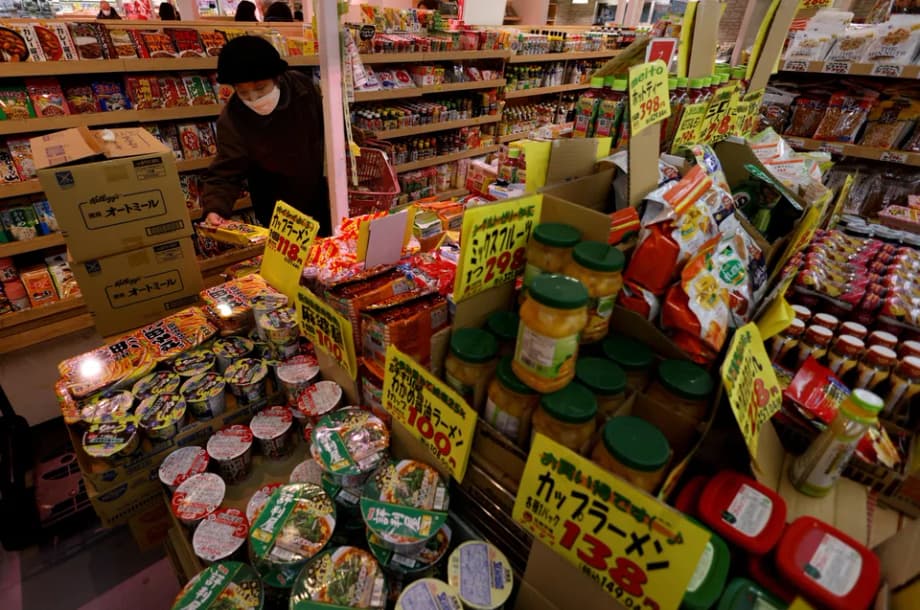
Japan finds itself trapped in an economic puzzle that defies traditional expectations. Household spending adjusted for inflation fell 1.8% in February from a year earlier, marking the third consecutive monthly decline and accelerating from January’s 1% retreat. This retreat came even as real wages turned positive in January for the first time in over a year, creating a stark contradiction that challenges conventional economic wisdom. Typically, rising purchasing power should translate into stronger consumption, yet Japanese households are tightening their budgets rather than celebrating income gains. The data, released by the Ministry of Internal Affairs and Communications on Tuesday, surprised economists who had anticipated a milder 0.8% drop. The severity of the decline signals deepening caution among consumers in the world’s third-largest economy, where domestic consumption accounts for more than half of total output and serves as the primary engine of growth.
Breaking Down the Numbers
The February report revealed uneven patterns across spending categories that tell a complex story of priorities shifting under pressure. Education and transportation expenditures led the downturn, while healthcare outlays provided a rare bright spot in an otherwise gloomy landscape. On a seasonally adjusted basis, however, the picture appeared slightly less grim than the headline numbers suggest. Overall spending actually rose 1.5% from January, offering a potential hint of stabilization beneath the gloomy year-on-year comparisons and suggesting that sequential momentum might be building slowly.
This monthly improvement coincided with consumer confidence reaching its highest level in nearly seven years during February, according to separate survey data. Yet the persistent year-on-year declines suggest that Japanese households remain hesitant to loosen their purse strings despite improving sentiment and statistical wage gains. The divergence between confidence surveys and actual spending behavior highlights the complexity of consumer psychology after years of relentless inflationary pressure that has conditioned shoppers to expect the worst.
The Wage-Price Disconnect
Monday’s decline arrived even after inflation-adjusted wages turned positive in January, breaking a prolonged slump that had persisted through much of 2025. Data expected Wednesday suggest real wages remained in positive territory for February, extending the brief recovery in purchasing power. Theoretically, rising real wages should translate into increased spending at retail counters and restaurants. In practice, Japanese households appear to be treating wage gains with skepticism born from experience.
Yukihiro Morita, chief economist at Meiji Yasuda Research Institute, captured this disconnect precisely in his analysis of the trend.
Real consumption remains weak. Although real income has risen, it is not immediately affecting consumption.
The lag between income recovery and spending response reflects what economists call inflation fatigue. After enduring price growth above the Bank of Japan’s 2% target for four consecutive years through 2025, households have grown accustomed to prioritizing necessities while cutting discretionary expenses regardless of monthly paycheck fluctuations.
The pressure on household budgets continues to mount without relief. Food and beverage companies planned price increases on nearly 2,800 items this month, the highest volume since October, according to a survey by Teikoku Databank. A majority of firms cited higher wage bills as the primary driver behind these hikes, suggesting that the very wage growth meant to boost consumption may instead be fueling cost-push inflation that erodes purchasing power before it can stimulate demand.
Government Interventions Face Headwinds
Prime Minister Sanae Takaichi has deployed aggressive fiscal measures aimed at breaking this cycle of caution before it entrenches further. Her administration rolled out utility subsidies at the start of the year to cap electricity and gas bills for households struggling with seasonal costs. When the conflict in Iran sparked a rally in global oil markets, she quickly added emergency measures to restrain petrol prices at the pump. These interventions form part of a broader 17.7 trillion yen stimulus package designed to cushion the blow from rising prices and protect living standards.
However, these fiscal efforts create immediate tension with monetary policy direction. The Bank of Japan has been tightening policy to combat inflation, raising rates to 0.75%, the highest level in 30 years, and reducing bond purchases. Deloitte analysts note that this fiscal expansion risks working against the central bank’s inflation-fighting mission by stimulating demand while the BOJ tries to cool it. The combination of government spending and central bank restraint has contributed to rising long-term interest rates, with 10-year government bond yields jumping above 2.3% in January for the first time since 1998.
The Central Bank’s Dilemma
As the Bank of Japan approaches its April 28 policy decision, officials face a difficult calculation that could determine the trajectory of the recovery. Governor Kazuo Ueda must determine whether external shocks, particularly from the Middle East conflict, will primarily stoke inflation or dampen investment and consumption through uncertainty. The central bank has signaled readiness to continue raising rates if economic developments align with forecasts, but weak consumption data complicates this normalization narrative considerably.
Wage trends offer one guidepost for policymakers navigating these crosscurrents. The Rengo labor federation reported that workers secured wage increases averaging 5.09% as of early April, nearly matching last year’s three-decade high of 5.25%. These results from the annual spring wage negotiations, known as shunto, theoretically support the Bank of Japan’s quest for a virtuous cycle of rising prices and wages. Yet if households refuse to spend those higher wages, the cycle breaks down and the theoretical foundation for further rate hikes crumbles.
Global Risks Compound Uncertainty
The escalating conflict in the Middle East looms over Japan’s economic outlook with particular menace for import-dependent industries. Authorities are assessing how the war might ripple through the economy, particularly through energy markets and industrial supply chains. Morita warned specifically that shortages of naphtha and other petrochemical materials could increase production costs throughout Japanese manufacturing.
If these increased production costs are passed on to consumers, leading to higher prices for food and other goods, consumption is likely to remain sluggish.
The risk of imported inflation returning just as domestic price pressures moderate threatens to extend the inflation fatigue already gripping households and delay any recovery in retail activity.
Japan’s heavy dependence on Middle East oil makes it particularly vulnerable to supply disruptions compared to energy-independent nations. While government subsidies have limited gasoline price hikes to approximately 2.4% between late February and early March, authorities have prepared contingency plans including potential releases from strategic petroleum reserves. Public and private reserves combined could cover domestic demand for approximately 254 days, though any release would likely require coordination with G7 partners to maximize effectiveness and stabilize markets.
Historical Echoes
This pattern of rising wages failing to spark consumption is not unprecedented in recent Japanese economic history, suggesting deep structural issues rather than temporary anomalies. In August 2024, real wages rose 1.1% year-on-year, boosted by summer bonuses, yet household spending fell 1.4% during the same period. Similarly, April 2025 saw spending decline unexpectedly even as nominal wages climbed and the labor market tightened. The OECD observed in its mid-2025 assessment that consumption remained flat in the first quarter of 2025 despite rising nominal wages and strong labor market performance.
These recurring episodes suggest structural rather than cyclical factors at work in the Japanese economy. Japan’s aging population continues to reduce the working-age cohort, shrinking the base of potential consumers and changing the composition of demand toward healthcare and away from education or durable goods. Demographic headwinds have persisted for eleven consecutive years, creating a fundamental drag on domestic demand that temporary wage increases struggle to overcome. Additionally, years of deflationary psychology followed by sudden inflation have conditioned households to prioritize precautionary saving over immediate gratification, a behavioral pattern that higher paychecks have not yet broken.
Key Points
- Household spending fell 1.8% year-on-year in February, worse than the 0.8% decline economists expected
- Real wages turned positive in January for the first time in over a year, yet consumption has declined for three straight months
- Prime Minister Takaichi has introduced utility and petrol subsidies to cushion price pressures, creating tension with the Bank of Japan’s tightening policy
- The Bank of Japan faces an April 28 decision on interest rates amid conflicting signals from wage growth and weak consumption
- Rengo labor union reported 5.09% wage increases in spring negotiations, nearly matching last year’s three-decade high
- Middle East conflict risks importing inflation through higher oil and naphtha costs, potentially squeezing household budgets further
- Consumer confidence reached a seven-year high in February despite the spending decline, suggesting potential for future recovery if inflation moderates