The Financial Crossroads
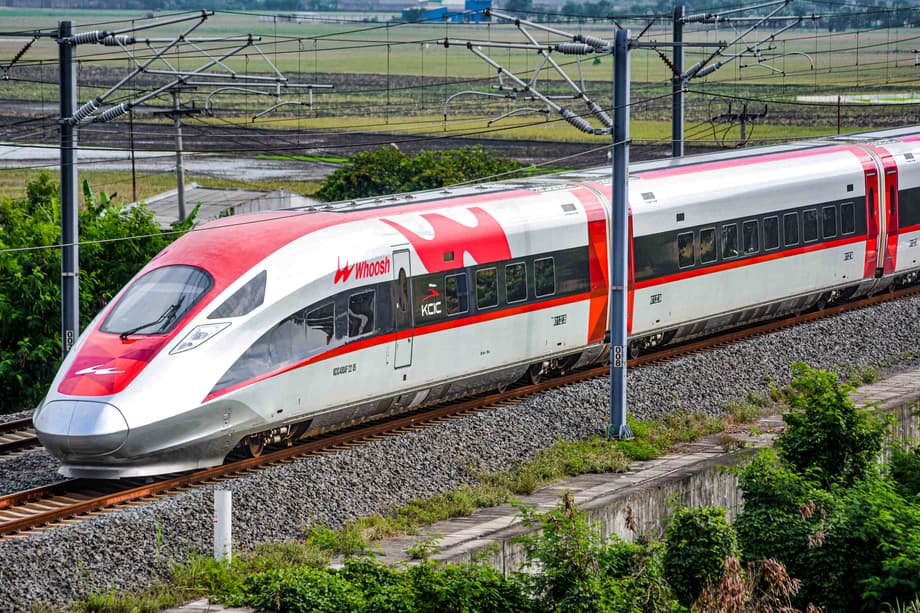
Indonesia has reached a decisive milestone in managing one of its most challenging infrastructure liabilities. Officials confirmed this week that the government has finalized a comprehensive debt restructuring plan for the Jakarta-Bandung high-speed railway, popularly known as Whoosh, marking a critical step toward stabilizing the $7.3 billion project that has strained state finances since its inception.
Dony Oskaria, chief operating officer of Danantara Indonesia, the sovereign wealth fund now overseeing the troubled asset, announced that the restructuring framework is complete. Speaking at the Presidential Palace Complex in Jakarta, Oskaria indicated that a public announcement detailing the specific terms would follow within two weeks, pending final administrative procedures including formal agreement signatures.
“We will reveal the whole plan then. I have discussed this with Minister [Purbaya]. An agreement has been reached. We have completed the assessments and other matters.”
The urgency of this resolution cannot be overstated. The 142-kilometer bullet train, Southeast Asia’s first fully operational high-speed rail line, has become a symbol of both technological ambition and fiscal vulnerability. Since commencing operations in October 2023, the project has grappled with massive cost overruns, construction delays, and a debt burden that threatens to destabilize Indonesia’s state railway operator for decades to come.
Breaking Down the Billion-Dollar Burden
Understanding the scale of Indonesia’s financial commitment requires examining the project’s complex funding architecture. The China Development Bank provided approximately 75 percent of the total construction costs through a $4.5 billion loan, while the remaining 25 percent came from equity contributions split between Indonesian and Chinese consortium members operating under PT Kereta Cepat Indonesia-China (KCIC). This financing model left the Indonesian side heavily leveraged from the outset, with minimal equity cushion to absorb unexpected costs.
However, the financial picture deteriorated significantly when the project encountered unforeseen challenges. Land acquisition complications, pandemic-related disruptions, and construction setbacks triggered an 18 trillion rupiah ($1.2 billion) cost overrun in February 2023. To cover these additional expenses, operators secured supplementary financing at considerably less favorable terms than the original facility. The overrun financing pushed total project costs to $7.27 billion, or approximately 118.37 trillion rupiah at current exchange rates.
The interest rate structure reveals the escalating cost of borrowing. While China set a 2 percent annual rate for the initial loan tranche covering $6.02 billion, the additional borrowing to cover overruns carries a 3.4 percent interest rate. This disparity has amplified debt servicing costs at a time when operational revenues remain insufficient to cover expenses. According to financial reports, Whoosh recorded operating losses of 4.2 trillion rupiah ($258 million) in 2024 alone, with Indonesian state-owned railway operator PT Kereta Api Indonesia (KAI) forced to absorb 2.23 trillion rupiah ($137 million) of that deficit due to its majority stake in the operating consortium. The first half of 2025 brought additional losses of 1.6 trillion rupiah ($98.3 million), further straining KAI’s financial reserves and limiting its ability to fund maintenance and expansion elsewhere.
From Promise to Predicament
The Jakarta-Bandung high-speed rail emerged from intense international competition. In 2015, Indonesia selected China’s bid over a rival Japanese proposal, attracted by Beijing’s promises of relaxed financing arrangements, technology transfer agreements, and joint venture opportunities that Tokyo did not match. Japan had initially offered financing at 0.1 percent interest through a government-to-government framework, but Indonesian authorities ultimately chose the Chinese option despite its higher interest rates, citing commercial confidentiality and the comprehensive partnership package offered by Beijing. Luhut Binsar Pandjaitan, who led the bullet train committee from 2021 through 2023, was among the officials advocating for the Chinese partnership.
Construction began in 2016 with expectations of a seamless build, but reality proved more complicated. Land procurement issues plagued the route from the outset, requiring complex negotiations with property owners across densely populated West Java. The COVID-19 pandemic then disrupted supply chains and labor availability, pushing completion dates back by years. When the line finally opened in October 2023, four years behind schedule, the project had already cemented its status as the most expensive infrastructure venture undertaken under China’s regional infrastructure diplomacy, surpassing comparable railways in Laos, Ethiopia, and Kenya which typically cost between $4 and $6 billion.
Despite these setbacks, the train has demonstrated operational success in passenger terms. The service carried 2.9 million passengers in the first half of 2025, representing a 10 percent increase over the same period in 2024. Travel time between the two cities has collapsed from three hours to approximately 40 minutes, offering genuine utility for commuters. Yet these operational achievements have not translated into financial sustainability, leaving the government to confront the gap between social benefit and fiscal reality.
Corporate Entanglements and Accumulating Losses
The project operates through a complex corporate structure that has complicated debt resolution. KCIC manages the railway as a joint venture between PT Pilar Sinergi BUMN Indonesia (PSBI), a consortium of four Indonesian state firms, and Beijing Yawan HSR Co Ltd, representing five Chinese companies. PSBI holds 60 percent of shares while Chinese entities control 40 percent. Within the Indonesian consortium, KAI serves as the majority shareholder at 58.53 percent, with PT Wijaya Karya (WIKA), PT Jasa Marga, and PT Perkebunan Nusantara VII holding the remaining equity.
This arrangement has proven financially devastating for KAI, which reported losses of 951.48 billion rupiah ($58.4 million) in the first half of 2025 alone from its Whoosh exposure. The debt structure, which relied heavily on foreign loans from a single creditor, created concentrated credit risk that now threatens to compromise KAI’s ability to invest in broader railway modernization across the archipelago. Danantara has warned that if KAI remains weighed down by unfavorable debt structures from the current project, its capacity to participate in future rail electrification projects on the Jakarta-Cikampek, Jakarta-Sukabumi, and Jakarta-Rangkasbitung lines could be permanently compromised.
Finance Minister Purbaya Yudhi Sadewa has publicly resisted proposals to transfer these liabilities directly to the state budget (APBN), arguing that such a move would establish a dangerous precedent whereby private sector losses become public obligations while profits remain privatized. Instead, Sadewa has advocated using dividends from state-owned enterprises flowing to Danantara, estimated at 80 trillion rupiah, to service the infrastructure debt, keeping the burden within the state enterprise ecosystem rather than general government revenues.
The Restructuring Strategy Takes Shape
Danantara’s finalized plan aims to reconfigure the debt’s temporal and financial structure without eliminating the underlying obligation. Dony Oskaria emphasized that the debt will remain on the books, but with modified terms intended to prevent disruption to Indonesia’s broader railway sector. The restructuring targets an extension of loan repayment periods beyond the current schedule, potential interest rate reductions from the current 2-3.4 percent range, and clarification of currency denominations for repayment to reduce exchange rate risk.
President Prabowo Subianto has taken personal ownership of the resolution process, convening limited cabinet meetings in late October 2025 to demand swift action. The president instructed Coordinating Minister for Economic Affairs Airlangga Hartarto, Finance Minister Sadewa, and Danantara CEO Rosan Roeslani to calculate optimal scenarios including extended loan periods. State Secretary Prasetyo Hadi conveyed the presidential directive that the government must devise a scheme that ensures project sustainability without crippling fiscal capacity.
“Do not worry about the noise surrounding Whoosh. I have studied the problem, there is no issue. I take full responsibility. Indonesia is not a trivial country. Everything has been calculated.”
The negotiations involve delicate diplomatic considerations. China retains significant strategic interest in the project’s success as a showcase for its high-speed rail technology in emerging markets. Dony Oskaria confirmed that Chinese partners will maintain their equity stakes following restructuring, and technical teams are preparing for imminent travel to Beijing to negotiate directly with the China Development Bank or National Development and Reform Commission officials. Purbaya Yudhi Sadewa has indicated he wishes to clarify which Chinese authority will serve as the primary counterpart before finalizing the delegation’s departure, ensuring the government does not suffer substantial losses during the negotiations.
Regional Implications for Chinese Infrastructure Diplomacy
The Whoosh debt restructuring sends ripples throughout Southeast Asia, where multiple nations are grappling with similar China-financed railway projects. The Jakarta-Bandung line represents the first high-speed rail completion in the region, making its financial outcome a reference point for Beijing’s infrastructure lending practices. The project has already become the subject of analysis regarding whether Chinese railway diplomacy is creating sustainable development or unsustainable debt burdens.
Precedents elsewhere suggest difficult negotiations ahead. Thailand and Malaysia have both restructured high-speed rail projects originally backed by Chinese loans, reducing their reliance on Beijing financing after disputes over debt sustainability and corruption allegations. The Philippines cancelled three railway projects worth $5 billion in Chinese concessional loans in 2023 amid deteriorating bilateral relations.
Laos presents a cautionary tale. The China-Laos railway, completed in 2021, has generated insufficient revenue to cover debt servicing, with the Asian Development Bank warning that the project presents very large contingent liability risks for the smaller economy. Cambodia continues pursuing a $4 billion high-speed rail proposal with Chinese backing, while Myanmar’s military junta seeks financing for the troubled Muse-Mandalay line despite the country’s crippled economy.
Vietnam watches particularly closely. Hanoi approved Chinese loans for a conventional northern railway in February and harbors ambitions for a $70 billion north-south high-speed line. Indonesia’s ability to secure favorable restructuring terms without ceding additional strategic assets will likely influence Vietnam’s approach to financing negotiations for its own rail ambitions.
Corruption Scrutiny Clouds the Project
Complicating the financial resolution, the Corruption Eradication Commission (KPK) launched a preliminary investigation into the project earlier in 2025. Former minister Mahfud MD raised public concerns about construction costs reaching approximately $52 million per kilometer, nearly triple comparable projects in China where costs run $17-18 million per kilometer.
The probe examines potential irregularities in procurement and financing decisions, including the selection of Chinese financing at 2-3.4 percent interest rates over Japanese government-to-government loans offered at 0.1 percent. Investigators are gathering evidence regarding whether commercial confidentiality claims masked preferential treatment or inflated budgeting. No formal suspects have been named, but the investigation tests the KPK’s willingness to scrutinize legacy projects associated with previous administrations.
Expansion Dreams Await Financial Clarity
Ambitious plans to extend the high-speed line eastward to Surabaya and potentially Banyuwangi remain contingent on resolving the current debt crisis. Coordinating Minister for Infrastructure Agus Harimurti Yudhoyono confirmed that the government has suspended detailed planning for the extension until KCIC’s financial structure stabilizes, noting that he has convened meetings with the Finance Ministry and Danantara to advance both the restructuring and the extension planning.
President Prabowo has articulated a vision of integrating Java through high-speed rail, reducing both traffic congestion and carbon emissions while cutting travel times between the capital and East Java to approximately three hours. However, Agus Harimurti Yudhoyono emphasized that addressing the existing financial burden takes precedence over expansion.
“It would be better to tackle the financial problem first, identifying the best solution to it, before taking forward plans for further development.”
The extension would require substantial additional investment beyond the current $7.3 billion commitment, raising questions about financing mechanisms for future segments. The government initially envisioned reaching Surabaya, the capital of East Java, but Prabowo later revealed ambitions to push the line further east to Banyuwangi, the easternmost district of Java. Officials believe that if a train trip from Jakarta to Surabaya can be completed within around three hours, it will reshape development maps and spur economic growth along the railway corridor. However, these visions remain theoretical until the existing debt burden achieves sustainable restructuring.
Key Points
- Indonesia has finalized a debt restructuring plan for the $7.3 billion Whoosh high-speed railway, with details to be announced within two weeks following discussions between Danantara and Finance Minister Purbaya Yudhi Sadewa.
- The project carries approximately $7 billion in debt, with 75 percent owed to the China Development Bank at interest rates between 2 percent on initial loans and 3.4 percent on cost overrun financing.
- State railway operator KAI absorbed $137 million in losses in 2024 and $58.4 million in the first half of 2025 due to its 58.53 percent majority stake in the operating consortium PT PSBI.
- President Prabowo Subianto has mandated ministers to resolve the debt without relying solely on state budget funds, preferring state enterprise dividends or extended loan terms to avoid setting a precedent for privatizing profits while nationalizing losses.
- The Corruption Eradication Commission is investigating potential irregularities in procurement and the selection of higher-interest Chinese loans over cheaper Japanese alternatives offered at 0.1 percent interest.
- Plans to extend the line to Surabaya and Banyuwangi remain on hold until the current debt restructuring is completed and operational finances stabilize, with Minister Agus Harimurti Yudhoyono coordinating infrastructure planning.
- China will retain its 40 percent equity stake in the project following restructuring, with negotiations ongoing regarding repayment timelines, interest rate reductions, and currency denominations for the $7 billion liability.