The Strait of Hormuz Becomes a Battlefield
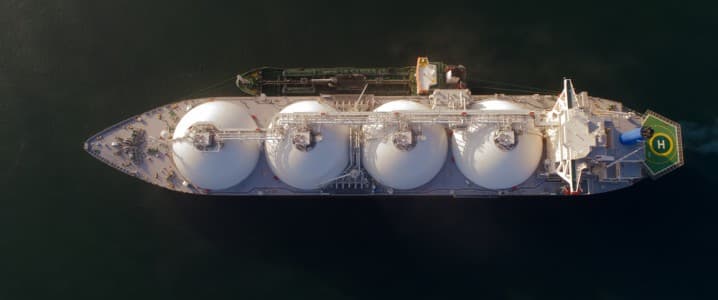
When Philippine President Ferdinand Marcos declared a “national energy emergency” in late March 2026, he placed into stark relief a crisis unfolding across the world’s most populous continent. The ongoing war in the Middle East has effectively closed the Strait of Hormuz, the narrow maritime chokepoint through which roughly one fifth of global oil and liquefied natural gas (LNG) flows. With tanker traffic grinding to a halt and drone strikes paralyzing Qatar’s Ras Laffan facility, the source of nearly 20 percent of global LNG exports has gone offline, triggering what analysts call the largest supply disruption in energy market history.
The closure has triggered a cascade of immediate logistical failures. Maritime insurance costs for vessels attempting the passage have skyrocketed to prohibitive levels, while major shipping companies have diverted fleets around the Cape of Good Hope, adding weeks to delivery schedules and further tightening regional supply.
The immediate shock has been financial. Spot LNG prices in Asia have doubled to reach three year highs, with the Japan Korea Marker benchmark surging roughly 70 percent since hostilities began. For nations that generate a third or more of their electricity from natural gas, including Japan, Singapore, Thailand, Taiwan, Pakistan, and Bangladesh, the price spike represents an existential threat to economic stability.
Anthony Knutson, global head of coal at consultancy Wood Mackenzie, described the regional response.
“Asian countries are opening the tap on coal generation to help offset rising gas prices and supply risk.”
Unlike the gradual supply adjustments that followed Russia’s 2022 invasion of Ukraine, this crisis offers no immediate alternative sources. The LNG cargoes already at sea are being depleted, and with Qatar’s production potentially offline until the decade’s end, Asia faces a structural supply gap that could last years.
National Responses From Seoul to Manila
Across the continent, governments are tearing up climate playbooks to keep lights on and factories running. In the Philippines, which relies on coal for approximately 60 percent of electricity generation, Energy Secretary Sharon Garin announced plans to maximize output from existing coal plants while negotiating additional imports from Indonesia. The emergency declaration authorizes direct government intervention against fuel hoarding and advance payments to secure contracts, reflecting concerns that the archipelago nation had only 45 days of fuel supply remaining as of late March.
South Korea, which had pledged to retire most coal plants by 2040 and halve emissions by 2035, has removed operational ceilings on coal fired generation. The reversal comes despite the fact that renewables supplied merely 10 percent of the country’s electricity in 2024, compared to a global average of 32 percent, leaving Seoul dangerously exposed when LNG supplies tightened. Japan’s largest utility, JERA, confirmed it would maintain coal plants at high utilization rates, while Tokyo accelerates plans to restart nuclear reactors paused since the 2011 Fukushima disaster.
In South Asia, Bangladesh is increasing coal power generation and imports of coal fired electricity, according to daily government data. The shift marks a decisive reversal for Bangladesh, which had previously sought to transition toward LNG imports before the current price spike made such plans economically impossible. Pakistan aims to boost power from domestic sources, particularly locally mined coal, to avoid a repeat of the widespread outages that followed the 2022 energy crisis. India, bracing for summer peak demand projected to hit 270 gigawatts, is burning coal at record levels while temporarily relaxing air quality rules to allow small industries to use coal for cooking and heating.
The Cold Math of Energy Economics
The return to coal is driven by brutal economic arithmetic. While Asian spot LNG prices have surged 70 percent, thermal coal prices have risen only 13 to 17 percent since the war began. For utility companies facing budget constraints and governments managing subsidy burdens, coal offers a buffer that gas cannot match. Wood Mackenzie analysts noted during the conflict’s first week that coal cannot fully replace the lost gas supply, but it creates a welcome buffer to help Asia go through the biggest supply disruption in energy markets, ever.
China, India, Japan, South Korea, and Southeast Asian nations are drawing down coal stockpiles accumulated precisely for such contingencies. These reserves, built through years of deliberate stockpiling programs, now represent a critical insurance policy against supply volatility. Indonesia, the world’s largest coal exporter, has prioritized domestic supply over export commitments, redirecting production toward national power plants even as regional neighbors scramble for alternative sources. The Philippines has secured assurances from Jakarta that no limits will be placed on coal orders, though Garin indicated increased purchases might prove unnecessary if local generation suffices.
The price disparity reveals a fundamental vulnerability in Asia’s energy architecture. LNG, long promoted by Western exporters and international energy majors as a bridge fuel between coal and renewables, has transformed from a flexible solution into a strategic liability. When vital shipping lanes become contested zones, the liquid in Liquefied Natural Gas loses its mobility advantage. With most LNG contracts linked to oil prices on a three month lag, Asian buyers will face even higher costs from June onward, further cementing coal’s temporary competitiveness.
Public Health and Climate Trade Offs
The emergency pivot carries heavy costs beyond economic ledgers. Coal combustion releases fine particulate matter known as PM2.5, microscopic particles that lodge deep in lungs and bloodstream, raising risks of heart disease, stroke, lung cancer, and chronic respiratory illness. The World Health Organization estimates that all 1.4 billion Indians already breathe air with unsafe particle concentrations. In Vietnam, where PM2.5 levels far exceed WHO limits throughout the dry season, shopowners like Lan Nguyen in Hanoi express daily worry for asthmatic children even as they acknowledge coal’s necessity for keeping electricity flowing.
Climate analysts warn that near term emergency measures risk becoming permanent structural dependencies. Pauline Heinrichs, a researcher at King’s College London, observed that China has also increased coal consumption to offset hydropower shortfalls caused by drought conditions.
“You learn to respond to shocks generated by certain insecurities by reproducing the insecurity.”
Indonesia’s coal power was already 48 percent more expensive in 2024 than in 2020 due to aging plants and maintenance backlogs, with state subsidies reaching USD 11 billion, roughly 5 percent of the national budget. Prolonged reliance on coal could delay early retirement pathways for aging plants, effectively stalling decarbonization efforts for years.
Julia Skorupska of the global coalition Powering Past Coal Alliance warned that the crisis demonstrates the risks of import dependency.
“This kind of crisis is a real sort of warning.”
She emphasized that the concern extends beyond immediate decisions to the precedent they set for future energy planning and infrastructure investment cycles. The health impacts are particularly acute during agricultural burning seasons, when coal emissions compound existing air quality challenges.
Geopolitical Advantage and Vulnerability
The crisis has exposed sharp asymmetries in Asian energy security. China, while the world’s largest oil importer, enjoys significant advantages over regional rivals Japan, South Korea, and Taiwan. The People’s Republic of China meets over a quarter of its oil demand through domestic production, maintains the world’s largest onshore crude stockpiles at an estimated 1.2 billion barrels, and can replace LNG imports with pipeline gas from Russia, Central Asia, and Myanmar. Natural gas accounts for a relatively small share of China’s primary energy consumption, and Beijing has spent years diversifying toward coal and renewables specifically to reduce import vulnerability.
Conversely, Japan, South Korea, and Taiwan rely almost exclusively on energy imports, with virtually no domestic crude production. Their economies are also more oil intensive than China’s, requiring more barrels of oil per thousand dollars of GDP. While Japan maintains robust strategic reserves covering roughly 150 days of supply, and South Korea holds approximately 107 days, their complete dependence on seaborne LNG leaves them exposed in ways that Beijing is not.
This divergence carries geopolitical consequences. If Tehran disproportionately targets LNG infrastructure while avoiding major oil facilities, it could benefit Beijing relative to its regional competitors while antagonizing Washington’s alliances. The United States, now the world’s largest LNG exporter, stands to gain commercially from supply shortages that redirect cargoes toward higher priced markets, potentially widening diplomatic fissures with allies who face economic pain from a war Washington initiated. As the Atlantic Council noted in recent analysis, Beijing may judge that LNG crises impose little economic cost on China while further straining ties between the United States and its Asia Pacific partners.
The Nuclear Question
Faced with the fragility of fossil fuel imports, several Asian democracies are reconsidering nuclear energy with renewed urgency. Japan, which possesses the third largest strategic petroleum reserve globally, is accelerating timelines to restart idled reactors despite persistent public skepticism following the 2011 Fukushima Daiichi disaster. Prime Minister Takaichi Sanae has vowed to achieve 100 percent energy self sufficiency, largely through a nuclear comeback that would have seemed politically impossible mere months ago. Utilities are currently inspecting reactors for compliance with post Fukushima safety standards.
South Korea, already a significant nuclear producer, faces more complex constraints. President Lee Jae Myung convened an extraordinary Cabinet meeting to examine war implications, as Seoul must import enriched uranium due to a 2015 civil nuclear agreement with Washington that strictly limits domestic enrichment capabilities and reprocessing activities. Real energy independence may require renegotiating those terms, carrying geopolitical risks regarding both American alliance management and North Korean reactions. Nevertheless, the prospect of breaching the enrichment cap is under active consideration as the crisis deepens and electricity prices surge.
Vietnam and the Philippines, which had previously explored nuclear options before the 2011 Fukushima accident dampened regional enthusiasm, are also stepping up development pace, aided by the World Bank’s decision last year to resume funding for nuclear projects. The shift highlights a broader regional recognition that renewable energy, while cheaper in the long run, cannot scale quickly enough to replace lost LNG within the required timeframe, particularly given existing grid infrastructure limitations.
Key Points
- The Middle East war has closed the Strait of Hormuz and halted Qatar’s LNG exports, removing 20 percent of global supply and doubling Asian spot LNG prices.
- Countries including the Philippines, South Korea, Japan, India, and Bangladesh are boosting coal fired power generation to prevent blackouts and contain electricity costs.
- Coal prices have risen only 13 to 17 percent compared to LNG’s 70 percent surge, making it the economically viable emergency buffer despite environmental costs.
- The crisis exposes divergent energy security levels across Asia, with China less vulnerable due to domestic production and pipeline imports, while Japan, South Korea, and Taiwan face severe import dependency.
- Asian nations are reconsidering nuclear energy restarts and accelerating renewable plans, but coal remains the only immediate substitute for lost gas supplies.
- Public health risks from increased coal combustion include elevated PM2.5 levels linked to respiratory and cardiovascular disease, particularly in major cities across India and Southeast Asia.
- Analysts warn that emergency coal reliance risks creating fossil fuel lock in that could delay climate targets and strand assets if temporary measures become permanent.