Manufacturing Recovery Defies Expectations
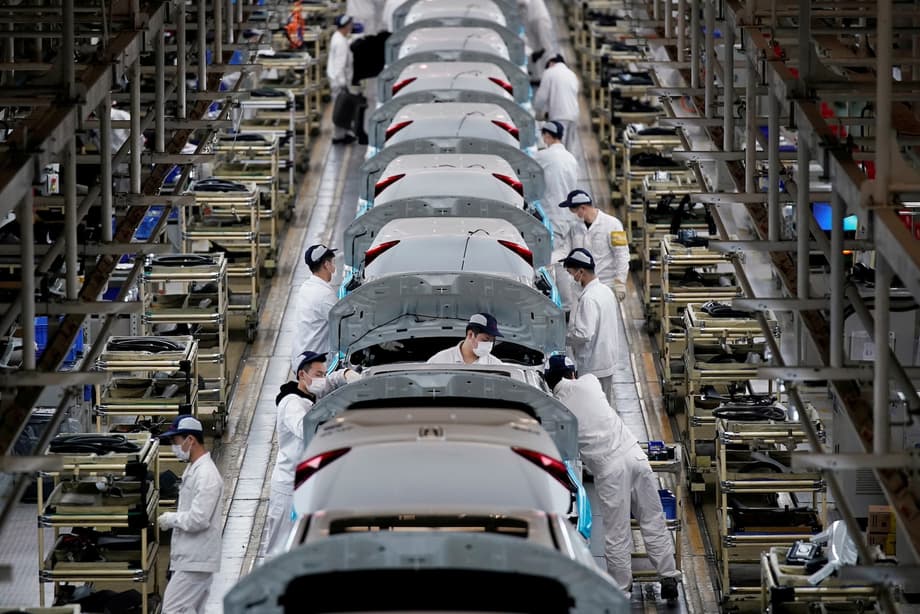
China’s manufacturing sector returned to expansion in March with a vigor that caught economists off guard, posting its strongest performance in twelve months as factories roared back to life following the Lunar New Year holiday. The official Manufacturing Purchasing Managers’ Index climbed to 50.4 in March, surpassing the 50.1 consensus forecast from a Reuters poll of economists and marking a decisive rebound from two consecutive months of contraction.
The reading, released by the National Bureau of Statistics on Tuesday, represents a 1.4 percentage point jump from February’s 49.0 figure and signals that the world’s second-largest economy is gaining manufacturing momentum despite gathering storm clouds on the global trade horizon. For readers unfamiliar with the metric, the PMI is a monthly survey of purchasing managers that serves as an early indicator of economic health. Readings above 50 indicate expansion compared with the previous month, while readings below that threshold signal contraction.
The March result snaps a troubling two-month slide that saw the index register 49.3 in January and 49.0 in February, periods distorted by the timing of the record-breaking Lunar New Year holiday which stretched to nine days this year. The manufacturing rebound aligns with preliminary trade data showing China’s exports surged 21.8 percent year on year during the first two months of 2026, driven by robust demand from Southeast Asian markets and European buyers that more than offset slumping shipments to the United States.
Production Metrics Reveal Broad-Based Improvement
Within the March PMI data, the subindex for production rose to 51.4 percent, up 1.8 percentage points from February and firmly in expansion territory. The new orders index performed even more strongly, climbing 3.0 percentage points to reach 51.6 percent, indicating a marked improvement in market demand for Chinese manufactured goods. The production index and new orders index for industries such as agricultural and sideline food processing and nonferrous metal smelting both exceeded 55.0 percent, reflecting rapid demand release in those sectors.
The recovery spanned enterprises of varying sizes, though large manufacturers continued to outperform their smaller counterparts. Large enterprises posted a PMI of 51.6 percent, rising 0.1 percentage points from the previous month. Medium-sized enterprises improved significantly to reach 49.0 percent, up 1.5 percentage points, while small enterprises saw the most dramatic rebound, jumping 4.5 percentage points to 49.3 percent. Despite these gains, medium and small firms remained in contraction territory, highlighting the uneven nature of the recovery.
Advanced technology manufacturing maintained its leadership position with a PMI of 52.1 percent, marking its fourteenth consecutive month above the expansion threshold. Equipment manufacturing and consumer goods industries both returned to growth, registering 51.5 percent and 50.8 percent respectively. However, high energy-consuming industries continued to lag, posting 48.9 percent despite improving 1.1 percentage points from February, while textile and apparel sectors remained below the critical point.
Export Dynamism Powers Factory Floor Revival
The manufacturing rebound correlates with an extraordinary performance in China’s foreign trade during the opening months of 2026. Total two-way trade reached $1.1 trillion in January and February, representing a 21 percent annual acceleration in dollar terms. Exports specifically surged 21.8 percent, with shipments to Southeast Asian nations climbing 29.4 percent and exports to the European Union rising 22.7 percent, successfully diversifying markets amid declining US orders.
This export strength has been particularly visible in high-value and green technology sectors. Electromechanical equipment exports grew 43.0 percent on an annual basis, while integrated circuit shipments soared 66.6 percent, reflecting insatiable global demand driven by artificial intelligence infrastructure buildouts. The so-called new three products, comprising solar cells, lithium-ion batteries, and electric vehicles, collectively expanded 53.3 percent, cementing China’s dominance in clean energy manufacturing. An outdoor furniture seller based in eastern China reported that orders rose 30 to 40 percent in January from a year earlier, with February orders continuing to grow due to improved supply chains and overseas warehouse stocking.
Cameron Johnson, Shanghai-based senior partner at consulting firm Tidalwave Solution, noted that overseas inquiries for Chinese-made solar panels and batteries have picked up markedly in recent weeks, particularly from buyers in Europe, India, and East Africa. Johnson suggested that China appears somewhat insulated from immediate supply shocks due to massive stockpiles of critical materials, though this buffer may not last indefinitely if disruptions persist into late spring.
Middle East Conflict Casts Shadow Over Outlook
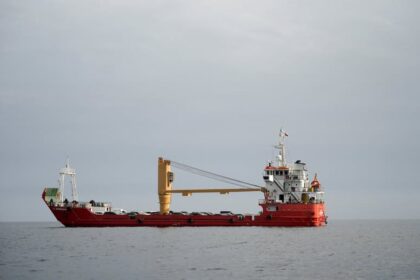
Despite the upbeat March figures, manufacturers face mounting pressure from the escalating conflict in the Middle East, which erupted in late February with United States-Israeli attacks on Iran. The war has triggered an energy crisis as Iran restricted shipments through the strategically vital Strait of Hormuz, through which roughly one-fifth of global oil shipments typically pass and which represents a critical chokepoint for Chinese energy imports.
The supply shock has manifested sharply in China’s PMI price subindexes. The purchase price index for major raw materials skyrocketed to 63.9 percent in March, up 9.1 percentage points from February, while the ex-factory price index reached 55.4 percent, rising 4.8 percentage points. These elevated readings indicate significant inflationary pressure in industrial input costs, particularly for petroleum, coal, and chemical processing industries, where price indices exceeded 70.0 percent according to the NBS breakdown.
Huo Lihui, chief statistician at the NBS, confirmed that higher shipping fees and costs for imported commodities, including crude oil and chemicals, have weighed heavily on surveyed companies. The China Association of Automobile Manufacturers has warned that the conflict could affect vehicle exports, given that the Middle East accounted for approximately 20 percent of China’s automotive exports last year. Manufacturers raised their output prices for the second consecutive month, with the rate of charge inflation picking up to a fifteen-month high.
Johnson expressed cautious optimism that disruptions might prove short-lived, citing expectations of a potential meeting between United States President Donald Trump and Chinese leader Xi Jinping in May that could stabilize trade relations. However, he warned that prolonged disruption into May would constitute a really big problem for manufacturers already operating on thin profit margins.
Divergent Signals from Survey Methodologies
The manufacturing landscape presents contrasting pictures depending on which survey methodology one examines. While the official NBS PMI rebounded to 50.4, the private sector RatingDog China General Manufacturing PMI, compiled by S&P Global, is expected to moderate to 51.6 when released Wednesday, down from a five year high of 52.1 recorded in February.
Economists attribute these divergences to fundamental differences in survey design. The official NBS poll covers over 3,000 companies, predominantly large government owned enterprises, and is compiled at month end. By contrast, the RatingDog survey samples a smaller group of export-oriented manufacturers and conducts its interviews in the middle of the month, potentially capturing different phases of production cycles and respondent profiles.
February’s stark contrast, which saw the official index contract to 49.0 while the private survey expanded to 52.1 at its fastest pace since December 2020, illustrates these methodological variations. The private survey in February showed new export orders rising at the most pronounced pace since September 2020, while the official survey captured the holiday-induced slump in state sector production.
Xu Tianchen, senior economist at the Economist Intelligence Unit, expects the March private PMI to be constrained by the oil shock impact, particularly affecting refineries and petrochemicals sectors. To cushion these impacts, Xu suggests policymakers could assist small and medium-sized companies through cheaper credit and reduced regulatory inspection burdens.
Looking ahead, the sustainability of this momentum depends on persistent demand and whether confidence translates into more active hiring and investment.
This observation from Yao Yu, founder of RatingDog, underscores the tentative nature of the current recovery.
Economic Context and Policy Framework
The March PMI data arrives against a backdrop of modestly upgraded policy support. Chinese authorities announced a 2026 economic growth target of 4.5 to 5 percent during the annual parliamentary meetings in early March, slightly softer than the around 5 percent target maintained for the previous three years. This adjustment reflects pragmatic acknowledgment of external uncertainties, including trade tensions and supply chain disruptions.
Fiscal policy is set to deliver its most expansionary support in years, with effective fiscal support reaching nearly 12 trillion yuan (approximately $1.74 trillion) when including special bonds and other instruments. Monetary policy has shifted to appropriately accommodative, signaling likely interest rate cuts and reserve requirement reductions in coming months. Separately, authorities have earmarked a special 100 billion yuan fiscal-financial coordination fund specifically for boosting consumption and private investment.
Despite the manufacturing rebound, underlying economic imbalances persist. Retail sales grew just 2.8 percent on an annual basis in January and February, accelerating from December but remaining subdued relative to historical trends. Big-ticket consumer items showed particular weakness, with vehicle sales declining 7.3 percent. Fixed asset investment excluding real estate grew 5.2 percent, but private investment continued contracting, falling 2.6 percent annually and suggesting that business confidence remains fragile outside government backed projects.
Employment subindexes remain concerning, with the official manufacturing employment gauge at 48.6 percent and nonmanufacturing employment at 45.2 percent, indicating ongoing job market softness that could constrain domestic consumption recovery. The nonmanufacturing PMI, which covers services and construction, edged up to 50.1 from 49.5, barely crossing into expansion territory.
Key Points
- China’s official manufacturing PMI rose to 50.4 in March, beating economist forecasts of 50.1 and marking the strongest expansion in twelve months
- The rebound snaps two consecutive months of contraction, driven by post-Lunar New Year production resumption and surging export orders
- Subindexes showed production at 51.4 and new orders at 51.6, while employment (48.6) and supplier delivery times (49.5) remained in contraction
- The Middle East conflict has triggered sharp rises in input costs, with the raw materials price index jumping to 63.9 percent
- China’s exports surged 21.8 percent year on year in January-February, driven by Southeast Asian and European demand
- Small enterprises saw significant improvement (up 4.5 points to 49.3) but remain in contraction, while large enterprises held steady at 51.6
- Advanced technology manufacturing continues to outperform with a 52.1 PMI reading, marking fourteen consecutive months of expansion
- The private sector RatingDog PMI is expected to moderate to 51.6 in March, down from February’s five year high of 52.1