When the Bamboo Eating Ambassadors Departed
Thousands of tearful fans gathered at Tokyo’s Ueno Zoo last month to bid farewell to two beloved residents who had become fixtures of the city’s cultural landscape. Xiao Xiao and Lei Lei, a pair of giant Chinese pandas, boarded a flight bound for Chengdu, ending their stay in Japan and marking the first time in decades that the nation has been without these symbolic animals. The return of the bears came as Beijing announced it was reclaiming them, a move that signaled far more than routine animal repatriation. In the intricate language of diplomacy between East Asian powers, the pandas had long served as furry envoys of friendship, their presence a barometer of bilateral warmth.
- When the Bamboo Eating Ambassadors Departed
- The Comment That Crossed Beijing’s Red Line
- Pressure Across Multiple Fronts
- An Electoral Mandate for Defiance
- Economic Vulnerabilities and Strategic Responses
- Military Posturing in Contested Waters
- Historical Narratives and Diplomatic Warfare
- The US Alliance and Regional Calculations
- What to Know
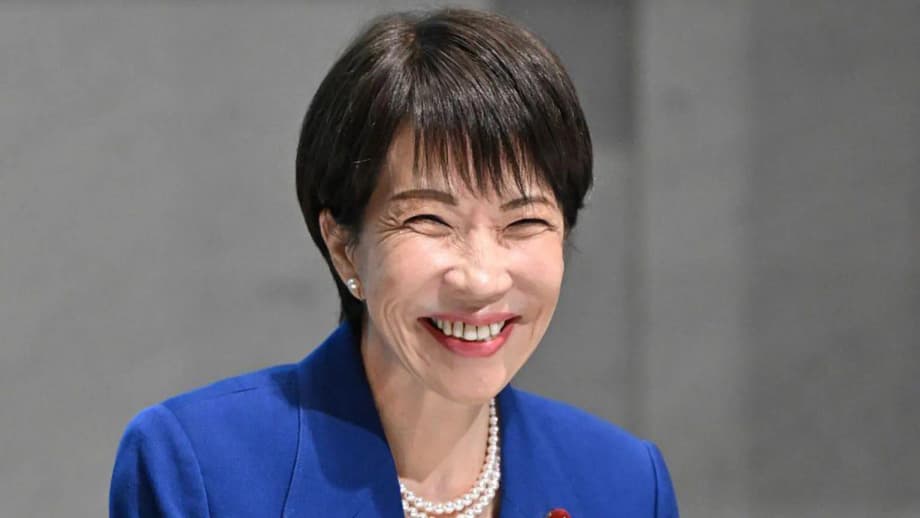
Their departure represents one front in an expansive Chinese pressure campaign targeting Japan following remarks by Prime Minister Sanae Takaichi regarding Taiwan. Since November, Beijing has deployed a diffuse array of tactics against Tokyo ranging from export controls and tourism restrictions to naval incursions and cultural cancellations. The strategy resembles what security analysts call greyzone warfare, designed to wear down opponents through persistent low level pressure that falls below the threshold of open conflict. For Japanese citizens, the absence of pandas at Ueno Zoo offers a tangible reminder that relations with their neighbor have entered a frigid new phase.
The Comment That Crossed Beijing’s Red Line
The current standoff ignited on November 7, when Takaichi responded to questions during a budget committee meeting in Japan’s Diet. The prime minister stated that Chinese military action against Taiwan, including scenarios such as a naval blockade, could constitute what Japanese defense legislation terms a survival threatening situation. This legal classification, established under Japan’s 2003 Act on the Peace and Independence of Japan and Maintenance of the Security of the Nation, permits the deployment of military force in collective self defense when an attack on a close ally threatens Japan’s own existence.
While previous Japanese leaders including former Prime Minister Shinzo Abe and former Deputy Prime Minister Taro Aso had made similar statements, Takaichi broke new ground as the first sitting prime minister to voice such views in an official parliamentary setting. Chinese officials immediately demanded a retraction, with Foreign Minister Wang Yi declaring that Japan had crossed a red line. Beijing’s response characterized the remarks as the first time since 1945 that a Japanese leader had openly promoted the notion that a Taiwan emergency constitutes a Japanese emergency, explicitly linking it to potential armed intervention.
Xue Jian, China’s consul general in Osaka, escalated the rhetoric dramatically with a threatening social media post targeting the Japanese leader directly.
The dirty neck that sticks itself in must be cut off.
The post, published on November 8, was later deleted, but the incident underscored the ferocity of Beijing’s response. Takaichi later acknowledged that her comments went beyond the government’s established stance, though she refused to retract them. She did, however, characterize the scenario as hypothetical while standing by the underlying principle. The distinction between an unscripted remark and official policy proved difficult to sustain, particularly as the remarks aligned with Takaichi’s long standing reputation as a security hawk within the ruling Liberal Democratic Party.
Pressure Across Multiple Fronts
Beijing has orchestrated a coordinated campaign across diplomatic, economic, military, and cultural domains. Diplomatically, China has lodged formal complaints with the United Nations and enlisted allies Russia and North Korea to denounce Japan. At the Munich Security Conference in February, Wang Yi invoked Japan’s World War Two history of aggression, warning that far right forces were seeking to revive militarism and that Japan risked self destruction if it continued on this path. Tokyo responded by lodging a stern demarche through diplomatic channels, rejecting the characterization as factually incorrect.
Economically, Beijing has targeted sectors where pain resonates most clearly. Chinese authorities urged citizens to avoid travel to Japan, citing safety concerns. The impact was immediate and severe. Chinese tourist arrivals fell 45 percent in December compared to the previous year, dropping to approximately 330,000 visitors. According to data released by Japanese authorities, inbound tourist spending declined 2.8 percent to $45.6 billion in the final quarter of 2025, marking the first year on year decline in more than four years. Six major Japanese department stores projected double digit declines in operating profit, as Chinese shoppers had previously accounted for roughly a quarter of all foreign visitors and spent significantly more than other tourists.
China also reinstated a de facto ban on Japanese seafood imports that had only been lifted months earlier, cancelled flights on 49 routes, and postponed the release of several Japanese films. Concerts by Japanese musicians faced abrupt cancellations, including one instance where singer Maki Otsuki was rushed off stage mid performance in Shanghai. Even Pokemon, one of Japan’s most recognizable cultural exports, faced criticism over an event planned near the Yasukuni Shrine, which honors Japan’s war dead including figures China considers war criminals. The event was eventually cancelled.
Militarily, Chinese coast guard vessels have maintained confrontations near the disputed Senkaku Islands, which Beijing calls the Diaoyu Islands. Japanese authorities reported that fighter jets from China’s Liaoning aircraft carrier locked radar on Japanese aircraft twice in December. In February, Japanese fisheries authorities seized a Chinese fishing vessel and arrested its captain for allegedly defying inspection orders in Japan’s exclusive economic zone, marking the first such arrest since 2022. While Beijing urged Tokyo to protect crew rights, the incident highlighted the risks of maritime enforcement amid heightened tensions.
An Electoral Mandate for Defiance
Rather than buckling under Chinese pressure, Takaichi emerged from snap elections on February 8 with a historically strong mandate. Her Liberal Democratic Party secured its largest share of lower house seats since World War II, giving her the political capital to confront Beijing on her own terms. Public opinion polls showed her approval ratings hovering around 75 percent, with 55 percent of respondents indicating they viewed her Taiwan remarks as appropriate.
The electoral victory vindicated her refusal to retract the controversial comments. Takaichi has pledged to increase Japan’s defense spending to 2 percent of GDP two years ahead of schedule and to revise key national security strategies by the end of 2026. These revisions come less than four years after the previous update, underscoring the rapid deterioration in Japan’s security calculus. The LDP’s election manifesto broke with historical precedent by explicitly stating that peace and stability in the Taiwan Strait are important, a direct reference that previous manifestos had avoided.
Analysts suggest that Beijing may have miscalculated by assuming economic pressure would force concessions from a weak governing coalition. Instead, the pressure campaign appears to have bolstered Takaichi’s domestic standing by framing her as a leader unwilling to compromise on national security. Kristi Govella of the Center for Strategic and International Studies noted that Takaichi will likely use her win as political capital to advance defense and economic policies that strengthen Japan’s position against coercion.
Economic Vulnerabilities and Strategic Responses
Despite the electoral boost, Japan faces substantial economic exposure to Chinese retaliation. Beyond the tourism collapse, Tokyo remains concerned about potential restrictions on rare earth elements and critical minerals. China has already tightened controls on exports of dual use technologies with potential military applications, fueling worries that Beijing may choke supplies of materials essential for electric vehicle motors and missile systems.
Japan has spent over a decade diversifying its rare earths supply chains, reducing dependence on China from approximately 90 percent in 2010 to about 60 percent in 2023. The nation maintains stockpiles lasting 60 to 180 days, according to economists at Barclays. However, if current tensions persist for several months, production processes could face significant disruption. During the 2010 crisis over the Senkaku Islands, China imposed a rare earths export ban that took months to resolve.
The economic friction comes as Takaichi attempts to implement a domestic agenda focused on inflation relief and semiconductor investment. Chief economist Naohiko Baba at Barclays noted that while government spending could boost growth by 0.2 to 0.3 percentage points, the China risk remains unquantified. A sustained tourism decline similar to the 2012 crisis could shave more than 0.1 percentage points off the fiscal 2026 growth rate.
Military Posturing in Contested Waters
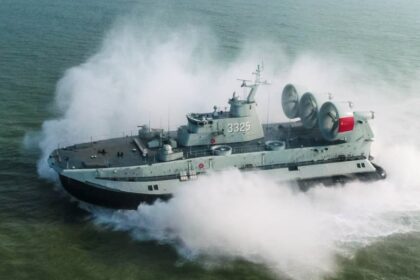
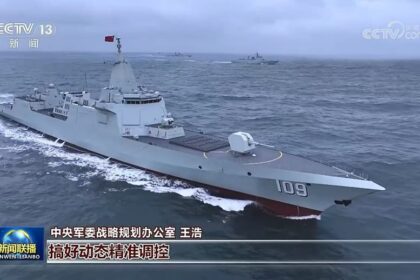
The military dimension of the dispute extends beyond symbolic gestures. Japan has documented instances of Chinese warships sailing past its islands and fighter jets locking targeting radars on Japanese aircraft. Chinese coast guard vessels have confronted Japanese ships near the Senkaku Islands, while the People’s Liberation Army has conducted live fire drills in the Yellow Sea and Bohai Gulf.
Geography amplifies the stakes. Yonaguni Island, Japan’s westernmost territory, lies just 111 kilometers from Taiwan. The island hosts Japanese Self Defense Force installations and sits near key shipping lanes. Japanese Defense Minister Shinjiro Koizumi recently confirmed plans to deploy missiles on Yonaguni, a move China denounced as a deliberate attempt to create regional tension.
The February fishing vessel seizure illustrated the risks of maritime enforcement. Japanese authorities arrested Captain Zheng Nianli after his boat allegedly fled inspection in the Goto archipelago, well within undisputed Japanese waters. While China issued a relatively measured response calling for crew safety, the incident represented a temperature check for bilateral relations. Tokyo has pledged to continue resolute enforcement against illegal fishing, setting up potential future confrontations.
Historical Narratives and Diplomatic Warfare
Beijing has woven historical grievances deeply into its contemporary pressure campaign. At the Munich Security Conference, Wang Yi framed current tensions through the lens of Japan’s World War Two aggression, accusing Takaichi of promoting militarist expansion. Chinese state media outlets published editorials under the pseudonym Zhong Sheng, a homonym for voice of China, asserting that Takaichi’s remarks contained dangerous signs of a resurgence of militarism.
The diplomatic offensive includes efforts to enlist third parties, with Beijing sending letters to the United Nations claiming that Japan has expressed ambitions to intervene militarily in Taiwan for the first time since its defeat in 1945. China has also advanced legal arguments referencing the UN Charter’s enemy state clauses, suggesting that founding members could take direct military action against former enemy states including Japan if they pursue aggressive policies. Tokyo has rejected these claims, noting that China previously supported a 1995 UN resolution demanding removal of those clauses.
The historical messaging coincides with the 80th anniversary commemorations of what Beijing terms its victory in the Chinese People’s War of Resistance against Japanese Aggression. Chinese authorities have released films documenting Japanese wartime atrocities while warning that Japan must face history squarely and break with militarism. Some Chinese commentators have speculated that Takaichi might visit the Yasukuni Shrine on December 26, a move that would further inflame tensions.
The US Alliance and Regional Calculations
The United States represents a crucial variable in the escalating feud. President Donald Trump issued an unusual endorsement for Takaichi before the snap election, and US Secretary of State Marco Rubio affirmed bilateral ties with Japanese counterpart Toshimitsu Motegi at the Munich Security Conference. However, analysts note that the US response has been relatively muted compared to previous crises, potentially emboldening China.
Japanese strategists worry about the potential for a grand bargain between Washington and Beijing that might sacrifice Japanese interests. Trump has scheduled a state visit to China in April and has emphasized the strong trajectory of US China relations in recent communications with President Xi Jinping. During a November phone call, Xi emphasized to Trump that Taiwan’s return to China represents an integral part of the post war international order.
Takaichi is scheduled to visit Washington in March ahead of Trump’s China trip, where she will likely seek assurances regarding alliance commitments. Robert Ward of the International Institute for Strategic Studies suggests that Tokyo will likely double down on shouldering more of the defense burden shared with the US to ensure Washington does not drift away from the region. The Japanese government has increasingly prioritized strengthening relationships with other US allies and partners while reducing economic dependence on China.
What to Know
- Chinese pandas Xiao Xiao and Lei Lei returned from Tokyo’s Ueno Zoo to China, ending 50 years of panda diplomacy and symbolizing the freeze in bilateral relations.
- Prime Minister Sanae Takaichi’s November 7 remarks suggested Japanese military intervention could be justified if China attacked Taiwan, marking the first time a sitting Japanese prime minister explicitly linked Taiwan’s security to Japan’s survival.
- China has responded with multi front pressure including a 45 percent drop in Chinese tourism, seafood import bans, rare earth export controls, and increased military activity near disputed islands.
- Takaichi refused to retract her comments and subsequently won a historic electoral mandate on February 8, with her Liberal Democratic Party securing its largest lower house majority since World War II.
- Chinese Foreign Minister Wang Yi accused Japan of reviving militarism at the Munich Security Conference, while Tokyo rejected the claims as factually incorrect and lodged formal protests.
- Japan seized a Chinese fishing vessel in February for the first time since 2022, arresting the captain in undisputed waters near the Goto archipelago.
- Analysts warn that even if tensions stabilize, relations will likely settle at a lower baseline than before, with both sides less willing to de escalate than during previous crises in 2010 and 2012.