A New Era in Space Warfare Capabilities
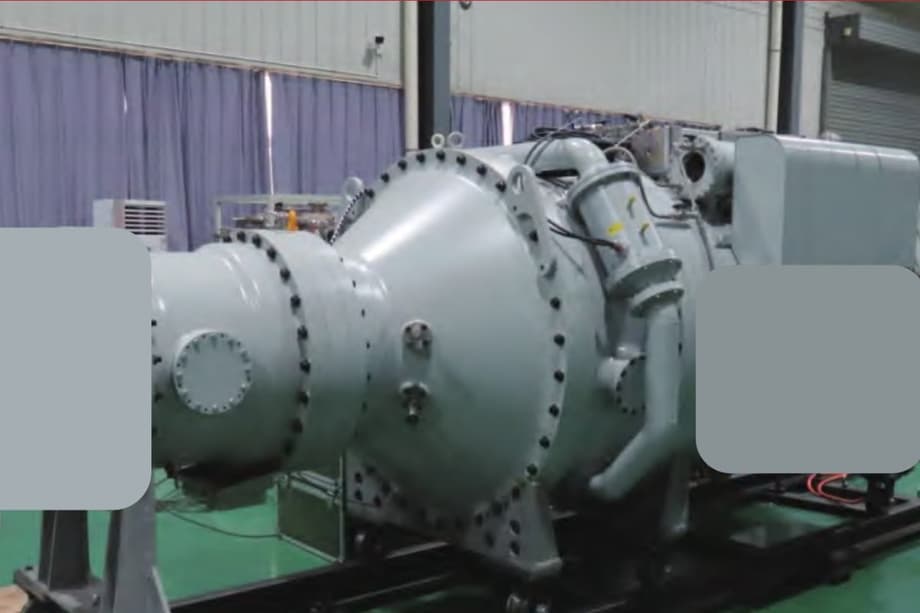
Chinese researchers have unveiled a technological breakthrough that could reshape the balance of power in orbital defense systems. At the Northwest Institute of Nuclear Technology in Xian, Shaanxi province, scientists have developed the TPG1000Cs, a compact high power microwave weapon driver capable of generating 20 gigawatts of power continuously for up to 60 seconds. This performance metric represents a dramatic leap beyond existing systems, which have traditionally been limited to operational bursts of three seconds or less.
- A New Era in Space Warfare Capabilities
- Understanding High Power Microwave Weapons
- Engineering Innovations Behind the Compact Design
- The Starlink Security Dilemma
- International Context and Comparative Capabilities
- Questions of Verification and Practical Application
- Strategic Consequences for Future Conflicts
- Key Points
The device, measuring merely four meters in length and weighing approximately five tonnes, achieves a level of miniaturization previously considered unattainable for weapons grade microwave systems. Its aluminum alloy construction allows for deployment across multiple platforms, including ground vehicles, naval vessels, aircraft, and potentially satellites themselves. This versatility marks a significant evolution in directed energy weapon design, offering military planners unprecedented flexibility in positioning and deployment strategies.
The research team, led by Wang Gang at the Key Laboratory of High Power Microwave Science and Technology, published their findings in the journal High Power Laser and Particle Beams. According to their published results, the system has accumulated over 200,000 operational pulses during testing phases, demonstrating what the researchers describe as stable and reliable performance across extended operational durations.
Understanding High Power Microwave Weapons
High power microwave weapons represent a distinct category of directed energy systems designed to disrupt or disable electronic components through intense electromagnetic radiation. Unlike conventional kinetic weapons that physically destroy targets through impact and explosion, microwave weapons function by inducing catastrophic electrical currents and voltage surges in sensitive circuitry. This approach offers several strategic advantages, including minimal space debris generation and the potential for reversible or temporary disablement rather than permanent destruction.
The operational principle involves storing substantial electrical energy and releasing it instantaneously in concentrated pulses. These pulses drive microwave generators that emit focused beams of electromagnetic energy capable of penetrating the shielding of satellites and other electronic systems. The TPG1000Cs reportedly delivers up to 3,000 high energy pulses in a single operational session, far exceeding the capabilities of comparable international systems.
Space security analysts note that a ground based microwave weapon generating output exceeding one gigawatt could theoretically disrupt communications or inflict damage upon satellites operating in low Earth orbit. Given that the TPG1000Cs achieves 20 times this threshold, concerns have emerged regarding its potential effectiveness against commercial satellite constellations, particularly the Starlink network operated by SpaceX, which currently maintains thousands of active satellites at relatively low orbital altitudes.
Engineering Innovations Behind the Compact Design
The dramatic size reduction achieved by the Chinese research team stems from several key engineering innovations that depart from traditional microwave weapon architectures. Conventional systems typically employ straight tube pulse forming lines, which require substantial physical space to achieve desired energy storage and pulse characteristics. The NINT researchers replaced this configuration with a compact dual U shaped structure that allows energy to bounce back and forth within the device, achieving equivalent performance in approximately half the physical space.
Material science advancements played an equally crucial role in the system miniaturization. The research team utilized a specialized liquid insulating material identified as Midel 7131, which provides higher energy storage density, superior insulation properties, and reduced energy loss compared to traditional dielectric materials. This liquid dielectric enables the integration of the Tesla transformer and pulse forming line into a unified, compact system rather than requiring separate, bulky components.
The choice of aluminum alloy for the structural framework further reduced overall mass while maintaining necessary rigidity and electromagnetic shielding properties. At five tonnes, the TPG1000Cs weighs roughly half as much as Russia’s Sinus7 driver, which could operate for only approximately one second while delivering roughly 100 pulses per burst despite its 10 tonne mass. This comparison highlights the substantial efficiency gains achieved through the Chinese team integrated design approach.
The Starlink Security Dilemma
The development of this weapon system occurs within a specific geopolitical context regarding satellite communications infrastructure. Chinese officials have repeatedly identified the Starlink constellation as a potential threat to national security, citing the network demonstrated military applications during ongoing conflicts. The Starlink system, which provides global internet coverage through thousands of small satellites in low Earth orbit, has proven resistant to traditional jamming attempts and offers communication capabilities that circumvent conventional terrestrial infrastructure.
During recent military conflicts, Starlink terminals have provided critical communication links that proved difficult to disrupt through conventional electronic warfare means. This resilience has prompted military researchers worldwide to investigate alternative methods for neutralizing such satellite networks. High power microwave weapons offer a potential solution, as their effects propagate at the speed of light and can target multiple satellites within a given orbital shell without the need for precise kinetic interception.
SpaceX has recently adjusted the orbital parameters of its Starlink satellites, lowering their altitude to reduce collision risks with space debris and other orbital objects. While this maneuver improves overall space safety metrics, it potentially increases vulnerability to ground based directed energy weapons by reducing the distance between targets and terrestrial emitters. The combination of lower orbital altitude and the development of increasingly powerful microwave systems creates a complex security environment for satellite operators.
International Context and Comparative Capabilities
The TPG1000Cs enters a competitive landscape where multiple nations pursue similar directed energy capabilities. The United States, Russia, and various European nations maintain active research programs focused on high power microwave applications for both defensive and offensive purposes. However, the claimed specifications of the Chinese system appear to exceed publicly acknowledged capabilities of existing international prototypes.
Russia’s Sinus7 driver, previously considered among the more advanced systems internationally, demonstrates the performance gap the TPG1000Cs claims to bridge. Operating for roughly one second per burst and weighing approximately 10 tonnes, the Russian system offers only a fraction of the operational duration while requiring twice the mass. American efforts in directed energy weapons have focused heavily on laser systems for missile defense and close range applications, with microwave research receiving comparatively less public attention in recent years.
Chinese military research institutions have published multiple studies stressing the necessity of developing countermeasures against mega-constellation satellites. Researchers from Nanjing University of Aeronautics and Astronautics have specifically highlighted the military value demonstrated by Starlink during the Russia-Ukraine conflict, while scientists from Beijing Institute of Technology have simulated disruption scenarios targeting satellite swarms covering areas comparable to Taiwan. These publications suggest a sustained, institutional focus on neutralizing commercial satellite capabilities that might support adversarial military operations.
Questions of Verification and Practical Application
Despite the detailed technical specifications published in High Power Laser and Particle Beams, independent verification of the TPG1000Cs capabilities remains challenging. Advanced military technology research, particularly when conducted by state affiliated institutions, often involves classified components that resist external validation. Western defense analysts have noted difficulty locating the specific research paper referenced in media reports, a common occurrence when reporting on sensitive military technologies from restricted academic sources.
Skeptics point out that laboratory demonstrations of individual components do not necessarily translate to operational battlefield systems. The transition from a compact driver to a fully functional weapon system requires integration with targeting radars, tracking systems, and atmospheric compensation technologies that may significantly increase overall system complexity and mass. Additionally, the effective range of ground based microwave weapons against orbital targets depends heavily on atmospheric conditions, beam focusing capabilities, and the specific vulnerability of target satellite electronics to electromagnetic interference.
Space security experts caution that describing the TPG1000Cs as a definitive Starlink killer may overstate current capabilities. While the power output specifications suggest theoretical capability to disrupt low Earth orbit satellites, actual effectiveness would depend on numerous variables including tracking accuracy, beam coherence over long distances, and the specific hardening measures implemented by satellite manufacturers. SpaceX has not publicly commented on the reported threat, though the company has historically stressed the resilience of its satellite architecture against various interference scenarios.
Strategic Consequences for Future Conflicts
The emergence of compact, high duration microwave weapons suggests a shifting paradigm in space warfare doctrine. Traditional anti satellite weapons rely on kinetic kill vehicles or explosive mechanisms that generate persistent orbital debris, potentially endangering all space operations including those of the nation conducting the attack. Microwave weapons offer the theoretical advantage of temporary or permanent disablement without debris generation, preserving the orbital environment while achieving tactical objectives.
The potential deployment of such systems across multiple platforms, including airborne and space based assets, creates complex strategic calculations for satellite constellation operators. Unlike fixed ground installations, mobile microwave platforms could reposition to optimize targeting geometries or avoid retaliatory strikes. Space based deployment, in particular, would eliminate atmospheric attenuation issues while enabling rapid response capabilities against emerging threats.
Military planners must now consider the vulnerability of commercial satellite infrastructure that has become integral to modern communication, navigation, and reconnaissance capabilities. The relatively low cost per shot of microwave weapons compared to missile based interception systems could enable sustained campaigns against satellite constellations, potentially overwhelming defensive measures through sheer operational persistence. This economic asymmetry may force reconsideration of satellite architecture designs, potentially driving renewed interest in higher orbital altitudes, improved electromagnetic shielding, or distributed constellation patterns that reduce the impact of individual satellite losses.
Key Points
- Chinese scientists have developed the TPG1000Cs, a compact microwave weapon driver capable of generating 20 gigawatts of power for up to 60 seconds continuously.
- The device measures four meters long and weighs five tonnes, small enough for deployment on trucks, ships, aircraft, or satellites.
- Previous comparable systems could operate for only three seconds or less and required significantly larger physical footprints.
- The system incorporates a dual U shaped energy structure and specialized Midel 7131 insulating liquid to achieve miniaturization.
- Chinese officials have identified the Starlink satellite constellation operated by SpaceX as a national security threat, prompting development of countermeasures.
- Experts suggest ground based microwave weapons exceeding one gigawatt output could disrupt or damage low Earth orbit satellites.
- The TPG1000Cs has reportedly accumulated over 200,000 operational pulses during testing, demonstrating reliability for extended operations.
- Independent verification of the system’s full capabilities remains difficult due to the classified nature of advanced military technology research.