A Fragile Peace Emerges Amid Massive Humanitarian Crisis
Four days after a ceasefire between Cambodian and Thai forces took effect, more than half a million civilians remain displaced from their homes, highlighting the enormous humanitarian challenges that persist despite growing stability along the border. The truce, implemented from 6pm on December 31 to 1pm on January 1, has brought a measure of calm to affected areas and enabled some families to begin returning home, but the overall situation remains precarious.
- A Fragile Peace Emerges Amid Massive Humanitarian Crisis
- The Human Toll of Border Conflict
- Education and Healthcare Systems Paralyzed
- Historical Roots of Modern Conflict
- Military Escalation and International Intervention
- A Hard-Won Ceasefire
- Obstacles to Return and Reconstruction
- Civilian Voices from the Conflict Zone
- The Hidden Dimensions of Conflict
- Path Forward and Recovery Efforts
- Key Points
According to the Cambodian Ministry of Interior, 512,263 people are still unable to return to their villages due to safety concerns, damaged infrastructure, and the threat of unexploded ordnance scattered throughout conflict zones. The scale of displacement represents one of the largest humanitarian emergencies in Southeast Asia in recent years, straining resources in both countries and testing regional diplomatic efforts.
The fighting, which erupted in early December following earlier clashes in July, has killed dozens of civilians and soldiers while displacing nearly one million people on both sides of the border. The conflict centers on longstanding territorial disputes over colonial-era border demarcation and ancient temple ruins situated along the frontier.
The Human Toll of Border Conflict
The human cost of this conflict has been devastating. At least 43 people have been killed and over 300,000 have been displaced by the violent border conflict since July 24, 2025, according to human rights organizations. The fighting reached a peak in December when clashes intensified dramatically, forcing hundreds of thousands from their homes in a matter of days.
Civilians, including children, have borne the brunt of the violence. On the first day of major fighting in July, Cambodian rocket and artillery attacks hit a hospital, a grocery store, and residential dwellings, killing 14 civilians, including children between the ages of 8 and 15, according to Thai police. The Thai health ministry later revised the death toll to include dozens of wounded and 12 dead, primarily civilians.
World Vision International in Cambodia has been providing humanitarian assistance, supporting more than 109,000 people between June and September 2025 across 56 displacement sites in the hardest-hit provinces of Preah Vihear, Banteay Meanchey, Siem Reap, and Oddar Meanchey. Their interventions have included emergency food packages benefiting 75,544 people, water and sanitation support for 60,127, and shelter materials for 109,134.
June Kunugi, Regional Director for East Asia and the Pacific at UNICEF, emphasized the particular vulnerability of children caught in the conflict. Speaking from Bangkok, she urged both countries to protect children and the critical services they depend on.
“Children must be protected at all times and their safety and wellbeing must be prioritised, while schools must remain safe spaces for learning,” she said.
Education and Healthcare Systems Paralyzed
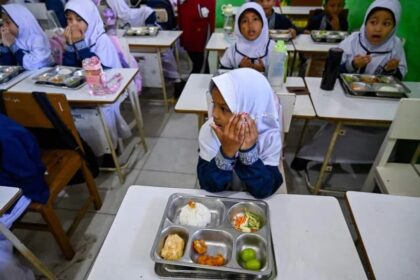
The conflict has severely disrupted essential services, with education and healthcare systems bearing a heavy burden. In Banteay Meanchey province alone, 321 schools and seven hospitals or health centres remain closed, while only limited government services have resumed. The situation in Preah Vihear is similarly dire, with 61 schools and 14 health facilities still not operational.
Oddar Meanchey has experienced the widest disruption, with more than 200 schools and dozens of local administrative offices remaining closed due to ongoing security concerns. Thai authorities have reported that 852 schools and seven hospitals were closed for safety reasons on their side of the border as well.
World Vision established 56 child-friendly spaces that have benefited 1,151 children, attempting to provide some continuity of education and psychological support for young people traumatized by the violence. However, these emergency measures cannot replace the formal education system that remains shuttered across large swathes of the border region.
The World Health Organization has documented the public health impact, noting that between August 6 and 14, there was a 75% decrease in the number of internally displaced people in Cambodia, but warning that the health infrastructure remains severely compromised. Many health centers require repairs to water supply systems and other basic infrastructure before they can resume full operations.
Historical Roots of Modern Conflict
The current fighting is the latest eruption in a decades-long border dispute between Thailand and Cambodia. The disagreement stems from colonial-era demarcation of their approximately 800-kilometer land border and the location of several ancient temple ruins situated along the frontier.
The most significant point of contention has been the 11th-century Preah Vihear Temple, a UNESCO World Heritage Site that sits on the Cambodian side of the border. The International Court of Justice ruled in 1962 that the temple belongs to Cambodia, but the surrounding territory remains disputed. The last major flare-up between the two countries occurred in 2011, when days of border fighting near the temple left multiple casualties on both sides.
Tensions eased somewhat in recent years but reignited two months ago after a minor clash involving soldiers from both sides. The contested areas focused on Ta Muen Thom and Ta Kwai temples in Thailand’s Surin province and Preah Vihear and Oddar Meanchey provinces in northern Cambodia.
The situation worsened significantly after two landmine incidents injured Thai soldiers in July, with mutual accusations of provocation leading to intensified skirmishes and culminating in a major military confrontation on December 8. What began as localized exchanges quickly expanded to involve nearly every province along the border, with unprecedented scale and intensity.
Military Escalation and International Intervention
The December fighting saw both sides employ heavy weaponry in ways not seen in decades of border tensions. Thailand, which possesses a more modern military, responded to provocations with airstrikes using F-16 fighter jets, while Cambodia fired back with rocket systems that set Thai homes ablaze.
Thailand’s air force dropped bombs in Kompong Svay District of Cambodia’s Banteay Meanchey Province, with Thai news outlets reporting that airstrikes targeted weapons storage sites. The use of cluster munitions by Thailand has drawn particular condemnation from human rights organizations, as their deployment in inhabited areas violates international norms despite Thailand not being a signatory to the Convention on Cluster Munitions.
The international community quickly mobilized to address the crisis. The UN Security Council held an emergency private meeting to discuss what officials described as the most serious escalation between the two Southeast Asian neighbors in more than a decade. Both the United States and China launched near-simultaneous diplomatic efforts to mediate.
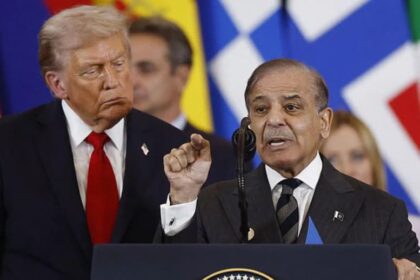
US President Donald Trump, who has styled himself as a global peacemaker, claimed credit for mediating the ceasefire. In a post on his Truth Social platform, he wrote: “The United States of America, as always, was proud to help! With all of the wars and conflicts I have settled and stopped over the last eleven months, EIGHT, perhaps the United States has become the REAL United Nations.”
China also played a significant role, hosting two days of talks in Yunnan province between Thai Foreign Minister Sihasak Phuangketkeow and Cambodian Foreign Minister Prak Sokhonn. The first batch of emergency humanitarian aid supplies from China, including tents, blankets, and food, arrived at Phnom Penh’s Techo International Airport as the talks concluded.
A Hard-Won Ceasefire
The current ceasefire agreement was reached after tense negotiations between defense ministers from both countries. The surprise announcement followed two days of difficult talks and came amid growing pressure from the United States and China to halt the fighting.
Nattaphon Narkphanit, the Thai defense minister, described the 72-hour initial truce as a testing period to evaluate whether a more enduring peace could begin. “The cease-fire will be monitored and observed for 72 hours to confirm that it is real and continuous,” he said at a news conference. “Once the situation stabilizes, civilians will be able to safely return to their homes.”
A key component of the agreement was the release of 18 Cambodian soldiers who had been detained in Thailand since the July clashes. Their captivity had inflamed nationalist sentiment in Cambodia, and their return was a central demand in ceasefire negotiations. The handover was delayed by a day over Thai concerns about alleged violations of the ceasefire, but eventually took place after sustained Chinese diplomatic pressure.
Thailand’s foreign ministry said the release of the soldiers was a “demonstration of goodwill” and expressed hope that Cambodia would “reciprocate this goodwill through its concrete actions.” Cambodia’s defence ministry said it “remains hopeful” that the release would help build “mutual trust and confidence.”
Despite the agreement, both sides have accused each other of violating the truce, with Thailand claiming Cambodia flew more than 250 unmanned aerial vehicles into Thai territory. However, the ceasefire appears to be holding, allowing humanitarian operations to expand and some displaced civilians to consider returning home.
Obstacles to Return and Reconstruction
Even with the ceasefire in place, significant obstacles prevent the safe return of displaced populations. The Cambodian Interior Ministry reported that 84 villages remain inaccessible and require further clearance and assessment before residents can go back.
Unexploded ordnance poses a particularly dangerous threat to returnees. Authorities have cited the presence of landmines and other explosive remnants as a major obstacle to resettlement. Both nations have committed to clearing land mines along their shared border, which have figured prominently in the recent clashes, but this process will be time-consuming and dangerous.
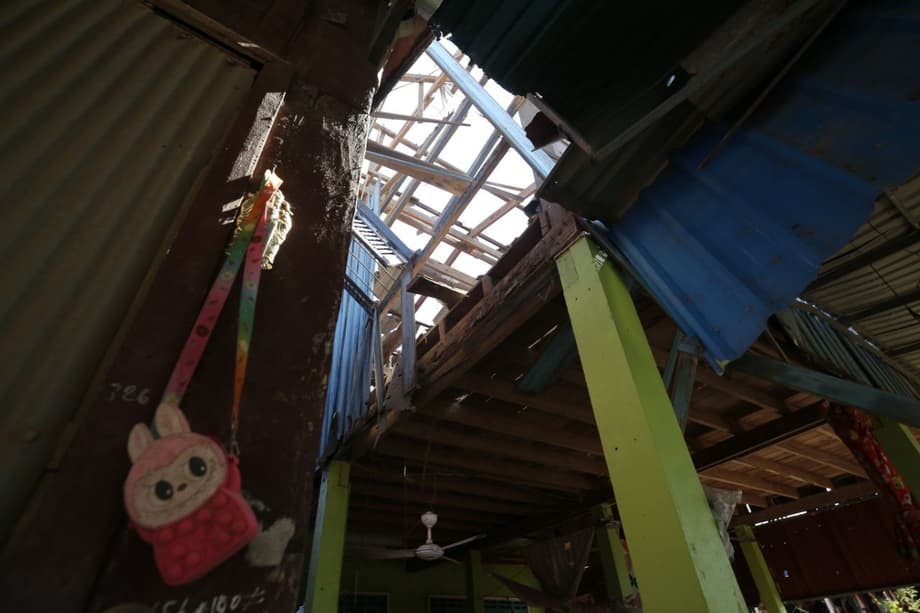
Damage to civilian infrastructure has been extensive. According to preliminary assessments, at least 117 civilian houses were damaged, along with schools, government offices, and religious sites. Additional damage was recorded at private homes, hotels, gas stations, rice barns, bridges, roads, and electricity facilities.
Religious and cultural landmarks have suffered as well. Shelling damaged the UNESCO-listed Preah Vihear Temple and a Buddhist pagoda, raising concerns about the protection of heritage sites during armed conflict. Khaosod English, a Thailand-based news website, pointed out the tragic irony of the situation.
“The current militarization of these sacred spaces represents a profound irony: sites once dedicated to spiritual harmony and cross-cultural exchange now serve as flashpoints for nationalist tensions, surrounded by barbed wire and military installations rather than pilgrims seeking enlightenment,” the publication noted.
Civilian Voices from the Conflict Zone
Those living near the border have paid the highest price in this conflict. Youk Menglong, a Cambodian studying in Thailand, highlighted the plight of residents caught between the two armies.
“Those of us living near the border carry the heaviest burden. We are not the ones cheering war from safe distances in Bangkok or Phnom Penh. We are the ones whose lives are being torn apart,” Menglong said. “Right now, families on both sides are suffering. So before anyone rushes to support this senseless war, think of the disabled, the elderly, the sick, and especially the children – children who are now learning to distinguish the sound of drones and missiles before they learn to read.”
Personal accounts from civilians who fled the violence paint a harrowing picture. Sen Sokha, a guard at Preah Vihear temple, described his escape during bombing attacks to Cambodian media outlet Kiripost.
“We had to hide in a temple as the bombs flew around. We hadn’t even made it halfway down [the mountain], when they suddenly destroyed the place where we were hiding. Luckily, we managed to escape. When they fired, we all hid to avoid the boom, sometimes tripping and falling into ditches,” Sokha recounted.
Sombat Socheata survived a Thai military drone attack on July 28 in Kon Kriel village, Samrong City, Oddar Meanchey province. She described the terror of trying to evacuate with her family under fire.
“I started to evacuate around 8:30 am. When we heard loud explosions, we immediately started running to the car. Before we could get to the car, a large bomb fell nearby and we were scared, so we decided to run to the shelter that we had dug in preparation. We waited until 12pm when the sound of explosions were silent. Again, we ran to the car, but bombs fell nearby again and we had to run to the shelter again until 2pm when we could move out from there,” Socheata said.
The Hidden Dimensions of Conflict
Beyond the territorial dispute, analysts have identified other factors that may be contributing to tensions between Thailand and Cambodia. There is an alleged human trafficking and cybercrime component to the war, with tensions said to have increased as a result of Thailand’s operation against cyber-scam compounds based in Cambodia.
These compounds, connected to human trafficking and supported by criminal networks, form part of what analysts estimate is a $12.5 billion USD scam industry in Cambodia. Some suggest these illicit profits may indirectly fund elements of the government, worsening mistrust between the nations.
Thailand has also been preparing plans to cut off shipments of fuel into Cambodia, tasking maritime enforcement authorities with controlling Thai-registered vessels that might be delivering gasoline and even weapons to support Cambodia’s armed forces. This economic dimension of the conflict adds another layer of complexity to diplomatic resolution efforts.
Migrant workers have also been caught in the crossfire. There are reports of attacks targeting Cambodian and even Myanmar workers in Thailand. Myanmar independent media Mizzima noted that “this case is a reminder that public sentiment and the realities on the street are closely linked, and migrants often suffer due to conflicts they cannot control.”
Path Forward and Recovery Efforts
The Cambodian Ministry of Interior said it is coordinating with national and local authorities to accelerate rehabilitation efforts, including repairing damaged homes, restoring public services, and ensuring security in affected areas. Preparations for resettlement have been completed in 172 villages, but many families remain in limbo.
World Vision International has outlined a three-pronged approach for the coming months: continue life-saving support in displacement sites, focusing on health, protection, and education; enable early recovery for returning families through cash transfers, livelihoods, and restored access to essential services; and conduct joint assessments of returnee migrants from Thailand to inform longer-term response strategies.
The Cambodian government has reaffirmed that the ceasefire does not compromise the country’s sovereignty or territorial integrity, emphasizing that border issues will continue to be addressed through existing international mechanisms. Officials have reiterated support for Prime Minister Hun Manet’s “Quiet but Not Silent” approach, which they said contributed to the safe return of the detained Cambodian soldiers.
Civil society groups from both countries have signed statements urging their governments to restore stability and address the humanitarian crisis. Human rights group Forum Asia asserted that “civilians living in the border areas should not have to live in fear.”
All parties have been urged to refrain from actions that could further inflame tensions and endanger lives. De-escalation remains crucial to preventing a broader humanitarian crisis and restoring stability for communities on both sides of the border.
For thousands of families still waiting in temporary shelters, the ceasefire marks only the first step toward rebuilding their lives after weeks of instability along the border. The process of restoring normal life will take time, resources, and sustained diplomatic commitment from both nations and the international community.
Key Points
- A ceasefire between Cambodia and Thailand took effect December 31-January 1, but 512,263 people remain displaced according to Cambodian officials
- At least 43 people have been killed and nearly one million displaced since July, with civilians, including children, bearing the brunt of the violence
- The conflict stems from a decades-old territorial dispute over colonial-era border demarcation, particularly around ancient temples like Preah Vihear
- Education and healthcare systems have been severely disrupted, with hundreds of schools and health facilities closed in border provinces
- Thailand released 18 Cambodian soldiers detained since July as part of the ceasefire agreement
- Unexploded ordnance and damaged infrastructure pose significant obstacles to safe return for displaced populations
- International actors including the US, China, and the UN have been involved in mediation efforts
- Humanitarian organizations like World Vision have provided assistance to more than 100,000 affected people
- Underlying factors including cyber-crime networks and human trafficking may be contributing to tensions