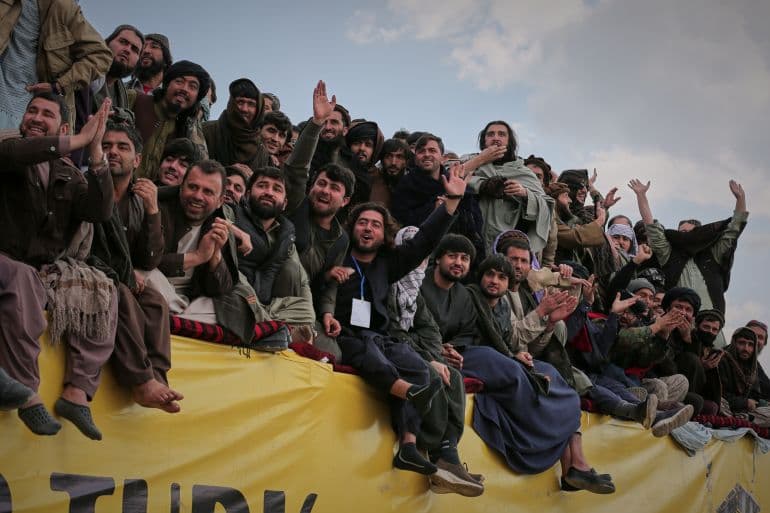
Afghanistan’s National Sport Thrives in Kabul Championship
Thousands of spectators gathered on the outskirts of Kabul to witness the dramatic final of Afghanistan’s annual national buzkashi tournament, a centuries-old equestrian tradition that continues to captivate the nation. The championship concluded with northern Sar-e-Pul province delivering a commanding 7-0 victory over northeastern Badakhshan, securing their position as the country’s premier buzkashi team for the year. The winning team celebrated with a triumphant lap around the field, proudly displaying their provincial flag as spectators erupted in cheers.
The eleven-day tournament showcased Afghanistan’s deep connection to buzkashi, often described as the “sport of kings” in Central Asia. Horsemen from across the country converged on the capital to compete in what many consider the nation’s most prestigious sporting event. The competition attracted crowds of enthusiastic male supporters who filled the stands at the central Kabul venue, with some climbing nearby trees and electricity pylons to secure better vantage points of the action.
Understanding Afghanistan’s Beloved National Sport
Buzkashi, which literally translates to “goat pulling” in Persian, stands at the heart of Afghan cultural identity. The sport involves horse-mounted players attempting to place a goat or calf carcass in a designated goal area. While traditional matches used a beheaded goat carcass, contemporary tournaments now utilize a leather-and-rope substitute filled with straw to replicate the weight of an animal, typically weighing around 30 kilograms (66 pounds).
The game demands extraordinary horsemanship from competitors, known as “chapandaz.” These skilled riders hang from their saddles at seemingly impossible angles, swooping down to snatch the weighted bundle from the ground while racing at full gallop. The objective involves carrying the bundle across a designated goal line to score points. In the classic format, two teams of twelve riders each compete in matches characterized by limited formal rules and fierce physical competition.
“Buzkashi is not just a sport in Afghanistan; it is a reflection of our history, our strength, and our unity as a people,” explained Atal Mashwani, spokesman for Afghanistan’s General Directorate of Physical Education and Sports.
The sport has two main forms: Tudabarai (“emerging from a mass”) and Qarajai (“black place”). The latter, which was featured in the national championship, involves carrying the carcass around a marker and into a scoring circle, requiring riders to complete a full-speed lap around the arena while being pursued by opponents. This creates one of the most exhilarating spectacles in all of sports, with swirling dust clouds adding to the dramatic atmosphere.
The Tournament’s Competitive Structure
This year’s national championship featured eleven provincial teams competing over eleven days of intense competition. The tournament followed a league format before concluding with the dramatic final match between Sar-e-Pul and Badakhshan. The northern province of Sar-e-Pul demonstrated exceptional skill throughout the tournament, culminating in their dominant performance in the final match.
Baghlan province claimed third place, while Kunduz finished fourth in the overall standings. The competition showcased not only the finest riders from across Afghanistan but also featured eight international participants from neighboring Tajikistan and Kyrgyzstan. This international participation highlights the sport’s regional significance, with buzkashi known by various names like kokpar, kupkari, and ulak tartysh across Central Asian nations.
Corporate sponsorship from a petrol company provided funding for the tournament, with automobiles awarded as prizes to the top four teams. The champions from Sar-e-Pul received a new car along with trophies, medals, and certificates, providing tangible rewards for their athletic achievements. This blend of traditional competition with modern sponsorship demonstrates how buzkashi continues to evolve while maintaining its cultural roots.
The selection of horses plays a crucial role in buzkashi success. Afghan teams and their sponsors regularly recruit riders and source horses from neighboring nations to secure competitive advantages. These animals undergo extensive training to develop the strength, agility, and responsiveness needed for the demanding sport. The best chapandaz often form partnerships with specific horses that understand the unique requirements of the game.
Cultural Significance Beyond the Arena
For many Afghans, buzkashi represents more than mere entertainment. The sport holds deep cultural and historical significance, with its roots tracing back to nomadic Asian tribes from the 10th to 15th centuries. Over generations, it has transformed from a rugged rural pastime into a professional sporting phenomenon that serves as a unifying force in Afghanistan’s diverse, multiethnic society.
Many Afghans maintain that organized sporting competitions, particularly buzkashi, play a vital role in rebuilding and strengthening national cohesion after decades of war, foreign invasions, and civil conflict. The tournament brings together people from different ethnic backgrounds and regions, fostering a sense of shared identity and pride in their cultural heritage.
The sport’s cultural importance is reflected in its presence in various forms of art and literature. Buzkashi has been featured in numerous books and film adaptations that showcase its significance to Afghan identity. The chapandaz themselves often hold elevated status within their communities, respected for their courage, skill, and dedication to maintaining this proud tradition.
Buzkashi’s influence extends beyond Afghanistan’s borders, with variations played across Central Asia. In Kazakhstan and Kyrgyzstan, the sport is known as kokpar or kokboru and is actively promoted with national associations and championships. Tajikistan’s buzkashi season typically runs from November to April, often coinciding with wedding celebrations and other communal events. Even Pakistan sees buzkashi played primarily in regions bordering Afghanistan by Wakhi and Pashtun communities.
The Taliban’s Evolving Relationship with Buzkashi
The tournament’s continuation under Taliban rule highlights the complex relationship between Afghanistan’s current government and traditional cultural practices. During their previous governance in the 1990s, the Taliban prohibited buzkashi along with many other forms of entertainment and public gathering. However, following their removal from power, the sport experienced a significant revival and has continued since their return to power in 2021.
High-ranking Taliban officials attended this year’s championship, signaling official approval of the tournament and its place in Afghan society. This government support marks a notable shift from the sport’s prohibition under previous Taliban rule. Atal Mashwani noted that government officials now regularly attend competitions, providing a form of state endorsement that helps ensure the events proceed smoothly.
“The Taliban’s decision to allow buzkashi represents a pragmatic approach to governance that acknowledges the sport’s deep cultural roots,” explained one regional analyst who has studied Afghanistan’s sporting traditions.
However, this year’s tournament was not without controversy. Morning Star Online described it as a “controversial buzkashi tournament” due to the danger faced by players and horses when competing, as well as its links to local politics and violence. The sport’s physical nature often results in injuries to both riders and animals, raising concerns among animal welfare advocates and health officials.
Despite these concerns, the tournament proceeded with full government approval. The presence of Taliban authorities at the final match served as a visual representation of the current administration’s acceptance of traditional Afghan sports, even as they maintain strict restrictions on other aspects of cultural life.
Spectator Dynamics in a Changing Society
The atmosphere at this year’s tournament captured both the passion for buzkashi and the changing social dynamics in Afghanistan under Taliban rule. Thousands of men and boys packed the spectator stands at the central Kabul venue, creating an electric environment as they cheered for their provincial teams. Some particularly enthusiastic fans scrambled up trees or electricity pylons to secure better views of the action, demonstrating the sport’s enduring popularity.
Notably absent from the crowds were women spectators. Current restrictions placed on women and girls in Afghanistan prohibit their attendance at such sporting events. While women attending buzkashi matches was historically frowned upon in the country’s conservative society even when there were no formal restrictions on their movements, the current ban represents another aspect of the Taliban’s social policies that have dramatically changed public life in Afghanistan.
The male-only crowd created a traditional atmosphere reminiscent of historical buzkashi matches that have taken place on the northern steppes of Afghanistan for centuries. The spectators’ knowledge of the game was evident in their reactions, with seasoned fans explaining nuances to younger generations, ensuring the transmission of cultural knowledge across age groups.
The energy of the crowd reached its peak during the final match as Sar-e-Pul dominated Badakhshan. Each successful carry of the leather bundle across the goal line elicited roars of approval from supporters of the northern province, while fans of Badakhshan fell silent as their team struggled to contain their opponents’ offensive onslaught.
Challenges Facing Modern Buzkashi
Despite its cultural significance and continued popularity, buzkashi faces several challenges in contemporary Afghanistan. The economic situation in the country has made it difficult to maintain the horses and fund tournaments without external sponsorship. The involvement of a petrol company as a sponsor this year provided crucial funding, but such corporate support remains inconsistent.
The physical demands of the sport also present ongoing concerns. Riders must possess exceptional strength, balance, and courage to compete at the highest level. A skilled player, or chapandaz, is often believed to be in their forties due to the game’s demanding nature and the years of experience required to master its intricacies. This creates challenges for developing the next generation of riders, as young people may find the path to becoming a professional chapandaz prohibitively difficult.
Horse welfare has emerged as another area of concern. The intense physical nature of buzkashi places significant strain on the animals, and questions about appropriate training methods and veterinary care have been raised by international observers. While traditional practices continue, there is growing awareness of the need to balance cultural preservation with animal welfare considerations.
The international dimension of buzkashi also presents both opportunities and challenges. While the participation of riders from Tajikistan and Kyrgyzstan enriches the tournament and demonstrates the sport’s regional connections, it also raises questions about the professionalization and potential commercialization of a traditionally amateur pastime.
Despite these challenges, buzkashi continues to occupy a central place in Afghan cultural life. The annual national tournament serves as both a sporting competition and a reaffirmation of cultural identity in a country that has experienced profound changes in recent years.
The Essentials
- Sar-e-Pul province defeated Badakhshan 7-0 in the final of Afghanistan’s national buzkashi championship
- The tournament featured 11 provincial teams competing over 11 days in Kabul
- Eight international riders from Tajikistan and Kyrgyzstan participated in the competition
- Buzkashi is Afghanistan’s national sport where riders carry a weighted bundle across a goal line while on horseback
- The Taliban government, which banned the sport in the 1990s, now supports the tournament with officials attending
- Cars were awarded as prizes to the top four teams, funded by a petrol company sponsor
- Thousands of male spectators attended, with women prohibited under current Taliban restrictions
- The sport uses a 30kg leather bundle instead of the traditional goat carcass in official tournaments
- Each team consists of 12 riders who demonstrate exceptional horsemanship to compete
- Buzkashi holds deep cultural significance as a unifying force in Afghanistan’s multiethnic society