A Historic Shift in the Automotive Landscape
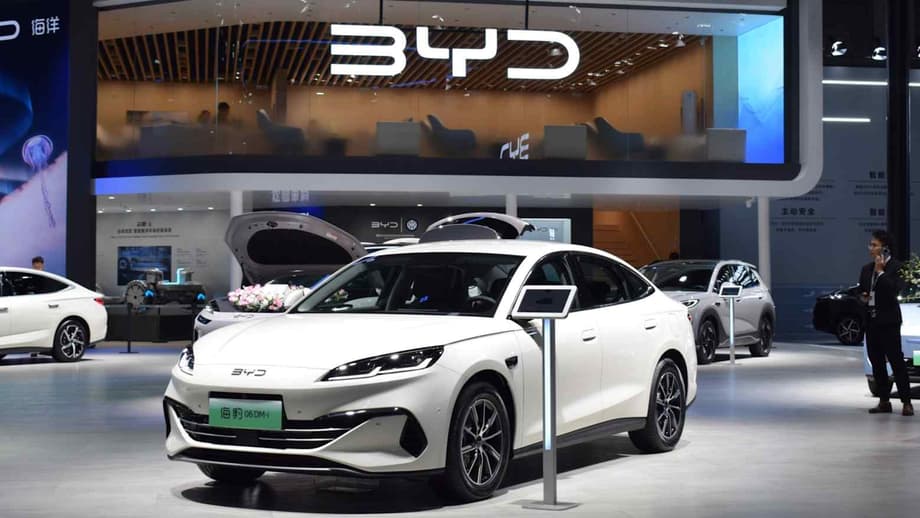
The global automotive industry is on the brink of a historic transformation as Chinese automakers are projected to overtake Japanese manufacturers in worldwide vehicle sales for the first time in 2025. This shift marks the end of more than two decades of Japanese dominance and signals the rising influence of China’s industrial power on the world stage. According to projections based on automaker disclosures and S&P Global Mobility data, Chinese brands are expected to sell approximately 27 million vehicles globally this year, surpassing Japanese automakers who are forecast to sell just under 25 million units. This milestone follows China’s ascent to become the world’s largest vehicle exporter in 2023, underscoring a rapid acceleration in the country’s automotive capabilities and market reach.
The speed of this transition has been remarkable. Just three years ago, in 2022, Japanese automakers held a lead of roughly 8 million vehicles over their Chinese counterparts. That advantage has now evaporated, driven by explosive growth in China’s domestic market and an aggressive export strategy. For Japanese manufacturers, who have held the top spot since the early 2000s and peaked at nearly 30 million sales in 2018, this displacement represents a significant competitive challenge. The change reflects broader trends in technology, economics, and consumer preferences that are reshaping the hierarchy of one of the world’s most vital industries.
The Domestic Engine Driving Global Ambitions
While exports play a crucial role, the foundation of China’s automotive surge lies within its own borders. The domestic market accounts for roughly 70% of total sales for Chinese automakers, serving as a massive testing ground and revenue generator. China has aggressively promoted new energy vehicles, including battery-electric vehicles and plug-in hybrids, creating an ecosystem where these technologies now comprise nearly 60% of passenger car sales. This rapid adoption has allowed local firms to achieve economies of scale that were previously unimaginable, significantly lowering costs for batteries, software, and production.
This scale advantage is becoming a formidable moat. By spreading fixed costs across millions of units, Chinese manufacturers can offer competitive pricing while maintaining margins, a feat that puts immense pressure on competitors in Japan, Europe, and the United States. The domestic market has essentially become a proving ground where Chinese companies can refine their technologies and business models before venturing abroad. Consequently, the global rankings are being reshaped not merely by shipping more cars, but by the sheer momentum of an industrial complex that has achieved critical mass in its home territory.
Cui Dongshu, secretary-general of the China Passenger Car Association, emphasized that this trend is structural rather than temporary. He noted that China’s well-established industrial chain and clear technological pathways have been the core drivers enabling domestic brands to gain market share steadily. The focus on both battery electric and plug-in hybrid pathways has resulted in an output nearing 15 million units this year, fundamentally altering the automotive landscape. In contrast, Japan’s continued focus on conventional hybrids has left it lagging in the race toward full electrification and intelligent connectivity.
The Export Onslaught: flooding the world
As the domestic market becomes saturated with electric vehicles, Chinese automakers are looking outward to sustain their growth. A striking aspect of this global expansion is the massive export of gasoline-powered vehicles. While Western policymakers have largely focused on the threat of subsidized Chinese electric vehicles, implementing tariffs to protect their markets, a significant portion of China’s export boom consists of fossil-fuel cars that domestic consumers no longer want.
Data from consultancy Automobility reveals that fossil-fuel vehicles have accounted for 76% of Chinese auto exports since 2020. Total annual shipments have jumped from 1 million to likely more than 6.5 million this year. This phenomenon is driven by the same government policies that crushed the China businesses of foreign automakers like Volkswagen, General Motors, and Nissan. By underwriting scores of Chinese EV makers and igniting a devastating price war, Beijing’s policies idled assembly lines capable of producing up to 20 million gasoline-powered cars annually. Automobility CEO Bill Russo noted that this excess capacity is now being aimed back at the rest of the world.
Among the biggest exporters are state-owned legacy giants such as SAIC, BAIC, Dongfeng, and Changan. These companies, which historically relied on joint ventures with foreign automakers for profits and engineering know-how, have seen their domestic joint venture sales plummet. For instance, SAIC-GM’s annual sales in China fell from more than 1.4 million vehicles to 435,000 between 2020 and 2024. To survive, these state-owned players are racking up sales in export markets that were once the domains of their foreign partners. SAIC’s exports soared from nearly 400,000 annually in 2020 to more than a million last year.
Strategic Pragmatism in Emerging Markets
Chinese automakers are displaying remarkable pragmatism in their export strategies, tailoring their offerings to the specific realities of each market rather than pushing a one-size-fits-all electric solution. In emerging and second-tier markets where EV charging infrastructure remains scarce, gasoline cars are simply easier to sell. This approach has opened new fronts in the market-share battle with foreign rivals.
Felipe Munoz, an auto analyst for JATO Dynamics, pointed out that legacy automakers were caught sleeping. While global giants focused their engineering and marketing on the wealthiest markets, Chinese manufacturers have launched an onslaught of affordable vehicles in the developing world. These exports often come with better safety features and software than the older models offered by established competitors. Munoz stated that the real battle is not happening in Europe or the United States, but in emerging markets.
In Eastern Europe, Latin America, and Africa, Chinese brands are rapidly gaining ground. In Poland, for example, 33 Chinese brands have launched sales since 2023. In South Africa, Chinese automakers controlled nearly 16% of the car market in the first half of the year, up from 10% a year earlier. They sold nearly 30,000 gasoline vehicles compared to just 11 EVs. Similarly, in Chile, Chinese automakers have captured almost one-third of the market, primarily by selling internal combustion vehicles.
Industry leaders recognize the necessity of this strategy. Nic Thomas, Changan’s European marketing director, explained that they fine-tune their offering for every market. Jelte Vernooij, Dongfeng’s Central Europe manager, echoed this sentiment, noting that if they want to be like Toyota, they cannot leave one stone unturned. Dongfeng’s exports of nearly 250,000 vehicles last year proved critical as sales of its China partnerships with Honda and Nissan entered a downward spiral.
Regional Battlegrounds and Trade Tensions
The expansion of Chinese automakers has not been without friction, leading to rising trade tensions and geopolitical maneuvering. Mexico has emerged as China’s largest export destination, a development that causes discomfort for the United States. With U.S. trade barriers effectively banning Chinese-brand vehicles, Mexico has become a potential “back door.” Chinese automakers are expected to end the year with sales exceeding 200,000 and a 14% market share in Mexico, gaining ground at the expense of brands like Fiat, Ford, and Chevrolet.
In response to this influx, Mexico raised tariffs on Chinese cars from 20% to 50% in September, a move aimed at protecting jobs and placating Washington. Similarly, Russia doubled fees on Chinese imports to $7,500 after Chinese brands grew their market share from 21% in 2022 to 64% in 2024. South Africa has also encouraged Chinese automakers to build factories while simultaneously threatening tariffs to restrict cheap imports to protect its own manufacturing base.
Europe remains a complex battleground. Despite the European Union imposing additional import tariffs on China-made electric vehicles, Chinese manufacturers have adapted by increasing the share of plug-in hybrid exports, which are not subject to the same duties. Sales of Chinese vehicles in Europe are expected to rise to around 2.3 million units this year. This adaptability demonstrates the flexibility of Chinese automakers in navigating regulatory hurdles to maintain their growth trajectory.
The Competitive Response and Future Outlook
Global automakers have widely acknowledged that rising Chinese rivals pose a serious competitive threat, yet their responses vary. Some legacy players express confidence. Alexander Seitz, Volkswagen’s South America chief, stated he had no fear of the Chinese, respecting them as competitors who are welcome to join the party. Volkswagen is even looking to export cars built in China to more overseas markets to leverage the cost advantages found there.
Others are forming alliances to counter the Chinese advance. Facing intensifying competition, General Motors and Hyundai announced in August they would jointly develop cars for South America to lower costs. Stellantis CEO Antonio Filosa indicated the company would focus on locally built cars tailored to local tastes in markets like the Middle East and Africa to defend its share.
Looking ahead, the momentum appears to be with the Chinese manufacturers. Consultancy AlixPartners predicts that annual sales outside China for these automakers will grow by 4 million vehicles by 2030. They are expected to capture large market shares in South America, the Middle East, Africa, and Southeast Asia. Including expected growth in China, Chinese automakers are projected to control 30% of the global auto industry in five years. Stephen Dyer of AlixPartners noted that this growth will come at the expense of everyone else.
The implications extend beyond just sales volume. As China consolidates its position, investor attention is likely to shift toward the parts of the supply chain with the strongest demand and pricing leverage, such as batteries, materials, and power electronics. The industry is evolving from a slow-moving hierarchy into a race for scale, data, and manufacturing speed, where setting standards for batteries, charging, and in-car software will be the next major contest.
The Bottom Line
- Chinese automakers are projected to sell approximately 27 million vehicles globally in 2025, surpassing Japanese automakers.
- Japan has held the top spot in global sales for over 20 years but is expected to fall to second place.
- China’s domestic market accounts for roughly 70% of its sales, driven by a 60% share in new energy vehicles.
- Fossil-fuel vehicles comprise 76% of China’s auto exports since 2020, totaling over 6.5 million shipments this year.
- State-owned giants like SAIC and Dongfeng are leading the export push to offset declining domestic joint venture sales.
- Emerging markets in Latin America, Africa, and Eastern Europe are primary targets for affordable gasoline vehicle exports.
- Rising trade tensions have led to tariff increases in Mexico, Russia, and South Africa to protect local industries.
- Chinese automakers are expected to control 30% of the global auto industry by 2030.