A New Creative Partnership Takes Shape
Netflix has announced an ambitious multimedia project that bridges the worlds of streaming animation and traditional manga publishing. “Love Through a Prism,” an original anime series created by legendary manga artist Yoko Kamio, will premiere on the streaming platform on January 15, 2026. Just one week earlier, on January 8, 2026, a manga adaptation of the same story will launch simultaneously on Shonen Jump+ and Manga Mee, digital platforms that typically serve different demographic audiences. This coordinated release strategy represents a significant shift in how major anime and manga properties are marketed to global audiences.
The project brings together two influential creators in the romance genre. Yoko Kamio, best known for creating the blockbuster series “Boys Over Flowers,” provides the original story and character designs. Collaborating on the manga adaptation is Maki Minami, creator of the acclaimed series “Special A.” What makes this partnership particularly meaningful is their professional history, as Minami began her career as an assistant to Kamio before achieving success in her own right. Now they reunite as equals to bring this new romantic tale to life across two different media formats.
Produced by WIT Studio, the animation company behind the first three seasons of “Attack on Titan” and the Netflix original “Great Pretender,” the anime series will consist of 20 episodes. The studio has been increasingly focusing on original content in recent years, and this collaboration with Netflix represents one of their most ambitious projects to date. The dual release approach demonstrates how publishers and streaming platforms are working together to create comprehensive entertainment experiences that engage audiences through multiple touchpoints.
<
Set Against the Canvas of Edwardian London
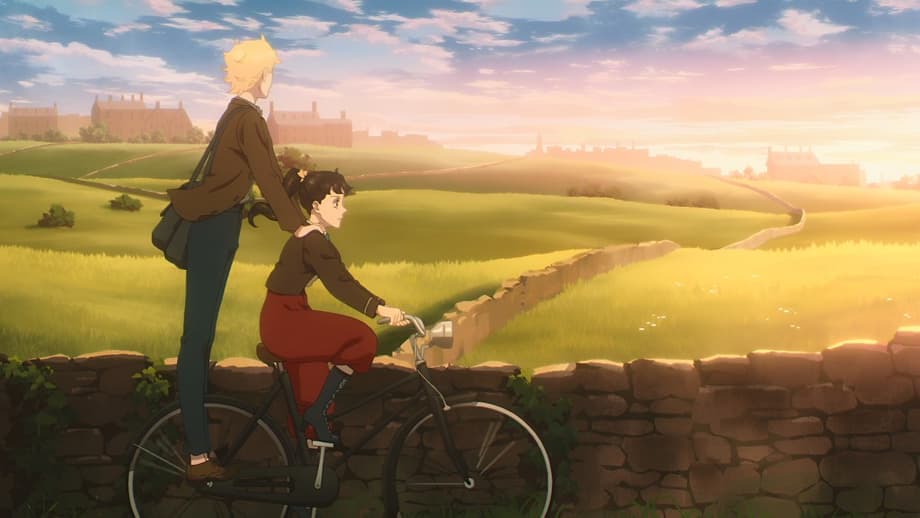
“Love Through a Prism” transports viewers to the early 1900s, a period of artistic innovation and social change in London. The story centers on Lili Ichijoin, a young Japanese woman who travels to England to study at the prestigious Saint Thomas Art Academy. Her parents have set an ultimatum, she must reach the top of her class within six months or return home to Japan. This pressure creates a tense environment where academic achievement becomes not just a personal goal but a condition of her continued independence.
At the academy, Lili encounters Kit Church, a gifted artist from an aristocratic family whose talent is matched only by his emotional detachment from others. Kit’s reputation as a prodigy painter precedes him, but his aloofness keeps potential friends and rivals at a distance. When their paths cross, Lili finds herself both drawn to and challenged by Kit’s singular focus on art. His dedication to painting sparks something in her, igniting a competitive drive that pushes her to develop her own artistic voice.
The series explores how their initial professional rivalry gradually evolves into something more complex. As they spend more time together, Lili and Kit begin to discover shared values and complementary perspectives on art and life. Their romance develops slowly, built on mutual respect and understanding rather than instant attraction. This deliberate pacing allows the story to examine how class differences, cultural expectations, and personal ambitions shape their relationship. The early 20th century setting provides a rich backdrop for these themes, highlighting the rigid social structures that Lili and Kit must navigate as they pursue both their artistic dreams and their growing feelings for each other.
<
Star-Studded Voice Cast and Production Team
The creative talent behind “Love Through a Prism” includes some of the most respected names in the anime industry. Atsumi Tanezaki, known for her roles in “Spy x Family” as Anya Forger and “Frieren: Beyond Journey’s End” as Frieren, voices the protagonist Lili Ichijoin. Her ability to convey both determination and vulnerability makes her an ideal choice for this complex character. Opposite her, Koki Uchiyama takes on the role of Kit Church. Uchiyama has built an impressive career with roles in “Hunter x Hunter,” “Horimiya,” and “Jujutsu Kaisen,” bringing to each performance a depth and subtlety that suits the enigmatic Kit.
“This is the story of Lili, who blazes through her time with love, courage, and romance. In our society, where it is becoming difficult to talk about hopes and dreams, and where common things we take for granted are fading away, I hope this series can be a light for those who watch it.” — Yoko Kamio
The supporting cast features equally accomplished voice actors. Yuki Kaji, famous for portraying Eren Yeager in “Attack on Titan,” plays Shinnosuke Kobayakawa, while Megumi Han, known for her work in “Oshi No Ko,” voices Dorothy Brown. Other notable cast members include Yohei Azakami as Joffrey O’Brien, Shogo Sakata as Peter Anthony, Sumire Uesaka as Catherine Astor, and Akari Kito as Sakura Kobayakawa. Veteran actors Hochu Otsuka, Yuhko Kaida, and Junichi Suwabe round out the ensemble, bringing decades of experience to their respective roles.
Behind the camera, director Kazuto Nakazawa leads the production team. Nakazawa has directed acclaimed series including “B: The Beginning” and worked on the animated sequence in “Kill Bill: Volume 1.” His visual style combines dynamic action with expressive character moments, making him well-suited to balance the romantic and artistic elements of the story. The music is composed by Naoki Chiba, whose previous work includes scores for popular anime series. The theme song, “star flower,” is performed by Chilli Beans., adding another layer of emotional resonance to the production.
<
The Legacy of Yoko Kamio and the Shōjo Renaissance
Yoko Kamio’s influence on the manga industry cannot be overstated. Her breakout creation, “Boys Over Flowers” (Hana Yori Dango), became a global phenomenon that defined romantic shōjo manga for a generation. The series holds the Guinness World Record for the most published copies of a shōjo manga series written by a single author, a testament to its enduring popularity. What made “Boys Over Flowers” special was its ability to combine classic romance tropes with sharp social commentary about class privilege and personal integrity.
The impact of Kamio’s work extends far beyond manga pages. “Boys Over Flowers” has been adapted into multiple live-action versions across Asia, including Japanese, Taiwanese, Korean, Chinese, and Thai productions. This international appeal demonstrates how her stories transcend cultural boundaries while addressing universal themes of love, ambition, and self-discovery. Each adaptation has found success in its local market, proving the versatility and timelessness of her storytelling approach.
With “Love Through a Prism,” Kamio returns to many of the themes that made her earlier work so compelling, but with a fresh setting and new character dynamics. The early 20th century London backdrop provides a different canvas for exploring class differences and social expectations, while the art school setting allows for rich visual storytelling and artistic metaphor. The story addresses contemporary issues through this historical lens, commenting on how societal pressures can stifle creativity and personal growth, and how art can serve as both refuge and rebellion against those constraints.
<
A Strategic Dual-Platform Release
The decision to launch the manga adaptation on both Shonen Jump+ and Manga Mee represents a deliberate strategy to reach the widest possible audience. Shonen Jump+ typically publishes series targeting male readers with action-oriented stories, while Manga Mee focuses on shōjo and josei content aimed at female readers interested in romance and slice-of-life narratives. By releasing “Love Through a Prism” on both platforms simultaneously, the publisher is acknowledging that the story has broad appeal that transcends traditional demographic categories.
This approach also maximizes promotional opportunities. Readers who discover the manga on either platform will be directed to the anime adaptation on Netflix, creating a natural cross-pollination effect. Conversely, viewers who watch the anime first can immediately access the manga to explore the story in greater depth. The one-week gap between the manga and anime releases creates anticipation and allows word-of-mouth to build, potentially increasing viewership for both versions of the story.
The collaboration between Kamio and Minami is particularly noteworthy given their professional history. Minami began her career as Kamio’s assistant, learning the craft of manga creation under her mentor’s guidance. Her own series, “Special A,” earned critical acclaim and established her as a significant voice in shōjo manga. Now, instead of working in a hierarchical relationship, they collaborate as equals, with Kamio providing the story foundation and Minami handling the artistic interpretation. This partnership model allows both creators to play to their strengths while maintaining a consistent vision for the project.
<
Visual Storytelling and Artistic Themes
The art school setting of “Love Through a Prism” provides rich opportunities for visual storytelling that bridges the gap between page and screen. The series uses painting as both subject matter and metaphor, with characters expressing emotions through their artistic choices and techniques. Lili’s journey from technically competent painter to true artist parallels her emotional growth and developing relationship with Kit. The visual contrast between her structured, methodical approach and his raw, intuitive style reflects their different backgrounds and worldviews.
WIT Studio’s involvement promises exceptional animation quality, particularly in depicting the artistic process. The studio has demonstrated its ability to create visually stunning sequences in previous works like “Attack on Titan” and “Vivy: Fluorite Eye’s Song.” For “Love Through a Prism,” they will need to balance romantic moments with detailed depictions of painting techniques and art school environments. The period setting also requires careful attention to historical detail, from fashion to architecture to the specific artistic styles popular in early 20th century London.
The title itself, “Love Through a Prism,” suggests themes of perception and perspective. Just as a prism separates light into its component colors, the series examines how love and art can be viewed from multiple angles. Characters see the world differently based on their experiences and social positions, and part of the story involves learning to appreciate these varying perspectives. This thematic richness gives the series potential to resonate with viewers beyond simple romantic entertainment, inviting reflection on how we see ourselves and others.
<
Positioning in the Evolving Anime Landscape
The release of “Love Through a Prism” comes at an interesting moment in the anime industry. While shōnen series dominated streaming viewership for years, recent successes have demonstrated growing appetite for shōjo and romance content. Series like “My Happy Marriage,” “Skip and Loafer,” and “Fruits Basket” have proven that stories focused on relationships and character development can find large audiences when given proper production values and marketing support.
This shift reflects broader changes in viewer preferences. Modern audiences, particularly younger viewers, increasingly value authentic emotional storytelling over escalating action spectacles. The success of shōjo anime highlights how these series often address complex psychological themes with nuance and sensitivity, offering character-driven narratives that resonate on a personal level. “Love Through a Prism” enters this landscape with advantages that position it for success: proven creators, a prestigious studio, and Netflix’s global marketing reach.
The series also represents part of Netflix’s strategy to develop original anime content that can compete with established franchises. Rather than simply licensing popular existing series, the streaming giant is investing in new properties that can become long-term assets. The collaboration with Shueisha for the manga component suggests a more integrated approach to content creation that benefits both companies. Netflix gains a source material library and built-in fanbase, while Shueisha gains international exposure for its intellectual property.
<
Bridging Traditional Publishing and Streaming
The coordinated release of “Love Through a Prism” across manga and streaming platforms illustrates how traditional publishing and digital entertainment are becoming increasingly interconnected. In Japan, manga has long served as source material for anime adaptations, but the timing and coordination of these releases has typically been less strategic. This project represents a more sophisticated approach where both versions are developed in parallel rather than sequentially.
This model offers several advantages. It creates a consistent brand experience across different media, ensuring that character designs, story elements, and visual style remain cohesive regardless of how audiences encounter the property. It also allows for cross-promotion, with each version driving interest in the other. From a business perspective, diversifying distribution channels reduces risk and maximizes potential revenue streams.
For international audiences, this approach provides multiple entry points into the story. Some viewers prefer reading manga at their own pace, while others enjoy the immersive experience of animated storytelling. By offering both options simultaneously, the creators acknowledge these different preferences and make the content accessible to the widest possible audience. This strategy aligns with contemporary media consumption habits, where audiences increasingly engage with stories across multiple platforms and formats.
<
What to Expect From the Series
Based on the information released so far, “Love Through a Prism” promises to deliver a sophisticated romantic story set against a rich historical backdrop. The 20-episode length suggests ample time for character development and relationship progression without feeling rushed. The gradual evolution of Lili and Kit’s relationship from professional rivals to romantic partners should provide satisfying emotional arcs, while the art school setting offers opportunities for visual creativity and artistic competition.
The supporting cast appears well-developed, with characters who will likely have their own subplots and relationships. Classmates at the academy will serve as both rivals and allies, creating a dynamic social environment that reflects the competitive nature of art education. Family relationships, particularly Lili’s connection to her parents in Japan, will add another layer of emotional complexity and personal stakes to the story.
The historical setting allows for exploration of issues that remain relevant today. The pressure Lili feels to succeed academically reflects contemporary concerns about educational achievement and parental expectations. Class differences between Lili and Kit echo ongoing discussions about social mobility and inequality. The early 20th century art world provides a fascinating backdrop for examining how artistic movements both reflect and challenge social norms. These elements should give the series depth beyond its romantic storyline.
<
The Broader Impact on Anime and Manga
The success of “Love Through a Prism” could have significant implications for the industry. If the coordinated release strategy proves effective, we may see more collaborations between streaming platforms and manga publishers to develop properties simultaneously across media. This would represent a shift from the traditional model where manga is typically adapted into anime only after achieving proven success in print.
The project also highlights the growing international appeal of shōjo content. For years, shōjo series struggled to find audiences outside Japan, but recent years have seen numerous romantic and slice-of-life anime achieve global popularity. “Love Through a Prism” benefits from being produced by a major studio with Netflix’s distribution reach, potentially introducing shōjo storytelling to viewers who might not otherwise seek it out.
Furthermore, the collaboration between Kamio and Minami demonstrates how established creators can mentor and empower the next generation while continuing their own creative evolution. This model of partnership could inspire similar collaborations in the industry, fostering knowledge transfer and creative renewal. By combining experience with fresh perspectives, such partnerships can produce work that respects tradition while innovating for contemporary audiences.
<
Key Points
- “Love Through a Prism” premieres on Netflix on January 15, 2026, with 20 episodes
- Manga adaptation launches January 8, 2026 on Shonen Jump+ and Manga Mee
- Created by Yoko Kamio of “Boys Over Flowers” fame, with art by Maki Minami
- Produced by WIT Studio and directed by Kazuto Nakazawa
- Set in early 1900s London at an art academy
- Features voice talent including Atsumi Tanezaki and Koki Uchiyama
- Story explores romance, artistic ambition, and social class differences
- Represents coordinated release strategy across manga and streaming platforms
- Part of broader trend showcasing shōjo anime’s growing international appeal