A Paradox of Progress and Decay
India’s cities present a baffling contradiction. On one hand, the nation has spent hundreds of billions on a national facelift, constructing shiny airports, multi-lane national highways, and metro train networks across major urban centers. On the other hand, these same cities rank near the bottom of global livability indexes, choked with traffic, shrouded in foul air, and littered with heaps of uncleared rubbish. This disconnect between impressive infrastructure spending and deteriorating quality of life has reached a breaking point in recent years, with citizens staging rare protests and public outbursts against the worsening conditions in places like Bengaluru, Mumbai, and Delhi. The question emerges with increasing urgency: Why isn’t India’s blazing GDP growth leading to a regeneration of its decrepit cities?
- A Paradox of Progress and Decay
- The Governance Deficit at the Core
- Urban Decay Across Major Cities
- The Climate Crisis Exacerbating Urban Failures
- Millionaire Migration Signals Deeper Crisis
- The Smart Cities Mission: Promise and Limitations
- Infrastructure and Service Delivery Failures
- The Persistence of the Urban Crisis
- Pathways Forward for Urban Transformation
- The Cycle of Realisation
- The Bottom Line
The Governance Deficit at the Core
The root cause of India’s urban crisis lies in a fundamental historical oversight. When the Indian Constitution was written, it spoke of the devolution of power to central and state governments but did not anticipate that cities would grow so massive that they would need separate governance structures. Ramanath Jha, a Distinguished Fellow at the Observer Research Foundation think tank, explains that India’s urban governance model remains fragmented and ineffective compared to other nations.
“Mayors and local councils that run Indian cities are the weakest organs of the state, closest to the citizenry, but tasked with the toughest problems to solve,” says Ankur Bisen, author of Wasted, a book about the history of India’s sanitation issues.
The situation stands in stark contrast to China, where city mayors wield substantial executive powers controlling urban planning, infrastructure, and investment approvals. China follows a highly centralized planning model with strong national mandates, yet local governments enjoy implementation freedom and face performance-based rewards and penalties. Chinese mayors of major cities have powerful patrons in the Communist Party’s top committee, making these posts important stepping stones for further promotions. In India, by comparison, few citizens can even name the mayors of their major cities.
An attempt was made in 1992 to “finally allow cities to take charge of their own destinies” through the 74th amendment of the Constitution. Local bodies were granted constitutional status and urban governance was decentralized. However, many provisions have never been fully implemented. Vested interests prevent bureaucrats and higher levels of government from devolving power and empowering local bodies. Instead, chief ministers of states act like super mayors and call the shots.
Urban Decay Across Major Cities
The manifestations of this governance failure are visible across India’s urban landscape. In Jaipur, centuries-old architecture faces defacement from tobacco stains while jostling for space with car mechanic workshops. The city’s decay reflects a resigned hopelessness about urban conditions that plague not just Jaipur but many Indian cities.
Bengaluru, often called India’s Silicon Valley for its many IT companies and startup headquarters, has seen its livability deteriorate dramatically. The city had a population of less than 1 million in 1951, but by 2021 it had swelled to 12.76 million and is currently estimated at 14 million. Along with population growth, both human density and built density have increased, contributing to rising temperatures. In 2024, the Karnataka State Natural Disaster Monitoring Centre reported that temperatures in the city had crossed 40 degrees Celsius, reaching 41.8 degrees on April 30, 2024.
Bengaluru now faces a severe drinking water problem. Last summer, the Karnataka Chief Minister stated that the city was short of 500 million litres of water daily, one-fifth of total demand. Parts of the citizenry rely on expensive water tankers. As population rises, greater water demand leads to larger groundwater extraction, dropping water levels and drying wells.
The traffic situation in Bengaluru has become notorious. Tom Tom’s global Traffic Congestion Index 2023 ranked Bengaluru as the most congested city in India and sixth-most congested worldwide. It took 28 minutes and 30 seconds to cover 10 kilometers with an average speed of 18 km per hour. This was one minute longer than in 2022, indicating worsening conditions.
Mumbai’s Pothole Protests
Mumbai, the financial capital, has witnessed citizen protests against worsening pothole problems. Clogged sewage lines dumped garbage onto flooded roads during the extended monsoon. The city, which publicly harbored dreams of becoming another Shanghai in the 1990s, remains unable to realize that ambition due to prohibitive land prices, lack of affordable housing, overwhelming population density, and declining quality of life.
The economic costs of urban flooding are estimated at approximately $4 billion annually. Pollution-related losses amount to as much as six percent of GDP in Delhi. Around seven percent of deaths in major Indian cities are caused by air pollution. Lost working hours due to congestion, poor air quality, and diseases transmitted through polluted water and air worsen the burden.
The Climate Crisis Exacerbating Urban Failures
Climate change is amplifying India’s urban challenges. Ten out of the country’s 15 hottest years on record occurred in the last decade and a half. In 2024, New Delhi experienced daytime temperatures higher than 40C for an entire month. With humidity, the air can feel as much as 10 degrees hotter. These temperatures can overwhelm railways and electrical grids, hampering exports and idling factories.
The toll of what researchers call “heat stress” is growing rapidly in India. Almost three-quarters of the workforce labors either outside or in indoor settings with little to no cooling. Many are employed informally. When they collapse from heatstroke or dehydration, they forgo income needed to survive and cannot contribute to economic growth. The International Labour Organization estimates heat stress will reduce India’s annual productivity by the equivalent of 34 million full-time jobs by the end of the decade.
“There’s not one system in the body that heat spares,” says Kamlesh Kumar, director of the heat-response department at Anugrah Narayan Magadh Medical College. “Right from the central nervous system to our heart, to our muscles, kidneys and liver, everything is at risk.”
The risks are particularly severe in fast-growing provincial cities with dusty streets and almost nonexistent green spaces. Children and the elderly struggle first, but healthy adults soon follow. In Bihar alone, a 2019 heat wave killed at least 215 people, and during last year’s national election, 10 poll workers died of apparent heatstroke within 24 hours. Such figures are almost certainly dramatic underestimates, as heat often aggravates preexisting medical conditions that then get listed as the cause of death.
Millionaire Migration Signals Deeper Crisis
The urban livability crisis has reached a point where it is triggering significant wealth flight. Millionaire migration has seen a disquieting rise in India recently. In 2023, 283,000 Indians with a net worth of over $3 million left the country. By 2028, 430,000 individuals with total wealth of over $40 billion are likely to leave. A survey by Kotak Private and Ernst & Young estimated that 22 percent of the super-rich in India were considering leaving.
While multiple factors drive this migration, sub-standard urban living conditions rank prominently among them. The availability of better living conditions abroad, including superior infrastructure with better roads, shorter daily commutes, cleaner air, greater cleanliness, more dependable municipal services, and enhanced safety, draws wealthy Indians away.
The consequences are apparent across India’s top cities. Mumbai, Delhi, Kolkata, Bengaluru, Chennai, Hyderabad, Pune, Ahmedabad, Surat, Vishakhapatnam, Jaipur, and Lucknow, which house most of India’s super-rich, contribute most to national GDP. While these are also the costliest cities, cost of living is not the primary factor driving migration. Rather, the quality of life in these cities has been declining. As soon as the super-rich leave their private homes, they must partake in the reality around them, including uneven and potholed roads, unclean surroundings, long commute times, traffic congestion, and poor air quality.
The Smart Cities Mission: Promise and Limitations
India launched the Smart Cities Mission in 2015 with ambitious goals. By July 2025, 7,636 projects had been completed with $1.53 lakh crore invested. Eighteen cities have fully implemented all smart city projects, and 100 cities are part of the scheme. Cities like Pune, Surat, Vadodara, Coimbatore, and Udaipur have implemented innovations including smart traffic management systems, IoT-enabled waste management, integrated command and control centers, smart mobility solutions, digital governance platforms, and smart water management.
However, beneath these impressive numbers lies a troubling reality. The Smart Cities Mission addresses only a fraction of India’s urbanization challenges. Only 100 cities are covered, representing approximately 30 percent of India’s urban population. The remaining 70 percent of urban residents live in cities and towns not included in the scheme.
The mission relies on a mixed financing model with central government contributions, state and municipal contributions that are often inadequate, complex public-private partnerships, and commercial loans creating debt burdens for financially weak municipalities. This fragmented financing structure has caused delays and incomplete projects. Additionally, maintenance of completed projects remains underfunded. Smart systems require continuous investment in upgrades, staff training, and operational costs.
Perhaps most critically, the Smart Cities Mission has failed to address the fundamental livability question for India’s poorest urban residents. Approximately 25 percent of urban dwellers live below the poverty line, and 17 percent of urban households reside in slums. The mission has been criticized for gentrifying urban spaces, driving property values upward, and inadvertently displacing low-income communities. Smart city projects often focus on high-tech surveillance systems, premium public spaces designed for middle-class use, commercial districts, and technology parks. Meanwhile, the immediate needs of slum dwellers such as adequate sanitation, drinking water, basic healthcare, and affordable housing remain unaddressed.
The Scale of India’s Urban Challenge
India is urbanizing at a pace the world has rarely seen. By 2030, more than 600 million Indians are expected to live in urban areas. According to UN projections, by 2050, urban areas will house 951 million Indians, representing the largest urbanization wave in human history. Concurrently, urban areas already contribute 63 percent to India’s GDP, a figure projected to reach 75 percent by 2030.
Managing this demographic shift requires 144 million new homes, thousands of kilometers of roads, water systems for expanded populations, and disposal infrastructure for waste. India’s current infrastructure investment averages only half of what is required. This funding gap represents a critical failure point in India’s urban future readiness.
The real story of Indian urbanization unfolds in smaller cities. More than 70 percent of India’s urban population lives in settlements with fewer than 1 million inhabitants. Small and medium-sized cities with populations between 100,000 and 500,000 experience explosive growth but lack adequate urban planning frameworks, fiscal resources for infrastructure development, and technical expertise in municipal administration.
Infrastructure and Service Delivery Failures
India’s urban infrastructure deficit grows larger each year as more people arrive. Water scarcity affects nearly 40 percent of India’s urban population. Cities like Chennai have experienced severe water shortages, forcing residents to rely on expensive private water tankers. The problem extends beyond supply to include distribution, quality, and efficient usage. Many cities lose 30 to 50 percent of their water supply through leaky pipes and poor infrastructure.
Transportation gridlock costs Indian cities billions of rupees annually in lost productivity and fuel consumption. Poor public transportation systems force people to rely on private vehicles, creating congestion and pollution. Traffic congestion costs India $22 billion annually in lost productivity. Cities lose 4 to 8 percent of productivity annually to transportation inefficiency. Average commute times in Indian metropolitan areas exceed 90 minutes daily in many areas.
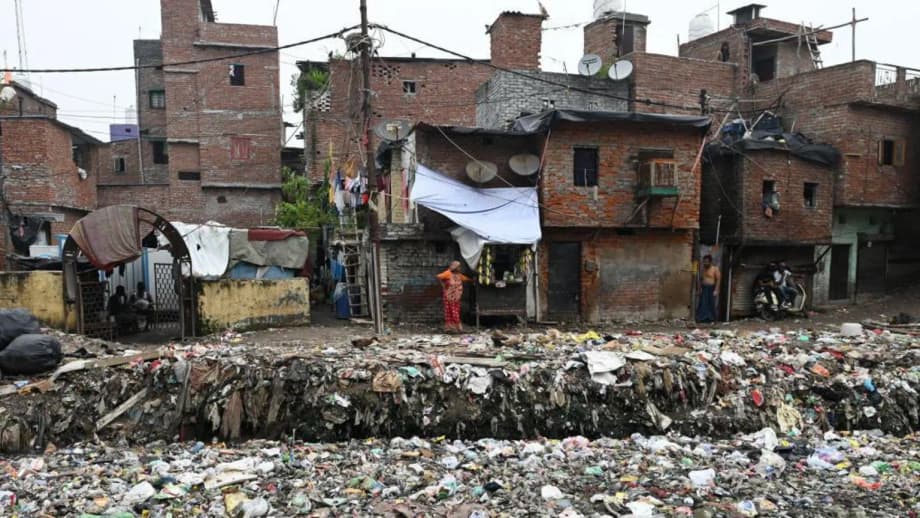
Housing represents another critical challenge. Nearly 65 million Indians live in slums, often without access to basic services like clean water, sanitation, or healthcare. India faces one of the world’s most severe housing crises, particularly acute for low-income groups. Slums across Indian cities house approximately 120 million people in conditions of severe overcrowding, with average slum density reaching 40 or more persons per thousand square meters compared to standard recommendations of 8 to 10.
Urban India faces persistent water and sanitation challenges despite urbanization. Approximately 50 percent of urban India lacks reliable 24-hour water supply. Groundwater depletion is severe in many metropolitan areas. Water quality remains poor, with microbial contamination common in piped water. Approximately 40 percent of urban households lack access to proper sewer connections. Septage management is virtually nonexistent in most cities, and untreated sewage contaminates groundwater and surface water.
The Persistence of the Urban Crisis
The persistence of India’s urban crisis can be traced to six major factors identified by researchers. First, there is a general disregard for natural water flow, as seen in Chennai, Bengaluru, Gurugram, and Mumbai. Second, cities lack exclusive and integrated plans for roads and drainage systems, often treating them as separate infrastructure concerns. Third, the financial and technical capacity of urban local bodies remains weak, with an average of 37 percent vacancies across major states and cases of a single engineer managing multiple towns.
Fourth, the multiplicity of agencies handling roads and drainage creates duplication and confusion. Delhi has nine such agencies without unified accountability. Fifth, the absence of coordinated regional planning prevents the smooth connection of drainage systems and impedes traffic management across city regions. Lastly, the lack of citizen participation has slowed the adoption of corrective and preventive measures that could build resilience at the community level.
Adding to these structural issues is a severe data vacuum. India’s last census, conducted over 15 years ago, recorded 30 percent urban population. Informally, nearly half the country is now thought to have taken on an urban character, with the next census delayed until 2026. As Ankur Bisen asks, “How do you even begin to solve a problem if you don’t have data on the extent and nature of urbanisation?”
Pathways Forward for Urban Transformation
Despite these daunting challenges, experts and policymakers propose several pathways forward. A comprehensive action plan for resilient cities includes preparing exclusive, integrated plans for roads and related services at both urban local body and regional levels. Implementing innovative traffic management systems can reduce congestion and commuting time. Conserving water bodies and introducing rainwater harvesting in a time-bound manner is essential. Reclaiming low-lying waste-dump areas to create new water bodies and developing water ring roads to restrict external runoff are additional strategies.
Establishing early-warning systems through Integrated Command and Control Centres, ensuring routine maintenance of roads and storm water drains, and conducting regular safety and structural audits of infrastructure are crucial steps. Addressing manpower shortages by filling vacancies and reducing overreliance on outsourcing must be prioritized. Regular staff training should be institutionalized, and citizen participation promoted to protect footpaths, conserve water bodies, follow rainwater harvesting rules, and maintain drainage systems.
Financial reforms remain critical. Many urban local bodies struggle with financial sustainability, depending heavily on state government grants with limited revenue-generating capacity. Reforms include implementing fair and efficient property tax systems, optimizing user fees for urban services, and issuing municipal bonds to raise funds for infrastructure projects. Public-private partnerships can leverage private sector efficiency and resources while ensuring public oversight and accountability.
Some experts have proposed more radical solutions, including the creation of private cities operated under specific laws and principles to serve quality of life objectives. These would function within the boundaries of the Indian Constitution but with municipal laws governing them differing from those applicable elsewhere. They would operate more akin to a business enterprise than a municipality, with powers to determine their functions, revenue raising, and expenditure.
The Cycle of Realisation
The data vacuum and non-implementation of frameworks articulated in the 74th constitutional amendment reflect a weakening of India’s grassroots democracy. It is strange to experts that there is no outcry about cities similar to the public reaction against corruption a few years ago. India will likely have to go through a natural “cycle of realisation” before urban conditions improve significantly.
Ankur Bisen gives the example of the Great Stink in London in 1858 which prompted the government to construct a new sewerage system for the city and marked the end of significant cholera outbreaks. “It’s usually [during] events like these when things reach a boiling point, that issues gain political currency,” says Bisen.
The frustration of citizens in major cities suggests that boiling point may be approaching. In Bengaluru, public outbursts from citizens and billionaire entrepreneurs alike have emerged fed up with traffic snarls and garbage piles. In Mumbai, citizens staged rare protests against worsening pothole problems. In Delhi’s annual winter of discontent, toxic smog left children and the elderly gasping, with doctors advising some to leave the city. Even footballer Lionel Messi’s visit was overshadowed by fans chanting against the capital’s poor air quality.
The honest assessment is that India is partially future-ready but dangerously underprepared in execution. India has vision, scale, and innovation capacity. What it lacks is coordinated urban planning, inclusivity, and long-term thinking. Smart cities without livability will not sustain India’s demographic and economic ambitions. The future of India will be decided not just by how many cities become “smart,” but by how many become livable, equitable, and resilient.
The Bottom Line
- India’s urban population is expected to reach 814 million by 2050, creating massive infrastructure challenges
- Root cause of urban crisis is governance deficit, with weak local bodies lacking power compared to Chinese city mayors
- Bengaluru grew from 790,308 people in 1951 to 14 million now, facing severe water shortages and worst traffic in India
- 283,000 high-net-worth Indians left in 2023, with 430,000 more likely to leave by 2028 due to declining quality of life
- Smart Cities Mission covers only 100 cities representing 30 percent of urban population
- Pollution losses amount to 6 percent of GDP in Delhi, with 7 percent of deaths in major cities caused by air pollution
- Water scarcity affects 40 percent of urban population, with many cities losing 30 to 50 percent supply through leaks
- 120 million people live in slums with average density of 40+ persons per thousand square meters
- Traffic congestion costs India $22 billion annually in lost productivity
- Heat stress expected to reduce India’s productivity by equivalent of 34 million full-time jobs by decade’s end