Hong Kong Takes Bold Step in Scientific Innovation with New Cross-Border Data Channel
Hong Kong authorities are preparing to launch a groundbreaking special channel next year that will allow sensitive mainland Chinese biological samples and data to cross the innovation cooperation zone between the city and Shenzhen. Secretary for Innovation, Technology and Industry Sun Dong announced the initiative on a television program, stating that authorities have already clearly defined the scope of specific genetic resources and sensitive information to be permitted through this new pathway.
- Hong Kong Takes Bold Step in Scientific Innovation with New Cross-Border Data Channel
- The Hetao Innovation Cooperation Zone: A New Scientific Frontier
- Implementation Framework: Green Channel and White List System
- Broader Strategic Context: Northern Metropolis and Greater Bay Area Development
- Future Outlook: Implications for Hong Kong’s Scientific Ecosystem
- Key Points
The initiative represents a significant development in cross-border scientific collaboration between Hong Kong and mainland China, addressing one of the key challenges in modern biological research: the difficulty of sharing sensitive genetic and biological data across different regulatory jurisdictions. The creation of this special channel is expected to accelerate research in critical areas including genetics, precision medicine, and biotechnology, potentially positioning the region as a global leader in life sciences innovation.
Sun Dong emphasized that implementation plans would be rolled out “appropriately when many enterprises move in and start formal operations next year.” The goal is to enable sensitive data in various industries, not just personal data, to cross into the Hetao park “in an orderly and safe manner under the premise of not affecting national security.” This careful balance between scientific progress and security considerations reflects the complex regulatory landscape governing biological data in both jurisdictions.
The Hetao Innovation Cooperation Zone: A New Scientific Frontier
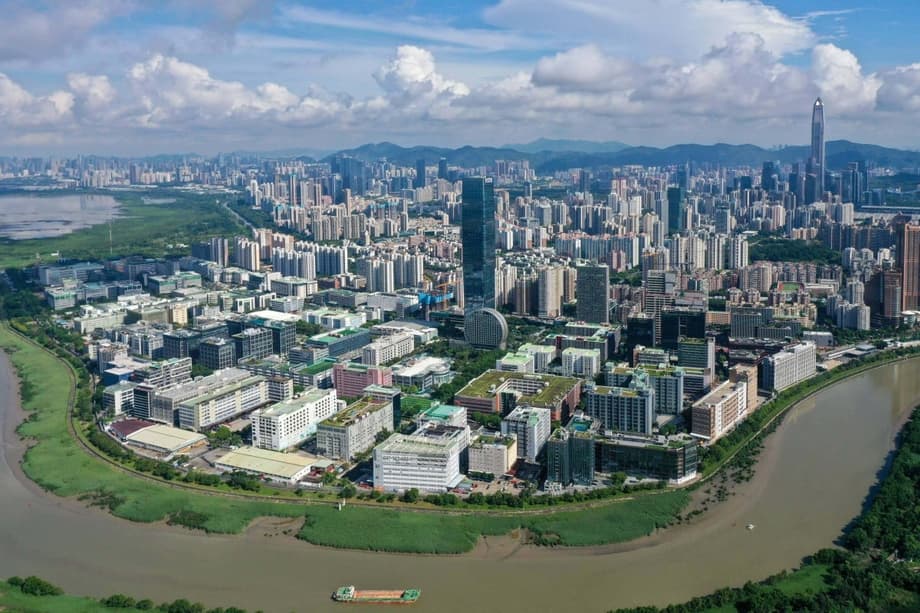
The special channel will operate within the Hetao Shenzhen-Hong Kong Science and Technology Innovation Cooperation Zone, a strategic initiative positioned by China’s 14th five-year plan as a world-class hub for technological innovation and high-quality development within the Greater Bay Area. This ambitious zone comprises the 87-hectare (215-acre) Hong Kong park at the Lok Ma Chau Loop and an adjacent 302-hectare site in Shenzhen, creating a significant research and development complex straddling the border between the two jurisdictions.
The Lok Ma Chau Loop location is particularly significant as it sits at the physical boundary between Hong Kong and Shenzhen, making it an ideal location for cross-border scientific collaboration. This geographical positioning allows for the seamless movement of researchers and, importantly with this new channel, sensitive biological data between the two innovation hubs. The zone aims to leverage the complementary strengths of both Hong Kong and Shenzhen – Hong Kong’s world-class research institutions, international connectivity, and regulatory environment, combined with Shenzhen’s manufacturing capabilities, technological infrastructure, and rapid innovation ecosystem.
The development of the Hetao zone is part of Hong Kong’s broader Northern Metropolis strategy, which seeks to transform the northern part of the territory into a major center for innovation and technology. This ambitious development plan aims to create new economic opportunities, strengthen Hong Kong’s role in the Greater Bay Area, and diversify the city’s economy beyond its traditional focus on finance and professional services.
The Scientific Imperative for Cross-Border Data Sharing
The need for efficient cross-border sharing of biological data has become increasingly urgent as scientific research becomes more collaborative and data-intensive. Modern biological research often requires large datasets involving genetic information, cellular metabolism studies, and clinical data from diverse populations. The ability to seamlessly share this sensitive information across borders while maintaining appropriate security and privacy protections is essential for advancing scientific understanding and developing new treatments and therapies.
For example, research into cellular zinc metabolism – a critical biological process implicated in numerous diseases including cancer, neurodegenerative disorders, and autoimmune conditions – would benefit significantly from the ability to share genetic and clinical data between Hong Kong and mainland Chinese research institutions. Such research requires complex analysis of how zinc transporters and metallothioneins function at the cellular level, how their dysregulation contributes to disease processes, and how they might be targeted therapeutically. The new data channel could facilitate exactly this kind of cutting-edge research by enabling secure collaboration between researchers in Hong Kong and mainland China.
Similarly, the creation of databases integrating multi-omics data to study adaptation in extreme environments – such as the deep-sea research being conducted by the Hong Kong University of Science and Technology in collaboration with mainland institutions – generates vast amounts of sensitive biological data that must be shared securely between research teams across borders. The new special channel would streamline this process, reducing administrative burdens while maintaining appropriate security protocols.
The complexity of biological data sharing is further underscored by the intricate regulatory frameworks that govern the movement of such information across borders. Hong Kong currently has comprehensive regulations controlling the import of various biological materials, including animal carcasses, products, infectious goods, and pharmaceutical products. These regulations, enforced by multiple government agencies including the Agriculture, Fisheries and Conservation Department, the Department of Health, and the Customs and Excise Department, are designed to maintain public health, safety, and security while facilitating legitimate scientific and medical research.
Implementation Framework: Green Channel and White List System
According to reports, the special channel will utilize a “green channel” and “white list” system to allow samples and data to cross between the innovation hubs in Lok Ma Chau and Shenzhen. This approach suggests a streamlined regulatory process for approved institutions and projects that meet strict security and scientific criteria. The white list system would likely designate specific research institutions, companies, or projects that are pre-approved to use the special channel, reducing bureaucratic delays while maintaining oversight and security controls.
The green channel concept implies a fast-track approval process for qualifying biological data transfers, potentially allowing for near real-time sharing of time-sensitive research information. This could be particularly valuable for clinical research collaborations where rapid data sharing is essential for patient care or for responding to emerging public health challenges.
The implementation of this system will require careful coordination between Hong Kong and mainland Chinese regulatory authorities to ensure consistent standards and appropriate security protocols. It will also necessitate the development of new technical infrastructure to securely transmit sensitive biological data across the border while protecting privacy and maintaining data integrity. This infrastructure might include dedicated data transmission lines, encryption systems, and monitoring tools to ensure compliance with all applicable regulations.
The special channel is expected to focus initially on specific types of genetic resources and sensitive information that have been clearly defined by authorities. This targeted approach allows for the gradual expansion of the system as trust is built and procedures are refined. Over time, the scope of permitted data types may broaden to include additional categories of sensitive biological information, potentially extending beyond genetic resources to include other types of biomedical data.
Security Considerations and Regulatory Compliance
Security and regulatory compliance are paramount considerations in the design and implementation of the special data channel. Biological data, particularly genetic information, is considered highly sensitive due to its potential implications for personal privacy, national security, and commercial interests. The channel must therefore incorporate robust safeguards to prevent unauthorized access, data breaches, or misuse of the information transmitted through it.
Hong Kong’s existing regulatory framework provides a foundation for these security measures. The city currently maintains strict controls on the import of biological materials and infectious goods, requiring permits from the Department of Health. These regulations are enforced to maintain public health and safety while enabling legitimate scientific and medical research. The new special channel will likely build upon these existing controls while introducing additional measures tailored to the unique challenges of digital data transfer.
From a mainland Chinese perspective, the special channel must comply with national data security laws and regulations governing the export of sensitive genetic resources. China has implemented increasingly stringent controls on the collection, storage, and sharing of genetic data, particularly when it involves human subjects or endangered species. The special channel will need to navigate these requirements while still facilitating legitimate scientific collaboration.
The balance between scientific openness and security concerns reflects a broader global trend in which governments are increasingly scrutinizing cross-border data flows in sensitive sectors. Hong Kong’s initiative, if successful, could serve as a model for how different jurisdictions can collaborate on scientific research while maintaining appropriate security controls and respecting national sovereignty.
Broader Strategic Context: Northern Metropolis and Greater Bay Area Development
The special biological data channel must be understood within the broader strategic context of Hong Kong’s development as part of the Greater Bay Area. The Northern Metropolis initiative, which encompasses the Hetao zone, represents a fundamental reimagining of Hong Kong’s spatial and economic development, shifting focus from the traditional urban core to the northern areas bordering Shenzhen. This strategy aims to create new engines of economic growth, particularly in innovation and technology, while addressing housing needs and improving quality of life.
The Greater Bay Area initiative, which encompasses nine cities in Guangdong province plus Hong Kong and Macau, seeks to create an integrated economic region with enhanced connectivity, coordinated development, and shared prosperity. Within this context, Hong Kong’s role is increasingly defined by its strengths in research and development, finance, and professional services, while other cities in the region focus on manufacturing, technology application, and innovation commercialization.
The special biological data channel aligns perfectly with this vision, enabling Hong Kong to leverage its research capabilities while connecting with mainland China’s vast market, resources, and talent pool. By facilitating the seamless flow of sensitive biological data, the channel helps create the foundation for a truly integrated innovation ecosystem spanning the Greater Bay Area, with the potential to compete with other leading biotechnology clusters globally.
From an economic perspective, the initiative supports Hong Kong’s efforts to diversify its economy beyond its traditional focus on finance and professional services. The city has recognized the importance of developing new growth engines, with innovation and technology identified as a key priority. The biotechnology and life sciences sectors, which require substantial investment in research and development but offer significant potential returns, are particularly important in this context.
International Perspectives and Comparative Approaches
While Hong Kong’s special biological data channel represents a unique response to the specific challenges of cross-border collaboration within China’s political context, it exists within a global landscape of increasing efforts to facilitate international scientific data sharing while managing security concerns. Different regions have developed various approaches to balancing these competing imperatives.
In the European Union, for example, the General Data Protection Regulation (GDPR) establishes strict rules for the transfer of personal data outside the EU, including special provisions for scientific research. Similarly, the United States has implemented various restrictions on the sharing of certain types of sensitive technologies and data with foreign entities, even as it promotes international scientific collaboration through programs like the National Institutes of Health’s global health initiatives.
Research on cross-border cooperation in other contexts, such as transportation systems between Shenzhen and Hong Kong, offers methodological insights that could inform the development of the biological data channel. Studies of cross-border commuting patterns have highlighted the importance of efficient systems and reduced barriers for promoting integration between jurisdictions. These findings underscore the potential impact that streamlined data sharing could have on scientific collaboration between Hong Kong and mainland China.
The Hong Kong initiative also reflects broader trends in Asia, where countries are increasingly seeking to balance the benefits of international scientific collaboration with concerns about data sovereignty and security. Countries like Singapore and South Korea have developed sophisticated frameworks for managing cross-border data flows while supporting innovation in sectors like biotechnology and artificial intelligence.
Future Outlook: Implications for Hong Kong’s Scientific Ecosystem
The successful implementation of the special biological data channel could have far-reaching implications for Hong Kong’s scientific ecosystem and its position in global research networks. By enabling more efficient collaboration with mainland Chinese researchers, Hong Kong institutions could access larger and more diverse patient populations, specialized clinical data, and complementary expertise that would significantly enhance their research capabilities.
This enhanced collaboration could accelerate progress in numerous areas of biomedical research, from rare diseases that are more prevalent in Asian populations to infectious diseases that require coordinated responses across borders. The ability to quickly and securely share genetic data could also accelerate the development of precision medicine approaches tailored to Asian populations, potentially positioning Hong Kong as a leader in this emerging field.
From a commercial perspective, the special channel could make the Hetao zone more attractive to biotechnology and pharmaceutical companies seeking to conduct research and development in the region. By reducing regulatory barriers to data sharing, the zone could become a preferred location for clinical trials, genomic research, and the development of new therapies targeting diseases prevalent in Asian populations.
The initiative could also strengthen Hong Kong’s universities and research institutions by enabling them to form deeper partnerships with their mainland Chinese counterparts. These partnerships could take various forms, from joint research projects and shared facilities to coordinated academic programs and talent exchanges. Over time, such collaborations could help create a truly integrated research community spanning the Greater Bay Area, with Hong Kong playing a central role as an international hub connecting mainland China with global scientific networks.
Looking further ahead, the special biological data channel could serve as a pilot for similar initiatives in other sectors involving sensitive data, such as financial services, artificial intelligence, or advanced manufacturing. The lessons learned from implementing this channel – both technical and regulatory – could inform the development of a broader framework for cross-border data sharing that supports Hong Kong’s economic diversification while maintaining appropriate security and privacy protections.
Key Points
- Hong Kong is launching a special channel next year for sensitive mainland Chinese biological samples and data to cross the Hetao Shenzhen-Hong Kong Science and Technology Innovation Cooperation Zone
- The initiative uses a “green channel” and “white list” system to streamline data sharing while maintaining security controls
- Authorities have defined the scope of specific genetic resources and sensitive information permitted through the channel
- The Hetao zone comprises an 87-hectare Hong Kong park at Lok Ma Chau Loop and a 302-hectare site in Shenzhen
- China’s 14th five-year plan positions the zone as a world-class hub for technological innovation in the Greater Bay Area
- The initiative aims to enable sensitive data in various industries to cross into the Hetao park “in an orderly and safe manner under the premise of not affecting national security”
- The development is part of Hong Kong’s broader Northern Metropolis strategy to transform the northern part of the territory into an innovation and technology center
- The channel could accelerate research in critical areas including genetics, precision medicine, and biotechnology
- Implementation will require careful coordination between Hong Kong and mainland Chinese regulatory authorities
- The initiative could serve as a model for how different jurisdictions can collaborate on scientific research while maintaining appropriate security controls