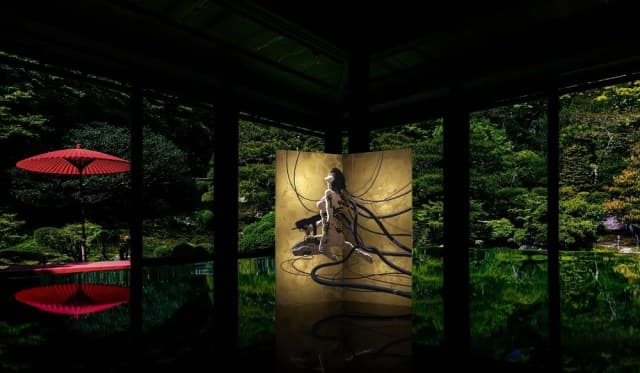
A Groundbreaking Fusion of Cyberpunk and Traditional Craftsmanship
Tokyo-based creative company UMAA has announced a stunning collaboration that bridges the gap between traditional Japanese art and futuristic science fiction. Their latest TechnoByobu collection features the iconic cyberpunk world of Ghost in the Shell reimagined on traditional Japanese folding screens adorned with gold leaf and pressed tin. These luxurious art pieces represent a remarkable convergence of centuries-old craftsmanship with cutting-edge digital aesthetics, offering anime enthusiasts and art collectors alike a truly unique acquisition opportunity.
The TechnoByobu series represents an ambitious artistic experiment that transforms contemporary visual culture through the lens of traditional Japanese craft. By applying techniques that date back over 500 years to imagery from one of Japan’s most influential cyberpunk franchises, UMAA has created something entirely new that respects both traditions while pushing boundaries. This latest installment follows their previous work featuring Yellow Magic Orchestra album artwork, establishing a pattern of reinterpreting groundbreaking Japanese pop culture through traditional media.
The Ghost in the Shell Collection: Designs and Inspirations
The Ghost in the Shell TechnoByobu collection features two distinct designs, each representing different facets of the franchise’s rich visual history. The first design, titled “Konpaku” (meaning “soul”), showcases Major Motoko Kusanagi perched atop her Fuchikoma mecha pod in an illustration originally drawn by series creator Masamune Shirow. This design captures the essence of the original manga’s aesthetic, which first appeared in 1989 and revolutionized the science fiction manga genre.
The second design, designated “Gitai” (prosthetic body), draws from the 1995 animated film directed by Mamoru Oshii that brought Ghost in the Shell international acclaim. This version depicts the Major with a web of wires attached to her cybernetic shell, capturing the film’s iconic imagery and themes of human-machine interface. Both designs are available in two material variations, giving collectors four distinct options to choose from.
“The ‘Techno’ in TechnoByobu originates from the Greek word ‘téchne’ meaning ‘art, technique, skill.’ It encompasses technology, craftsmanship, and futuristic sensibility,” explains the official UMAA concept description.
According to the official product information, each screen measures approximately 1500mm in height and 1400mm in width (roughly 59 inches by 55 inches), following the traditional Japanese measurement of five shaku. Despite their substantial size, each screen weighs only about 4kg (approximately 8.8 pounds), making them relatively manageable to display.
Centuries-Old Craftsmanship Meets Cyberpunk Vision
The creation of these remarkable screens involves traditional Japanese foil craftsmanship with a heritage spanning over five centuries. The process incorporates a technique called “Kasane Graphica Multi-Layered Pigment Transfer Technique,” which allows for the precise reproduction of digital artwork on traditional materials. The screens utilize two distinct types of foil paper: Western gold foil (large scattered foil) paper and tin foil (flat press) paper, each creating different visual effects when light reflects off the surface.
The foil craftsmanship is provided by Rekiseisha, a company founded in 1905 that developed the innovative foil-pressed paper using Western gold foil. This groundbreaking invention has been valued globally and represents the pinnacle of traditional Japanese decorative arts. By combining these time-honored techniques with modern archival pigment printing methods, UMAA has created artworks that will maintain their vivid appearance for generations to come.
The production process involves more than 500 individual pieces of foil, meticulously arranged to recreate the intricate details of the original Ghost in the Shell artwork. This painstaking craftsmanship ensures that each screen is not merely a reproduction but a unique artwork in its own right, with the traditional materials adding depth and texture that digital prints cannot achieve.
The Cultural Significance of Byobu in Japanese Art
Byobu, or folding screens, have been an important part of Japanese interior design and artistic expression for over a thousand years. Traditionally used as room dividers, backdrops for tea ceremonies, and displays of status and wealth, byobu evolved from Chinese folding screens and became distinctly Japanese in form and function. The typical byobu consists of two to eight panels joined by cords or hinges, allowing them to be configured in various ways to suit different spaces and purposes.
Throughout Japanese history, byobu have served as canvases for some of the country’s most celebrated artists, depicting scenes from nature, mythology, literature, and daily life. The use of gold leaf on byobu became particularly popular during the Momoyama period (1573-1615), creating works that shimmered in candlelight and reflected the wealth and power of their owners. By applying this prestigious tradition to Ghost in the Shell imagery, UMAA creates a fascinating dialogue between Japan’s artistic past and its cyberpunk future.
Ghost in the Shell: A Franchise That Changed Science Fiction
Ghost in the Shell began as a manga series created by Masamune Shirow in 1989 and quickly became one of the most influential science fiction works of the modern era. The story follows Major Motoko Kusanagi, a full-body cyborg who leads Public Security Section 9, a counter-cyberterrorist organization in a futuristic Japan where humans can replace body parts with cybernetic enhancements. The franchise explores profound philosophical questions about consciousness, identity, and the relationship between humanity and technology.
The 1995 animated film adaptation, directed by Mamoru Oshii, brought Ghost in the Shell to international attention and directly influenced numerous Hollywood productions, most notably The Matrix. The franchise has since expanded to include multiple films, television series, novels, and video games, consistently exploring themes of human-machine integration and the nature of the self in an increasingly digital world.
“The Ghost in the Shell” is a science fiction manga by Masamune Shirow, serialized since 1989. It depicts Motoko Kusanagi, a full-body cyborg leading “Public Security Section 9,” confronting complex crimes and exploring themes of human-technology fusion and identity,” according to the official product information.
Premium Pricing and Limited Availability
These remarkable art pieces come with a premium price tag reflecting both the materials involved and the craftsmanship required to create them. Each Ghost in the Shell TechnoByobu is priced at 1,100,000 yen (approximately $7,190 USD), placing them firmly in the luxury art market. This pricing positions the screens alongside other high-end collectible artworks rather than typical anime merchandise.
The screens will be produced in strictly limited quantities, with each piece featuring a unique serial number to guarantee authenticity and collectibility. This limited edition approach creates scarcity that may appeal to serious collectors and investors in addition to fans of the franchise. Unlike mass-produced posters or figurines, these screens are intended as serious art pieces that can serve as the centerpiece of a collection.
Prospective buyers should note that these screens will not be available through typical anime merchandise retailers. Instead, they will be offered exclusively at the upcoming Ghost in the Shell: The Exhibition event at Tokyo Node, located within Tokyo’s Toranomon Hills complex. The exhibition begins on January 30, 2026, providing a suitable high-end setting for the debut of these premium art pieces.
International Interest and Preceding Exhibitions
Prior to their official release, the first prototype of the Ghost in the Shell TechnoByobu series was unveiled at Design Shanghai 2025, held in Shanghai, China, in June 2025. This international debut indicates that UMAA is positioning these works for a global audience of art collectors and design enthusiasts, not just domestic Japanese anime fans. The presentation at such a prestigious design fair suggests that the company views these pieces as legitimate design objects rather than mere fan merchandise.
Those interested in acquiring one of these limited screens are encouraged to register through the customer service form on the official TechnoByobu website. Priority information regarding availability and purchasing details will be sent to registered customers, ensuring that serious collectors have the best opportunity to secure these exclusive pieces.
The Broader Context of Anime in Contemporary Art
The creation of these high-end art pieces reflects a broader trend of anime and manga imagery entering the world of fine art. What was once considered niche popular culture has increasingly gained recognition as a legitimate artistic medium worthy of serious attention. Major museums worldwide have hosted anime and manga exhibitions, and works by prominent anime creators have been displayed alongside traditional fine art in prestigious galleries.
This elevation of anime imagery through traditional mediums like byobu represents an interesting cultural exchange. Rather than simply printing anime artwork on canvas, the use of centuries-old Japanese craft techniques to reproduce these contemporary images creates a meaningful dialogue between Japan’s artistic heritage and its modern cultural exports. The fusion suggests that these seemingly disparate traditions share common ground in their attention to detail, technical excellence, and visual impact.
The relatively high price point of these screens also reflects changing attitudes toward anime collectibles. While merchandise like posters, keychains, and figurines remain popular, there is a growing market for high-end, museum-quality collectibles that blur the line between merchandise and art. These pieces appeal not only to anime fans but to collectors of contemporary art, Japanese crafts, and design objects.
The Future of the TechnoByobu Concept
The Ghost in the Shell series represents only the second installment in UMAA’s TechnoByobu collection, following the previously released “TB-01: Electronic Fan Girl” featuring Yellow Magic Orchestra album artwork. This suggests that UMAA plans to continue the series with additional collaborations, potentially featuring other iconic works of Japanese visual culture. The common thread between the two releases appears to be groundbreaking Japanese cultural exports that have had significant international impact.
The company behind the project, U/M/A/A Inc. (United Music And Arts), is a record company founded by someone who previously worked at Alfa Records, with a stated mission of uniting music and art. Their self-description notes that they “inherit the progressive spirit of YMO’s techno-pop,” suggesting that future TechnoByobu releases may continue to focus on innovative Japanese cultural products that have challenged conventions and pushed boundaries.
As technology continues to advance and traditional craft techniques face challenges in finding contemporary applications, projects like TechnoByobu offer a model for how these seemingly opposing forces can complement each other. By demonstrating that traditional techniques can be applied to cutting-edge imagery, UMAA not only creates beautiful objects but also helps ensure the continued relevance and viability of these craft traditions for future generations.
Key Points
- Tokyo-based creative company UMAA has created limited edition Ghost in the Shell folding screens called TechnoByobu
- Two designs available: “Konpaku” featuring Major Motoko Kusanagi on a Fuchikoma from the original manga, and “Gitai” featuring wire-connected imagery from the 1995 film
- Each screen measures approximately 1500mm by 1400mm (59 by 55 inches) and weighs about 4kg
- Created using traditional Japanese foil craftsmanship techniques dating back over 500 years, incorporating gold leaf and pressed tin
- Priced at 1,100,000 yen (approximately $7,190) each with limited production and individual serial numbers
- Available exclusively at the Ghost in the Shell: The Exhibition event at Tokyo Node in Tokyo’s Toranomon Hills complex from January 30, 2026
- This is the second installment in the TechnoByobu series, following a previous release featuring Yellow Magic Orchestra artwork