A Surprising Welcome for Mainland Students
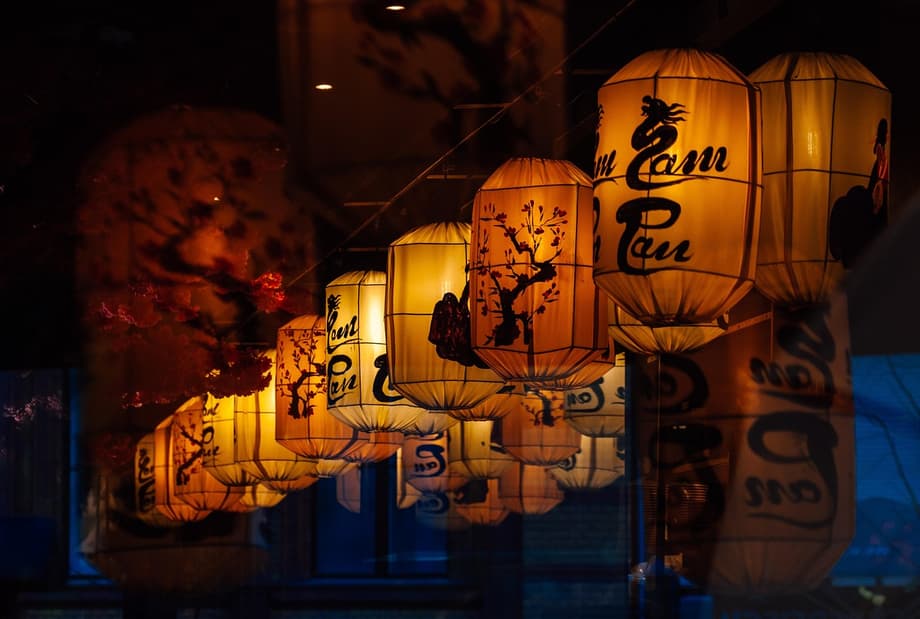
Many mainland Chinese students arriving in Malaysia expected to spend the Lunar New Year in quiet solitude, connected to family only through video calls and modest celebrations far from home. Instead, they discovered that the festive spirit had already transformed the country weeks before the holiday officially began. Shopping malls glowed with red lanterns, artificial plum blossoms bloomed in elaborate displays, and giant zodiac sculptures dominated public spaces from Kuala Lumpur to Penang. The transformation begins almost immediately after Christmas decorations come down, creating a seamless transition between Western and Chinese festive seasons that surprises visitors accustomed to more compressed celebration periods.
This early surge of festive preparation comes as a revelation to students accustomed to more subdued celebrations in modern China. Loong Yang, a business administration student at Universiti Malaya from Henan province, observed that while shopping malls in China typically begin decorating just two weeks before the festival, Malaysia launches into the festive season immediately after Christmas ends.
In my hometown, we place immense importance on CNY and begin our prep well in advance, but Malaysia takes it to a whole new level by starting even sooner. The decor here is indeed better, and projects a stronger festive atmosphere.
UCSI undergraduate Feng Jiayang appreciates the distinct Malaysian interpretation of the holiday. She noted that while Chinese celebrations emphasize subtle elegance integrated into daily life, Malaysia transforms the occasion into something resembling a carnival. “Each has its own merits,” she reflected, acknowledging the vibrant energy that distinguishes Southeast Asian celebrations from their mainland counterparts. The contrast reveals how diaspora communities often amplify traditions as a means of maintaining cultural identity within diverse societies.
The Spectacle of Preserved Traditions
Beyond the visual grandeur, Malaysian celebrations offer sensory experiences increasingly rare in mainland China. Fireworks and firecrackers, heavily restricted in many Chinese cities because of environmental and safety regulations, fill the Malaysian night sky with color and sound. The rhythmic beating of drums accompanying dragon and lion dances echoes through neighborhoods, creating an atmosphere that students describe as more traditionally Chinese than what they now find at home.
Lin Yanyang, a Universiti Malaya student from Beijing, described the experience as authentically moving.
The dazzling fireworks and festive crackle here really bring out the spirit of Chinese culture, making it a more traditional and exciting experience.
This unrestricted celebration of folk customs provides a window into practices that younger generations in China often experience only through historical recordings or tightly controlled municipal displays.
Perhaps more striking than the public spectacles are the private customs preserved in Malaysian Chinese homes. Guo Kaixin, another student at Universiti Malaya, recalled a video conversation with friends in Penang that left her astonished. She watched as entire families donned auspicious vermilion Tang suits from the first day of the new year through the fifth, maintaining a strict adherence to traditional attire that has largely faded from modern Chinese urban life. “Such strict adherence to traditional attire is rare in today’s China,” she observed, noting how diaspora communities often maintain practices that have evolved or disappeared in the homeland.
A Shared Tapestry of Cultures
What distinguishes Malaysian celebrations most profoundly from those in China is the active participation of the country’s multi-ethnic population. While Chinese New Year in China remains exclusively a Han Chinese tradition, in Malaysia it has become a national festival that bridges racial and religious divides. Universiti Putra Malaysia student Wu Hailong described the experience as feeling like a shared tapestry rather than a closed ethnic observance.
He recalled previous celebrations where Indian neighbors offered warm greetings in Mandarin and enthusiastically engaged with Chinese families during their most important holiday. This inclusive spirit manifests in the Malaysian tradition of “Open House,” where Chinese families invite friends from all ethnic backgrounds, including Malay and Indian communities, to share reunion meals and festive treats. The practice transforms private family gatherings into public demonstrations of national unity.
Prime Minister Datuk Seri Anwar Ibrahim emphasized this unique harmony during recent celebrations in Ipoh. He noted that Malaysia’s ability to maintain peace among its diverse population of more than 34 million people, comprising Malays, Chinese, Indians, Ibans, Kadazans, and other groups, represents a fundamental pillar of national progress.
We want to show our society and our children that if Malaysia is to progress, enjoy economic growth, improve education and have better hospitals, we must preserve peace in this country.
Customs Unique to Southeast Asia
Several traditions observed during Malaysian Chinese New Year have evolved into distinctly local practices unknown in mainland China. The most prominent of these is Yee Sang, also known as Yu Sheng, a colorful raw fish salad that has become the centerpiece of reunion dinners in Malaysia and Singapore. Family members gather around the dish and toss the ingredients high into the air with chopsticks while shouting auspicious phrases, a ritual called “lo hei” that symbolizes the invitation of prosperity and good fortune for the coming year.
The festival extends across fifteen days, concluding with Chap Goh Mei on the final day. This celebration features distinctive customs including the tradition of single women throwing oranges into the sea or rivers, originally to wish for a good husband, though modern variations involve writing contact details on the fruit. Men in boats traditionally collect these oranges, turning the ritual into a playful matchmaking event that reflects the community’s adaptability in preserving tradition while embracing contemporary social practices.
For the Hokkien community, the ninth day holds special significance as the Ti Kong Festival, dedicated to prayers for the Jade Emperor. Families prepare elaborate midnight offerings including sugarcane stalks, which symbolize protection and peace, alongside roasted meats and traditional sweets. The ceremony fills the night with firecrackers and incense smoke, demonstrating the specific regional Chinese traditions that have found fertile ground in Malaysia’s multicultural soil.
The 2026 Convergence of Celebrations
This year’s festivities carry particular significance because of an unusual calendar alignment. Chinese New Year falls on February 17, while Ramadan begins just two days later, creating successive celebrations that will culminate in Hari Raya Aidilfitri next month. This overlapping of the country’s two major cultural festivals promises double the merriment while highlighting the distinctive harmony that defines Malaysian society.
The convergence creates what locals call “Gong Xi Raya,” a phenomenon occurring once every thirty-three years when Hari Raya Aidilfitri and Chinese New Year coincide closely. Malaysia previously experienced this joyful overlap from 1963 to 1965 and again from 1996 to 1998. The next such convergence will occur from 2029 to 2031, making the current period part of a rare and cherished cycle.
This dual celebration has generated a windfall for the retail and hospitality sectors. Hotels and restaurants have responded by creating innovative fusion menus that blend Chinese and Malay culinary traditions. At Sunway Resort Hotel, executive chefs have developed Sichuan-inspired lamb dishes that appear in both Chinese New Year buffets and Ramadan iftar spreads, prepared with different accompaniments to suit each occasion. The Sichuan roasted whole lamb, marinated with chili powder, garlic, sesame oil, and cumin, represents how Malaysian hospitality adapts foreign influences to local palates while serving multiple communities simultaneously.
Shopping malls have capitalized on the festive energy by creating elaborate decorative displays that often go viral on social media. Berjaya Times Square features Chinese imperial dynasty-themed installations this year, while Intermark Mall showcases Peranakan-inspired designs with intricate floral patterns and traditional kebayas. Mall managers note that such elaborate decorations, rarely seen in other major cities including those in China, have become attractions that draw tourists and locals alike.
National Scale and Official Recognition
The importance of Chinese New Year in Malaysia extends beyond cultural observance into national planning and economic strategy. The government has implemented specific traffic management measures for the holiday period, with the Road Transport Department banning heavy goods vehicles from roads on February 14, 15, 21, and 22 to reduce accident risks and ensure smooth traffic flow during the peak travel period. This level of official coordination demonstrates how the festival affects the entire nation’s infrastructure.
The celebration also aligns with Visit Malaysia 2026, a national tourism campaign that leverages the country’s multicultural festivals as major attractions. The CNY Spring Carnival 2026 at Pavilion Bukit Jalil exemplifies this strategy, transforming into a city-wide cultural celebration from January 15 to 25. The event integrates online and offline engagement through partnerships with digital platforms, featuring over one hundred artistes and content creators who amplify the festival’s reach globally.
Zheng Xuefang, Minister of the Embassy of the People’s Republic of China in Malaysia, attended the carnival launch and emphasized the strengthening ties between the two nations.
The Spring Festival is increasingly celebrated around the world, reflecting shared values and friendship. We look forward to leveraging Visit Malaysia 2026 to strengthen cultural ties and deepen practical cooperation.
Deputy Minister of Communications Teo Nie Ching noted that Malaysia recorded 38.3 million international arrivals in the first eleven months of 2025, surpassing regional competitors and setting a strong foundation for the upcoming campaign year.
Heritage Preserved Across Generations
For fourth-generation Malaysian Chinese like Jess Lee, the Spring Festival serves as a crucial bond for family connections and cultural continuity. She has observed that many customs originating from China remain fully preserved in Malaysia, creating a living museum of traditional practices. This preservation extends to language, with many Malaysian Chinese maintaining fluency in Mandarin and various Chinese dialects alongside Malay and English, allowing them to engage with the original cultural texts and oral traditions.
The commitment to tradition appears even in specific culinary guarantees. DAP secretary-general Anthony Loke recently assured the Chinese Malaysian community that despite controversies surrounding pig farming in Selangor, the supply of pork remains stable for reunion dinners. “Chinese New Year would not feel like Chinese New Year without roast pig, so we must have it,” he declared at a banquet, highlighting how specific food traditions anchor the cultural identity of the celebration.
Yet not all celebrations focus on public spectacle. Zurich Malaysia’s recent festive film highlighted quieter, more intimate observances, showing how couples celebrate through calm personal moments, shared meals, and neighborhood connections. This diversity of celebration styles, from the grand carnival atmosphere of shopping malls to the private rituals of family homes, demonstrates the varied nature of the holiday in Malaysian society.
What to Know
- Malaysian Chinese New Year celebrations begin weeks earlier than those in mainland China, with decorations appearing immediately after Christmas
- Fireworks and lion dances, restricted in many Chinese cities, remain central to the Malaysian celebration
- The “Open House” tradition invites all ethnic communities to participate, reflecting Malaysia’s multicultural identity
- Yee Sang (Yu Sheng) tossing and Chap Goh Mei are unique Southeast Asian traditions not practiced in China
- 2026 features back-to-back Chinese New Year and Ramadan celebrations, creating a rare “Gong Xi Raya” period
- The government implements heavy vehicle bans and traffic management specifically for the holiday period
- Fourth-generation Malaysian Chinese maintain traditional customs, including attire and language, that have evolved in modern China
- Visit Malaysia 2026 incorporates the Spring Festival as a major tourism attraction with city-wide carnivals