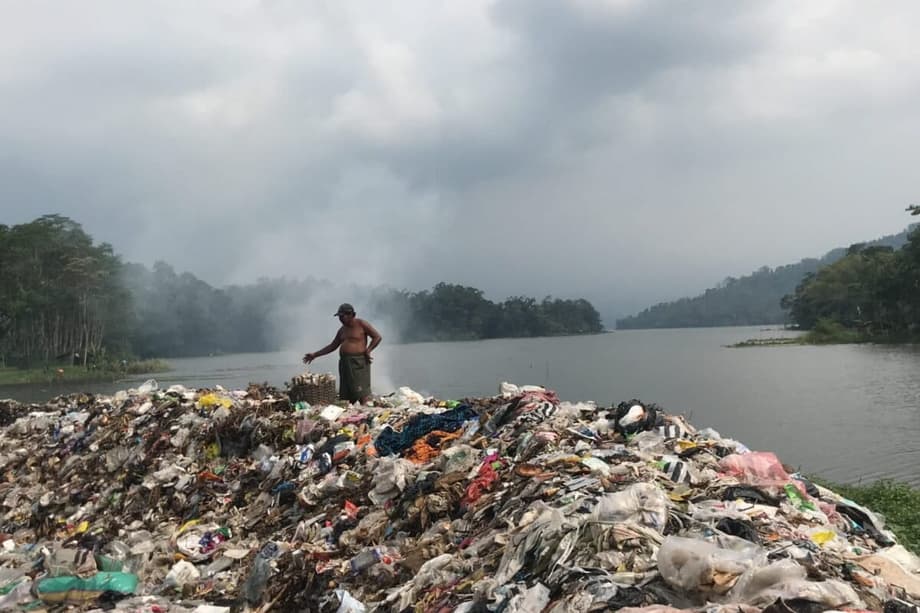
The Hidden Crisis in Indonesian Neighborhoods
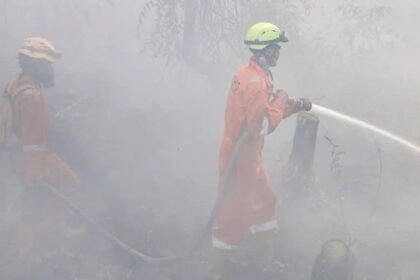
More than half of all Indonesian households continue to burn their trash despite national laws prohibiting the practice, creating a public health emergency that extends far beyond the smell of smoke wafting through dense urban neighborhoods. A 2023 national survey by the Ministry of Health revealed that 57% of households rely on open burning as their primary waste disposal method, compared to just 27.6% who hand waste to collectors and a mere 0.1% who report recycling. This widespread practice releases fine particulate matter and black carbon, pollutants that penetrate deep into human tissue and accelerate global warming.
- The Hidden Crisis in Indonesian Neighborhoods
- Health and Climate Impacts of Backyard Burning
- Why Communities Turn to Fire
- FIREFLIES: Monitoring and Community Engagement
- The Malang Alternative: Comprehensive Collection
- National Infrastructure Push Meets Local Resistance
- Corporate Pilots Offer Mixed Results
- Foreign Technology, Local Challenges
- Integrating the Informal Sector
- Key Points
The persistence of backyard burning highlights a fundamental gap between environmental legislation and ground-level reality. While Indonesia’s 2008 Waste Management Law explicitly prohibits open burning, enforcement remains virtually impossible at the household level. Unlike large forest fires that satellites can detect, small neighborhood fires occur by the thousands daily across the archipelago, invisible to authorities but palpable to residents who breathe the toxic smoke.
Health and Climate Impacts of Backyard Burning
The combustion of household waste generates a toxic mixture of pollutants that poses severe risks to human health. When plastics, foams, and synthetic materials burn alongside organic refuse, they release fine particulate matter known as PM2.5 and PM10, along with sooty black carbon. These particles are small enough to bypass the body’s natural defenses, entering deep lung tissue and even the bloodstream.
Budi Haryanto, a professor of environmental health at the University of Indonesia, explained that the damage extends throughout the body. Chemical components including black carbon and carbon monoxide deposit in vital organs such as the heart, nervous system, lungs, digestive tract, skin, blood and bones. This widespread contamination helps explain why many Indonesian women experience anemia, as heavy metals from burning waste inhibit red blood cell production in bone marrow. If left unaddressed, Haryanto warned, air pollution from waste burning becomes a silent killer affecting public health for generations.
Beyond immediate health concerns, black carbon acts as a potent climate pollutant. Unlike carbon dioxide, which lingers in the atmosphere for centuries, black carbon remains airborne for only days to weeks. However, during that time it absorbs solar radiation and heats surrounding air directly, creating a warming effect per unit of mass far stronger than CO2. Didin Agustian Permadi, an environmental engineering lecturer at the National Institute of Technology who studies air pollution and climate interactions, noted that because these emissions are short lived, cutting them at the source could deliver relatively quick climate and air quality benefits by 2030.
Why Communities Turn to Fire
The decision to burn waste rarely stems from disregard for the environment. Instead, it emerges from a complex web of infrastructure gaps, financial constraints, and cultural norms that make fire seem like the only viable option. In Bogor, south of Jakarta, neighborhood unit head Erwinsyah faces a dilemma when residents dump bulky items like old mattresses and broken chairs by the roadside. Left unattended, these items create safety hazards for children walking to school. The local environmental agency refuses to collect such bulky or inorganic waste, leaving Erwinsyah with what he sees as no alternative.
If we burn it, at least it is gone. Yes, it smells. But I am forced to do it. There is no other way.
Erwinsyah’s predicament illustrates structural failures that repeat across Indonesia. Financial constraints compound the problem. In his neighborhood of roughly 90 households, only 60% to 70% of residents pay the 15,000 rupiah (less than $1) monthly waste collection fee. At times, Erwinsyah must use neighborhood funds or his own money to ensure collection continues. For low-income communities, concerns about air pollution or climate change often rank below immediate daily survival needs.
Cultural factors also play a role. Anthropologist Sofyan Ansory, involved in a new pilot project addressing the issue, explained that historically, burning waste signaled diligence and community contribution when household trash consisted mainly of leaves and twigs. Today, the waste stream has transformed. Plastics, foams and synthetic materials dominate household trash, producing far more toxic smoke when burned, yet the cultural association between burning and cleanliness persists.
FIREFLIES: Monitoring and Community Engagement
In response to these challenges, Dietplastik Indonesia, supported by energy transition campaign group ViriyaENB, has launched a pilot project called FIREFLIES across three neighborhoods in Jakarta and its satellite cities of Bogor and Depok. The initiative combines sociocultural research, community education, and improvements to local waste infrastructure to address the root causes of burning behavior.
Researchers from the University of Indonesia are studying how residents understand and manage waste, aiming to design interventions that fit local conditions rather than imposing uniform solutions. The project also plans to install low-cost air quality sensors to measure pollution levels continuously, with monitoring expected to generate detailed data accessible to communities starting this month through year’s end.
The visibility of pollution data serves a social purpose. Currently, waste burning is often tolerated because neighbors are reluctant to confront one another. Zakiyus Shadicky, senior research lead at Dietplastik Indonesia, explained that visible spikes in pollution during burning events may prompt discussion and potentially peer pressure among residents. Without social norms against burning, even the best technology is useless, he noted. Community education interventions based on the neighborhood studies are expected to roll out in April and May this year.
Nurmayanti, a senior environmental impact controller at the Ministry of Environment, welcomed the initiative, emphasizing that waste reduction at source and changes in community attitudes are crucial to national waste management and emissions reduction efforts. Waste represents Indonesia’s third-largest source of greenhouse gas emissions, after land use and energy, yet few people connect waste and climate change.
The Malang Alternative: Comprehensive Collection
While FIREFLIES focuses on behavioral change in dense urban neighborhoods, another pilot project in East Java demonstrates the potential of comprehensive infrastructure solutions. The Alliance to End Plastic Waste (AEPW) has launched an integrated waste management project in Malang Regency, covering household collection, safe disposal, and recycling across four villages: Tulus Besar, Duwet Krajan, Wringin Anom, and Kenongo.
The project began in March 2025 with 2,300 households pre-registered to participate. Customized waste tricycles navigate narrow village streets to collect household waste twice weekly. Residents sort waste into organic and inorganic fractions, with recyclable materials sold to local recyclers to generate revenue for the system alongside collection fees. Economic modeling shows that 80% of households in the covered area must participate for the pilot to succeed financially.
Behavior change campaigns accompany the infrastructure rollout. Bimo Harimurti, Indonesia Program Advisor for AEPW, explained that when hiring, they prioritized recruiting village residents to increase engagement and strengthen community ownership. Village Head Mulyo Siswanto of Duwet Krajan Village reported that residents have already begun changing their behavior, decreasing the tendency to throw garbage into gutters or neighborhood areas.
The Malang pilot aims to expand to 12 villages encompassing approximately 18,000 households, collecting 750 tonnes of municipal waste monthly and recycling around 20 tonnes of plastic. If successful, the local government hopes to develop a sustainable business model that other regencies can replicate, offering a viable alternative to dumping and burning.
National Infrastructure Push Meets Local Resistance
While community-scale pilots proceed, Indonesia’s central government is advancing an ambitious national program to build up to 33 waste to energy plants across the archipelago. Presidential Regulation 109/2025, issued earlier this year, replaces the previous framework and assigns Indonesia’s new sovereign wealth fund, Danantara, to coordinate procurement and investment. The regulation establishes a fixed electricity purchase price of $0.20 per kWh for 30 years, with state utility PLN serving as the single offtaker.
However, large-scale incineration projects face significant community opposition. A planned waste to energy facility in South Jakarta’s Tebet neighborhood stalled after protests from residents and environmentalists. Muhammad Aminullah, a campaigner with WALHI Jakarta, warned of potential dioxin discharge and worsening air quality in a city already struggling with pollution.
Concerns about health impacts gained support from a recent study by WALHI East Java around the Benowo waste to energy plant in Surabaya, Indonesia’s first and largest such facility. A 54-day monitoring period between November 2024 and January 2025 found that air quality frequently exceeded World Health Organization safety limits. Average PM2.5 concentrations reached 26.78 µg/m³, with peaks hitting 78 µg/m³, far above the WHO daily safety threshold of 15 µg/m³.
The most dramatic spikes occurred between 8 a.m. and 5 p.m., when the incinerator was running.
Wahyu Eka Setyawan, executive director of WALHI East Java, explained that volunteers recorded sharp increases in both PM2.5 and PM10 levels when passing areas close to the incinerator, especially when wind blew toward residential neighborhoods. Officials and the plant operator disputed these findings, insisting that government-approved monitoring showed no threshold breaches while declining to release the data publicly.
Corporate Pilots Offer Mixed Results
Private sector waste management initiatives have demonstrated both the potential and pitfalls of technical solutions. In 2021, Danone established a recycling facility in Bali in partnership with Reciki Solusi Indonesia, aiming to process low-value plastic into refuse-derived fuel (RDF). However, the project was suspended in April 2024 following complaints from local residents that the facility, located meters from homes without proper consultation, produced toxic smoke that made it impossible to open windows.
Yuyun Ismawati, co-chair of the International Pollutants Elimination Network (IPEN), reported that several residents were hospitalized due to emissions from melting plastic scrap. The briquettes produced were destined for laundry boilers and street food BBQs, despite the severe health risks of burning plastic in the open. The facility was eventually razed by a fire, leaving behind contaminated ground.
Similarly, Unilever’s much-touted chemical recycling pilot for plastic sachets, launched in Indonesia in 2017, quietly ceased operations after two years. An investigation by the Global Alliance for Incinerator Alternatives (GAIA) revealed that due to low recyclability potential and technological failures, the plant could only process mono-layer sachets to make different packaging, losing 40-60% of waste feedstock as residue. The facility, which cost over 10 million euros, failed to prove that multilayer sachets could be recycled multiple times as claimed.
Despite these setbacks, new corporate initiatives continue to emerge. Borouge and Borealis recently announced a feasibility study for Indonesia’s first fully integrated circular waste management ecosystem for polyolefin recycling in East Java, aiming to transform plastic waste into valuable feedstock for high-quality recycled materials.
Foreign Technology, Local Challenges
As Indonesia scales up waste processing, it faces an influx of technology and expertise from European and Japanese companies seeking new markets after saturating their home countries. Japan alone hosts more than 1,500 incinerators, while European nations like Germany, Sweden and Denmark burn tens of millions of tonnes of municipal waste annually. Companies including Hitachi Zosen, Marubeni, and JFE Engineering are now active across Southeast Asia.
However, environmental groups caution that waste to energy technology designed for European or Japanese waste streams may not suit Indonesian conditions. In developed economies, organic waste comprises only 10-20% of municipal trash, and sophisticated segregation systems limit non-burnable materials. In Indonesia, organic waste can make up 50% or more of the stream, with limited formal separation systems. Burning wet organic waste requires higher temperatures and often demands supplemental fuel, typically plastic, to maintain combustion efficiency.
This difference raises concerns that waste to energy plants in Indonesia could lock in demand for plastic waste for decades, undermining recycling efforts and circular economy goals. Janek Vähk of Zero Waste Europe noted that energy produced by incinerators is at least 1.5 to two times more greenhouse gas-intensive than burning natural gas, making it the most climate-impacting way of producing energy when plastics are involved.
Integrating the Informal Sector
Amid debates over high-tech solutions, some pilots focus on improving existing informal waste management systems. A project supported by the Climate and Clean Air Coalition is working in Bandung to integrate informal waste pickers into organic waste management systems. The initiative aims to divert 11,000 tonnes of organic waste from dumpsites while demonstrating business models that include rather than displace informal workers.
This approach addresses a critical vulnerability in national waste to energy plans. Indonesia’s informal waste pickers form the backbone of the current recycling economy, earning minimal wages while working seven days a week. Large-scale incineration could displace these workers unless their roles are formalized within new systems. Analysis from Asia Times warns that unless waste pickers are integrated into formal waste management structures, the human cost of modernization could create friction that undermines policy implementation.
The Bandung pilot, along with similar projects in Valparaíso, Chile, and Durban, South Africa, seeks to improve the capacity of informal sector workers to financially sustain their operations while reducing methane emissions from organic waste. Success in these pilots could provide models for Indonesia’s broader waste strategy, balancing technological advancement with social inclusion.
Key Points
- 57% of Indonesian households burn waste despite legal prohibitions, releasing toxic black carbon and particulate matter linked to respiratory disease, cardiovascular problems, and anemia.
- The FIREFLIES pilot project in Jakarta, Bogor, and Depok combines live air quality monitoring with community engagement to change burning behaviors at the neighborhood level.
- In Malang Regency, East Java, the Alliance to End Plastic Waste is testing an integrated collection system requiring 80% household participation to achieve economic viability across 12 villages.
- Presidential Regulation 109/2025 establishes a national framework for up to 33 waste to energy plants coordinated by sovereign wealth fund Danantara, with fixed electricity tariffs of $0.20/kWh.
- Community opposition has stalled projects in Jakarta’s Tebet neighborhood and sparked health warnings around Surabaya’s operational Benowo plant, where independent monitoring recorded air quality exceeding WHO safety limits.
- Corporate pilots have faced setbacks, including Danone’s failed Bali RDF facility and Unilever’s abandoned chemical recycling plant, while new initiatives from Borouge and Borealis aim to establish polyolefin recycling ecosystems.
- Environmental groups warn that European and Japanese incineration technology may be unsuitable for Indonesia’s high-organic waste streams, potentially locking in plastic dependency and exceeding greenhouse gas emissions from fossil fuel power generation.