The Unthinkable Fall of a Loyal Ally
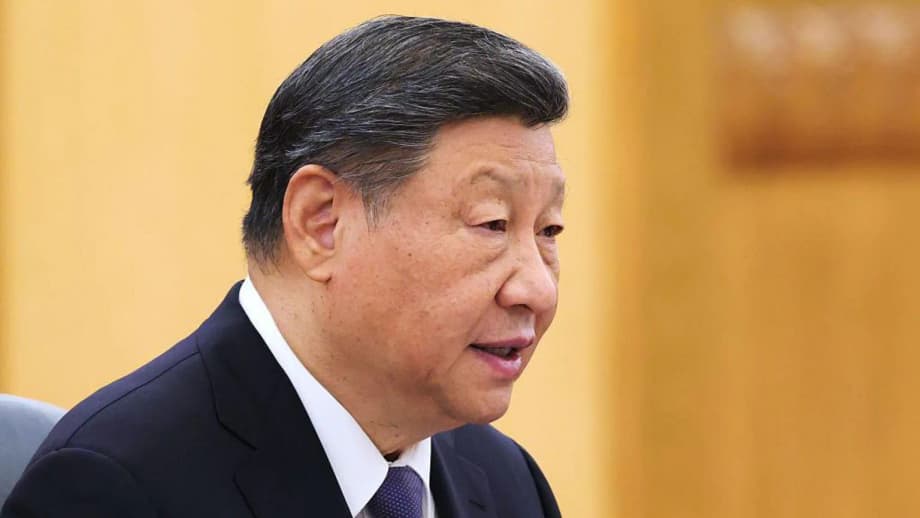
Chinese President Xi Jinping has orchestrated the most sweeping purge of military leadership since the Cultural Revolution, removing his own closest confidant from the apex of the People’s Liberation Army. In a rare public acknowledgment of internal turmoil, Xi told the armed forces in February that the past year had been “unusual and extraordinary,” praising the military for undergoing “revolutionary tempering in the fight against corruption.” The statement marked the first time since 2022 that China’s leader has explicitly referenced anti-corruption efforts in his annual Chinese New Year address to the troops.
The removal of General Zhang Youxia, vice chairman of the Central Military Commission and widely regarded as Xi’s most trusted military ally, has sent shockwaves through Beijing’s power structure. At 75, Zhang had been retained past the mandatory retirement age, a privilege that signaled his unique standing in Xi’s inner circle. Yet on January 24, the Defense Ministry announced that both Zhang and General Liu Zhenli, chief of the Joint Staff Department, faced investigation for “serious violations of discipline and law,” the standard euphemism for corruption and political crimes in China.
Zhang’s fall is particularly striking given his revolutionary pedigree. As a “princeling,” the son of General Zhang Zongxun, a founding hero of the People’s Republic who fought alongside Xi’s own father in the Communist revolutionary campaigns, Zhang Youxia represented an unbreakable link to the Party’s military heritage. He and Xi reportedly shared childhood connections in Beijing’s elite revolutionary circles, and both hail from Shaanxi Province in northwestern China. Unlike most modern PLA commanders who have never seen combat, Zhang fought with distinction in the bloody 1979 Sino-Vietnamese War and subsequent border clashes in 1984, earning a reputation for tactical competence and battlefield courage.
Professor Chong Ja Ian, a China specialist at the National University of Singapore, noted that official statements leave crucial questions unanswered about the true nature of the purge.
The actual language surrounding the purges do not provide much detail about what exactly is going on internally, whether it really is corruption, political struggles, outright purges, or something else. Publicity surrounding the purges are meant to be a signal, more likely domestic and internal to the CCP than anything else.
The Hollowed Command
The purge has effectively gutted the Central Military Commission, the supreme command body that directs China’s 2 million-strong armed forces. When Xi began his third term in 2022, the CMC comprised seven members. Today, only two remain: Xi himself as chairman, and General Zhang Shengmin, who serves as the commission’s discipline inspection chief. The other five positions, including both vice chairmen and the defense minister, now sit empty or filled by officers under investigation.
This level of decimation is unprecedented in the post-Mao era. Even during previous anti-corruption drives, the CMC maintained a facade of collective leadership. Now, the body has transformed from a deliberative council into what analysts describe as an extension of Xi’s personal will. The remaining member, Zhang Shengmin, owes his position directly to the purges, having been promoted to vice chairman in October 2025 after the expulsion of General He Weidong, the previous occupant of that post.
The timing could not be more critical. Xi has reportedly ordered the PLA to achieve full modernization by 2035 and to be capable of invading Taiwan by 2027, a deadline that coincides with the PLA’s centenary. Yet the removal of the entire high command throws these timelines into question. General Liu Zhenli, who was purged alongside Zhang, had served as the primary operational coordinator for military exercises and joint training. His removal eliminates the most experienced point of contact for risk management between Chinese and Western militaries, potentially increasing the danger of miscalculation in tense regional flashpoints.
Nuclear Secrets and Allegations of Betrayal
While official Chinese statements have focused on corruption and political disloyalty, Western media reports suggest more explosive allegations. The Wall Street Journal, citing individuals familiar with internal briefings, reported that Zhang was accused of leaking classified information about China’s nuclear weapons program to the United States. According to these accounts, Zhang allegedly met with former National Security Advisor Jake Sullivan in Beijing in 2024 and divulged sensitive details about Beijing’s nuclear modernization efforts.
Chinese military sources cited in the state-backed Liberation Army Daily offered a different emphasis, accusing Zhang and Liu of “seriously trampling upon and undermining the chairman responsibility system of the Central Military Commission.” This phrasing suggests their crimes were primarily political, specifically challenging Xi’s absolute authority over military decisions. The editorial claimed they had gravely encouraged political and corruption problems that weakened the Party’s absolute leadership over the military, causing “immense harm” to China’s combat readiness.
The distinction matters. If Zhang fell purely to corruption, his purge would fit a familiar pattern in Chinese politics. However, the language of “betrayal” and “undermining authority” suggests open defiance of Xi’s strategic priorities. According to analysis by the Jamestown Foundation, Zhang and Liu may have resisted Xi’s aggressive timeline for preparing the military to invade Taiwan, favoring a more methodical approach focused on 2035 rather than the 2027 deadline. This divergence over military modernization priorities appears to have escalated into visible disagreements during the 2025 legislative sessions, where Zhang reportedly avoided endorsing the “CMC chairman responsibility system,” a mandatory phrase signaling loyalty to Xi.
Strategic Consequences for Taiwan
The purge presents a paradox for Xi’s Taiwan ambitions. By removing officers who may have counseled caution or provided realistic assessments of military readiness, Xi has consolidated absolute control over the PLA. Yet he has simultaneously decapitated the command structure responsible for executing any potential invasion, leaving the military in a state of operational paralysis at the precise moment when tensions over the self-ruled island are escalating.
Experts warn that the turmoil could delay any near-term military action against Taiwan. The loss of experienced generals and continuing investigations will make it hard for the PLA to focus on operational training, according to security analysts. The Eastern Theater Command, which would lead any assault on Taiwan, and the Joint Staff Department, which coordinates national-level assets, have both lost their seasoned leadership. Their replacements will require time to master new responsibilities and establish command relationships.
However, the consolidation of power may also remove the last internal brakes on Xi’s aggressive impulses. With Zhang’s removal, there will not be any general who would dare to advise Xi against a military adventure when the time comes, warned Steve Tsang, director of the China Institute at SOAS University of London. This creates a dangerous dynamic where Xi might receive only compliant approval for risky operations, increasing the chance of strategic miscalculation.
CIA Targets Disillusioned Officers
The turmoil has attracted attention from American intelligence agencies. Weeks after Zhang’s removal, the Central Intelligence Agency released a Chinese-language recruitment video titled “Save the Future,” explicitly targeting disillusioned PLA officers. The video features a fictional officer lamenting that “the only thing our party leaders are interested in defending is their own pockets.”
While the CIA has not formally linked the video to the recent purges, the timing suggests an effort to exploit the widening divisions within China’s military establishment. CIA Director John Ratcliffe stated the agency would “continue offering Chinese government officials and citizens an opportunity to work toward a brighter future together.” The recruitment push reflects a belief that Xi’s intensifying crackdown has created opportunities to gather intelligence from aggrieved officers within the PLA’s ranks.
The Isolation of Absolute Power
Xi’s willingness to destroy his own support networks reveals the depth of his obsession with control. Zhang Youxia was not merely a subordinate but a “sworn brother” with decades of family ties to the Xi clan. Their fathers had fought together in the revolutionary wars, and both men had navigated the restrictive “princeling” career tracks imposed by Communist Party elders. By purging Zhang, Xi has demonstrated that no relationship, however historic or intimate, outweighs his demand for absolute obedience.
This pattern of destruction extends beyond Zhang. Since 2023, authorities have expelled or investigated over 20 senior military officials, including two defense ministers and the entire leadership of the PLA Rocket Force, which controls China’s nuclear arsenal. The only precedent for this level of internal warfare is the Cultural Revolution, when Chairman Mao Zedong systematically dismantled the military high command to eliminate potential rivals.
Yet the concentration of power carries risks. Neither Xi nor the remaining CMC member Zhang Shengmin possess significant military command experience. Xi has never served in the armed forces, while Zhang Shengmin built his career in political commissar roles focused on discipline rather than combat operations. By surrounding himself with loyalists who rose through the anti-corruption apparatus rather than military merit, Xi may have created a high command incapable of providing honest assessments or managing complex joint operations.
What to Know
- Xi Jinping has purged five of the six generals he appointed to the Central Military Commission in 2022, leaving the seven-member body with just two members: Xi himself and the anti-corruption chief Zhang Shengmin.
- General Zhang Youxia, Xi’s closest military ally and a combat veteran of the 1979 Sino-Vietnamese War, was removed in January 2026 along with General Liu Zhenli, the chief of staff.
- Allegations include corruption, undermining Xi’s authority, and reportedly leaking nuclear secrets to the United States, though official Chinese statements emphasize political crimes and “trampling” on the CMC chairman responsibility system.
- The purge has hollowed out the PLA high command at a critical moment, potentially delaying Xi’s 2027 deadline for achieving capability to invade Taiwan while simultaneously increasing risks of miscalculation by eliminating generals who might counsel caution.
- The CIA has launched a recruitment campaign targeting disillusioned Chinese military officers, releasing Chinese-language videos seeking intelligence sources within the PLA.
- With the removal of experienced combat commanders, China’s military leadership now lacks officers with actual battlefield experience, raising questions about operational effectiveness in any future conflict.