The Urban Mining Revolution Takes Shape
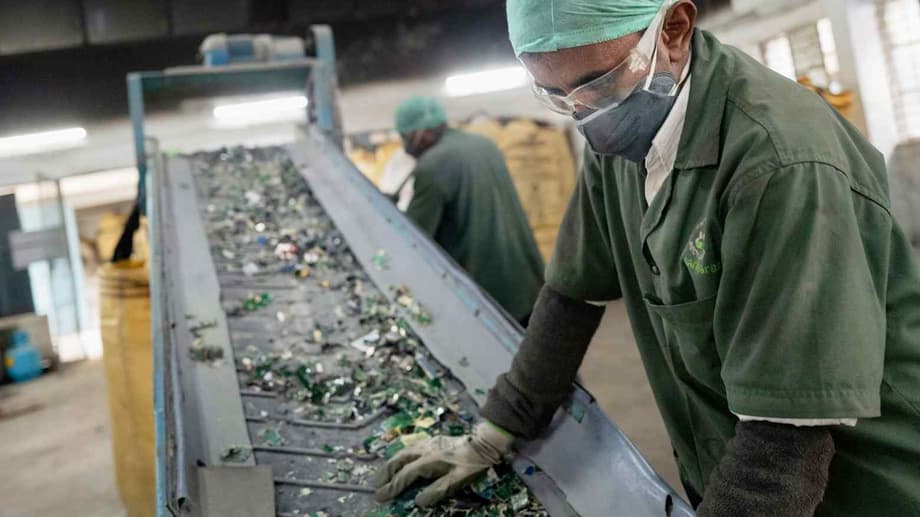
NOIDA, India — Beneath the surface of India’s bustling electronics markets and industrial corridors lies a hidden resource that the government now considers strategic gold. The country generates approximately 1.75 million tonnes of electronic waste annually, alongside 60,000 tonnes of spent lithium-ion batteries, creating what officials describe as an untapped urban mine containing lithium, cobalt, nickel, and rare earth elements essential for the green energy transition.
In September 2025, Prime Minister Narendra Modi’s cabinet approved a 15 billion rupee ($166 million) Critical Mineral Recycling Incentive Scheme designed to transform this waste stream into a domestic supply chain backbone. The initiative forms a crucial component of the broader National Critical Mineral Mission, which carries a total outlay of 163 billion rupees and represents one of the most significant industrial policy shifts in India’s recent mining history.
The scheme targets a specific gap in India’s resource security. While the country holds the world’s third largest reserves of rare earths and has recently discovered 5.9 million tonnes of lithium in Jammu and Kashmir, it remains almost entirely dependent on imports for processed critical minerals. The recycling program aims to develop 270,000 tonnes of annual recycling capacity capable of producing 40,000 tonnes of critical minerals yearly, potentially meeting 10 percent of domestic demand while creating nearly 70,000 direct and indirect jobs.
Breaking Free from Import Dependence
India’s vulnerability in critical mineral supply chains has become a pressing concern as geopolitical tensions reshape global trade. The country currently relies on imports for 100 percent of its lithium, cobalt, and nickel requirements, and 93 percent of its copper needs. China dominates the processing landscape, controlling approximately 73 percent of global cobalt refining and 59 percent of lithium processing, giving Beijing significant influence over supplies essential for electric vehicles, wind turbines, and solar infrastructure.
Recent supply disruptions have underscored these risks. Indonesia’s nickel export bans and China’s periodic restrictions on rare earth shipments have demonstrated how quickly critical material flows can constrict. For a nation targeting net zero greenhouse gas emissions by 2070 and projecting electric vehicle sales to double to 200,000 units in 2025, securing mineral supply chains has moved from economic preference to strategic necessity.
“India must act now to build domestic recycling and recovery capacity if it wants secure supply chains,” said Anupam Agnihotri, Director of the Jawaharlal Nehru Aluminium Research Development and Design Centre (JNARDDC), which serves as the Project Management Agency for the recycling scheme.
Recycling offers distinct advantages over traditional mining beyond supply security. According to the International Energy Agency, recycling could reduce the need for new mining by 40 percent for copper and cobalt and 25 percent for lithium and nickel by 2050 under global climate pledges. The process proves 2 to 10 times more energy efficient than virgin ore mining, supporting India’s decarbonization goals while reducing production costs for domestic manufacturers.
How the Incentive Structure Works
The six year program, running from fiscal year 2025-26 through 2030-31, employs a dual subsidy approach designed to attract both established industrial players and emerging startups. Participants can access capital expenditure subsidies covering 20 percent of investments in plant, machinery, equipment, and associated utilities, provided they commence production within specified timeframes. Beyond these deadlines, reduced subsidy rates apply to ensure timely capacity creation.
Operational expenditure support complements the capital incentives, rewarding performance through incremental sales over base year benchmarks. Recipients receive 40 percent of eligible operational subsidies in the second year of operation, with the remaining 60 percent disbursed in the fifth year upon achieving specified sales thresholds. This structure incentivizes sustained production rather than merely building idle capacity.
To ensure broad participation, the government has imposed incentive caps while reserving one third of the total outlay for small enterprises and new entrants. Large recyclers face a total ceiling of 500 million rupees (50 crore), with operational expenditure support capped at 100 million rupees (10 crore). Smaller players can receive up to 250 million rupees (25 crore) total, including 50 million rupees (5 crore) in operational support. The ministry has explicitly limited incentives to companies engaged in actual mineral extraction, excluding operations that only produce “black mass” (an intermediate powder containing valuable metals) without completing the refining process.
Industry Mobilizes for Implementation
The scheme’s rapid rollout has already triggered significant industry response. Within weeks of the October 2, 2025 application launch, over 70 recycling companies registered on the government portal, with more than 10 firms acknowledged under the eligibility framework. This enthusiastic early participation contrasts sharply with India’s current recycling landscape, which includes only 10 to 12 companies operating complete end to end R4 recycling systems capable of converting battery scrap directly into usable metals.
JNARDDC conducted a stakeholder consultation workshop on November 21, 2025, drawing approximately 30 prospective beneficiaries including startups, technology providers, and established industrial recyclers. The agency has established a continuous helpdesk to guide applicants through registration, documentation, and incentive disbursement processes, signaling the government’s commitment to operational efficiency.
“This transformative step by the Cabinet reflects a visionary commitment to building a robust circular economy, ensuring resource security, and driving innovation in recycling technologies,” said Debmalya Sen, President of the India Energy Storage Alliance (IESA), which contributed to the scheme’s development.
The policy framework has been strengthened by concurrent trade measures. The February 2025 Union Budget removed customs duties on lithium ion battery scrap and waste from critical substances including lead, zinc, and cobalt powder. This elimination of import tariffs allows Indian recyclers to access international feedstock markets, broadening raw material availability while domestic collection systems mature under the Extended Producer Responsibility framework, which mandates that electronics and battery manufacturers finance the collection and recycling of their end of life products.
Technology and the Formal Supply Chain
Currently, most of India’s electronic waste flows through informal collection networks that recover only high volume metals like copper, aluminum, and gold, while discarding rare earth bearing components. The new incentive scheme aims to formalize this ecosystem by encouraging dismantlers, crushers, and shredders to join organized recycling chains that preserve critical mineral content through to final extraction.
Technical capabilities for mineral recovery have advanced significantly through indigenous research. Indian Institutes of Technology (IITs) and Council of Scientific and Industrial Research (CSIR) laboratories have developed proprietary hydrometallurgical processes for metal recovery and purification, offering alternatives to energy intensive pyrometallurgy. These water based chemical extraction methods prove particularly suitable for processing the complex matrices found in spent batteries and electronic waste.
The scheme specifically targets the current practice of exporting “black mass” (crushed and shredded battery material containing lithium, cobalt, and nickel) to foreign refiners due to limited domestic processing capacity. By incentivizing full mineral extraction rather than intermediate processing, the government hopes to retain value domestically while building technical expertise in high purity metal recovery.
“Recycling of critical minerals will reduce cost of our products. This critical step will create a circular economy, create employments, and ensure sustainability for the EV industry,” explained Anmol Bohre, founder of Madhya Pradesh based electric two wheeler manufacturer Inigma Automobile.
International Alliances and the Quad Context
India’s domestic recycling push aligns with broader international efforts to reduce dependence on Chinese mineral processing. In July 2025, the Quadrilateral Security Dialogue (Quad) comprising Australia, India, Japan, and the United States launched the Critical Minerals Initiative, explicitly prioritizing electronic waste recovery and reprocessing as a joint strategy. The partnership recognizes that recycling provides a strategic buffer against supply chain disruptions while upholding circular economic principles.
Each Quad member brings distinct capabilities to potential collaboration. Australia possesses vast mineral reserves but limited recycling infrastructure. Japan has mastered secondary recovery technologies following China’s 2010 rare earth embargo, though it still depends on Chinese processing. The United States maintains advanced research institutions but lacks domestic recycling capacity. India offers a massive growing waste stream and rapidly developing technical capabilities, though it must address challenges posed by its informal e-waste sector.
Policy analysts recommend establishing a “Quad Recycling Index” to track progress, standardizing waste classifications across member states, and creating blended financing models combining public funds with green bonds and private investment. The initiative highlights how recycling has evolved from environmental compliance to national security priority.
Budget 2026 and the Long Term Vision
The recycling scheme fits within a broader resource security architecture outlined in India’s Budget 2026-27, which announced dedicated rare earth corridors in the mineral rich states of Odisha, Kerala, Andhra Pradesh, and Tamil Nadu. These coastal regions hold monazite sands containing an estimated 7.23 million tonnes of rare earth oxides, though mining has historically progressed slowly due to regulatory complexities including thorium association and atomic energy controls.
While new mining and refining operations face gestation periods exceeding a decade, recycling offers immediate capacity expansion. Research from The Takshashila Institution suggests recycling alone could satisfy over 35 percent of India’s baseline rare earth demand within the next decade, particularly as electric vehicle motors and wind turbines reach end of life. A single electric car contains up to 1.5 kilograms of permanent rare earth magnets, while modern wind turbines use roughly 600 kilograms per megawatt of capacity.
The economic logic extends beyond supply security. Industry experts note that recycling prevents capital flight while reducing manufacturing costs for domestic EV producers. As one sustainability expert noted, recycling and reusing minerals domestically saves billions in foreign exchange that can be redirected to decarbonization efforts, ultimately making electric vehicles more affordable for Indian consumers.
“Amid the ongoing tariff war globally, it is very important to promote domestic economy and production. It becomes even more critical to recycle and reuse minerals in India if we wish to accelerate our EV revolution and green transition,” said Shubham Thakur, a sustainability expert tracking the sector.
Key Points
- The Indian government approved a 15 billion rupee ($166 million) Critical Mineral Recycling Incentive Scheme in September 2025, operating through fiscal year 2030-31.
- The program aims to develop 270,000 tonnes of annual recycling capacity producing 40,000 tonnes of critical minerals including lithium, cobalt, nickel, and rare earths.
- Over 70 recycling companies have already registered for the scheme, which offers capital expenditure subsidies of 20 percent and performance linked operational incentives.
- India currently imports 100 percent of its lithium, cobalt, and nickel, with the new initiative targeting a 10 percent reduction in import dependence through urban mining.
- The scheme supports the broader National Critical Mineral Mission and aligns with the Quad’s international strategy to reduce reliance on Chinese mineral processing through joint recycling initiatives.