A Day of Chaos in Asian Skies
Thousands of passengers found themselves stranded across Asia today as a perfect storm of operational challenges triggered widespread flight disruptions. Aviation data reveals a staggering 1,680 flight delays and 227 cancellations recorded in a single day, creating ripple effects throughout the region’s interconnected air travel network. The disruption hit major hubs from Tokyo to Manila, affecting both international and domestic operations and leaving millions of travelers facing uncertain journeys.
The scale of today’s chaos represents one of the most significant single-day disruptions to hit Asian aviation in recent memory. While flight delays are not uncommon in the busy region, the combination of high cancellation numbers and extensive delays across multiple major hubs suggests a convergence of factors that overwhelmed the system’s capacity to absorb shocks.
Aviation industry analysts note that today’s disruptions are particularly notable because they affected both primary international gateways and regional airports, indicating systemic stress rather than isolated incidents at specific locations. The widespread nature of the problem suggests that travelers across Asia should prepare for continued instability as airlines work to clear the backlog.
Ground Zero: The Hardest Hit Airports
Bangkok’s Suvarnabhumi Airport emerged as ground zero for delays, recording 341 delayed flights with just two cancellations. This pattern of extreme delay concentration rather than mass cancellations suggests that Thai authorities and airlines prioritized keeping flights operating despite schedule instability. The massive delay count reflects severe congestion at one of Southeast Asia’s busiest international gateways, where arriving and departing aircraft competed for limited gate space and runway slots.
In a stark contrast, Urumqi Diwopu International Airport in western China became the epicenter for cancellations, accounting for 151 of the day’s 227 total cancelled flights. This represents more than half of all cancellations across the entire Asian dataset. Combined with 258 delays, Urumqi’s disruption pattern suggests more severe operational challenges, possibly related to weather conditions unique to the region or technical issues that could not be resolved quickly.
Singapore Changi Airport, often praised for operational efficiency, absorbed 242 delays while maintaining minimal cancellations. This resilience highlights Changi’s role as a critical international transit hub that prioritizes continuity of service even under stress. Similarly, Hong Kong International Airport reported an unusual pattern of 216 delays with zero cancellations, demonstrating an extreme delay-only disruption strategy that kept all flights moving but at significantly reduced speed.
Major Hubs Under Pressure
Tokyo’s Haneda Airport logged 200 delays and eight cancellations, affecting both domestic and international operations. As Japan’s primary domestic hub with growing international presence, Haneda’s disruption created cascading effects across the country’s aviation network. Beijing Capital International faced moderate pressure with 127 delays and 14 cancellations, while Manila’s Ninoy Aquino International Airport recorded 138 delays and two cancellations.
The geographic spread of these disruptions illustrates how Asia’s aviation network functions as an interconnected system. When major hubs experience delays, the effects propagate through connecting flights and aircraft scheduling, creating secondary disruptions even at airports not directly affected by the root causes. This interconnection explains why a disruption starting at Urumqi could ultimately impact passengers connecting through Singapore or Hong Kong.
Airlines Scramble to Maintain Operations
China Southern Airlines bore the brunt of today’s disruption, recording 122 delays and 38 cancellations. As one of China’s largest carriers with extensive domestic and international networks, the airline’s operational struggles reflected the broader challenges facing Chinese aviation. Air China followed with 72 delays and 12 cancellations, dominating disruption statistics at Beijing Capital while contributing to delays across western China.
Sichuan Airlines, a major carrier focused on western China, recorded 52 delays and only three cancellations. The airline’s relatively low cancellation rate compared to its delay volume suggests it adopted a strategy similar to Bangkok’s approach, prioritizing flight completion over schedule adherence. Japan’s All Nippon Airways (ANA) accounted for 91 delays and two cancellations, representing the bulk of delays at Tokyo Haneda and reflecting the scale-driven exposure that comes with operating one of Asia’s largest networks.
Cathay Pacific demonstrated remarkable operational discipline, leading delay volumes at Hong Kong with 65 or more delays without cancelling a single flight. This zero-cancellation approach underscores the Hong Kong-based carrier’s commitment to maintaining full network presence even under strain. Other major carriers including Singapore Airlines, Japan Airlines, Thai Airways, Cebu Pacific Air, and Malaysia Airlines also reported notable delays despite limited cancellations, indicating that network airlines generally chose to absorb disruption through delays rather than wholesale cancellations.
“Any operational challenges that come at short notice and affecting a large part of your operation is tough to deal with,” said UK-based aviation consultant John Strickland, commenting on the broader context of sudden aviation disruptions.
Regional Carriers Face Tougher Choices
While major network airlines had the resources and operational flexibility to manage delays, regional carriers showed higher cancellation percentages. These smaller airlines often operate with tighter margins and fewer spare aircraft, making it difficult to absorb delays without cancelling flights entirely. When technical issues arise or crew availability becomes constrained, regional carriers may have fewer options to maintain schedules compared to their larger competitors.
The disparity in disruption strategies between network and regional carriers highlights a fundamental asymmetry in Asian aviation. Major carriers can often reroute passengers through alternative hubs or rebook them on later flights, while regional carriers may simply cancel services and process refunds, leaving passengers to find alternative arrangements on their own.
Unraveling the Causes of Chaos
The disruptions reported today did not emerge from a single cause but rather resulted from a convergence of multiple factors that together overwhelmed the system’s capacity. Weather patterns across Asia played a significant role, with reduced visibility and strong winds lowering runway capacity at several key airports. In China, adverse weather conditions particularly affected Urumqi and Beijing, while Japanese airports faced similar challenges.
Technical issues also contributed significantly to today’s chaos. A global software glitch affecting Airbus A320 jets forced airlines to address unexpected maintenance requirements. The European planemaker issued a partial recall of A320-family aircraft, which recently overtook the Boeing 737 as the industry’s most-delivered model. Airlines worked through the night to implement software updates that revert to a previous version in a computer that helps determine the nose angle of affected jets. Some older aircraft also require hardware changes that take two to three hours per plane to complete.
Airbus CEO Guillaume Faury apologized for the disruption, which affected more than half of the global A320-family fleet.
“I want to sincerely apologise to our airline customers and passengers who are impacted now,” Faury posted on LinkedIn.
The recall followed an unintended loss of altitude on a JetBlue flight from Cancun to Newark on October 30, which injured 10 passengers and prompted investigation by France’s BEA accident agency. While European and Asian airlines had time to address the issue during overnight hours, the timing created significant operational challenges that contributed to today’s disruptions.
Beyond Weather and Technology
Additional factors compounded today’s disruption. Peak holiday travel season created intense demand for seats, leaving airlines with fewer options to rebook passengers when flights were cancelled. Infrastructure constraints at major hubs limited the ability to recover from delays quickly, as airports operated near maximum capacity. Crew availability issues, exacerbated by the complexity of recovering from previous days of disruptions, also played a role in preventing airlines from operating their full schedules.
Geopolitical tensions have also subtly affected Asian aviation. Earlier reports indicated that deteriorating relations between China and Japan led to the cancellation of around 1,900 flights, with key carriers like Air China and China Eastern reducing services on routes between Beijing-Tokyo and Shanghai-Osaka. While not a direct cause of today’s specific disruptions, these geopolitical factors create underlying fragility in the network that makes recovery from other disruptions more difficult.
The Human Cost of Aviation Chaos
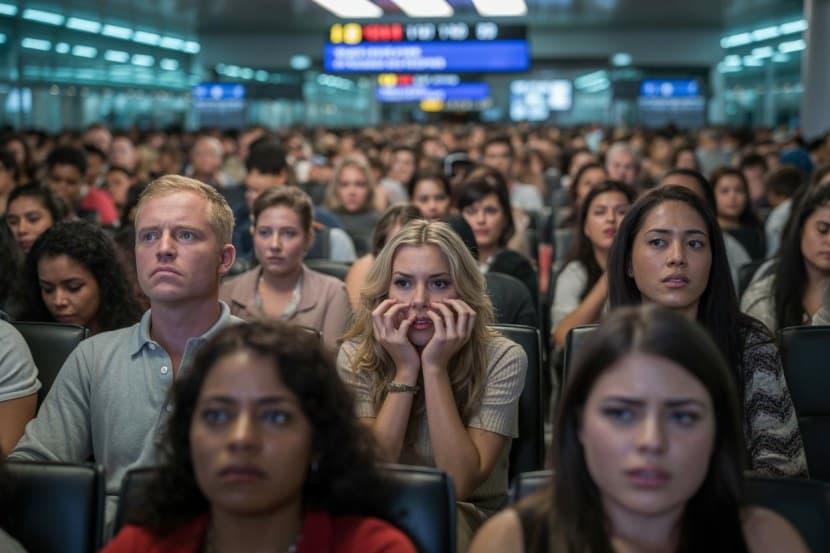
Behind the statistics of delays and cancellations lies the human cost of aviation disruption. Thousands of travelers faced longer connection times at hub airports, with many missing onward flights and spending hours in terminals while waiting for rebooking. The sheer volume of disrupted passengers overwhelmed airline customer service systems, creating long queues at service counters and extending wait times for phone support.
Business travelers faced missed meetings and altered schedules that disrupted professional commitments. Families travelling during the holiday season found their reunions delayed or cancelled, creating emotional and financial stress. Leisure travelers saw carefully planned itineraries unravel as flights were cancelled or delayed by many hours, potentially leading to shortened vacations and additional expenses for accommodation and meals.
Passengers relying on ground transportation connections found themselves particularly vulnerable. Those arriving late missed pre-booked train connections, bus departures, or ride arrangements, forcing them to make alternative plans at often significant additional cost. Hotels in airport areas filled quickly as passengers stranded overnight sought accommodation, leaving some travelers with no choice but to sleep in terminals.
The psychological impact of extended uncertainty also took its toll. Confusing information from airlines about the status of flights, combined with constantly changing departure times, created stress and anxiety for passengers unsure whether they would reach their destinations. For those with tight connections to cruises, tours, or events, the prospect of missing critical activities added significant pressure to an already difficult situation.
A Pattern of Instability
Today’s disruptions are not isolated incidents but part of a broader pattern of instability affecting Asian aviation in recent months. Historical data reveals persistent challenges throughout late 2025. On October 13, 2025, carriers including ANA Wings, Akasa Air, and Sky Angkor caused 18 flight cancellations and 836 delays, affecting airports in Japan, Thailand, and Cambodia.
By December 15, 2025, the situation had intensified, with Asian airports recording 887 flight delays and 62 cancellations. This mid-December disruption affected major hubs in China, Japan, Indonesia, and Thailand, with the heaviest impact felt at Shanghai Hongqiao Airport (82 delays, five cancellations), Beijing Capital (65 delays, nine cancellations), and New Chitose Airport in Hokkaido (eight cancellations, 144 delays).
Earlier in December, reports indicated 858 flights delayed and 94 cancelled, with significant disruptions in Shenzhen, Shanghai, and Beijing, as well as Japanese airports including Narita and Fukuoka and Malaysian hubs including Kuala Lumpur. This pattern of recurring disruptions suggests systemic vulnerabilities in Asian aviation that extend beyond isolated weather events or technical issues.
Asia-based aviation analyst Brendan Sobie offered perspective on the recurring nature of these challenges.
“The update was ‘not as chaotic as some people might think,’ although ‘it does create some short-term headaches for operations,'” Sobie said regarding the Airbus software issue.
Factors Behind Persistent Instability
The recurring nature of flight disruptions points to structural challenges in Asian aviation. Rapid growth in passenger demand has outpaced infrastructure development at many airports, creating bottlenecks that manifest as delays even under normal operating conditions. Air traffic management systems struggle to handle increasing traffic volumes, particularly in crowded airspace around major metropolitan areas.
Airlines also face staffing challenges as they attempt to restore capacity reduced during the pandemic. Training new pilots, flight attendants, and maintenance personnel takes time, and shortages in these critical roles limit airlines’ ability to recover quickly from disruptions. When irregular operations occur, airlines have fewer spare crew members available to operate recovery flights or cover for absent colleagues.
Environmental factors have become increasingly unpredictable, with more extreme weather events creating disruption patterns that historical planning models did not anticipate. From volcanic ash clouds to unseasonable storms, these events challenge even the most resilient operational systems and create cascading effects across the network.
Know Your Rights as a Passenger
Facing flight disruptions can be frustrating, but passengers have rights that airlines must respect. When flights are cancelled or significantly delayed, airlines are obligated to provide care and assistance regardless of the cause. For delays exceeding two to four hours, carriers must provide food and drink vouchers to maintain passenger comfort during extended waits.
For overnight delays, airlines must provide hotel accommodation and transportation to and from the hotel. This obligation applies regardless of whether the passenger ultimately qualifies for monetary compensation, ensuring that travelers are not left stranded without basic support. Passengers also have the right to make two phone calls or send two emails during extended waiting periods, helping them stay connected with family, employers, or booking services.
When flights are cancelled, passengers choose between a refund for the unused portion of their ticket or rebooking on the next available flight to their destination. Airlines must process these requests promptly, and passengers should not feel pressured to accept less favorable options. Rebooking should ideally be on the same airline, but if no suitable options are available, carriers may arrange travel on partner airlines or even competitors in extreme cases.
Navigating Compensation Claims
The question of monetary compensation depends on the cause of the disruption. Technical faults within the airline’s control, crew scheduling issues, and operational errors typically make flights eligible for compensation under various regulatory regimes. However, weather conditions, security threats, air traffic control restrictions, and other extraordinary circumstances often exempt airlines from paying compensation.
Persian Gulf carriers operating under regulations like EC 261 and UK 261, as well as other regional frameworks, have specific compensation frameworks that apply to qualifying disruptions. These regulations provide defined compensation amounts based on flight distance and delay duration. Passengers should keep all travel documents and receipts, as these may be necessary to prove claims for compensation later.
The process of determining eligibility can take time, as authorities or airlines investigate the specific cause of disruption. Passengers should not expect immediate compensation decisions and should be prepared to follow up persistently with airlines or regulatory bodies if they believe they have legitimate claims. Documentation is crucial throughout this process, including boarding passes, delay notifications, and receipts for expenses incurred due to the disruption.
What Lies Ahead for Asian Travelers
The immediate future for Asian travelers involves continued uncertainty as airlines work to clear the backlog of disrupted flights. Industry experts suggest that recovery will take several days, particularly for passengers on complex itineraries involving multiple connections. Airlines typically prioritize rebooking based on status and fare class, which means leisure travelers on discounted tickets may face longer wait times for alternative arrangements.
Looking further ahead, the aviation industry must address the structural vulnerabilities exposed by recent disruptions. Investment in infrastructure, particularly runway and gate capacity at constrained airports, will be essential to accommodate continued growth in demand. Air traffic management modernization can help reduce delays by improving the efficiency of airspace utilization and enabling more direct routing between cities.
Airlines are also investing in digital transformation initiatives that may improve disruption management. Artificial intelligence and machine learning tools can help predict potential issues before they materialize, enabling proactive rebooking and communication with affected passengers. Enhanced mobile applications and self-service tools can give travelers greater control over their recovery options, reducing pressure on airline customer service systems during irregular operations.
“Transportation Secretary Sean Duffy said that impacted U.S. carriers ‘have reported great progress, and are on track to meet the deadline of this Sunday at midnight to complete the work,'” regarding the Airbus software updates.
The global nature of aviation disruptions also highlights the need for improved international coordination. Today’s events originated from technical requirements issued by European regulators, affected Asian airlines and airports, and had implications for carriers worldwide including those in the United States. Enhanced cooperation between regulatory bodies, airlines, and air navigation service providers could help mitigate the impact of such cross-regional disruptions in the future.
Strategies for Resilient Travel
For travelers planning upcoming trips to, from, or within Asia, building resilience into travel plans can help mitigate the impact of potential disruptions. Booking direct flights when possible reduces the number of connection points that could become bottlenecks. When connections are necessary, allowing longer layovers provides buffer time for recovery from initial delays without missing onward flights.
Travel insurance that covers trip interruption and delay can provide financial protection and assistance services when disruptions occur. Policies typically cover additional accommodation and meal costs, as well as alternative transportation arrangements when flights are cancelled or significantly delayed. Reviewing policy terms before purchase ensures that coverage matches the specific risks of the planned itinerary.
Staying informed through airline mobile apps and flight tracking services provides real-time information about potential issues before arriving at the airport. Early notification allows for proactive rebooking when possible, rather than waiting in long lines at the airport when problems become widespread. Having multiple communication channels with airlines, including phone numbers, social media accounts, and airport service desks, increases the chances of reaching customer service representatives during busy periods.
Packing essential items in carry-on luggage rather than checked bags provides access to necessities like medications, toiletries, and change of clothing even when baggage is delayed or flights are cancelled. Keeping electronic devices charged and carrying portable power banks ensures continued access to information and communication tools throughout extended delays.
The Bottom Line
Today’s widespread flight disruptions across Asia highlight the vulnerability of even the most sophisticated aviation networks to converging challenges. With 1,680 delays and 227 cancellations affecting major hubs and carriers throughout the region, passengers experienced significant inconvenience and uncertainty. The combination of weather patterns, technical issues, infrastructure constraints, and operational pressures created a perfect storm that overwhelmed normal recovery capabilities.
While today represents a particularly challenging day, the disruptions fit into a broader pattern of instability that has affected Asian aviation throughout late 2025. Airlines and airports continue to work to restore normal operations, but passengers should prepare for continued unpredictability as the holiday travel season progresses and the industry addresses underlying structural vulnerabilities.
For travelers affected by today’s disruptions, understanding passenger rights and available options for rebooking and compensation is crucial. For those planning future travel, building flexibility into itineraries and preparing contingency plans can help mitigate the impact of potential disruptions. As the aviation industry works to enhance resilience, travelers must adapt to the reality that disruptions, while inconvenient, have become a persistent feature of modern air travel in Asia and globally.
Key Points
- Asian aviation recorded 1,680 flight delays and 227 cancellations in a single day of widespread disruption
- Bangkok Suvarnabhumi Airport experienced the highest delay count with 341 delayed flights
- Urumqi Diwopu International Airport was the epicenter for cancellations with 151 cancelled flights
- China Southern Airlines recorded the highest combined disruption volume with 122 delays and 38 cancellations
- A global Airbus A320 software recall contributed to technical disruptions across the region
- Weather patterns, infrastructure constraints, and crew availability compounded operational challenges
- Passengers have rights to care, rebooking, and potential compensation depending on disruption causes
- Historical data shows a pattern of recurring disruptions across Asian aviation since October 2025
- Recovery from today’s disruptions is expected to take several days as airlines clear backlogs
- Travelers should build flexibility into itineraries and prepare contingency plans for future trips