Developers Hesitate as Hong Kong Bets Big on Tech Transformation
Hong Kong’s government is making an unprecedented financial commitment to transform its northern frontier into a technology powerhouse, but the city’s real estate developers are responding with caution rather than enthusiasm. In February, officials announced they would withdraw HK$150 billion (approximately $19 billion) from the city’s currency defense fund to support the Northern Metropolis project, marking the first time such reserves have been tapped for development in over four decades. This massive injection represents one of the largest infrastructure commitments in the territory’s history, yet property executives privately express concerns about oversupply risks and uncertain returns.
The Northern Metropolis initiative, first unveiled in 2021 as a solution to housing congestion, has evolved into something far more ambitious. Spanning roughly 300 square kilometers or nearly a third of Hong Kong’s total territory, the project aims to create a dual-centered city where finance remains concentrated in the southern districts while innovation drives growth in the north. The development borders Shenzhen, China’s established technology hub, and seeks to house everything from advanced research laboratories to pharmaceutical startups, eventually accommodating 2.5 million residents and creating 650,000 jobs according to government projections.
Despite the government’s show of financial commitment, the reception from private sector partners remains tepid. While major developers have avoided public criticism, executives at leading firms grumble privately about the project’s scale and unfamiliar development model. Their hesitation stems from fundamental differences between Hong Kong’s traditional property development approach and the industrial park strategy being imported from mainland China. Environmental groups have also raised alarms about threats to local wildlife, while radio show callers question whether the investment primarily benefits Shenzhen rather than Hong Kong residents.
The stakes are high as the city faces what some economists describe as its longest recession, with retail sales and property values still below 2018 peaks.
Clash of Development Philosophies
The heart of the tension lies in a paradigm shift that threatens to sideline Hong Kong’s established property developers. The Northern Metropolis is being developed using an industrial park model, where similar companies cluster in sector-specific hubs administered through heavy government planning. This approach has succeeded across the border in Shenzhen and other Chinese cities, but it stands in stark contrast to Hong Kong’s tradition of minimal government intervention where developers typically control their own office towers, shopping malls, and residential complexes from conception to completion.
Under the new model, property companies will take a back seat to government planners. Rather than leading master developments, they may be relegated to building residential high-rises near key sites or constructing factories and offices for large industrial tenants selected by authorities. This represents a significant departure from the autonomy Hong Kong developers have enjoyed since the colonial era, when limited government involvement allowed real estate conglomerates to amass enormous wealth and influence.
The unfamiliar operating structure makes it difficult for companies to estimate potential returns. Multiple executives at major development firms cite a lack of detailed planning documents, the possibility of oversupply in specific zones, and concerns that the government is attempting to develop too many areas simultaneously. The uncertainty is compounded by Hong Kong’s current economic difficulties, with retail sales falling from a peak of HK$485.2 billion in 2018 to HK$376.8 billion in 2024, and residential property prices dropping significantly from their 2018 highs.
When Capital Meets Political Expectations
The economic pressures on developers extend beyond market uncertainties into the realm of political expectations. Hong Kong’s business community, which built its wealth under British-style capitalism, now faces mounting pressure to demonstrate what officials call “love for the country and Hong Kong” through concrete investment actions. In November 2024, Xia Baolong, Beijing’s top official for Hong Kong affairs, convened a symposium in Shenzhen where 29 business leaders were required to present their investment plans for the Northern Metropolis.
“The Hong Kong business community is the main force behind Hong Kong’s economic development,” Xia stated, urging executives to “illustrate their love for the country and Hong Kong with concrete actions.”
The message was clear: investment in the Northern Metropolis carries patriotic significance. Yet the business response has been measured. Henry Tang Ying-yen, a former Chief Secretary for Administration and scion of a major corporation, articulated the skeptical view of many executives when he stated that projects must remain profitable. Chief Executive John Lee countered by emphasizing the need to understand “the spirit of President Xi Jinping’s reply letter,” suggesting commercial decisions should reflect emotional attachment to the territory.
This tension highlights a fundamental challenge. While Beijing can impose political control through the National Security Law and other measures, economic development requires voluntary private sector participation. Unlike state-led projects on the mainland where government enterprises follow central directives, Hong Kong’s developers operate in a capitalist system where they must answer to shareholders and creditors.
Integration Across the Border
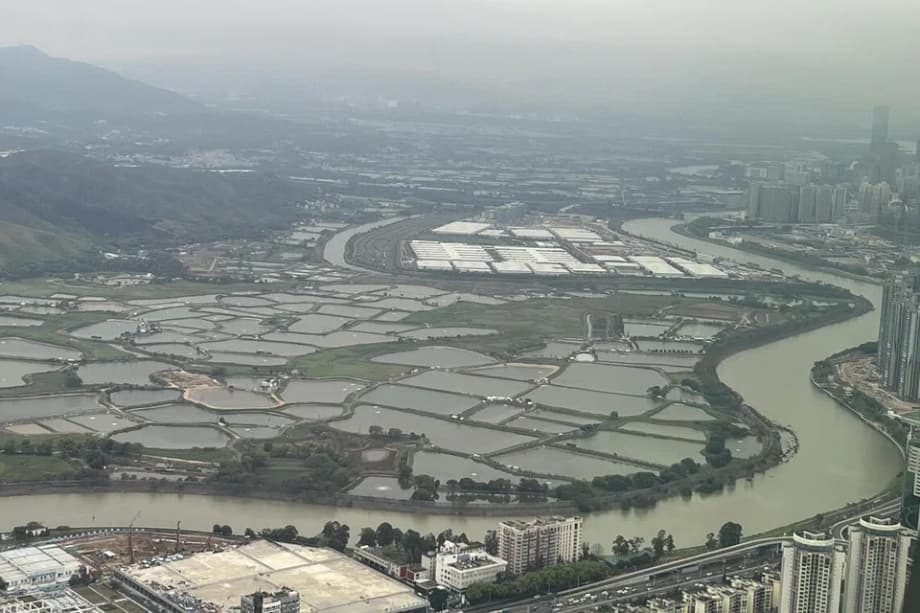
The Northern Metropolis represents more than urban expansion; it signals the physical dissolution of the boundary that has separated Hong Kong from mainland China since the 1997 handover. The development sits along the Sham Chun River, which once served as a stark demarcation between British Hong Kong and Communist China. During the 1960s, millions swam across these waters escaping famine and persecution. Today, the river still flows, but the conceptual border is fading.
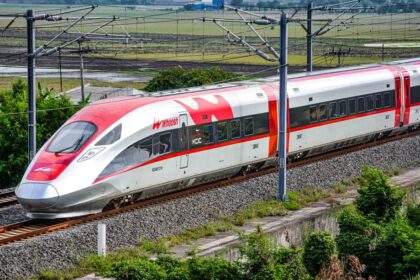
The project aligns with Chinese President Xi Jinping’s vision for the Greater Bay Area, an economic zone linking nine coastal cities with Hong Kong and Macao as a rival to Silicon Valley. Five new railway lines will connect the Northern Metropolis to Shenzhen, facilitating cross border commuting for technology workers. Some analysts suggest the joint jurisdiction arrangement used at West Kowloon Station, where mainland Chinese police operate on Hong Kong soil, could extend to the new tech hub.
However, the integration raises questions about Hong Kong’s distinct identity. Steve Tsang, director of the SOAS China Institute at the University of London, notes that the plans mark a change in paradigm for the territory. The Hong Kong Development Bureau maintains that the project will capitalize on the region’s rapid economic development, but critics note that Hong Kong’s traditional strengths in finance, trade, and logistics are being deprioritized in favor of advanced manufacturing where Shenzhen already dominates.
John Tsang Chun-wah, who served as Financial Secretary until 2017, questioned whether abandoning Hong Kong’s commercial strengths makes economic sense. With Shenzhen already surpassing Hong Kong in technological prowess and offering lower land and labor costs, some wonder whether Hong Kong can compete effectively in a sector where it has fallen behind.
Local Communities Face Disruption
Beyond boardrooms and government offices, the Northern Metropolis threatens to upend centuries-old ways of life. In Lau Fau Shan, a coastal village in the New Territories, families have produced dried oysters for over 200 years. Chan To-ngan, a 72-year-old farmer who has worked these waters for four decades, faces an uncertain future as the government plans transformation of the area into residential and commercial zones.
“I really don’t know how things will change,” Chan said. “Maybe I should start taking photos of our farm and this sea view.”
Similarly, in Ha Wan village near Lok Ma Chau, where the tech park will be built, 69-year-old Kwok Chi-wai tends trees planted by his father. Village families, most of whom do not own their land, could face relocation as early as next year without specific details about their futures. These communities represent the last vestiges of pre-industrial Hong Kong, landscapes of wetlands and fish ponds that have remained untouched while the city grew into a financial powerhouse.
Environmental groups have sounded alarms about the development’s ecological impact. The project threatens habitats for rare species including the Chinese white dolphin. Chan Hall-sion, a senior campaigner for Greenpeace in Hong Kong, warns that reclamation is irreversible and brings permanent damage to ecosystems that serve as wildlife homes.
The government’s response emphasizes that development areas are ecologically less sensitive, though environmental impact assessments remain ongoing. The dilemma reflects a broader pattern where economic integration with the mainland takes precedence over local preservation.
Global Precedents and Cautionary Tales
Hong Kong’s officials have studied other massive urban development projects, though the examples offer mixed lessons. The Xiong’an New Area, designed as an extension of Beijing and personally championed by President Xi, has struggled to attract residents and businesses despite massive state investment, earning the nickname “ghost town.” Beijing is now resorting to moving government owned companies to the area to fill empty space.
Other international megaprojects face similar challenges. Saudi Arabia’s Neom and Indonesia’s Nusantara have encountered delays, cost overruns, and land rights conflicts. Brian Wong, a researcher at the Liber Research Community, notes that urban development on this scale typically follows a predictable pattern of ambition followed by scaling back, debt problems, or prolonged timelines that spawn additional complications.
The comparison to Xiong’an is particularly relevant because Hong Kong’s government has explicitly modeled aspects of the Northern Metropolis on Chinese “smart cities.” Yet the fundamental difference remains: Xiong’an relies on state enterprises and central government mandates, while Hong Kong must convince private developers to participate voluntarily in a market-based economy.
Polling suggests public skepticism matches developer hesitation. A survey conducted by Greenpeace and the Hong Kong Public Opinion Research Institute found only 6 percent of residents support simultaneous construction of both the Northern Metropolis and the separate Kau Yi Chau Artificial Islands project. Despite this, officials continue to characterize the development as inevitable, with Financial Secretary Paul Chan defending the investment against radio callers who complain resources should benefit local residents rather than cross-border integration.
Key Points
- The Hong Kong government committed HK$150 billion from its currency defense fund to develop the Northern Metropolis, the first such withdrawal in over 40 years
- Real estate developers express private skepticism about the industrial park model, which reduces their traditional autonomy in planning and development
- The project aims to transform 300 square kilometers of northern Hong Kong into a technology hub integrated with Shenzhen over 20 years
- Beijing officials are pressuring business leaders to invest as a demonstration of patriotism, though executives insist on profitability requirements
- Local communities including 200-year-old oyster farming villages face displacement without clear relocation details
- Environmental groups warn of irreversible damage to wetlands and wildlife habitats including the Chinese white dolphin
- The development represents physical integration with mainland China, potentially extending joint jurisdiction arrangements where mainland officials operate on Hong Kong soil
- Historical precedents like China’s Xiong’an New Area show that state-backed tech cities can struggle with population retention and business attraction