Shanghai Leads Broad Based Recovery in Resale Market
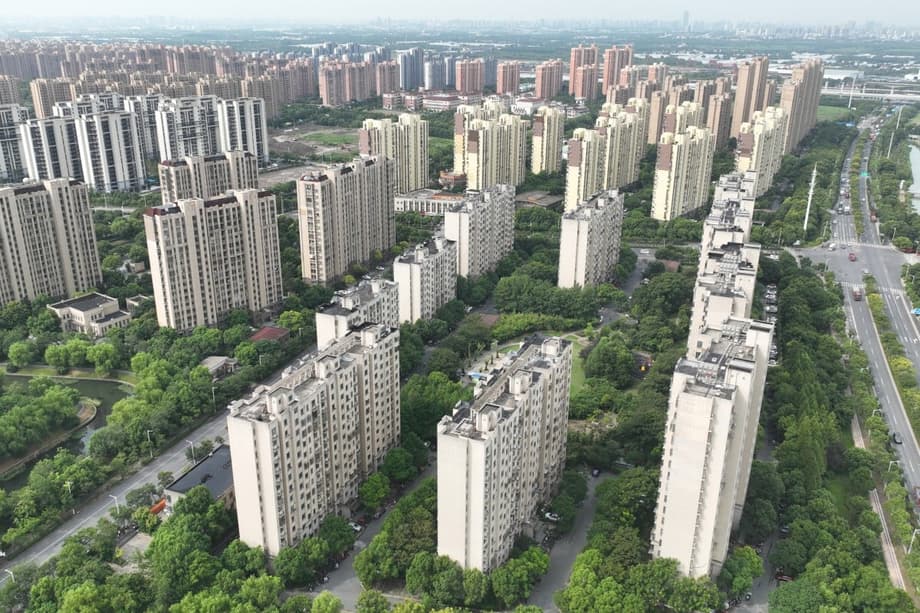
China’s battered property market is showing unexpected signs of life this spring, with second hand home transactions surging across major metropolitan areas and fueling expectations that the prolonged downturn may be reaching a floor. Shanghai, the country’s financial hub and largest city by economy, recorded approximately 22,000 resale home sales between March 1 and March 23, representing a striking 170 percent increase from the same period in February, according to data from local financial outlet Cailian. This pace puts the city on track to exceed 30,000 transactions for the full month, which would mark a three year high and breach a psychological threshold that analysts view as indicative of genuine market vitality rather than seasonal fluctuation.
The momentum extends well beyond China’s most cosmopolitan city. In Nanjing, the capital of Jiangsu province and a major regional economic center, official data showed 5,789 resale homes sold during the first three weeks of March, up 54 percent from the same period a year earlier. Research from Huatai Securities indicates that across 26 cities it monitors nationwide, resale home transactions climbed 22 percent year on year following the Chinese New Year holiday in mid February. This broad based uptick suggests the recovery is not isolated to a single market but reflects a fundamental shift in sentiment among Chinese homebuyers who have spent three years waiting on the sidelines, paralyzed by concerns about falling prices, developer defaults, and economic uncertainty.
Tier One Cities Show Synchronized Momentum
The resurgence has taken hold simultaneously across China’s four premier cities, known as the tier one markets that typically set the tone for national real estate trends and serve as bellwethers for the broader economy. In Beijing, the nation’s political capital, online resale home sales surpassed 5,700 units during the first half of March, while Guangzhou, the commercial hub of southern China, recorded more than 500 resale transactions over a single weekend, hitting a one month high. Shenzhen, the technology and manufacturing powerhouse adjacent to Hong Kong, has demonstrated particular vigor, with second hand home sales at Leyoujia’s housing agencies surging 132 percent in the first week of March compared to the previous week, reaching levels not seen since late March of last year.
Real estate agents report a fundamental shift in buyer behavior that extends beyond raw transaction numbers. Ye Wei, director of the Shekou North District branch of Centaline Property in Shenzhen, described the change in client attitudes.
“Many clients are contacting us to arrange viewings, and our agents are all out showing properties. Previously, buyers were in no rush to make offers after viewings, but recently deals are being sealed within days, as purchasing sentiment has visibly strengthened.”
This acceleration from initial viewing to final purchase indicates that confidence is returning after years of hesitation driven by concerns about falling prices and developer insolvencies. Viewing volumes in Shenzhen also climbed to their highest level since mid October 2024, suggesting that buyer interest is translating into active market participation rather than mere curiosity.
Policy Shift Signals Government Resolve
Behind the transaction data lies a significant evolution in official thinking that began with a rare New Year’s Day article in Qiushi, the Communist Party’s authoritative theoretical journal that typically publishes the most senior leadership’s policy directions. The commentary called for more powerful and precise measures to stabilize property market expectations, marking what Ting Lu, chief China economist at Nomura, described as the most comprehensive assessment of China’s property markets published in Qiushi since the sector’s collapse began in mid 2021.
“This is the most comprehensive assessment of China’s property markets published in Qiushi since the sector’s collapse in mid 2021,” Lu noted in a research report, adding that “its significance should not be overlooked” as public commentary in such journals often signals internal policy debates before formal decisions are announced.
The article appeared strategically ahead of China’s annual parliamentary meeting in March, known as the Two Sessions, where top leaders gather to set policy goals and release the five year development plan. Unlike previous official language that characterized the downturn as merely a period of adjustment, the Qiushi piece explicitly urged policymakers to shorten the adjustment period as much as possible. It also rejected the notion that real estate has become economically irrelevant, warning that the sector remains crucial to the broader economy and that authorities must prepare for potential bankruptcies among debt laden developers still struggling with high debt levels. This rhetorical shift suggests Beijing recognizes it cannot afford to let the property sector slide indefinitely, particularly as export driven growth faces mounting trade tensions and the government seeks to transition toward consumption led growth.
Innovative Local Programs Drive Second Tier Growth
While tier one cities dominate headlines, second tier markets are implementing creative policy solutions to unlock demand and address the inventory overhang that has plagued the market for years. In Ningbo, a major port city in Zhejiang province with a population exceeding eight million, resale home sales surpassed 5,400 units as of March 26, with daily transaction volumes on working days consistently exceeding 300 since mid March. This represents a 132 percent jump from February’s total figures and positions the city to breach the 6,000 unit threshold for the month, well above the 5,000 unit level that local agents consider critical for market health and liquidity.
The catalyst is Ningbo’s innovative Old for New program, launched in its third phase at the end of February after two earlier phases in the second half of last year. Under this initiative, the city government purchases resale homes built before 2010 at prices determined by the average value independently assessed by three third party institutions, providing homeowners with immediate liquidity to upgrade their housing conditions more quickly without waiting for individual buyers. Participants receive a replacement voucher equivalent to 5 percent of their property’s assessed value that can be applied toward purchasing a new home, effectively providing a subsidy for upgrading. The program’s website has accumulated over 170,000 visits and received 7,801 applications for old property exchanges as of March 23, driving the purchase of 1,687 improved homes. The government plans to renovate acquired properties for use as public rentals or transitional housing for displaced residents and young professionals, addressing both inventory overhang and affordable housing needs simultaneously while injecting liquidity into the upgrade chain.
Market Split: Luxury Thrives While Affordable Segment Lags
Not all segments of the property market are recovering equally, creating a bifurcated landscape that favors the wealthy while leaving first time buyers and the affordable segment struggling. Analysts describe the current rebound as structured, with luxury projects substantially outperforming those targeting budget conscious purchasers. In Shanghai’s Pudong New Area, Poly Development and Holdings Group’s Expo Tianyue project closed sales exceeding CNY290 million (USD40 million) in the first week of March, with sales staff reporting they were basically selling one large apartment priced at about CNY50 million (USD6.9 million) each day to buyers with substantial existing wealth.
Conversely, projects aimed at basic needs and first time buyers continue to struggle with weak demand. In Shenzhen’s Bao’an district, the Junyue Mingdu project was still running aggressive promotions in late February, slashing prices by CNY800,000 to CNY1.1 million (USD110,000 to USD150,000) for 89 square meter apartments to attract buyers. The oversupply of new affordable housing in suburban Shenzhen before the Chinese New Year, combined with fierce competition from the resale market where sellers have more flexibility to discount, has forced developers of such projects to cut prices to drive sales.
“Transaction data across cities shows that upgrade oriented products in core cities are leading the property market recovery,” explained Zhang Bo, president of the 58 Anjuke Research Institute. “This structured rebound reflects an improved match between new supply and real demand, as affluent buyers with stable finances and existing property assets return to the market while price sensitive first time buyers remain cautious about job security and future income prospects.”
Developer Debt Crisis Casts Shadow on Optimism
Despite the encouraging resale data, significant risks persist in the developer sector that could undermine the nascent recovery and limit the sustainability of the current uptick. Financial stress remains evident across the industry, with Chinese real estate developers’ outstanding loan balance falling in the third quarter of last year for the first time in more than a decade, indicating that banks are reducing exposure to the sector. Vanke, once one of the country’s largest and most respected developers and considered a model of financial prudence, narrowly avoided default on a 2 billion yuan (USD283 million) onshore bond in recent weeks, only securing an extension after prolonged negotiations that highlighted the company’s struggle to meet obligations amid frozen credit markets.
The unfinished housing stock presents another drag on sentiment that policy must address to fully restore confidence. Chinese developers have long sold apartments before completion through pre sale mechanisms, leaving buyers with mortgages on unfinished homes. Without funds from new sales or access to fresh credit, developers have struggled to complete construction, creating a crisis of confidence among potential buyers who fear purchasing new units that may never be delivered. Based on the Qiushi article, the government is expected to implement more innovative and targeted measures, wrote Michelle Kwok, HSBC’s head of Asia real estate and Hong Kong equity research. The most impactful policies will likely be those that meaningfully reduce the financial burden on home buyers. In our view, more focus on acquiring excess inventory will be a key step to resolving bottlenecks. Larry Hu, chief China economist at Macquarie, predicts home construction completions will fall by 12 percent this year after a 17 percent drop last year, suggesting the supply side remains fragile even as demand shows signs of stabilization.
Key Points
- Shanghai’s resale home sales reached approximately 22,000 units in the first 23 days of March, up 170 percent from February, with full month transactions expected to exceed 30,000 units for the first time in three years.
- Twenty six major cities tracked by Huatai Securities showed a 22 percent year on year increase in resale home transactions after the Chinese New Year holiday, with tier one cities collectively rising 20 percent.
- The Communist Party’s Qiushi journal published a rare January article calling for more powerful and precise measures to stabilize the market, rejecting the view that real estate is no longer economically important and urging leaders to shorten the adjustment period.
- Ningbo’s innovative Old for New program, which purchases pre 2010 homes to help residents upgrade, has driven over 5,400 resale sales in March and received nearly 8,000 applications for property exchanges.
- The recovery exhibits a split structure, with luxury properties selling rapidly while affordable new developments still require heavy discounting to attract buyers, reflecting divergent financial confidence among different income groups.
- Developer debt remains a critical vulnerability, with major players like Vanke struggling to meet obligations, outstanding industry loan balances declining for the first time in over a decade, and millions of homes remaining unfinished across the country.