A New Waterfront Icon Illuminates Tokyo Bay
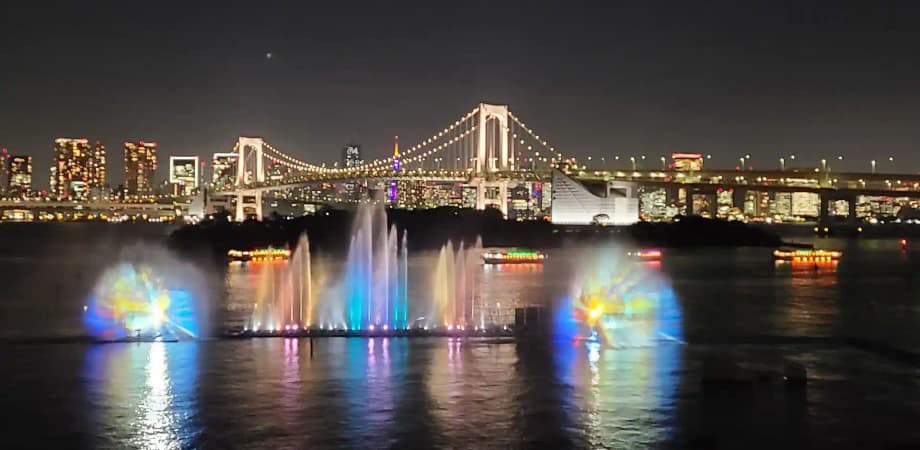
On the evening of March 28, 2026, the Tokyo skyline welcomed a dazzling new addition as the Tokyo Aqua Symphony fountain made its public debut at Odaiba Marine Park. Water jets soared 150 meters into the night sky while synchronized lights danced across the bay, creating a spectacle that officials hope will redefine the city’s waterfront entertainment district. Tokyo Governor Yuriko Koike presided over the opening ceremony, addressing a crowd that had gathered to witness what the metropolitan government describes as one of the largest fountain complexes in the world. The air carried a sense of anticipation as darkness fell over Tokyo Bay, with the Rainbow Bridge illuminated in the background providing a dramatic frame for the inaugural display.
The metropolitan government expects 30 million visitors annually to witness these displays, which combine hydraulic engineering with artistic vision to create a signature attraction for the capital. The inaugural performances, scheduled for 8:00 PM and 9:00 PM on opening night, featured intricate choreography set to music against the iconic backdrop of the Rainbow Bridge and Tokyo Tower. Spectators watched as the 250-meter-wide installation transformed the marine park into a canvas of moving water and light, its design paying homage to the Somei Yoshino variety that serves as Tokyo’s official flower. The launch marks the culmination of a construction project that began in July 2025 and represents a significant investment in the ongoing revitalization of the Tokyo Waterfront City area.
The debut of this massive installation represents more than a simple addition to Tokyo’s tourist infrastructure. It signals a strategic shift toward creating immersive nighttime experiences that can compete with other global destinations while providing residents with accessible cultural amenities. The fountain’s location in Odaiba, an artificial island in Tokyo Bay originally developed for defensive purposes in the 19th century and later transformed into a leisure destination, perfectly encapsulates the city’s ability to reinvent its urban spaces for contemporary enjoyment. The project demonstrates how Tokyo continues to invest in public art that serves both aesthetic and economic functions.
Breathing New Life into the Waterfront
The Tokyo Aqua Symphony emerges as a centerpiece in the metropolitan government’s broader strategy to improve the appeal of the Tokyo Waterfront City district, encompassing the neighborhoods of Daiba, Aomi, and Ariake. This initiative seeks to create a balanced urban environment that integrates workplaces, residential areas, educational institutions, and leisure facilities into a cohesive destination for both residents and tourists.
The fountain’s development comes as Tokyo Metropolitan Marine Parks celebrate their 50th anniversary, with the first facilities having opened in 1975. Odaiba Marine Park, where the new installation stands, has long served as a recreational hub featuring attractions ranging from a replica of the Statue of Liberty to extensive shopping and entertainment complexes. However, city officials recognized the need for a signature nighttime attraction that could extend visitor engagement beyond daylight hours and provide a draw throughout the year for the bayside district.
Tokyo Governor Yuriko Koike highlighted this vision during the opening ceremony, articulating the city’s aspirations for the project.
We hope to create a new flow of people and will make efforts to become a city that can entertain people day and night.
Her remarks stressed the fountain’s role not merely as aesthetic infrastructure but as a catalyst for economic activity and urban vibrancy.
Engineering and Design Excellence
Beyond its sheer scale, the Tokyo Aqua Symphony represents a sophisticated fusion of engineering prowess and cultural symbolism. The installation features dual records: a vertical water jet capable of reaching 150 meters skyward, and a horizontal span of 250 meters that creates patterns visible from considerable distances across Tokyo Bay. These dimensions place the fountain among the world’s tallest and widest aquatic displays.
The design motif draws directly from Japanese cultural heritage. Engineers and artists collaborated to shape the fountain’s water patterns after the Somei Yoshino cherry blossom, the official flower of Tokyo. This choice carries particular resonance as the fountain opened during cherry blossom season, with the nearby trees reaching full bloom in late March 2026 according to weather agency reports. The fountain effectively transforms the ephemeral beauty of sakura into a permanent, dynamic installation that can be enjoyed regardless of season.
Technical specifications reveal a complex system of smart fountain technology that coordinates water jets with musical accompaniment and LED lighting arrays. The synchronization requires precise computational control to ensure that water formations, color changes, and audio cues align perfectly during performances. Maintenance of such sophisticated equipment carries significant costs, with the metropolitan government estimating annual operating expenses between 150 million and 200 million yen, approximately $941,000 to $1.25 million.
A Name Born from Community Engagement
The fountain’s designation as “Tokyo Aqua Symphony” reflects a democratic selection process that involved local youth in the landmark’s identity formation. The Tokyo Metropolitan Government received 7,489 public submissions during a naming campaign conducted in October and November 2025. From these entries, local elementary and junior high school students participated in a popularity vote to determine the final selection.
The chosen name encapsulates the project’s conceptual framework: the harmony between Tokyo’s waterfront scenery and the synchronized elements of water choreography, music, and illumination. This tripartite integration of aqua, symphony, and landscape aims to create what officials describe as a unified waterside spectacle, distinguishing the installation from conventional static fountains.
The community involvement in naming the fountain aligns with broader urban planning principles that seek to generate public ownership of civic spaces. By engaging students in the decision-making process, the metropolitan government built a connection between the younger generation and this significant public asset, potentially ensuring continued local interest and stewardship as the installation matures.
Economic Projections and Tourism Strategy
The financial dimensions of the Tokyo Aqua Symphony project reveal ambitious expectations for economic return on public investment. Construction costs totaled approximately 2.64 billion yen, equivalent to roughly $16.55 million. While substantial, this initial outlay represents only part of the fiscal picture, with ongoing maintenance requiring sustained budget allocation.
However, officials anticipate significant economic benefits that justify these expenditures. Projections indicate the fountain will attract approximately 30 million visitors annually, generating an estimated economic ripple effect of 9.8 billion yen, or approximately $61.39 million. These figures suggest that within a single year, the fountain’s economic impact could exceed its construction costs by a factor of nearly four.
The installation joins an existing ecosystem of Odaiba attractions that includes the Rainbow Bridge, Tokyo Big Sight convention center, various museums, and extensive retail facilities. Tourism strategists expect the fountain to serve as an anchor for evening itineraries, potentially extending the average duration of tourist stays in the waterfront district and increasing spending at nearby restaurants, hotels, and shops. Tour operators have already begun incorporating the fountain into guided packages highlighting Tokyo’s modern architectural achievements.
The economic model assumes that the fountain will operate at capacity during peak tourist seasons while maintaining steady attendance throughout the year. This approach mirrors successful waterfront revitalization projects in other major international cities, where iconic water features have generated sustained economic activity in previously underutilized districts. Tokyo officials have indicated that the project serves as a prototype for future urban beautification initiatives planned for other bayside areas.
Visitor Information and Experience
For those planning to experience the Tokyo Aqua Symphony, the fountain offers regular performances scheduled daily until 9:00 PM. While opening day featured limited shows at 8:00 PM and 9:00 PM, the regular schedule implemented after March 28 includes multiple performances throughout the evening. The complete performance calendar is available through the official Tokyo Aqua Symphony website, though officials note that schedules may adjust occasionally for equipment maintenance.
Viewing opportunities abound throughout Odaiba Marine Park, with optimal vantage points offering simultaneous views of the fountain, Rainbow Bridge, and Tokyo Tower. The juxtaposition of these landmarks creates a uniquely Tokyo visual experience that blends natural elements with the city’s distinctive modern skyline. Evening shows prove particularly popular as darkness allows the lighting effects to achieve maximum impact.
Practical considerations for visitors include awareness that certain areas within Odaiba Marine Park may close temporarily on specific days for operational preparations or maintenance work. The fountain operates within the context of the marine park’s broader activities, which have served the public since 1975. Visitors can access the area via public transportation, including the Yurikamome automated guideway transit system and various bus routes serving the Tokyo Waterfront City district.
The Bottom Line
- The Tokyo Aqua Symphony opened March 28, 2026, at Odaiba Marine Park in Minato Ward
- The fountain reaches 150 meters in height and spans 250 meters in width, ranking among the world’s largest
- Design inspiration comes from the Somei Yoshino cherry blossom, Tokyo’s official flower
- Construction cost approximately 2.64 billion yen ($16.55 million) with annual maintenance of 150-200 million yen
- Officials project 30 million annual visitors and an economic impact of 9.8 billion yen ($61 million)
- Regular performances run daily until 9:00 PM featuring synchronized water, music, and light displays
- The installation marks the 50th anniversary of Tokyo Metropolitan Marine Parks
- The name was selected by local students from 7,489 public submissions