The Geopolitical Shift Reshaping Tech Markets
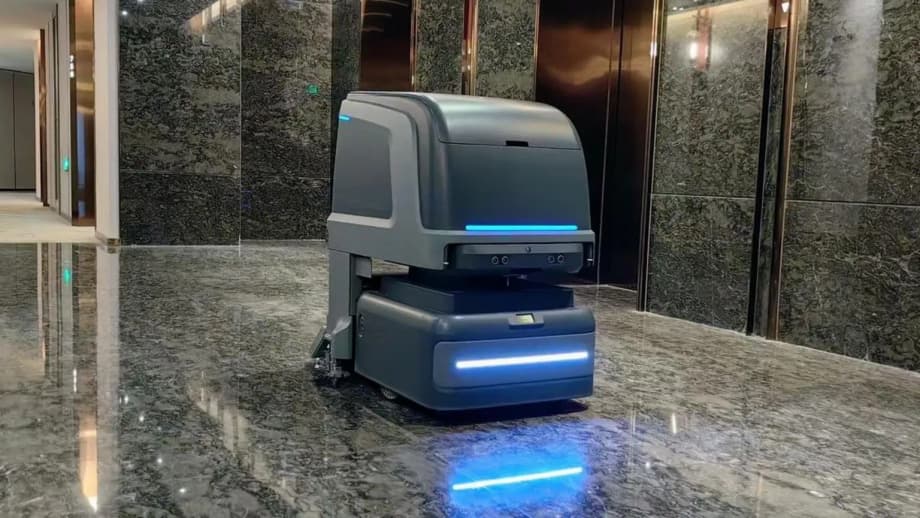
In a hotel lobby on Hong Kong Island, a delivery robot pauses outside an elevator as the doors open and a guest steps out. The machine waits patiently, then rolls smoothly inside. This maneuver appears simple, yet it reflects complex engineering achievements. Operating within a busy hotel owned by an international chain, the robot must navigate an environment that never slows down for it. The device handles crowded spaces, operates lifts independently, selects correct floors, and ultimately finds designated rooms without human intervention.
The company behind this robot, Yunji, represents a growing wave of mainland Chinese technology firms using Hong Kong as a springboard for international expansion. “We aim to make our product succeed in Hong Kong, and then expand outward,” says Xie Yunpeng, vice-president of the firm. This strategy reflects a fundamental shift in how Chinese technology companies approach global markets. As the United States and European nations grow increasingly wary of Chinese firms, citing concerns often described as “China risk,” mainland companies face mounting obstacles securing capital, customers, and trust in Western markets. Governments fear state-backed espionage and excessive Chinese dominance in critical technology sectors. Consequently, these firms are redirecting their ambitions toward Hong Kong, treating the city as both a testing ground and a launchpad.
The numbers reveal the scale of this migration. According to PricewaterhouseCoopers, 76 mainland Chinese firms listed on the Hong Kong Stock Exchange last year, representing a 153% increase from 30 listings in 2024. Invest Hong Kong, the territory’s investment promotion agency, reports similar growth in mainland firms establishing physical operations there, with innovation and technology ranking among the largest sectors. This surge comes as Chinese authorities fast-track artificial intelligence and semiconductor listings to strengthen domestic alternatives to advanced US technology, creating a pipeline that includes memory chipmaker ChangXin Memory Technologies, Baidu’s AI chip arm Kunlunxin, and autonomous driving firm DeepRoute.ai.
A Record-Breaking Year for Hong Kong Listings
The resurgence of Hong Kong’s capital markets has attracted companies across the technology spectrum, from artificial intelligence to semiconductor design and medical robotics. In early January 2026, three major Chinese technology companies completed successful trading debuts, raising a combined $1.19 billion and closing significantly above their offer prices. Artificial intelligence firm Zhipu AI, also known as Knowledge Atlas Technology, opened 3.3% higher than its offer price and finished the day up 13.2%, reaching a valuation near HK$51 billion. Semiconductor designer Shanghai Iluvatar CoreX started 31.6% above its IPO price, while surgical robotics company Shenzhen Edge Medical jumped 36.4% at the open.
These strong performances signal robust international investor appetite for Chinese technology stocks when offered through Hong Kong’s regulatory framework. Market data indicates that 119 new listings in 2025 raised HK$286.9 billion, more than tripling the previous year’s total and enabling Hong Kong to reclaim its status as the world’s largest IPO market for the first time since 2019. The debut pipeline continues growing, with MiniMax Group, another Chinese AI firm, and chipmaker OmniVision Integrated Circuits joining the queue. Cornerstone investors in these offerings include Abu Dhabi Investment Authority, OrbiMed, UBS Asset Management, and Tencent’s Huang River fund, demonstrating the global capital flows passing through the city.
Tom Chan Pak-lam, permanent honorary president of the Institute of Securities Dealers, notes that international investors are actively seeking mainland technology companies, particularly in semiconductors, AI, and robotics. “This trend will continue as Hong Kong is an international financial centre and a connector between China and the world,” he explains. “It is natural for mainland technology companies to use Hong Kong as a platform to go global.” Janice Hu, China Country Head at UBS, observes that China’s listed AI and high-tech companies are worth about $5 trillion versus roughly $30 trillion in the US, suggesting significant room for growth. “It’s only a matter of time,” Hu adds.
Diversification Beyond Software
While artificial intelligence firms dominate headlines, the Hong Kong expansion encompasses hardware manufacturers, biotechnology innovators, and industrial automation specialists. Arm China, the Chinese unit of British semiconductor firm Arm Holdings, announced plans to establish a chip intellectual property research and development centre in Hong Kong during 2026. Located in the Hetao Shenzhen-Hong Kong Science and Technology Innovation Cooperation Zone, the facility aims to recruit approximately 100 people within three years, focusing on artificial intelligence and robotics applications. The company cited Hong Kong’s significant advantage in bringing together global innovation resources, top-tier industry talent, and a mature capital ecosystem.
Industrial robot manufacturer Shenzhen Inovance Technology has selected banks including Bank of America, CICC, and Morgan Stanley for a Hong Kong listing that could raise as much as $2 billion. Founded in 2003 and already publicly traded in Shenzhen, Inovance produces automation solutions for plastics, packaging, and steel production sectors. The company represents the industrial side of China’s robotics push, complementing service robot makers like Yunji and collaborative robot producer Guangdong Huayan Robotics, which saw its stock rise 27% during its December debut.
The biotechnology sector has also established deep roots in Hong Kong. The Hong Kong Science and Technology Parks Corporation hosts more than 300 health and life science companies, including over 60 clinical-stage innovators. Companies like Health Hope Pharma are utilizing Hong Kong’s “1+” regulatory pathway to expedite commercialization of novel cancer therapies across the Greater Bay Area. Arthrosi Therapeutics, acquired by international biopharma Sobi for $1.5 billion, developed its gout treatment through HKSTP’s clinical trial ecosystem, securing $153 million in Series E funding before the acquisition.
This diversification reflects Hong Kong’s evolution from a purely financial center into a comprehensive technology hub. The Office for Attracting Strategic Enterprises has drawn more than 102 firms to the city, with ten currently planning public offerings. These companies are expected to bring around HK$60 billion in investment and create approximately 22,000 job opportunities.
Hong Kong as the Ultimate Proving Ground
For many firms, Hong Kong serves as a critical testing environment where products must prove themselves in real-world international settings before advancing to broader global markets. Yunji’s hotel delivery robots exemplify this approach, requiring the machines to navigate complex human environments and meet international hospitality standards. The company, which builds service robots for hotels, hospitals, and factories, listed in Hong Kong in October last year specifically to broaden its investor base beyond the mainland while demonstrating operational capabilities in international settings.
MiningLamp Technology, a Chinese AI software company that established operations in Hong Kong last year, utilizes the territory for a specific regulatory function. Founder Wu Minghui describes Hong Kong as a “data compliance transfer station,” where mainland firms can test cross-border data flow management and build compliance processes before entering other markets. This function has become increasingly valuable as data sovereignty concerns shape global technology regulations and governments tighten scrutiny over information access.
Alicia Garcia-Herrero, chief economist for Asia-Pacific at French investment bank Natixis, explains that Hong Kong offers mainland firms an opportunity to demonstrate adherence to international standards while building confidence among global investors and clients. The city’s common law legal system, intellectual property protections, and English-language business environment provide credibility that mainland listings sometimes lack. Wendy Chang of the Mercator Institute for China Studies notes that Hong Kong is fashioning itself as a connector to the outside world for Chinese companies, with policies designed to speed up share flotations and help mainland firms establish operations.
Xiaomeng Lu, a director at political consultancy Eurasia Group, observes that mainland firms are shifting primary share listings to Hong Kong as geopolitical headwinds dampen their ability to float in New York. “These days Hong Kong is their best hope to attract global investors and position themselves as a player not fully constrained by the boundary of the mainland market,” she notes. This positioning allows companies to claim a degree of international separation while maintaining mainland operational ties.
The Limits of the Hong Kong Shield
Despite its advantages, establishing operations in Hong Kong does not guarantee smooth entry into Western markets or insulation from Beijing’s regulatory oversight. Paul Triolo, a Washington-based partner at consultancy DGA Group, cautions that Hong Kong provides only partial mitigation of geopolitical risks. “Hong Kong is not really a geopolitical shield [for such firms],” he states. “It only partially mitigates their risks.” He adds that mainland companies remain bound by evolving rules set in Beijing regarding cybersecurity, data controls, and requirements for public-facing artificial intelligence.
This reality is forcing some companies to restructure significantly before listing. Moonshot AI, one of China’s most prominent artificial intelligence startups valued at approximately $18 billion, is currently dismantling its Cayman Islands holding structure to enable a Hong Kong listing. Chinese regulators have encouraged “red-chip” companies, which have mainland operations but offshore incorporation, to eliminate these structures and list as local entities to improve ownership transparency. The China Securities Regulatory Commission has tightened oversight of these arrangements, though they have not been officially banned.
Western governments continue tightening national security reviews of Chinese investments and technology, citing concerns over data access and critical infrastructure. The United States and United Kingdom have moved to restrict or phase out Chinese suppliers from telecommunications networks. Investor skepticism regarding Chinese corporate governance persists following the Luckin Coffee scandal, where the company admitted fabricating sales and faced delisting from New York’s Nasdaq in 2020.
Additionally, Hong Kong’s own political transformation has affected its international appeal. Following mass pro-democracy protests in 2019, authorities imposed sweeping national security legislation. Dozens of activists, opposition politicians, and journalists have been arrested or imprisoned under these laws. While officials maintain these measures restored stability, critics argue they have curtailed political freedoms and created uncertainty for international businesses. The complex interplay between Hong Kong’s international aspirations and its integration into China’s security framework continues to evolve.
Physical Roots and Global Ambitions
Beyond public listings, major technology firms are establishing physical headquarters in Hong Kong to anchor their international operations. Alibaba Group Holding and its affiliate Ant Group purchased office space at One Causeway Bay for HK$7.2 billion ($925 million), representing the largest office property deal in Hong Kong since 2021. Joseph Tsai, Alibaba’s chairman, cited the city’s professional talent, robust capital markets, innovative culture, and global connectivity as decisive factors for a global technology company.
Electric vehicle startup Li Auto established its overseas headquarters in Hong Kong earlier this year to oversee research and development, intellectual property management, global supply chains, and international business development. BrainCo, a brain-computer interface unicorn, opened its Asia-Pacific R&D base in the city to strengthen partnerships with local universities and accelerate product development. Lens Technology Group, a key supplier to robotics firms, plans to use Hong Kong listing proceeds to expand operations in Vietnam and North America while developing humanoid robotics components.
The Hong Kong government has responded by creating the GoGlobal Task Force, a one-stop platform integrating InvestHK, the Hong Kong Trade Development Council, and overseas offices. Algernon Yau, secretary for commerce and economic development, explains that the initiative provides tailored services for mainland enterprises regarding tax, legal matters, financing, testing and certification, environmental compliance, and intellectual property protection. This infrastructure supports companies adopting an “R&D in Hong Kong, manufacturing in the Greater Bay Area, and global sales” model that combines the territory’s research capabilities with Shenzhen and Guangzhou’s production capacity.
From Hong Kong to Southeast Asia and Beyond
While Hong Kong serves as the immediate destination, the ultimate goal for many firms is expansion into Southeast Asian, Middle Eastern, and Global South markets. Xiaohongshu, known internationally as RedNote, opened its first office outside mainland China in Hong Kong last June before expanding into Malaysia, now its second-largest market outside China. The platform benefits from large ethnic Chinese communities in Southeast Asia, which provide an initial user base with fewer language and cultural barriers than Western markets. ByteDance and Tencent are similarly boosting digital offerings in e-sports, e-commerce, and artificial intelligence across the region.
The Middle East represents another growth vector. Loretta Lee, Associate Director-General of Investment Promotion at Invest Hong Kong, recently led a trade mission to Kuwait and Qatar where local companies expressed strong interest in partnerships with Chinese firms. “They have capital and resources, but they lack people and advanced technologies,” Lee explains. “When we brought mainland companies to meet them, they were immediately impressed and eager to cooperate.” This “technology plus services” model pairs mainland technical capabilities with Hong Kong’s legal, financial, and accounting expertise.
Southeast Asia has become a critical testing ground for China’s tech companies, offering young, mobile-savvy consumers and lighter regulatory pressure than Western markets. In 2025, China’s trade surplus from digital services jumped to a record high of $33 billion. TikTok Shop, an in-app e-commerce feature, saw its gross merchandise value in Southeast Asia double year-on-year to hit $45.6 billion. This regional expansion aligns with Beijing’s broader economic goals, which emphasize technology self-reliance and reduced dependence on foreign hardware and software as outlined in China’s 15th Five-Year Plan.
To navigate global uncertainty, Hong Kong is accelerating engagement with Global South countries across Africa, Latin America, ASEAN, the Middle East, and Eastern Europe. Loretta Lee emphasizes that as a free port and international financial center, Hong Kong offers a highly open environment for capital, legal services, language, and data flows. With more than 70 leading global banks and a world-class financial system, the city provides mainland companies with end-to-end support from financing and compliance to risk management and global branding.
Key Points
- Mainland Chinese tech listings in Hong Kong surged 153% last year, with 76 companies raising capital compared to 30 in 2024, raising a combined HK$286.9 billion
- Sectors expanding include AI (Zhipu AI, Moonshot AI, MiniMax), semiconductors (Iluvatar CoreX, Arm China, China Micro Semicon), robotics (Yunji, Inovance, Huayan), and biotech (HKSTP cluster)
- Hong Kong serves as a “data compliance transfer station” and proving ground for products before global expansion, allowing firms to test cross-border data flows and international standards
- Major firms including Alibaba, Ant Group, Li Auto, and BrainCo are establishing physical headquarters and R&D centers in the city
- Geopolitical tensions and “China risk” concerns in the US and Europe are driving the shift from New York to Hong Kong listings as firms seek alternatives to Nasdaq
- Success in Hong Kong does not eliminate barriers to Western markets or exempt firms from Beijing’s regulatory oversight on cybersecurity and data controls
- Southeast Asia and the Middle East represent key next markets for expansion, with companies using Hong Kong as a platform to access these regions
- The Hong Kong government has established the GoGlobal Task Force to provide one-stop services for mainland enterprises expanding overseas