Higher salaries come with a growing cost
Singapore's higher wages continue to draw Malaysians across the Johor-Singapore Causeway, even as tighter hiring rules, a stronger ringgit and exhausting journeys complicate the decision. Singapore's median monthly income exceeds S$5,700, approximately RM18,200 at the exchange rate cited, while Malaysia's median formal sector wage is around RM3,000. For families weighing a job across the border, the attraction is substantial.
Contents
- Higher salaries come with a growing cost
- Why Malaysians keep looking across the border
- A stronger ringgit changes the household calculation
- Singapore tightens entry for foreign professionals
- Hiring rules also examine the employer
- Which jobs are held by foreign workers?
- Malaysia's graduates face too few suitable jobs
- Can the economic zone create a different bargain?
- The Essentials
Singapore is also trying to address local concerns about employment competition. Manpower Minister Tan See Leng announced an increase in the minimum monthly salary for Employment Pass holders from S$5,000 to S$5,600, with S$6,200 required for financial services positions. Meanwhile, Malaysia faces a shortage of jobs that match its graduates' qualifications, pushing many to seek better pay and career prospects abroad.
The Johor-Singapore Special Economic Zone, launched in January 2025, offers a shared response. Covering 3,500 square kilometers across nine flagship developments, it targets 50 projects within five years, 100 by 2035 and 20,000 skilled jobs. Its central idea is to connect Singapore's advanced industries with Johor's industrial capacity and lower operating costs.
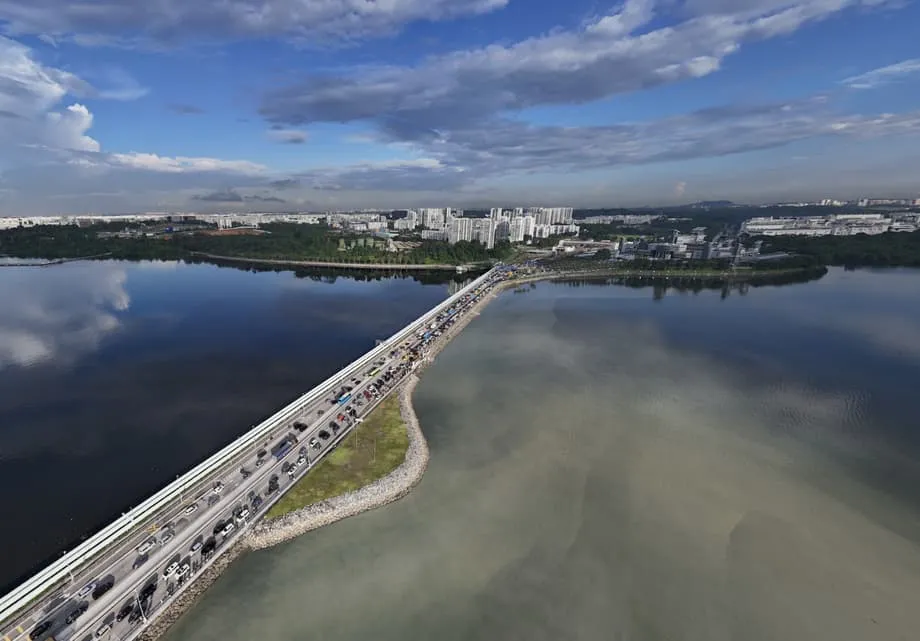
For workers, however, the immediate decision remains personal: how much money reaches home, how much time work and travel consume, and whether a better salary brings a better life. Thousands cross the Causeway before dawn each morning, joining motorcycles, buses and cars at one of the world's busiest land crossings.
A Reddit user captured the question facing many of those commuters:
Is it really worth it?
The answer depends on more than a currency conversion. Housing, food, family responsibilities and opportunities for promotion all shape whether working in Singapore pays off.
Why Malaysians keep looking across the border
Malaysian workers can often earn salaries in Singapore that are three times what they might receive at home. Converting those earnings into ringgit helps them support families, meet mortgage payments and build savings. For a software engineer, a Singapore position can pay S$6,125 or more, more than double the pay for an equivalent role in an emerging Malaysian technology center such as Kulai.
Young professionals without family commitments may find the move easier. One online forum participant encouraged single Malaysians to take an opportunity in Singapore:
To all single people in Malaysia, if you have the chance to work in Singapore, please go for it,
Career development adds to the attraction. Singapore provides access to multinational companies whose regional headquarters are rarely located in Malaysian cities. A worker may therefore weigh the immediate salary against the experience, professional contacts and future roles that a Singapore job could bring.
Singapore hosted 1.13 million of the 1.86 million Malaysians living overseas in 2022, making it the largest Malaysian diaspora community worldwide. Those figures put its share at about 61%. The population count covers Malaysians living there, while the daily flow across the Causeway also includes people who maintain their homes in Johor.
Recruitment consultant Shawn Moo illustrates that arrangement. He bought a house in Johor Bahru but continues to work in Singapore, combining a Malaysian home with employment across the border.
A stronger ringgit changes the household calculation
The ringgit's strengthening to around RM3.20 per Singapore dollar in late 2024 reduced the value of money sent home. Tour executive Loo Yong Tat felt the change directly: S$2,000 that had previously converted to RM6,800 returned roughly RM400 less.
For a household budgeting in ringgit, that is money no longer available for everyday spending or savings, even when the salary paid in Singapore dollars stays the same. The exchange rate therefore matters alongside the wage itself.
Shahril Umf, a participant in the Malaysia-Singapore Border Crossers Facebook group, recalled much lower exchange rates in earlier years:
I've felt what it was like when it was 2.25, 2.44 between 2000 and 2010,
He also described when the stronger conversion advantage became familiar:
Only after 2020, we started seeing the rate reach up to 3.00.
Johor Bahru's living costs help explain why a stronger ringgit has not reversed the movement toward Singapore jobs. Moo pointed to the price of eating out:
In Johor Bahru for instance, it is very expensive to eat outside food. Just a curry noodle in a cafe will cost from RM10 to RM25,
Workers also describe long hours stretching into the evening, rent that absorbs a large part of higher earnings, and separation from family and familiar surroundings. For commuters, the border journey adds another demand on their day. Mental health and relationships can carry costs that never appear in a salary comparison.
Singapore tightens entry for foreign professionals
Singapore's foreign workforce has reached approximately 1.91 million, with large concentrations in construction, marine shipyards and domestic work. Local frustration nevertheless extends to competition for jobs across the employment ladder, alongside concerns about housing costs, educational placements and cultural change.
One participant in an online discussion expressed that resentment in blunt terms:
They basically just destroy the job market here and don't contribute anything to SG society,
The government faces pressure to respond to those anxieties while retaining the workers and companies that support Singapore's economy. Its Employment Pass, or EP, rules govern access for foreign professionals, and a higher qualifying salary raises the minimum pay an employer must offer an eligible applicant.
Manpower Minister Tan See Leng explained the purpose of regularly adjusting those requirements:
By regularly updating the qualifying salaries based on the set wage benchmarks, we ensure a level-playing field for locals.
The announced increase from S$5,000 to S$5,600 is S$600 a month, or 12%, with a S$6,200 requirement for financial services positions. The announcement was described as having been made last month, with the changes taking effect next year; a calendar date for implementation was not specified.
The policy seeks to direct foreign recruitment toward roles requiring greater skills while protecting opportunities for residents. Labor economist Professor Walter Theseira of the Singapore University of Social Sciences said the EP system originally focused on highly skilled workers filling particular gaps, before expanding into positions in the middle of the employment market.
Theseira described the reaction and the government's response:
This was perceived by local workers to be unwelcome competition for jobs that many skilled locals could do, so the government responded by re-calibrating the EP again upwards,
The shift aims to favor senior roles and specialized expertise in artificial intelligence, advanced engineering and healthcare, while encouraging employers to develop local staff for positions in the middle of their organizations.
Hiring rules also examine the employer
Singapore introduced the Complementarity Assessment Framework, known as COMPASS, in September 2023. It evaluates Employment Pass applications using criteria that include workforce diversity and the proportion of local employees. In simple terms, the assessment considers the company's staffing mix as well as the person it wants to hire.
Early results indicate changes in hiring patterns. The number of firms overly dependent on workers from a single nationality fell by 7%, while the number with a high dependence on foreign labor fell by 15%. Those changes reportedly generated approximately 4,000 additional professional, managerial, executive and technical positions for locals. These occupations are commonly grouped under the abbreviation PMET.
Tan has also argued that removing a foreign worker does not automatically create a job for a local person. He described that idea as:
overly simplistic.
The government's reasoning is that access to an appropriate foreign workforce helps keep multinational companies in Singapore. Those companies, in turn, create employment for residents. Policy therefore has to balance local hiring opportunities with the staffing needs of businesses that can operate elsewhere.
Political sensitivity around foreign employment was evident in 2011, when discontent over job competition and infrastructure pressure contributed to reduced election vote margins for the ruling People's Action Party. The later leadership transition, with Lawrence Wong set to lead the party into a general election due by 2025 as Lee Hsien Loong stepped down after two decades, formed part of the political context surrounding the policy debate.
Jobseekers face a more competitive market as well. Their numbers grew by 11%, while job postings increased by only 3%, creating the toughest conditions since the hiring boom following the pandemic. More people competing for a slower rise in openings can make concerns about access to employment especially pressing.
Which jobs are held by foreign workers?
Singapore's Ministry of Manpower figures offer a more detailed picture of professional employment. Its most comprehensive PMET breakdown to date places the foreign share at no more than 25% in any major industry. The highest paying sectors remain dominated by local residents.
In financial services, the highest paying industry, foreign pass holders occupy less than 15% of PMET positions. Healthcare and social services show a similarly low foreign share. In information and communications, which accounts for roughly one in seven professional job openings, foreigners make up less than 25% of the workforce.
Higher foreign employment ratios, between 40% and 50%, occur in food and beverage services, construction and administrative support. These broader workforce figures concern industries that struggle to attract local workers because of lower wages and less desirable working conditions. The professional employment figures and the wider industry workforce figures describe different groups of jobs.
Employers' costs also extend beyond monthly salaries. Recruiting foreign professionals can involve relocation expenses and housing allowances for private condominiums, alongside the practical effects of workers lacking nearby family support. Foreigners cannot purchase subsidized Housing and Development Board flats.
Permanent residents make up a substantial part of the local employment category. They face the same Central Provident Fund obligations as citizens. CPF is Singapore's savings system, and these obligations affect employment costs, removing the cost advantage sometimes attributed to foreign workers when discussing permanent residents.
Residents' concerns and these employment patterns sit alongside each other. Singapore is adjusting the rules for professional recruitment while continuing to depend heavily on foreign labor in industries where employers have difficulty attracting local applicants.
Malaysia's graduates face too few suitable jobs
Malaysia's challenge is the shortage of work that makes full use of education and skills. The country produces roughly 300,000 graduates annually, yet an estimated two million Malaysians with tertiary education work in jobs that underuse their qualifications.
The figures cited for the share of skilled jobs show a decline from 45% in 2018 to 27% in 2024. Most new employment is in occupations requiring an intermediate level of skills, leaving too few higher paying professional positions to lift the wider wage structure.
Graduates accepting work below their qualification level add to competition for those positions. That helps explain why median wages can remain near RM3,000 despite growth in gross domestic product, the measure of the goods and services an economy produces. Economic expansion and better career opportunities do not always advance at the same pace.
For young Malaysians with education loans and urban living expenses, slow career progression can delay marriage, home ownership and financial independence. A job in Singapore may offer a way to reach those goals sooner, even when travel or living away from family makes it demanding.
Malaysia also occupies an uncomfortable position among regional competitors. Vietnam attracts companies seeking large scale production at low cost. Singapore draws advanced financial and technology activities, while South Korea offers an economy driven by industrial innovation.
This is the missing middle problem: Malaysia needs more jobs between production based mainly on low costs and the most advanced professional and industrial work. Without enough of them, businesses face price competition from cheaper locations and pressure from more technologically advanced economies.
Noor Azlan Ghazali of the Malaysian Inclusive Development and Advancement Institute has framed the stakes around graduates' prospects. Whether graduation photographs mark the start of upward mobility or quiet disappointment depends on how Malaysia responds to its regional position.
Can the economic zone create a different bargain?
The Johor-Singapore Special Economic Zone seeks to connect the strengths of both economies. Singapore's advanced sectors, including semiconductor production and biotechnology, could work more closely with Johor's expanding industrial base and lower costs.
Malaysia has introduced a 15% corporate tax rate for targeted industries and an equivalent income tax rate for knowledge workers, including engineers and technicians. These incentives aim to attract both investment and the people needed to carry it out.
The Johor Bahru-Singapore Rapid Transit System is expected to begin operating by late 2026. Better transport could make movement across the border easier, potentially helping Malaysians retain homes in Johor while accessing Singapore salaries.
Several dates define how the employment policies and shared economic plans have developed:
- 2018: The cited skilled jobs share stood at 45%.
- 2022: Singapore hosted 1.13 million of the 1.86 million Malaysians living overseas.
- September 2023: Singapore introduced COMPASS for Employment Pass assessments.
- 2024: The cited skilled jobs share fell to 27%.
- Late 2024: The ringgit strengthened to around RM3.20 per Singapore dollar.
- January 2025: The Johor-Singapore Special Economic Zone was launched.
- Late 2026: The rapid transit connection is expected to begin operating.
- 2035: The economic zone aims to reach 100 projects.
Infrastructure development follows a build as they invest approach, meaning progress may depend on companies making firm commitments. Businesses also have concerns about administrative efficiency and whether policy will remain consistent through political transitions.
Singapore's stringent regulatory environment and Malaysia's more flexible, but sometimes unpredictable, business climate present another practical challenge. Companies need the two systems to work together reliably if activities on either side of the border are to function as a connected operation.
The zone's larger aim is to let multinational headquarters in Singapore coordinate with manufacturing and logistics operations in Johor. That could help the region retain economic activity that now stays entirely in Singapore or goes elsewhere, including Vietnam and Indonesia.
For both governments, success would mean more than investment announcements. Malaysia needs skilled jobs that give graduates a reason to build careers at home. Singapore needs access to talent while keeping opportunities open for residents. Workers need the resulting pay and prospects to justify the time, housing costs and family sacrifices involved.
The Essentials
- Singapore's median monthly income exceeds S$5,700, compared with a Malaysian median formal sector wage of around RM3,000.
- The announced Employment Pass salary minimum rises from S$5,000 to S$5,600, with S$6,200 required for financial services positions.
- Singapore hosted 1.13 million Malaysians in 2022, about 61% of Malaysia's overseas population of 1.86 million.
- A stronger ringgit reduced the Malaysian value of Singapore earnings, while travel, rent and family separation add costs.
- Ministry of Manpower figures put the foreign share of PMET employment at no more than 25% across major industries, with finance and healthcare below 15%.
- COMPASS was introduced in September 2023, with early changes reportedly producing approximately 4,000 additional local PMET jobs.
- Malaysia produces about 300,000 graduates annually, while an estimated two million people with tertiary education work below their qualification level.
- The cited skilled employment figures fell from 45% in 2018 to 27% in 2024, alongside concerns about the skilled share of new job creation.
- Jobseeker numbers grew by 11%, compared with a 3% increase in job postings.
- The economic zone targets 20,000 skilled jobs, 50 projects within five years and 100 by 2035. The rapid transit connection is expected to open in late 2026.