When the War Came to the Shores of India
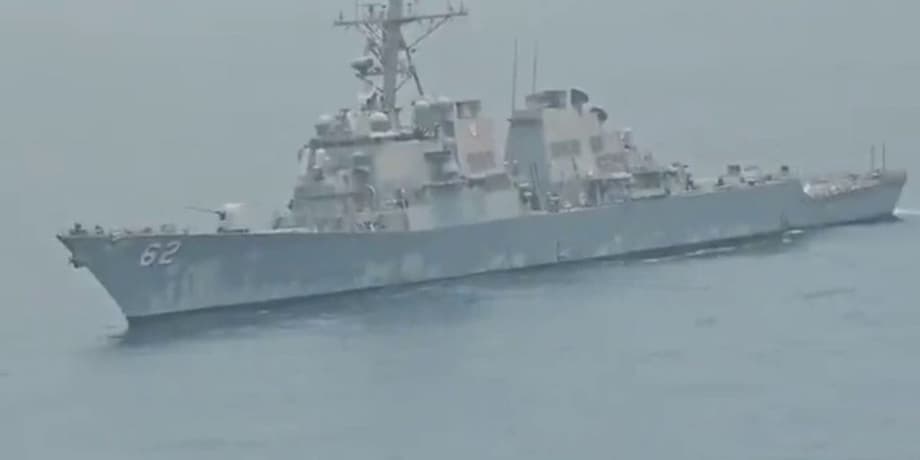
On March 4, 2026, the Israel-Iran war reached the Indian Ocean in a manner that could no longer be ignored. The United States sank the Iranian naval vessel IRIS Dena near Sri Lanka as the ship returned from the MILAN international fleet review hosted by India at Visakhapatnam. This incident underscored a stark reality for Indian defense planners: the Indian Ocean region is no longer insulated from the spillover effects of major power confrontations. The sinking occurred despite the vessel being unarmed and returning from a diplomatic exercise, signaling how rapidly rules of engagement are changing in modern warfare. For New Delhi, the conflict has become more than a distant geopolitical concern. It has transformed into a live laboratory where weapon systems from around the world are being tested under combat conditions, offering India rare insights into how the diverse military inventory of India might perform in future high intensity conflicts. With nearly nine million Indian citizens residing in the Gulf region and over eighty percent of crude oil imports of India originating from West Asia, the war presents immediate stakes for national security that extend far beyond military observation.
- When the War Came to the Shores of India
- A Laboratory for Modern Combat
- Air Combat in the Age of Stealth and Long Range Missiles
- The Drone Revolution and Swarm Tactics
- Missile Warfare and Layered Air Defense
- Naval Power and Subsea Vulnerabilities
- Diplomatic Balancing in a Region Aflame
- The Push for Indigenous Capability
- What to Know
The timing of this conflict is particularly significant for military modernization efforts in India. Following the recent Operation Sindoor air battles with Pakistan, which featured beyond visual range missile duels and extensive drone warfare, Indian planners are already processing lessons from high intensity combat. The simultaneous observation of the Israel-Iran war provides a unique comparative opportunity to see how Western, Russian, and indigenous systems perform against modern defenses. The military of India possesses one of the most diverse arsenals globally, drawing from Russian, American, French, Israeli, and domestic sources. This heterogeneity means that almost every dimension of the Gulf conflict offers relevant data for Indian force planning, from stealth aircraft operations to drone swarm tactics and layered missile defenses.
A Laboratory for Modern Combat
For defense planners in India, the current Gulf conflict represents an unprecedented opportunity to observe how advanced military systems perform when subjected to the stresses of actual warfare. This phenomenon is not without historical precedent. The 1991 Gulf War served as a similar catalyst for military modernization across the globe, prompting nations including India, China, and others to reassess their defense strategies. According to analysis from the Center for Strategic and International Studies, the 1991 conflict established benchmarks in precision munitions, joint operations, and air power that continue to influence military planning today. The current conflict extends these lessons into new domains, particularly regarding the integration of unmanned systems, directed energy weapons, and networked air defense architectures.
The value of such observation lies in identifying gaps between theoretical capabilities and battlefield reality. Peacetime evaluations often fail to reveal how systems perform against determined adversaries employing asymmetric tactics. The sinking of the Iris Dena illustrates how rapidly maritime engagements can escalate, while the aerial campaigns reveal the effectiveness of stealth platforms against integrated air defenses. For a country like India, which maintains a strategic posture between competing powers while developing indigenous capabilities, these observations provide critical data for procurement decisions and doctrinal development. The conflict demonstrates that battlefield success depends less on individual weapon systems and more on how effectively different capabilities are networked together to create comprehensive operational effects.
Air Combat in the Age of Stealth and Long Range Missiles
The air war over the Middle East offers some of the most instructive lessons for the Indian Air Force. Stealth aircraft such as the Lockheed Martin F-35 Lightning II and the F-22 Raptor are flying operational missions in heavily contested airspace, providing rare insight into how low observable aircraft perform against modern integrated air defense systems. The front line fighter of India, the Dassault Rafale, represents a powerful advanced fourth generation platform with sophisticated avionics and electronic warfare capabilities. However, the Rafale is not a stealth aircraft, creating a capability gap that the Advanced Medium Combat Aircraft program aims to address through the development of an indigenous fifth generation fighter. Until such platforms arrive, the air force of India relies on the Sukhoi Su-30MKI for heavy strike missions, an aircraft that corresponds broadly in role to the F-15E Strike Eagle but lacks the sensor fusion and electronic warfare advances seen in recent American upgrade cycles.
A more significant gap exists in the strategic bomber category. The conflict has seen extended range strike missions carried out by the Northrop Grumman B-2 Spirit and the Boeing B-52 Stratofortress, both capable of delivering massive conventional payloads deep inside defended territory. India currently operates no comparable heavy bomber platform and maintains no active program to acquire such capability. This absence limits the ability to conduct strategic strikes at intercontinental ranges without risking manned fighter aircraft.
Recent combat experience from Operation Sindoor adds another layer of complexity to these observations. During the May 2025 air battles with Pakistan, Indian forces confronted the reality of beyond visual range combat where traditional attributes of fighter maneuverability proved less decisive than sensor capabilities and missile performance. The possible downing of a Rafale by a Chinese designed PL-15 missile fired from a Pakistani J-10 aircraft represents the first combat loss of this advanced French platform globally. Western defense analysts had considered the Meteor missile carried by the Rafale to be the most capable air-to-air weapon in service, yet the confrontation revealed that Chinese missile technology may be greater than previously thought. This suggests that the advantage in aerial combat increasingly depends on software, sensor integration, and human decision making based on data rather than the raw performance characteristics of individual aircraft.
The Drone Revolution and Swarm Tactics
If the air war is instructive, the drone war is transformative. Following lessons from the Russia-Ukraine War, the Gulf conflict has reinforced the central role of unmanned systems in modern warfare. The General Atomics MQ-9 Reaper has once again demonstrated the effectiveness of combining persistent surveillance with precision strike capabilities. India has ordered thirty-one units of the MQ-9B SeaGuardian and SkyGuardian variants, although deliveries have yet to begin. This delay highlights procurement challenges that could leave gaps in maritime surveillance and strike capabilities at critical moments.
Equally significant has been the proliferation of low cost expendable attack drones inspired by the Shahed-136 design. Swarms of inexpensive drones overwhelming sophisticated air defense systems have become a defining feature of the conflict. India fields the Israeli origin IAI Harop, a more capable system in several respects, but available in comparatively smaller numbers. While indigenous drone and loitering munition programs are progressing, the scale and urgency highlighted by the Gulf conflict have not yet been fully reflected in the pace of induction for Indian forces. The conflict demonstrates that future wars will require not just high end unmanned platforms but also mass quantities of attritable systems capable of saturating enemy defenses.
Missile Warfare and Layered Air Defense
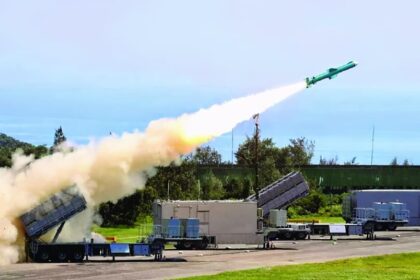
Missile systems have played a major role in the conflict, offering several points of comparison with Indian capabilities. The BrahMos cruise missile of India remains one of the fastest operational cruise missiles globally, traveling at speeds close to Mach 2.8. This velocity provides an advantage over many subsonic cruise missiles used by other nations, though speed must be balanced against stealth characteristics seen in systems like the AGM-158 JASSM employed by American bombers. India has also developed the Rudram-1, intended to target enemy radar systems and provide the Indian Air Force with suppression of enemy air defenses comparable in function to the AGM-88 HARM.
In the ballistic missile domain, the Agni missile family of India is widely regarded as more survivable due to canisterized and road mobile launch configurations when compared with Iranian systems such as the Shahab and Ghadr missiles. Future comparisons are also likely between the Shaurya missile of India and the Fattah missile of Iran. These systems demonstrate how mobility and concealment contribute to strategic deterrence in an era of satellite surveillance.
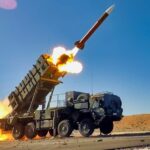
Perhaps the most valuable lessons for Indian analysts are emerging from the air and missile defense battle. The layered defense network of Israel, comprising the Iron Dome, David Sling, and the Terminal High Altitude Area Defence system, is being evaluated against actual threats including rockets, drones, and ballistic missiles. India is developing a similar layered approach through the Akashteer network, which integrates systems such as the Akash-NG into a unified architecture. At the long range tier, India operates the S-400 Triumf, while indigenous ballistic missile defense efforts include systems such as the Prithvi Air Defence and the Advanced Air Defence.
Another emerging dimension is directed energy defense. The Iron Beam of Israel has demonstrated the ability to intercept drones, rockets, and missiles at much lower cost compared to conventional interceptors. India is pursuing a similar concept through the Surya Directed Energy Weapon being developed by the Defence Research and Development Organisation. The proposed 300 kW system is expected to achieve a range of up to twenty kilometers and could potentially neutralize drones, missiles, and other aerial threats almost instantaneously. Such capabilities represent a potential paradigm shift in defensive economics, where the cost per interception drops from hundreds of thousands of dollars for missile interceptors to mere dollars for laser shots.
Naval Power and Subsea Vulnerabilities
The conflict has highlighted critical gaps in naval capabilities that extend beyond surface warfare. American carriers such as the USS Nimitz and USS Gerald R. Ford are sustaining air operations at a scale far greater than what the INS Vikramaditya and INS Vikrant of India can currently support. The carriers of India use a short takeoff ramp configuration, which limits aircraft takeoff weight compared with catapult assisted launch systems used on American carriers. This restricts the payload and range of naval aircraft, reducing the combat radius and striking power of carrier battle groups.
A more critical capability gap lies underwater. The Virginia class submarines of the United States Navy are conducting covert operations across the theater. India currently has no operational indigenous nuclear powered attack submarines and relies on leasing such vessels from Russia primarily for training purposes. In a future conflict in the Indian Ocean, the absence of an operational SSN fleet could become a significant strategic limitation, preventing the Navy of India from contesting sea lanes or threatening enemy surface groups effectively.
Beyond traditional naval warfare, the conflict has exposed vulnerabilities in the undersea cable networks that carry global internet traffic. The Strait of Hormuz serves not only as a chokepoint for oil tankers but also as a corridor for fiber optic cables connecting Asia, Europe, and the Middle East. With nearly all international data traffic of India flowing through these cables, any damage caused by naval maneuvers, anchor strikes, or deliberate sabotage could cripple communications and financial transactions. The departure of cable repair vessels from the region due to security concerns has heightened these risks, creating a hidden dimension to maritime security that planners can no longer ignore.
Diplomatic Balancing in a Region Aflame
The military lessons of the conflict occur against a backdrop of severe diplomatic challenges for New Delhi. The war threatens to disrupt the connectivity projects of India through Iran, particularly the Chabahar port that serves as the only gateway to Afghanistan and Central Asia for Indian commerce. An incapacitated Iran would sever this link, allowing China to supplant Indian influence in Afghanistan through the China-Pakistan Economic Corridor. The conflict also endangers the nine million Indian citizens working in the Gulf region, whose remittances contribute substantially to the economy of India.
Energy security presents another immediate concern. With over eighty percent of crude oil imports coming from West Asia, including Iran and other Gulf countries, the closure of the Strait of Hormuz or sustained high prices could severely impact the Indian economy. Analysts predict that oil prices could reach one hundred twenty dollars per barrel if tensions escalate, increasing inflation and straining the current account deficit of India. The government has already issued travel advisories and is monitoring the safety of citizens, while simultaneously managing the arrival of distressed Iranian vessels such as the IRIS Lavan at Kochi under an arrangement that separates crews from military assets to satisfy security concerns of all parties.
Maintaining relationships with both Israel and Iran while managing ties with the United States and Gulf monarchies requires constant adjustment. The carefully balanced foreign policy articulated by officials in New Delhi seeks to avoid choosing sides in a conflict that pits strategic partners against one another. This balancing act is crucial as India seeks to maintain influence in the region and protect strategic interests without alienating any major power. The approach reflects a recognition that autonomy in decision making, rather than automatic alignment with any single power, serves the long term interests of India best.
The Push for Indigenous Capability
Perhaps the most profound lesson from the conflict is that national security cannot be outsourced. The Gulf states are discovering that American security guarantees may prove illusory when critical interests diverge, with reports indicating that missile interceptors in the region have run out while the United States prioritizes resupply for Israel. This validates the emphasis on independence that has guided Indian defense policy since the Kargil War of 1999, when import dependencies exposed critical vulnerabilities.
The Defense Research and Development Organisation and private industry partners have made significant strides in reducing reliance on foreign arms. Indigenous major weapon platforms such as the BrahMos missile, the Tejas fighter aircraft, artillery guns, and various ammunition types are now in demand internationally, with defense exports reaching approximately 2.78 billion dollars in the 2024-25 fiscal year. The import percentage has dropped to between twenty-five and thirty percent, reflecting a deliberate shift toward domestic production. The model of the United Arab Emirates, where the Edge defense conglomerate has built sovereign capability across domains from bullets to satellites following lessons from the 1991 Gulf War, offers a parallel example of how regional conflicts can catalyze industrial independence.
However, challenges remain in developing the most advanced systems. The gaps in fifth generation fighters, nuclear powered attack submarines, and strategic bombers highlight areas where indigenous development timelines lag behind immediate requirements. The lesson from the current conflict is that integration of existing capabilities matters as much as developing new ones. Networked systems that combine sensors, shooters, and command nodes into unified architectures will determine battlefield outcomes more than individual platforms. For India, achieving this integration across the diverse inventory of Russian, Western, and domestic systems represents the central challenge of the coming decade.
What to Know
- The sinking of the Iranian vessel IRIS Dena near Sri Lanka on March 4 brought the Israel-Iran war to the Indian Ocean, affecting the immediate security environment of India.
- The conflict serves as a live testing ground for advanced military systems, including stealth aircraft, drone swarms, and layered missile defenses, offering operational data relevant to the diverse arsenal of India.
- The Indian Air Force operates advanced fourth generation fighters but lacks stealth capabilities and strategic bombers seen in action over the Gulf, while recent combat with Pakistan revealed the importance of beyond visual range missile technology.
- Drone warfare has emerged as a transformative element, with India awaiting delivery of MQ-9B systems and expanding indigenous loitering munition programs to counter low cost swarm tactics.
- The ballistic missile defense network of India, including the S-400 and indigenous interceptors, faces new challenges from saturation attacks, driving interest in directed energy weapons such as the Surya laser system.
- The Navy of India lacks nuclear powered attack submarines and faces limitations in carrier-based air operations compared with American standards, while undersea cable vulnerabilities threaten critical internet connectivity.
- With nine million citizens in the Gulf and eighty percent of oil imports originating from the region, the war threatens energy security, economic stability, and connectivity projects such as the Chabahar port.
- The conflict reinforces the importance of self-reliance in defense production, with indigenous systems such as BrahMos and Tejas reducing import dependence and driving export growth to 2.78 billion dollars annually.