Seoul’s Uncomfortable Compromise
South Korean President Lee Jae Myung has openly acknowledged what many allied nations fear but rarely admit aloud: when Washington decides to reallocate military assets, even treaty partners have limited recourse to resist. Speaking during a cabinet meeting this week, Lee confirmed that the United States is withdrawing Patriot air defense systems and other weaponry from the Korean Peninsula to support operations in the Middle East, a move Seoul opposes but cannot prevent.
“While we have expressed opposition, the reality is that we cannot fully push through our position,” Lee told his ministers, according to official transcripts. His candor underscores the delicate position South Korea finds itself in as the United States simultaneously conducts major military exercises with Seoul while engaging in sustained combat operations against Iran thousands of miles away.
The redeployment involves sophisticated missile defense equipment maintained by United States Forces Korea (USFK), the command authority overseeing approximately 28,500 American military personnel stationed in the country. These forces and their associated hardware form the backbone of the combined defense posture against North Korea, a nuclear-armed state that South Korean intelligence agencies consider the most immediate threat to regional stability.
Physical Evidence of the Transfer
While USFK officials have declined to confirm specific movements citing operational security, physical evidence of the redeployment has mounted rapidly. Flight-tracking data and independent photography reveal sustained airlift operations at Osan Air Base in Pyeongtaek, located just south of Seoul. Multiple C-17 Globemaster III tactical transport aircraft and rare appearances by the larger C-5 Galaxy strategic airlifters have been observed departing the facility since late February.
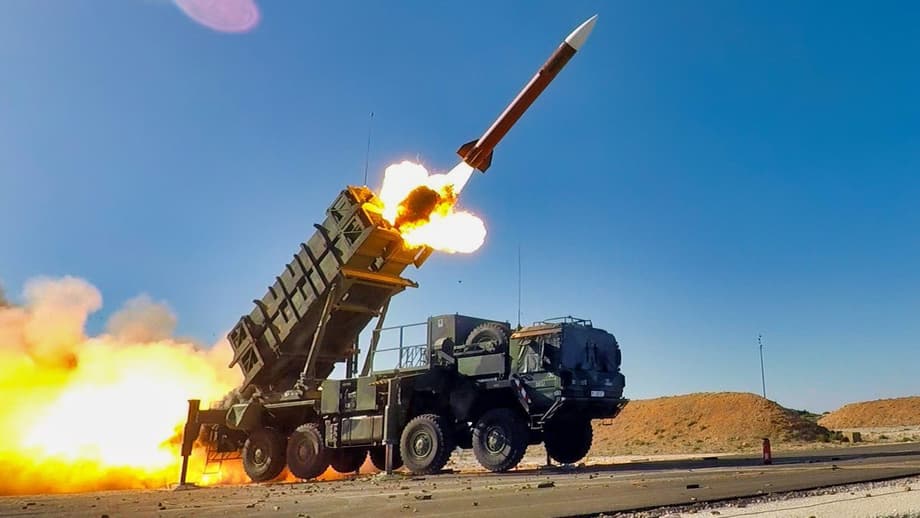
Reuters photographs taken at Osan on Tuesday showed multiple mobile launchers on the tarmac that defense experts identified as Patriot PAC-2 and PAC-3 interceptors. These systems represent distinct layers of air defense: the PAC-2 variant targets aircraft and cruise missiles, while the newer PAC-3 is optimized for ballistic missile interception at lower altitudes. The Washington Post further reported that elements of the Terminal High Altitude Area Defense (THAAD) system are also being transferred, which would strip the peninsula of its high-altitude ballistic missile interception capability.
“For operational security reasons, we do not comment on the movement, relocation or potential repositioning of specific military capabilities or assets,” USFK stated in response to inquiries. This standard response has done little to quell speculation, particularly after South Korean media reported that the destination for these assets likely includes US bases in Saudi Arabia and the United Arab Emirates, where American forces are currently engaged in intensive operations against Iranian targets.
The Iran Conflict’s Resource Strain
The urgency driving these transfers stems from the escalating conflict between the United States, Israel, and Iran that began with strikes on Iranian nuclear facilities on February 28. As Tehran has retaliated with waves of ballistic missiles and drones targeting US installations and allied states across the Gulf region, American air defense inventories have reportedly reached critically low levels.
Gulf nations had previously warned that their interceptor stocks were running “dangerously low” against sustained Iranian projectile barrages. The Patriot systems, while effective against such threats, consume expensive guided missiles with each interception, creating a logistics drain that has outpaced production capacity. This shortage has forced Washington to tap assets stationed in secondary theaters, including the Korean Peninsula and potentially Japan, where two guided-missile destroyers homeported at Yokosuka have already been redirected to the Arabian Sea.
US President Donald Trump has indicated Washington would accept assistance from any nation willing to contribute to operations against Iran, though South Korean Foreign Minister Cho Hyun clarified that Seoul has received no formal request for direct military participation in the Middle East conflict. “In general, the military authorities of both countries maintain close consultations regarding the deployment of strategic assets,” Cho told lawmakers during a parliamentary hearing, carefully avoiding confirmation of imminent transfers while acknowledging active discussions.
Assessing South Korea’s Defensive Readiness
President Lee has attempted to reassure the South Korean public and military establishment that the withdrawal of American air defense assets will not create a “serious setback” in deterrence capabilities against North Korea. His confidence rests on several factors: South Korea’s defense spending and conventional military capabilities substantially exceed those of the North, and Seoul has developed indigenous alternatives to American missile defense systems.
The centerpiece of South Korea’s self-reliant air defense is the Cheongung (or KM-SAM) medium-range surface-to-air missile system, developed jointly by LIG Nex1 and Hanwha Aerospace. This system reportedly achieved its first combat validation when deployed by the United Arab Emirates against Iranian projectiles, demonstrating capabilities that overlap significantly with the Patriot’s defensive role. Additionally, South Korea operates its own layered air defense network designed to protect critical infrastructure and military installations from North Korean missile threats.
However, defense analysts caution that while Seoul possesses independent capabilities, the physical removal of US assets carries symbolic and strategic weight beyond simple firepower calculations. “Although South Korea has developed and deployed its own sophisticated missile defense systems, such as Cheongung, the Patriot system remains a major component of its air defense architecture,” noted Lami Kim, who holds the Korea Chair in Advanced Technologies, National Security and Defence at the International Institute for Strategic Studies.
Leif-Eric Easley, professor of international studies at Seoul’s Ewha Womans University, offered a more optimistic assessment: “The temporary redeployment of Patriot missile defense systems and even limited quantities of offensive munitions would not rattle US allies in Asia because North Korea is well deterred by South Korean conventional forces and American nuclear weapons.”
Regional Anxiety and Alliance Strains
Despite these assurances, the redeployment has triggered unease across East Asia regarding Washington’s long-term commitment to regional security. Philip Shetler-Jones, senior research fellow for Indo-Pacific Security at the Royal United Services Institute, warned that the move feeds a perception that the United States is prioritizing its Middle East interests ahead of its Asian allies.
“Another reasonable perception would be that if it is happening at this stage, the U.S. had not planned well for Iran’s response.”
Shetler-Jones added a pointed observation about alliance dynamics: if Seoul earns status as a “model ally” by increasing defense spending and achieving self-reliance, “the consequence may be that you are left more on your own.”
Japan has voiced similar concerns through its political opposition, even as the government maintains official silence. Junya Ogawa, head of Japan’s main opposition party, raised objections in parliament regarding the deployment of Yokosuka-based vessels to the Middle East. “Japan has not permitted the stationing of US forces so they can sortie from those bases to fire missiles towards the Middle East,” Ogawa stated, emphasizing that these forces should instead ensure Japan’s security and maintain peace in East Asia.
The simultaneous demands on US military resources have created an unusual situation where Washington is conducting its major annual Freedom Shield exercise with South Korea (involving 18,000 personnel from March 9-19) while actively fighting a war in the Middle East. This dual-focus scenario tests the limits of American military capacity and raises questions about whether resources diverted today can be rapidly returned if North Korea escalates tensions on the peninsula.
The North Korean Calculus
Pyongyang has not remained silent amid these developments. Kim Yo Jong, sister of leader Kim Jong Un and a high-ranking official in the Workers’ Party of Korea, denounced the Freedom Shield exercises as a “provocative and aggressive war rehearsal” that threatens regional stability. State media KCNA published her statement accusing the allies of revealing their “habitual hostile policy” through drills involving ground, sea, air, space, and cyber domains.
Military analysts worry that North Korea might interpret the temporary weakening of US air defenses on the peninsula as an opportunity for low-level provocations designed to test alliance responses without triggering full-scale conflict. “There is a risk that North Korea could miscalculate the relocation of some of these weapons as a pretext for low-level provocations to test the allies’ defence posture,” warned Choi Gi-il, a military studies professor at Sangji University.
North Korea has spent recent months escalating its own rhetoric and capabilities. In February, Kim Jong Un declared South Korea the “most hostile enemy” and announced a focus on expanding the nation’s nuclear arsenal. Last week, he oversaw the test-firing of a missile from a naval destroyer, demonstrating advancing capabilities across multiple domains. The combination of reduced US air defenses and heightened North Korean belligerence creates a volatile window that both Seoul and Washington are monitoring closely.
Interestingly, some analysts suggest North Korea might calibrate its response carefully to avoid disrupting potential diplomatic engagement with the Trump administration, which has hinted at possible summit meetings in the coming months. This complex calculation involves weighing the immediate opportunity presented by redeployed American assets against the long-term goal of sanctions relief through negotiations.
Strategic Flexibility Versus Commitment
The current situation highlights the tension between the Pentagon’s doctrine of “strategic flexibility” and alliance expectations of permanent protection. The United States maintains the right to reallocate forces globally based on threat priorities, a principle that theoretically serves all allies by ensuring resources flow to the hottest conflicts. However, when those conflicts persist and inventories stretch thin, secondary theaters like the Korean Peninsula risk becoming temporary supply depots for primary conflicts.
This is not the first time South Korea has seen its Patriot batteries temporarily relocated. In 2025, two batteries were moved to the Middle East before being returned in October, establishing a precedent that may now be expanding to include THAAD components and larger quantities of equipment. The difference this time appears to be scale: the volume of C-5 and C-17 flights suggests a more substantial transfer than the previous rotation.
South Korea’s response reflects a mature alliance partner accepting necessary adjustments while asserting its own growing capabilities. By publicly opposing the move while privately acknowledging its inevitability, Seoul attempts to signal both its concerns to Washington and its confidence to Pyongyang. President Lee’s emphasis on South Korea’s superior conventional forces serves domestic political needs while reminding North Korea that deterrence does not rest solely on American hardware.
Nevertheless, the episode raises uncomfortable questions about contingency planning. If the Iran conflict prolongs or expands, the United States may face difficult choices about returning assets to Korea or retaining them in the Middle East. Similarly, if North Korea conducts a major provocation during this window of reduced coverage, the alliance may face criticism for allowing operational tempo in one theater to compromise readiness in another.
Key Points
- President Lee Jae Myung confirmed South Korea opposes but cannot prevent the redeployment of US Patriot and THAAD missile defense systems to the Middle East.
- Flight-tracking data and photography show C-5 Galaxy and C-17 Globemaster aircraft moving equipment from Osan Air Base, with destinations likely including Saudi Arabia and the UAE.
- The transfers address critical shortages of interceptor missiles as the US and Israel conduct sustained strikes against Iran, which has retaliated with ballistic missiles and drones.
- South Korea possesses indigenous Cheongung air defense systems and maintains superior conventional forces compared to North Korea, mitigating immediate deterrence gaps.
- Japan faces similar pressures, with Yokosuka-based destroyers deployed to the Arabian Sea, sparking political opposition about the purpose of US bases in East Asia.
- North Korea has denounced ongoing US-South Korea Freedom Shield exercises as “war rehearsals” while leader Kim Jong Un recently labeled the South the “most hostile enemy.”
- Analysts warn that Pyongyang might miscalculate the temporary reduction in US air defenses as an opportunity for provocations, though the risk of misreading alliance resolve remains significant.