The Airport Arrest That Sparked International Outcry
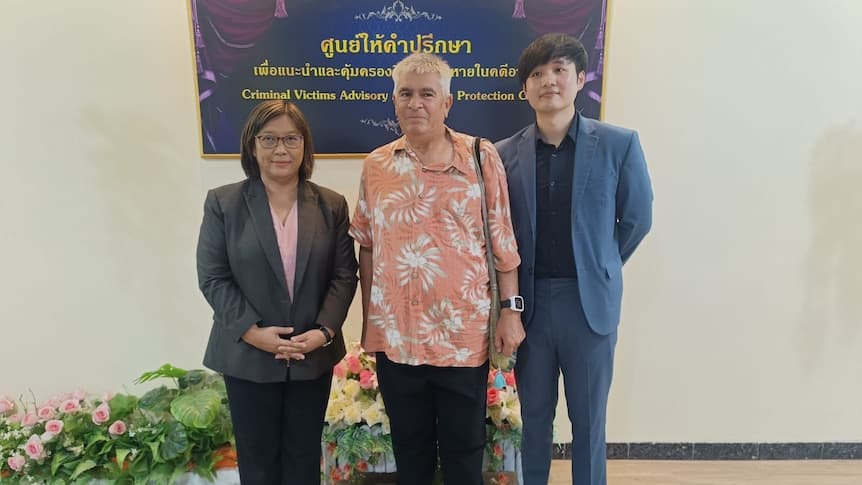
On September 29, 2025, Australian journalist Murray Hunter was preparing to board a flight to Hong Kong at Bangkok’s Suvarnabhumi Airport when Thai police arrested him. The 66-year-old writer, who had resided in southern Thailand for years, was detained overnight and thrust into a legal nightmare that would trap him in the country for months. Authorities charged him with four counts of criminal defamation under Section 328 of the Thai Criminal Code, each carrying a maximum penalty of two years in prison and a fine of 200,000 baht ($6,175). The complainant was not a Thai citizen or business, but the Malaysian Communications and Multimedia Commission (MCMC), the government media regulator of Malaysia.
Hunter was released on bail of 20,000 baht ($620) after 24 hours in detention, but authorities confiscated his passport, effectively imprisoning him within Thailand’s borders. He could not leave the country, open a bank account, or even check into a hotel. The arrest represented a disturbing new development in Southeast Asian press freedom: a government agency using the courts of a neighboring country to prosecute a foreign journalist for articles published online.
The Articles That Triggered a Diplomatic Legal Battle
The case stemmed from four articles Hunter published on his Substack newsletter between April 13 and April 29, 2024. In these posts, he criticized the MCMC, describing the commission as operating unlawfully, abusing its power, and acting as a police-like force that subverted democratic governance. He accused the agency of blocking critical websites and protecting corporate interests. Thai prosecutors argued these articles, accessible within Thailand, could lead the public to believe the MCMC operated outside the law and lacked credibility.
The MCMC had already blocked Hunter’s Substack in Malaysia for three years prior to the criminal complaint. In October 2024, the commission won a civil defamation judgment against Hunter in Malaysia, a ruling he said he was never informed of until later. The civil case involved 13 allegedly defamatory articles. When the criminal complaint was filed in Thailand, it marked the first known instance of Thai law being used to prosecute a journalist for reporting on a foreign government agency.
Human rights organizations quickly identified the legal action as a Strategic Lawsuit Against Public Participation (SLAPP), a tactic designed to silence critics by burdening them with the cost and stress of a legal defense. The International Federation of Journalists (IFJ), the Committee to Protect Journalists (CPJ), PEN International, and Human Rights Watch all condemned the prosecution. IFEX, an international coalition promoting free expression, warned that the Malaysian government use of SLAPPs and willingness to engage in transnational repression signaled a significant escalation in efforts to silence critical voices beyond national borders.
Understanding Transnational Legal Intimidation
SLAPP suits traditionally emerged in Western legal systems, particularly the United States, where wealthy corporations or individuals would file meritless lawsuits against journalists, activists, or community members to exhaust them financially and psychologically. However, Hunter’s case introduced a new dimension: transnational repression. This occurs when governments use legal systems, security forces, or other mechanisms beyond their borders to target critics, dissidents, or journalists.
Thailand’s cooperation in this case alarmed press freedom advocates because it demonstrated how easily a country criminal defamation laws could be weaponized by foreign governments. Under Thai law, defamation by publication is a criminal offense punishable by imprisonment. Unlike civil defamation, which typically results in monetary damages, criminal charges carry the threat of jail time, creating a powerful deterrent against critical speech.
The United Nations Human Rights Committee has stated that governments should consider decriminalizing defamation and that imprisonment is never an appropriate penalty for this offense. Despite this, 80% of countries worldwide still criminalize defamation according to UNESCO data. In Southeast Asia, criminal defamation combined with pretrial detention creates a system where government critics can be arrested and jailed until their cases are heard, even if the charges are eventually dropped.
Hunter’s lawyers characterized the case as a transnational SLAPP that added a dangerous new weapon to the arsenal of cross-border repression. The Foreign Correspondents Club of Thailand noted that the prosecution showed how the Thailand Criminal Code poses a serious threat to freedom of expression, particularly for foreign journalists residing in the kingdom.
The Human Cost of Fighting for Press Freedom
During the four months he was trapped in Thailand, Hunter endured significant personal hardship. Unable to work normally or travel, he lost his income and faced mounting legal bills. The psychological toll was severe. He told The Diplomat that he felt 77 rather than 67, and suffered nightmares about being locked up, tortured, and executed. The stress of potentially facing two years in prison, followed by the possibility of years of trials and appeals, weighed heavily on him.
His case highlighted a principle that his defense lawyer, Akarachai Chaimaneekarakate of Thai Lawyers for Human Rights, described starkly:
the process is the punishment.
Even though Hunter was eventually cleared, the months of detention without a passport, the legal fees, and the emotional trauma served as punishment for his critical reporting. This chilling effect is precisely the goal of SLAPP suits, which seek to deter future criticism through the mere threat of legal action.
Hunter was not alone in facing such pressure from Thai authorities acting on behalf of foreign governments. In 2025, prominent Thai studies scholar Paul Chambers was forced to leave Thailand after facing similar legal pressure. Thai authorities also removed artworks concerning Hong Kong, Tibet, and Xinjiang from a Bangkok exhibition in August 2025 at the request of the Chinese Embassy, demonstrating a pattern of cooperation with foreign governments seeking to suppress dissent.
Hunter explained his decision to settle rather than fight through a full trial, stating:
There was little else I could do. This type of litigation could continue for another two years and there is always the prospect of going to prison.
Mediation and an Uneasy Resolution
The breakthrough came on January 12, 2026, when Hunter and the MCMC reached a settlement agreement during a 12-hour mediation session at the Bangkok South Criminal Court. Under the terms of the confidential agreement, Hunter issued a public apology to the MCMC and retracted the offending articles, which included allegations ranging from abuse of power to conflicts of interest involving the commission chairperson. In exchange, the MCMC formally withdrew the criminal complaint, and the court dismissed the case with no costs or penalties awarded against Hunter.
The MCMC also withdrew a separate civil defamation suit in Malaysia involving 13 articles, resolved through a consent order dated February 4. Hunter Substack newsletter was unblocked in Malaysia, and his passport was returned, allowing him to travel freely again. However, Hunter expressed dissatisfaction with the resolution, stating that he felt he was treated unfairly under the law and that the general threat of such lawsuits remained intact.
The settlement required Hunter to comply with specific terms to prevent the cases from being reopened. As of mid-February 2026, he noted that the situation remained tense, with some issues raised by MCMC lawyers potentially affecting whether his site would remain unblocked. Despite these lingering concerns, the formal withdrawal of charges marked the end of his immediate legal jeopardy.
Following the resolution, Hunter announced he would remain in Thailand and is working on a book about SLAPP lawsuits and criminal defamation. He has become an advocate for legal reform in Southeast Asia, highlighting the dangers these laws pose not just to journalists but to ordinary citizens, including tourists who might post negative reviews online.
Implications for Southeast Asian Press Freedom
The Hunter case has intensified calls for anti-SLAPP legislation in Thailand and across Southeast Asia. In December 2025, Hunter appeared before a Thai Senate Committee examining ways to enhance protections against SLAPP suits. The committee was particularly concerned about the transnational nature of the Hunter case and the potential for foreign groups to abuse the Thailand legal system to harass critics, thereby clogging courts with limited resources.
During the hearing, lawyers and activists floated several proposals to prevent similar abuses. These included requiring litigants to pay deposits covering legal fees and lost income if a case is found frivolous, and establishing an anti-SLAPP ombudsman to identify and screen potential SLAPP cases before they reach court. Activists specifically recommended removing the criminal aspects of defamation law, which would make Thailand safer for foreign journalists and prevent arrests based on criminal defamation charges.
The case also raised alarms about the vulnerability of ordinary people in an interconnected digital world. Hunter noted that under current legal frameworks, a tourist who posted a negative review of a resort in Bali on TripAdvisor could theoretically face criminal charges in the Philippines three years later if the review was downloaded there. He cited the case of Nuon Toeun, a Cambodian maid working in Malaysia who was deported and jailed for criticizing Cambodian Prime Minister Hun Sen on Facebook, as another example of how cross-border legal actions can target everyday citizens.
Thailand role in the case drew particular criticism given its position as a current member of the UN Human Rights Council. Human Rights Watch noted that Thailand has disregarded recommendations regarding freedom of expression from the 2021 Universal Periodic Review by other UN member states. Since the 2014 military coup, successive Thai governments have prosecuted nearly 2,000 people for exercising their right to freedom of expression.
Malaysia amendments to the Communications and Multimedia Act in December 2024 expanded the MCMC powers to remove online content with limited oversight, amid wider concerns about increasing censorship and surveillance. Hunter case demonstrated the commission willingness to pursue critics beyond Malaysia borders, using friendly legal jurisdictions to enforce its censorship regime internationally.
Key Points
- Australian journalist Murray Hunter was arrested at Bangkok Suvarnabhumi Airport on September 29, 2025, and charged with criminal defamation at the request of Malaysia Communications and Multimedia Commission.
- The charges stemmed from four Substack articles critical of the MCMC, which Hunter published in April 2024. He faced up to eight years in prison if convicted on all counts.
- After mediation on January 12, 2026, the MCMC withdrew the criminal complaint and a separate civil case in Malaysia. Hunter apologized and retracted approximately ten articles in exchange for having his passport returned and his Substack unblocked.
- Human rights groups condemned the case as a transnational SLAPP suit designed to silence critical voices, marking the first known instance of Thailand prosecuting a journalist for reporting on a foreign government agency.
- Hunter defense lawyer described the case as an example of how the process is the punishment, highlighting the financial and psychological toll of legal intimidation even when charges are eventually dropped.
- The case has prompted calls for anti-SLAPP legislation in Thailand, including proposals for screening mechanisms and the decriminalization of defamation to prevent future abuse of the legal system for transnational repression.