A Cry from the Mountains: Shan Leader Breaks Silence
From his isolated mountaintop headquarters at Loi Tai Leng, perched between forest-clad hills on the Thai border, General Yawd Serk delivered a stark message to the international community. The chairman of the Restoration Council of Shan State (RCSS), one of Myanmar’s most influential ethnic armies, accused world leaders of turning a blind eye as the ruling military junta escalates a campaign of deadly airstrikes against civilian populations. Reuters was the only international news outlet present for the leader’s first meeting with media in years, a briefing held just days after the military cemented its grip on power through a widely criticized election held in limited areas of the conflict-ravaged nation.
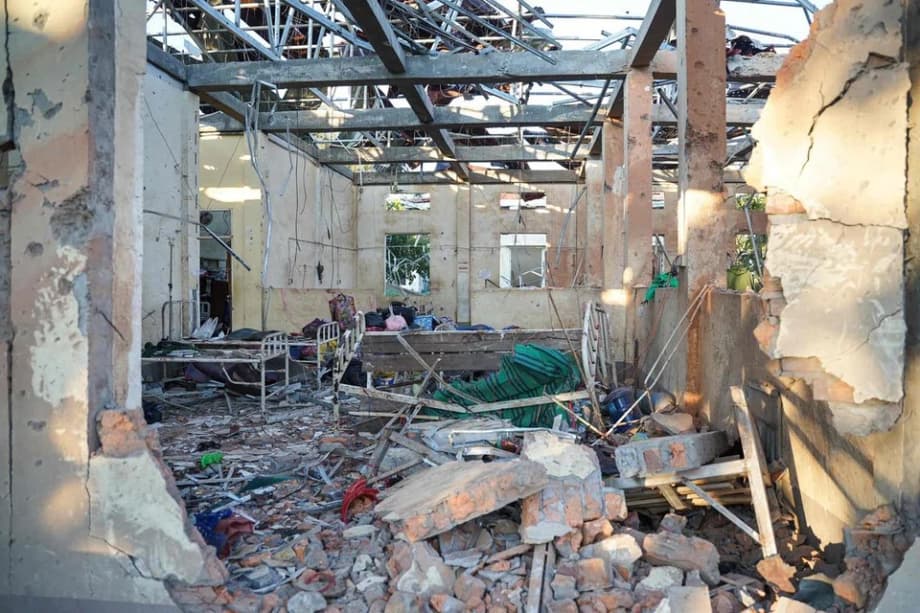
“The civilians are suffering and I want the international community not to ignore it,” Gen Yawd Serk stated emphatically, his words carrying the weight of a conflict that has engulfed Myanmar since the February 2021 coup toppled the democratically elected government of Nobel peace laureate Aung San Suu Kyi. The data supporting his accusation is grim. According to the Myanmar Peace Monitor, air strikes have struck more than 1,000 civilian locations across 15 months of intensifying conflict. Since late 2024 alone, these attacks have killed at least 1,728 civilians, according to documentation from the National Unity Government’s Human Rights Ministry.
The timing of Gen Yawd Serk’s intervention underscores the critical juncture at which Myanmar finds itself. The military-backed Union Solidarity and Development Party (USDP) claimed victory in January after elections held in stages throughout late 2025 and early 2026, securing 739 of the 1,025 contested seats. The United Nations and international rights groups have denounced the polls as a theatrical performance designed to entrench military power behind a civilian facade, with Senior General Min Aung Hlaing expected to assume the presidency. Yet even as the junta stages these political maneuvers, its aircraft continue to rain destruction on villages, schools, religious buildings, and displacement camps.
“Nowadays, we can’t even think who we can rely on,” Gen Yawd Serk added, capturing the sense of abandonment felt by many in Myanmar’s border regions. His RCSS controls strategic territory between China and Thailand, placing his forces at the center of a geopolitical struggle that extends far beyond the battlefield.
The Anatomy of an Air War
The military junta’s reliance on air power represents both a tactical shift and an admission of ground warfare failures. As pro-democracy forces and ethnic armed organizations have gained territory across large swaths of Myanmar, the Tatmadaw (Myanmar military) has increasingly turned to fighter jets, helicopter gunships, and even retrofitted transport aircraft to project force. The junta maintains it is targeting terrorists, yet the locations struck suggest a different pattern. On February 8, junta jets bombed a Baptist church in Chinpiang village, Matupi Township, while worshippers gathered for Sunday services, killing at least three civilians including a child and injuring others. The same day saw strikes damage a Buddhist Dhamma Hall in Mindat town and destroy residential areas in Kanpetlet.
Earlier, on October 8, 2025, an airstrike targeted a monastery sheltering displaced civilians in Makyikone village, Natogyi Township, killing 45-year-old Daw Kyin and injuring at least ten others, including children. The monastery had been serving as a refuge for villagers fleeing military columns advancing through central Myanmar. These incidents are not isolated aberrations but part of a systematic campaign. Even during a declared earthquake truce between March 28 and May 9, 2025, the regime conducted 372 airstrikes across 13 of Myanmar’s 15 states and regions, killing 334 people and injuring 552 others according to the National Unity Government.
The sustainability of this air campaign relies on foreign supply chains. The Chin Human Rights Organisation (CHRO) has identified Iranian aviation fuel shipments as directly enabling these attacks on religious communities, calling for international sanctions on aviation fuel supply chains. This external support allows the junta to maintain operational tempo despite mounting losses on the ground. Military analysts suggest the bombing of former bases lost to resistance forces, such as Strategic Operations Command 15 in Buthidaung Township or various installations in Arakan State, reflects strategic desperation rather than coherent military planning. As one Arakan military observer noted, “If you can’t have the meat, you scatter sand on it.”
China’s Shadow Over Shan State
Amid this landscape of international paralysis, Gen Yawd Serk identified a single external actor actively shaping Myanmar’s destiny. “There is one country which intervenes in Myanmar, it is China and only China,” he told Reuters, declining to elaborate further but highlighting Beijing’s role as the conflict’s primary power broker. China’s foreign ministry responded by stating it has “long played a constructive role in the domestic peace and reconciliation process,” backing parties to strengthen dialogue. Yet the reality on the ground suggests Beijing’s intervention serves specific strategic interests rather than neutral peacemaking.
China’s economic stakes in Myanmar are substantial and concentrated in Shan State and neighboring regions. The China-Myanmar Economic Corridor, part of the Belt and Road Initiative, connects Yunnan Province to Southeast Asia and the Indian Ocean through pipelines, roads, and hydropower projects including the Upper Yeywa and Shweli-3 plants. The Kyaukphyu Special Economic Zone and deep-sea port in Rakhine State provide Beijing with direct Indian Ocean access, reducing reliance on the Strait of Malacca. To protect these investments, Beijing has pivoted from initially supporting certain ethnic armed organizations to pressuring them to halt offensives that threatened the junta’s survival.
This pressure has proven decisive. During Operation 1027 in late 2023 and 2024, the Brotherhood Alliance of ethnic armies including the Myanmar National Democratic Alliance Army (MNDAA), Ta’ang National Liberation Army (TNLA), and Arakan Army (AA) seized most of northern Shan State, including the capital Lashio, and advanced to within 22 kilometers of Mandalay city. Families of military personnel fled the garrison town of Pyin Oo Lwin as resistance forces seemed poised to capture Myanmar’s second-largest city. However, Beijing closed border gates, cutting food and medicine supplies to ethnic armies while preventing weapons procurement. The United Wa State Army (UWSA), Myanmar’s most powerful ethnic armed group, faced asset seizures and border closures until it agreed to halt military assistance to the MNDAA and TNLA.
By August 2025, UWSA Vice Chair Shao Guoan reportedly told allied groups that Chinese pressure had created “the worst survival crisis in our 40-year history.” Facing this squeeze, the MNDAA was forced to hand back Lashio to the regime in April 2025 after China-controlled peace talks in Kunming, though it maintained control of rural areas. The TNLA subsequently relinquished Mogoke and Mongmit during October 2025 negotiations, allowing regime forces to advance on resistance-held territory in northern Mandalay and cut supply lines to People’s Defense Force (PDF) groups. This Chinese intervention effectively reversed significant resistance gains, demonstrating how Beijing’s economic priorities translate into direct military outcomes.
Beijing’s Election Engineering
China’s role extends beyond battlefield mediation to political engineering. In July 2024, the Chinese Communist Party invited leaders from four specific Myanmar political parties to Beijing: the USDP, the People’s Party, the Arakan Front Party (AFP), and the Shan and Ethnic Democratic Party (SEDP). Notably absent were the National League for Democracy (dissolved by the junta) and the National Unity Government in exile, which represents the ousted democratic administration. All four invited parties are registered with the junta’s State Administration Council and maintain varying degrees of cooperation with the military.
This selective engagement reflects Beijing’s preference for stability under military or military-influenced governance rather than democratic transitions that might introduce uncertainty. The SEDP represents Shan interests and engages pragmatically with the regime to advance regional goals, while the AFP in Rakhine State has shown willingness to work with the SAC to negotiate greater autonomy. By backing these parties, China attempts to ensure its border regions remain secure for trade and resource extraction while preventing the emergence of governance structures that might challenge its economic interests. The approach has created what the International Crisis Group describes as a “fractured landscape” that risks deepening grievances while stabilizing the junta just enough to protect Chinese infrastructure.
The Reluctant Peacekeeper: RCSS and the Ceasefire
General Yawd Serk’s position within this complex web defies simple categorization. Unlike many ethnic armed organizations that have taken up arms against the junta since the 2021 coup, the RCSS maintains its adherence to the Nationwide Ceasefire Agreement (NCA) signed in October 2015, even as it vocally condemns the military’s conduct. This stance reflects both strategic calculation and historical experience. Yawd Serk first emerged as a military commander in the Mong Tai Army (MTA) under the legendary narcotics entrepreneur General Khun Sa, who declared Shan independence in 1993 before surrendering in 1996. When Khun Sa handed over thousands of troops and weapons, Yawd Serk refused to surrender, reforming as the Shan State Army-South and establishing the RCSS as its political wing in 2000.
The relationship between Yawd Serk and Min Aung Hlaing has been characterized by decades of mutual antipathy masked by periodic diplomatic engagement. High-level meetings between the two leaders have historically featured handshakes and broad smiles that belied what observers describe as a “visceral antipathy” between the strongmen. Following the 2021 coup, the RCSS initially condemned the takeover but quickly adopted an ambivalent position, continuing peace talks while other signatories abandoned the NCA. Six of the original ten NCA signatories have since resumed armed resistance against the junta, including the Karen National Union, Chin National Front, and All Burma Students’ Democratic Front.
Speaking at the February 7 military parade marking Shan National Day, attended by approximately 7,000 people including representatives of rival groups, Gen Yawd Serk delivered a pointed critique of Myanmar’s leadership. He attributed the nation’s turmoil to “leadership driven by excessive ego, pride, and greed – placing the will of one individual above the desires of the public.” While praising the ousted administration of Aung San Suu Kyi, he called for trust-building among Myanmar’s array of armed factions and proposed the establishment of a Federal Army to ensure national security, a key demand of forces opposing the military. He emphasized the importance of the 1947 Panglong Agreement, which established the Union of Myanmar as a federal system with distinct administrative arrangements for ethnic states, arguing that national leaders have lost touch with the “Middle Way” or Moderation necessary for unity.
Min Aung Hlaing responded with a statement urging ethnic and “terrorist” groups to abandon armed struggle and join peace talks, a message Yawd Serk dismissed as an old refrain that “no one has accepted.” Yet the RCSS leader indicated his preference for political solutions over renewed fighting, stating his army would judge the new government by its actions rather than its words. This delicate balancing act, maintaining a ceasefire while criticizing the regime’s brutality, reflects the RCSS’s strategic vulnerability. Having been pushed out of northern Shan State territories by rival forces backed by China, the RCSS now faces encroachment from the UWSA, whose southern divisions threaten Loi Tai Leng and RCSS border positions.
A Fractured Landscape: Alliances and Betrayals
The failure of the Nationwide Ceasefire Agreement to deliver peace has become starkly apparent as Myanmar marks the truce’s tenth anniversary. What was intended as a framework for ending decades of ethnic conflict has instead devolved into a mechanism for managing hostilities while the military maintains ultimate authority. The agreement’s collapse accelerated after the 2021 coup rendered its political foundations void. Six signatories have formally exited, citing the junta’s “total disregard” for NCA principles and its continued use of force against civilians. Only the RCSS, the Democratic Karen Benevolent Army, the Karen National Union/Karen National Liberation Army Peace Council, and the Arakan Liberation Party maintain peaceable terms with the regime, and only the RCSS possesses substantial military capacity among these.
The Shan State context illustrates the complexity of post-coup alliances. While various Shan groups have agreed in principle on the framework for a future federal state, deep divisions persist. The Shan State Progress Party/Shan State Army-North (SSPP/SSA-North), which never signed the NCA, maintains a tense relationship with the RCSS despite both advocating for Shan interests. The RCSS’s expansion into northern Shan territories after 2015, often with tacit military approval, created lasting resentment among Ta’ang and other non-Shan communities, leading to routine clashes and intercommunal tensions. Yawd Serk’s call for Shan unity at the February 7 gathering, attended by longtime rivals, represents an acknowledgment that the coup has reshaped the balance of power in ways that threaten all Shan factions.
The Karen National Union (KNU), one of the most powerful groups fighting the junta, sent a letter to the Shan National Day ceremony rather than attending in person. KNU spokesperson Saw Taw Nee described the moment as “critical for us to build unity,” stating, “We are proud that our Shan brothers are trying to pave the way.” This sentiment reflects a broader recognition among ethnic armed organizations that fragmented resistance serves the junta’s divide-and-rule strategy, yet suspicion born of decades of competing territorial claims and shifting alliances impedes meaningful cooperation. The UWSA’s expansion throughout eastern Shan State, moving forces southward toward RCSS positions, adds another layer of complexity, raising questions about whether the Wa might eventually force Yawd Serk into a position similar to that faced by his former commander Khun Sa in 1996.
The Search for Accountability
As the air war intensifies and civilian casualties mount, efforts to hold the junta accountable through international legal mechanisms have faced significant obstacles. The International Criminal Court (ICC) and International Court of Justice (ICJ) both maintain investigations regarding crimes against the Rohingya, but these cover incidents predating the 2021 coup. ICC Chief Prosecutor Karim Khan requested an arrest warrant for Min Aung Hlaing in November 2024, yet more than a year later no decision has been issued, highlighting the court’s procedural delays and limited enforcement capabilities.
In this vacuum, smaller nations have begun exercising universal jurisdiction to pursue justice. Timor-Leste, which joined ASEAN just four months prior, appointed a prosecutor in February 2026 to examine the Myanmar military’s responsibility for war crimes and crimes against humanity, marking the first time an ASEAN state has taken such action against a fellow member. The complaint, brought by the Chin Human Rights Organisation, relies on the principle that domestic courts can hear cases alleging international crimes regardless of where they occurred. Similar efforts have been attempted in Argentina, Turkey, and Germany, though challenges remain regarding arrests, diplomatic immunity, and the practical difficulties of gathering evidence and witnesses from overseas.
Gen Yawd Serk’s despair regarding international reliability resonates across Myanmar’s conflict zones. With Western powers maintaining primarily diplomatic and sanctions-based pressure, ASEAN paralyzed by its non-interference principles, and neighboring countries prioritizing border stability over democratic outcomes, the burden of resistance falls heavily on domestic forces. The junta’s recent creation of a Union Consultative Council, designed to oversee both military and civilian administrations with “exceptionally broad” powers, suggests Min Aung Hlaing intends to retain control regardless of electoral outcomes. For the civilians sheltering in monasteries that become targets, or the displaced families fleeing from village to village, the gap between international condemnation and actual protection remains painfully wide.
The Essentials
- General Yawd Serk, leader of the Restoration Council of Shan State, has accused world leaders of ignoring the Myanmar junta’s deadly airstrikes that have killed at least 1,728 civilians since late 2024.
- Data from the Myanmar Peace Monitor indicates over 1,000 civilian locations have been struck in 15 months, including religious buildings, schools, and displacement camps.
- China serves as the primary external actor intervening in the conflict, pressuring ethnic armed groups to halt offensives and stabilize the junta to protect Belt and Road infrastructure investments.
- Beijing-brokered ceasefires forced the MNDAA and TNLA to hand back strategic territories including Lashio, Mogoke, and Mongmit, reversing resistance gains and allowing junta counteroffensives.
- The military-backed USDP claimed victory in widely criticized January elections designed to entrench military rule, with Senior General Min Aung Hlaing expected to become president.
- Yawd Serk maintains the RCSS’s Nationwide Ceasefire Agreement with the junta while criticizing Min Aung Hlaing’s leadership as driven by “ego, pride, and greed,” calling for a Federal Army and renewed political dialogue.
- Timor-Leste has initiated the first ASEAN state universal jurisdiction case against Myanmar’s military leaders for war crimes and crimes against humanity.
- Iranian aviation fuel imports have been identified as enabling the junta’s sustained air campaign despite international sanctions.