A Prince’s Promise: The Royal Champion
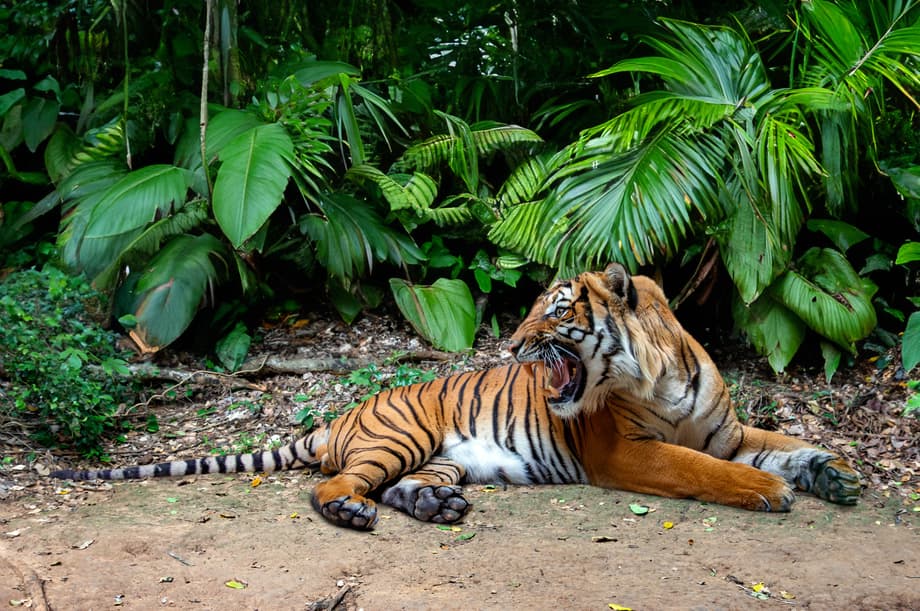
When Tengku Hassanal Ibrahim Alam Shah, the 30-year-old Crown Prince of Pahang, gazes across the dense rainforests of his Malaysian state, he sees not just towering trees and winding rivers, but the last hope for one of Asia’s most iconic predators. The Malayan tiger, scientifically known as Panthera tigris jacksoni, once ruled these jungles with a population estimated at 3,000 individuals during the 1950s. Today, fewer than 150 remain in the wild, placing the species on the critically endangered list and dangerously close to extinction.
- A Prince’s Promise: The Royal Champion
- The Last Stronghold: Anatomy of a Tiger Reserve
- Guardians of the Forest: Indigenous Expertise
- Technology in the Wilderness: Monitoring and Connectivity
- Global Alliances: Funding the Future
- Beyond the Stripes: A Biodiversity Sanctuary
- Fighting for Survival: Threats and Triumphs
- Key Points
Unlike his great-great-grandfather Sultan Ibrahim of Johor, who famously hunted tigers as sport in the early 1900s according to historical accounts from The Wide World Magazine, Tengku Hassanal has chosen a different path. He has become the champion of the very creatures his ancestor pursued, establishing Southeast Asia’s first royal tiger reserve and emerging as an unexpected conservation leader. In 2023, he founded the Al-Sultan Abdullah Royal Tiger Reserve (ASARTR), a sanctuary that represents a radical reimagining of how royalty, indigenous communities, and international partners can collaborate to save a species from disappearing forever.
The prince’s commitment extends beyond ceremonial appearances. He actively participates in conservation strategy, fosters international partnerships, and ensures that scientific expertise guides the reserve’s operations. His approach combines traditional ecological knowledge with modern conservation science, creating a model that could influence tiger preservation across Southeast Asia. Under his patronage, the reserve has already attracted significant international attention and funding, transforming a dire situation into a beacon of hope for the Malayan tiger’s recovery and demonstrating how targeted leadership can catalyze conservation action.
The urgency of his mission reflects a broader crisis facing Malaysia’s natural heritage. Habitat fragmentation, driven by decades of logging and agricultural expansion, has isolated tiger populations while poaching syndicates continue to plague forest boundaries. Taman Negara, while protected, lacked the buffer zones necessary to prevent incursions. Tengku Hassanal recognized that without immediate intervention, the Malayan tiger would follow its extinct relatives into history books, erasing both a cultural symbol and a crucial apex predator from Malaysia’s ecosystems.
The Last Stronghold: Anatomy of a Tiger Reserve
ASARTR represents a groundbreaking expansion of protected habitat in Peninsular Malaysia. Covering approximately 1,340 square kilometers (142,000 hectares) comprising the Gunung Aais and Tekai-Tembeling forest reserves, the reserve sits adjacent to Taman Negara, the country’s largest national park. This strategic positioning increases the total protected area by more than 30 percent, creating a contiguous 568,500-hectare (1.4 million-acre) sanctuary where tiger populations can potentially recover without the constraints of isolated habitats.
The reserve’s ecological significance extends far beyond its size. According to official documentation, ASARTR contains the highest Above Ground Biomass of any forest in Peninsular Malaysia, highlighting its exceptional capacity for carbon sequestration and its substantial contribution to mitigating greenhouse gas emissions. As the primary water reservoir for the Tembeling River, the reserve plays a crucial role in supplying fresh water to native populations and nearby communities, representing the most critical ecological benefit that the rainforest offers to human settlements.
Managed by Pahang State Parks Corporation (PTNP) and operated by Enggang Management Services (EMS), the reserve adheres to rigorous international standards. The management framework follows Conservation Assured Tiger Standards (CA|TS) and IUCN standards for protected and conserved areas, ensuring that conservation activities meet global best practices. This structured approach encompasses wildlife patrolling, habitat protection, monitoring systems, and landscape enrichment activities designed to support not only tigers but the entire ecosystem they inhabit.
The geographical location proves particularly vital for genetic diversity. Tigers can now roam freely between the national park and the reserve to find prey, establish their own territory, and avoid conflict with people and other tigers. This connectivity addresses one of the primary threats to small populations: inbreeding depression. As wildlife analyst Chin Weng Yuen from Panthera explains, gene flow between populations is essential to prevent genetic bottlenecks that could doom the species even if numbers stabilize.
Guardians of the Forest: Indigenous Expertise
At the heart of ASARTR’s protection strategy stands a team of rangers drawn from the Orang Asli, Malaysia’s indigenous peoples who have inhabited these forests for generations. Approximately twenty-six rangers from the Indigenous Orang Asli community currently serve in the reserve, their expertise in tracking and wilderness survival proving essential in the dense rainforest terrain. Unlike conventional conservation models that often exclude indigenous populations, Tengku Hassanal’s initiative actively integrates their generational knowledge into formal protection protocols.
Adrian Cheah Chor Eu, an assistant project coordinator at Panthera, emphasizes the value of this partnership. He contrasts the indigenous rangers’ abilities with those of urban conservationists.
“They have so much knowledge of the reserve. We (city people) can navigate ourselves but we do not know much about the forest.”
This expertise has directly contributed to security outcomes. Patrols follow a deep forest anti poaching strategy that has led to the disruption of three poaching incidents within ASARTR, and by 2025, the reserve achieved snare free status according to conservation reports.
The collaboration extends beyond employment to genuine partnership. Rather than driving indigenous communities from their traditional lands, as has occurred in conservation projects elsewhere, the reserve recognizes the Jahai tribe and other Orang Asli groups as stakeholders. Shah Redza Hussein, former CEO of EMS who helped establish the reserve’s operational framework, implemented a system where ranger salaries support entire villages. A portion of each ranger’s earnings flows back to their community, creating shared economic incentives for conservation and transforming local inhabitants into conservation advocates who view protection as an inheritance from their ancestors.
Technology in the Wilderness: Monitoring and Connectivity
Modern conservation at ASARTR relies on sophisticated technology integrated into remote rainforest conditions. The reserve maintains a network of more than 340 camera traps that continuously monitor wildlife movements, providing crucial data on tiger density, prey distribution, and habitat use. This surveillance system, overseen by Panthera, captures rare moments such as the first documented breeding within the reserve: a mother tiger accompanied by two cubs spotted last year, representing the first signs of successful reproduction in the protected area.
In November 2025, the reserve deployed a revolutionary connectivity solution through a partnership with EdgePoint Towers. The company installed Low Earth Orbit (LEO) satellite technology at manned guard posts and campsites, enabling real-time coordination and communication for rangers and research staff operating deep within the forest. This system, powered by independent solar and battery installations, supports incident reporting, navigation, and emergency response protocols that were previously impossible in such remote terrain.
Muniff Kamaruddin, Chief Executive Officer of EdgePoint Towers, explains that the project addresses operational constraints such as limited fuel supply and power access.
“By integrating independent solar and battery systems, these installations will improve the efficiency of rangers and researchers, providing reliable access to critical data in real time and enabling faster response to tiger sightings and anti poaching efforts.”
The technology replaces reliance on satellite phones, significantly improving safety for patrollers while enhancing park management capabilities and demonstrating how digital infrastructure can safeguard natural heritage.
Global Alliances: Funding the Future
The scale of conservation required at ASARTR demands substantial international investment, which the reserve has successfully secured through high-level diplomatic partnerships. In January 2025, the United Arab Emirates committed $22 million (approximately RM99.8 million) over five years through the Mohamed bin Zayed Species Conservation Fund (MBZF). Crown Prince Sheikh Khaled bin Mohamed bin Zayed witnessed the signing ceremony alongside Tengku Hassanal during Abu Dhabi Sustainability Week, signaling the strategic importance of this collaboration.
Her Excellency Razan Khalifa Al Mubarak, Executive Managing Director of MBZF, emphasized the existential stakes.
“If tiger populations continue to decline at this rate, experts predict their extinction within a few years. This initiative to support the Al-Sultan Abdullah Royal Tiger Reserve is a crucial step toward securing the Malayan tiger’s future.”
The funding supports anti poaching patrols, breeding programs, habitat restoration, and the establishment of a research facility focusing on advanced genetics applications and global scientific collaboration. A Rewilding Centre named in honor of UAE President Sheikh Mohamed bin Zayed Al Nahyan will anchor these efforts, creating a hub for species recovery that could inform conservation strategies across Southeast Asia.
European support complements these Middle Eastern investments. The European Union provided a grant of one million euros ($1.18 million) in 2024, demonstrating broad international recognition of the reserve’s importance. Additional support comes from The Habitat Foundation, which oversees community engagement and sustainable tourism projects funded by Malaysia’s Ministry of Finance, while the Malaysian wildlife nonprofit BORA focuses specifically on boosting tiger prey species like sambar deer and boar.
Beyond the Stripes: A Biodiversity Sanctuary
While the Malayan tiger serves as the flagship species attracting global attention, ASARTR functions as a critical sanctuary for numerous endangered species. Panthera describes the broader Taman Negara landscape as a Catscape, hosting seven wild cat species: the tiger, leopard, clouded leopard, leopard cat, flat-headed cat, marbled cat, and the Asiatic golden cat. This concentration of felid diversity represents one of the richest such assemblages in Southeast Asia.
The reserve also provides habitat for large mammals including the Asian elephant, Malayan tapir, Asian dhole, Malayan gaur, White-handed gibbon, Pig-tailed macaque, and Dusky leaf monkey. Bird diversity encompasses approximately 380 types, while the total mammal count reaches 150 species. This biological richness underscores the importance of protecting large contiguous forest blocks, as apex predators like tigers require extensive territories that simultaneously safeguard countless other species occupying the same ecosystem.
Ecological connectivity remains a priority beyond the reserve’s immediate boundaries. ASARTR forms part of a broader initiative to reconnect Malaysia’s Central Forest Spine, a 5.3-million-hectare north-south belt of rainforest fragmented by decades of deforestation. Malaysia has lost nearly a third of its primary forest since the 1970s, but coordinated efforts between government agencies and NGOs resulted in a 13 percent reduction in primary forest loss in 2024 compared to the previous year. Plans to create 37 ecological corridors will help wildlife move freely again, restoring gene flow across the landscape.
Fighting for Survival: Threats and Triumphs
Despite these conservation advances, the Malayan tiger faces persistent threats that require constant vigilance. Pahang, along with Kelantan and Terengganu, remains identified as a hotspot for illegal hunting targeting the endangered species. Wildlife authorities destroyed 4,466 traps between 2020 and mid-2025, with poachers primarily consisting of foreign nationals from Vietnam and Cambodia who exploit logging roads and river access to infiltrate protected areas. Black market prices for tiger parts reach between RM200,000 and RM300,000 per animal, driving continued criminal interest.
The threats extend beyond direct poaching to ecological disruptions. African swine fever has decimated wild boar populations, a primary prey species for tigers, forcing the predators to seek alternative food sources that sometimes bring them into conflict with human communities. Prey augmentation programs led by BORA attempt to address these imbalances through habitat restoration and population management of sambar deer and other key species.
Yet amid these challenges, encouraging signs emerge. The appearance of a mother tiger with two cubs on camera traps marks the first confirmed breeding within the reserve, suggesting that the combination of protection, space, and prey availability is creating conditions conducive to population recovery. As Chin Weng Yuen observes, the recent discoveries offer reason for optimism.
“That is quite exciting and pretty encouraging.”
With the reserve achieving snare free status in 2025 and international funding secured for five years, conservationists maintain hope that the Malayan tiger can avoid the fate that befell its extinct Javan and Bali relatives. The Wildlife and National Parks Department (Perhilitan) has set an ambitious target to increase the Malayan tiger population from 150 to at least 400 by 2030. Achieving this goal depends on maintaining critical habitats like ASARTR, expanding connectivity through ecological corridors including eco-viaducts and underpasses, and sustaining the collaborative model that combines royal patronage, indigenous knowledge, international funding, and technological innovation.
Key Points
- Crown Prince Tengku Hassanal Ibrahim Alam Shah established the Al-Sultan Abdullah Royal Tiger Reserve (ASARTR) in 2023, creating Southeast Asia’s first royal tiger reserve to protect the critically endangered Malayan tiger.
- The Malayan tiger population has declined from 3,000 in the 1950s to fewer than 150 individuals today, threatened by poaching, habitat loss, and prey depletion.
- ASARTR covers 1,340 square kilometers adjacent to Taman Negara, increasing the protected area by over 30% to create a 568,500-hectare sanctuary with forest connectivity essential for genetic diversity.
- The reserve integrates indigenous Orang Asli rangers utilizing traditional tracking expertise with modern technology including 340 camera traps and Low Earth Orbit satellite connectivity for real-time anti poaching monitoring.
- International funding includes $22 million from the UAE’s Mohamed bin Zayed Species Conservation Fund and one million euros from the European Union, supporting research, habitat restoration, and community development.
- Early conservation successes include achieving snare free status in 2025 and documenting the first breeding tiger with cubs within the reserve, offering hope for population recovery.