When Internet Outages Exposed an International Intrigue
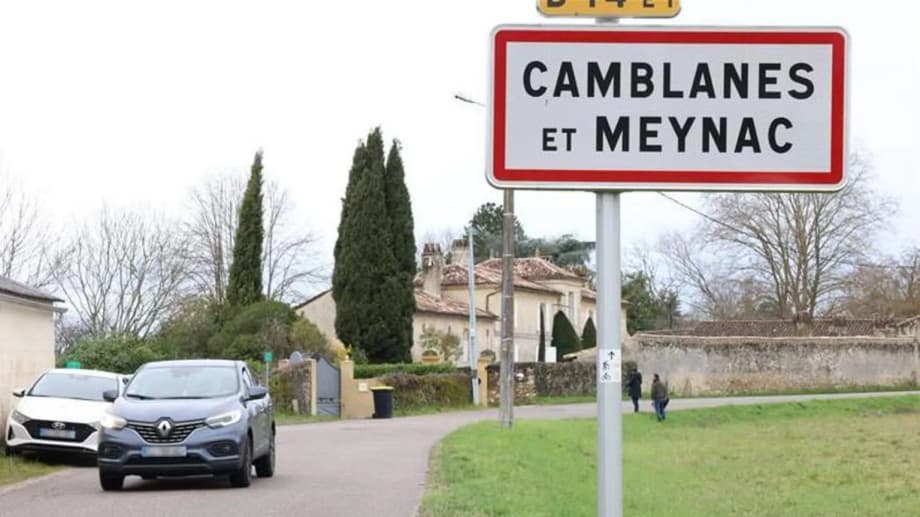
In the sleepy commune of Camblanes-et-Meynac, nestled among the rolling vineyards approximately 15 kilometers east of Bordeaux, residents are accustomed to a tranquil rhythm of rural French life. Artists seeking inspiration and tourists renting vacation properties typically comprise the area’s transient population. However, this pastoral calm shattered in late January when villagers noticed something distinctly out of place: persistent internet outages that coincided with the arrival of new neighbors who had rented a local home through Airbnb.
- When Internet Outages Exposed an International Intrigue
- The Raid and Seizure
- The Suspects and Their Cover Story
- Targeting the Final Frontier
- A Recurring Pattern in Southwest France
- The Strategic Significance of the Southwest
- Shifting French Counterintelligence Strategy
- Beijing’s Denial and Diplomatic Fallout
- Key Points
The source of the disruption became apparent on January 30, when locals observed the installation of a massive parabolic antenna in the garden of the rented property. The dish, measuring roughly two meters in diameter, pointed skyward in a manner that immediately aroused suspicion. Villagers connected the technical disturbance to the hardware, prompting authorities to investigate what initially appeared to be an illegal telecommunications setup.
What French security services discovered would transform this quaint Gironde village into the epicenter of an international espionage investigation. Rather than mere signal piracy, authorities uncovered what they believe was a sophisticated Chinese intelligence operation targeting sensitive military satellite communications and data from the Starlink satellite network of Elon Musk.
The Raid and Seizure
Officers from France’s General Directorate for Internal Security (DGSI), the country’s domestic intelligence agency responsible for counterespionage and counterterrorism, conducted a raid on the property on January 31. The operation yielded substantial evidence: investigators discovered an elaborate computer system connected to the satellite dishes, equipment specifically configured to capture and intercept satellite data transmissions.
The Paris public prosecutor’s office confirmed that the setup enabled the illegal interception of satellite downlinks, including exchanges between military entities deemed vital to French national security. The national radio frequency agency reported frequency jamming and the illegal possession of technical devices for capturing computer data, explaining the internet disruptions that had plagued nearby residents.
Four individuals were taken into custody during the operation. Two Chinese nationals, aged 27 and 29, formed the core of the alleged spy ring. Two additional suspects of Chinese origin, residing in France, were arrested on suspicion of providing logistical support and illegally importing the specialized technical equipment, including a used Starlink antenna and satellite signal display devices.
The Suspects and Their Cover Story
According to French prosecutors, the two primary suspects had entered France the previous month under work visas that identified them as engineers employed by a research and development company specializing in wireless communication equipment. Their stated professional backgrounds provided plausible cover for possessing technical expertise, though investigators allege their true mission involved capturing data from entities of vital importance, notably military entities, for transmission to China.
During questioning at DGSI headquarters in the Paris suburbs, the men allegedly claimed they were merely attempting to understand Starlink technology. However, the scale and configuration of the equipment seized suggested capabilities far beyond academic curiosity. The judicial investigation focuses on charges of delivering information to a foreign power likely to damage the interests of France, an offense carrying a potential prison sentence of up to 15 years.
By February 5, all four suspects had been formally placed under investigation by an examining judge. Two remain in pretrial detention, while the other two have been released under judicial supervision. The prosecutor’s office has not released detailed identities of the auxiliary suspects, though their involvement appears centered on the procurement and installation of the prohibited equipment.
Targeting the Final Frontier
The alleged espionage operation specifically targeted Starlink, the satellite internet constellation operated by SpaceX, the aerospace manufacturer founded by billionaire Elon Musk. Starlink operates thousands of small satellites in low Earth orbit, providing broadband internet coverage across the globe. While primarily a commercial venture, the network has become integral to military communications in multiple conflict zones, including Ukraine, where it has enabled battlefield connectivity resistant to traditional jamming techniques.
The technical sophistication required to intercept Starlink transmissions indicates advanced signals intelligence capabilities. Satellite interception involves capturing downlink signals as they travel from orbiting spacecraft to ground stations or user terminals. Military variants of these communications often employ encryption, though metadata and traffic patterns can reveal operational details, troop movements, and strategic intentions even when content remains secured.
Camblanes-et-Meynac proved strategically significant because the village sits mere kilometers from Villenave d’Ornon, home to France’s only Starlink ground station. These gateway facilities serve as critical infrastructure nodes connecting the satellite constellation to terrestrial internet backbones. Proximity to such infrastructure allows for stronger signal interception with smaller antenna arrays, explaining why the suspects selected this particular rural location despite its distance from major urban centers.
A Recurring Pattern in Southwest France
This arrest represents merely the latest incident in what intelligence experts describe as a sustained Chinese espionage campaign targeting southwestern France. The region, stretching between Bordeaux and Toulouse, hosts a dense concentration of Europe’s most sensitive defense, aerospace, and telecommunications infrastructure.
In June 2025, authorities detained a 51-year-old Chinese engineer in Boulogne-sur-Gesse, approximately 40 miles southwest of Toulouse. She had similarly installed a satellite dish and was suspected of intercepting signals from the Issus-Aussaguel ground station, a facility communicating with satellites utilized by French military and intelligence services. Intelligence Online, a specialized publication tracking espionage activities, reported that intercepted information from that operation could potentially have led to the destruction of a French-supplied satellite operated by a third country.
More recently, in December 2025, a mathematics professor at the University of Bordeaux Institute of Mechanics and Engineering faced judicial investigation for providing information to a foreign power. He allegedly permitted members of a Chinese delegation access to restricted areas within the institute, which has carried a restricted area designation since 2019 due to its involvement in sensitive defense research. The professor has been released under judicial supervision but faces charges including colluding with a foreign power.
Jeremy André, an expert in Asian espionage at Intelligence Online, described these activities as part of a secret war increasingly fought in space. He spoke to Radio France International about the nature of modern espionage operations.
This is not cold observation. Today, there is a secret war going on, and it is taking place in space in particular.
The Strategic Significance of the Southwest
The concentration of espionage activity in this particular French region is no coincidence. Since World War I, French defense planners have deliberately concentrated aerospace and military research facilities in the southwest, initially seeking distance from potential frontlines with neighboring Germany. This historical decision created a permanent ecosystem of high-value targets that remains vulnerable to modern technical surveillance.
The area hosts major installations from defense contractors including Airbus, Thales, and Dassault Aviation, alongside the Bordeaux-Mérignac airbase, a critical military facility. The Issus-Aussaguel ground station near Toulouse serves as a primary communications hub for French space assets, while various research institutions conduct classified work on satellite technology, missile systems, and aerospace engineering.
Chinese intelligence services have systematically cultivated relationships within this region through legitimate diplomatic and economic channels. André noted that Beijing has invested considerable energy developing cooperation with municipal governments and local collectivities throughout the southwest. In itself, there is nothing wrong with that, but in doing so they create a tissue of links which can be activated on demand, he explained. These networks provide cover for intelligence operatives and facilitate access to sensitive locations under the guise of academic exchange, business partnerships, or cultural diplomacy.
Shifting French Counterintelligence Strategy
The public prosecution of these cases marks a notable shift in French counterintelligence posture. Historically, French authorities often handled espionage incidents involving Chinese nationals discreetly, preferring quiet expulsions or diplomatic warnings to preserve bilateral trade relationships. The decision to pursue formal criminal charges, publicize details, and seek substantial prison sentences suggests a hardening French stance toward Beijing’s intelligence activities.
This evolution reflects broader European concerns regarding Chinese state sponsored espionage. In January 2026, Czech police detained an individual suspected of working for Chinese intelligence services. Germany has pursued similar cases, including the trial of an American citizen who worked at a US military base and allegedly offered services to Chinese intelligence. In October 2025, Ken McCallum, director general of Britain’s MI5 domestic security service, warned that China poses a daily threat to British interests.
The French pivot toward transparency aims to deter future operations while alerting the public to vulnerabilities in civilian infrastructure. By exposing how easily vacation rental properties can be converted into signals intelligence stations, authorities hope to encourage vigilance among property owners and local communities.
Beijing’s Denial and Diplomatic Fallout
The Chinese government has vigorously denied the allegations, characterizing them as part of a Western campaign to vilify China. The Chinese Embassy in France issued a statement indicating it had not received formal notification from French authorities regarding the investigation. China has consistently opposed the hyping of purported Chinese spies and the smearing of China, the embassy declared, urging French authorities to enforce the law impartially and safeguard the legitimate rights and interests of Chinese citizens in France.
Chinese Foreign Ministry spokesperson Mao Ning previously addressed similar cases, stating that China always opposes vilifying China by peddling the purported Chinese spy narrative. Beijing maintains that Chinese citizens abroad consistently abide by local laws and that Chinese funded enterprises operate in compliance with regulations.
Tensions between Beijing and Western powers over espionage have escalated markedly in recent years. Western intelligence agencies have increasingly publicized allegations of Chinese state backed hacking and technical surveillance, while China has reciprocated with accusations regarding Western cyber operations. The satellite interception case adds a new dimension to these disputes, highlighting the vulnerability of commercial space infrastructure to ground based surveillance.
In Camblanes-et-Meynac, the episode has left residents bewildered by their unexpected role in international intrigue. Mayor Jean-Philippe Guillemeot captured the village surprise with dry humor.
Here we tend to get artists, not spies. Maybe they just wanted somewhere nice and quiet.
The mayor observation underscores the surreal nature of modern espionage, where global powers project their conflicts into the most peaceful corners of rural Europe, transforming garden satellite dishes into potential instruments of statecraft.
Key Points
- Two Chinese nationals aged 27 and 29 were arrested in Camblanes-et-Meynac, Gironde, after installing a two meter satellite dish at an Airbnb rental
- The installation caused internet outages that alerted local residents, leading to a January 31 raid by France’s DGSI domestic intelligence agency
- Authorities seized computer systems capable of intercepting Starlink satellite data and military communications
- Four individuals total face charges of delivering information to a foreign power, punishable by up to 15 years imprisonment
- The suspects allegedly entered France on work visas claiming to be wireless communications engineers
- The case represents the latest in a series of Chinese espionage incidents targeting defense and aerospace facilities in southwestern France
- French authorities have shifted from covert handling to public prosecution of such cases, reflecting heightened concerns about Chinese intelligence activities
- The Chinese Embassy in France denies receiving official notification and calls the allegations malicious slander