The Political Phenomenon Reshaping Japan’s Electoral Map
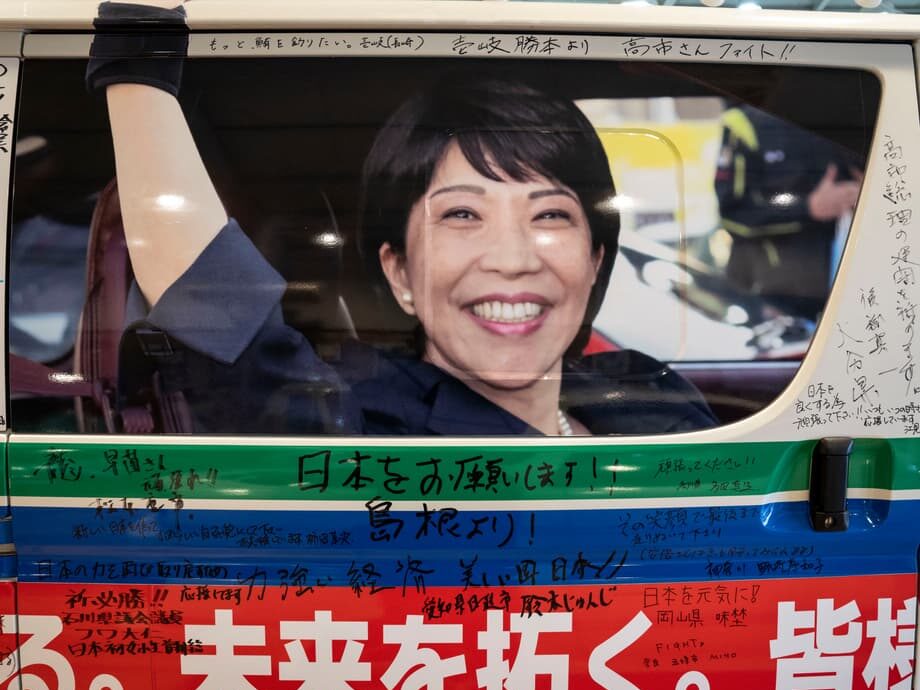
Black leather handbags selling out within hours, viral social media videos accumulating more than 100 million views, and convenience store snacks becoming objects of national fascination. These are not typical markers of a political campaign in Japan, a nation where elections have historically been subdued affairs dominated by established party structures and older voters. Yet these phenomena define the current landscape as Prime Minister Sanae Takaichi, the countrys first female leader, rides a wave of youth driven enthusiasm toward what opinion polls indicate will be a decisive victory in Sundays lower house elections.
The craze, dubbed Sanamania or Sanakatsu by supporters, has transformed the 64 year old conservative into an unlikely cultural icon. Her $900 black leather handbag has sold out nationwide. The pink pen she uses to take notes in parliament has become a social media sensation. Young voters dissect her train journey snacks and wardrobe choices with the fervor typically reserved for entertainment figures rather than political leaders. This personality driven momentum has propelled Takaichis personal approval ratings to 57 percent, according to an Asahi Shimbun survey released this week, far outpacing support for her Liberal Democratic Party (LDP), which remains stuck near 30 percent.
The contrast between leader and party is stark. Where the LDP appeared to be approaching electoral collapse just eight months ago, having lost its parliamentary majority for the second time in 15 months amid a slush fund scandal and factional infighting, Takaichi has engineered a remarkable reversal. When she assumed office in October 2025, replacing the embattled Shigeru Ishiba, many observers expected a brief tenure. Instead, she has galvanized a moribund political machine through sheer personal appeal.
Mana Suzuki, a 20 year old Tokyo resident, described the algorithmic reach of the phenomenon.
Even though I am not that much into politics, pro-Takaichi videos are recommended to me a lot on YouTube. And there is almost no criticism of her in the comments section.
Unlike her predecessors, Takaichi shuns late night drinking sessions and expensive restaurants, preferring home comforts and early morning strategy meetings. She cites Margaret Thatcher, the daughter of a shopkeeper, as her inspiration, drawing parallels to her own modest upbringing as the child of a police officer mother and car company employee father. This commoner narrative, combined with her decisive speaking style and energetic campaign presence, appears to have struck a chord with a generation previously disengaged from politics.
The Gamble on Personal Popularity
When Takaichi dissolved parliament last month and called a snap election for February 8, she framed the vote as a personal referendum. I am putting my future as prime minister on this election, she declared on January 19, explicitly asking voters to decide whether they could entrust the management of the country to her. The move represented a calculated risk: converting her high personal approval into parliamentary seats for a party still tainted by scandal and economic anxieties.
Recent polling suggests the gamble is paying off handsomely. Surveys by both the Asahi Shimbun and Nikkei indicate that the LDP and its coalition partner, the Japan Innovation Party (Ishin), are likely to secure more than 300 of the 465 seats in the lower house. This would represent a dramatic increase from their current combined strength of 232 seats and would grant them a two thirds supermajority. Such a margin would allow the ruling coalition to override the upper house, where it currently lacks a majority, by repassing legislation rejected by that chamber.
Achieving 300 seats would mark a stunning recovery from the July 2025 upper house defeat and the October 2024 lower house setback that forced then Prime Minister Ishiba to resign. Analysts attribute the turnaround almost entirely to Takaichis individual appeal rather than any fundamental shift in the LDPs standing or Japans economic conditions.
Kristi Govella, Japan Chair at the Center for Strategic and International Studies, attributed the potential victory solely to Takaichis personal appeal.
If the LDP manages to gain a clear majority in this election, it will be entirely attributable to Takaichis personal popularity. Little else has changed since July when the LDP was drubbed at the polls.
The opposition Centrist Reform Alliance, formed from the merger of the Constitutional Democratic Party and Komeito, appears headed for catastrophic losses. The Asahi poll suggests the alliance could shed half of its current 167 seats, a collapse that would leave it unable to mount effective resistance to Takaichis legislative agenda.
Economic Promises and Market Anxieties
Takaichis campaign has centered on an expansionary fiscal agenda designed to alleviate the cost of living pressures affecting Japanese households. She has pledged to suspend the 8 percent consumption tax on food sales for two years, a proposal that sparked a broad market rout last month as investors worried about fiscal discipline. Japans public debt already exceeds twice the size of its economy, the highest ratio among developed nations.
The prime minister has also embraced a weaker yen, at least partially, arguing that currency depreciation benefits export industries and boosts the value of Japans foreign reserves. People say the weak yen is bad right now, but for export industries, it is a major opportunity, Takaichi said during the campaign, adding that the currencys decline would increase the value of Japans substantial overseas holdings.
These comments caused the yen to wobble and prompted a clarification from government spokespeople, who insisted she was stressing the need for economic resilience rather than actively seeking depreciation. Nevertheless, super long Japanese government bond yields have risen to record highs as traders price in the possibility of aggressive fiscal stimulus.
Ryutaro Kono, chief Japan economist at BNP Paribas, warned about the interaction of fiscal stimulus with current economic conditions.
Implementing expansionary fiscal policy at a time the economy is at near full employment would heighten inflationary pressure and weaken the yen. The Bank of Japan may be forced to accelerate the pace of interest rate hikes to combat the weak yen and inflationary pressures from expansionary fiscal policy.
Other analysts suggest that a decisive LDP victory might actually prevent extreme fiscal measures by reducing the need to compete with opposition parties offering even more ambitious tax cuts. The LDPs campaign pledge explicitly commits to reducing Japans debt to GDP ratio through expenditure and revenue reforms, according to Takeshi Yamaguchi, chief Japan economist at Morgan Stanley MUFG Securities.
Defense Spending and Constitutional Goals
Beyond economic management, Takaichi has outlined an ambitious security agenda. The LDP seeks to accelerate Japans defense buildup, targeting constitutional revision for the first time since the postwar pacifist constitution took effect in 1947. The partys campaign pledges include strengthening intelligence operations and revising Article 9, which renounces war as a sovereign right.
Japan has already reached its target of spending 2 percent of GDP on defense in fiscal 2025, two years ahead of schedule. With a supermajority, Takaichi could push spending toward 3.5 percent or higher, responding to U.S. pressure for allies to increase military outlays. The recently released U.S. National Defense Strategy urged partners to aim for 5 percent of GDP, though Japanese analysts suggest such a level would be fiscally impossible to reach immediately.
Masahiro Iwasaki, political science professor at Nihon University, described the potential shift in security policy.
If the LDP wins the election by a landslide, Prime Minister Takaichi may harden her already hawkish stance on security issues. What Takaichi is trying to achieve is clearly different from her predecessors and even more aggressive than the late Prime Minister Shinzo Abes proactive foreign policy.
International Relations: The Trump Factor and China Tensions
The election has drawn unusual international attention, particularly from the United States. President Donald Trump offered a Complete and Total Endorsement of Takaichi on February 6, announcing plans to host her at the White House on March 19. Such overt backing of a foreign candidate is rare for American presidents, though Trump has previously endorsed leaders including Argentinas Javier Milei and Hungarys Viktor Orban.
Prime Minister Takaichi is someone who deserves powerful recognition for the job she and her Coalition are doing, Trump wrote on Truth Social, praising her as a strong, powerful, and wise Leader, and one that truly loves her Country. The endorsement follows Takaichis diplomatic outreach, which included nominating Trump for the Nobel Peace Prize and presenting him with golf memorabilia during his visit to Japan.
However, Takaichis hawkish security posture has strained relations with Beijing. In November, she suggested Japan could intervene militarily if China sought to take Taiwan by force, remarks that sparked an unresolved diplomatic row. China claims Taiwan as part of its territory and has not ruled out forcible annexation. While observers expect Takaichi to maintain a stoic stance on China without escalating tensions further, Beijing is unlikely to engage her administration warmly in the near term.
The Taiwan comments reflect Takaichis broader rejection of postwar constraints on Japanese military action. She opposes allowing female members of the imperial family to reign as empresses and insists married couples should share the same surname, positions that align with her ultraconservative social views. Despite these stances, which might seem at odds with progressive youth values, her personal charisma appears to have transcended traditional ideological divides.
The Collapse of Opposition Coordination
While Takaichis popularity explains much of the LDPs resurgence, the disarray among opposition forces has compounded her advantages. The Centrist Reform Alliance, formed by merging the Constitutional Democratic Party with Komeito after the latter ended its 26 year partnership with the LDP, has failed to generate momentum. Polls suggest the alliance could lose more than half its 167 seats.
Komeitos defection was initially seen as a blow to the LDP, given the smaller partys historical role in mobilizing voters, particularly among religious communities affiliated with the lay Buddhist organization Soka Gakkai. However, the merger appears to have confused traditional support bases rather than creating a cohesive alternative. Meanwhile, smaller parties including Sanseito and Team Mirai are projected to make gains, fragmenting the anti LDP vote further.
The oppositions struggles also reflect Takaichis successful framing of the election as a choice between her leadership and chaos. By dissolving parliament and forcing an early vote in midwinter, she prevented opposition parties from fully consolidating their organizational structures. Many voters remain undecided, and analysts note that younger supporters of Takaichi, while enthusiastic, have historically low turnout rates. Yet even accounting for these uncertainties, the scale of the projected LDP victory suggests a fundamental realignment in Japanese politics.
Legislative Control and Constitutional Change
If the polls prove accurate and the ruling coalition secures 300 or more seats, Takaichi will gain unprecedented legislative leverage. A two thirds majority in the lower house enables the government to override upper house vetoes, effectively controlling the legislative process even without majority control of both chambers. This power extends to constitutional amendments, which require approval by two thirds of both houses followed by a national referendum.
Such a mandate would allow Takaichi to pursue her proactive fiscal policies without parliamentary obstruction, potentially accelerating defense spending increases and tax reforms. It would also position her to meet Trump in March from a position of strength, negotiating trade and security arrangements with the backing of a decisive electoral mandate.
Norio Toyoshima, a political analyst, explained the strategic importance of a strong mandate before the U.S. meeting.
Trump wants to make sure he gets what is promised, so he prefers making deals with strong and stable governments.
During his first presidency, Trump developed a rapport with Shinzo Abe, Takaichis mentor and Japans longest serving prime minister. Takaichi hopes to replicate that relationship while managing the complex triangle of U.S. Japan China relations.
Yet risks remain. The consumption tax suspension, while popular, could strain Japans already fragile public finances. The Bank of Japan faces the delicate task of managing inflationary pressures while supporting economic growth. And Takaichis hawkish security policies, particularly regarding Taiwan, could provoke regional instability even as they satisfy Washingtons expectations for greater Japanese military contribution.
As voters prepare to brave freezing temperatures across the archipelago this Sunday, they confront a choice that extends beyond immediate economic relief. The election represents a referendum on whether Japan should embrace Takaichis vision of a more assertive, fiscally stimulative, and militarily capable nation, breaking from the postwar constraints that have defined its politics for seven decades.
Key Points
- Prime Minister Sanae Takaichi has generated a youth driven cultural phenomenon called Sanamania, propelling her personal approval to 57 percent despite her partys weaker standing.
- Opinion polls project the LDP and coalition partner Japan Innovation Party will win more than 300 seats in Sundays election, securing a two thirds supermajority in the 465 seat lower house.
- A supermajority would allow the ruling coalition to override upper house vetoes and potentially advance constitutional revisions, including changes to Article 9s pacifist provisions.
- Takaichi campaigns on expansionary fiscal policy, including a two year suspension of the 8 percent consumption tax on food, though this has sparked concerns about Japans debt to GDP ratio exceeding 200 percent.
- President Donald Trump has publicly endorsed Takaichi and invited her to the White House on March 19, an unusual intervention in a foreign election.
- The opposition Centrist Reform Alliance, formed from the merger of the Constitutional Democratic Party and Komeito, appears headed for heavy losses, potentially shedding half its current 167 seats.
- Takaichis hawkish security stance includes suggesting Japan could intervene if China attacks Taiwan, straining Beijing relations while aligning with U.S. pressure for increased defense spending.