From National Day Promise to Strategic Scrutiny
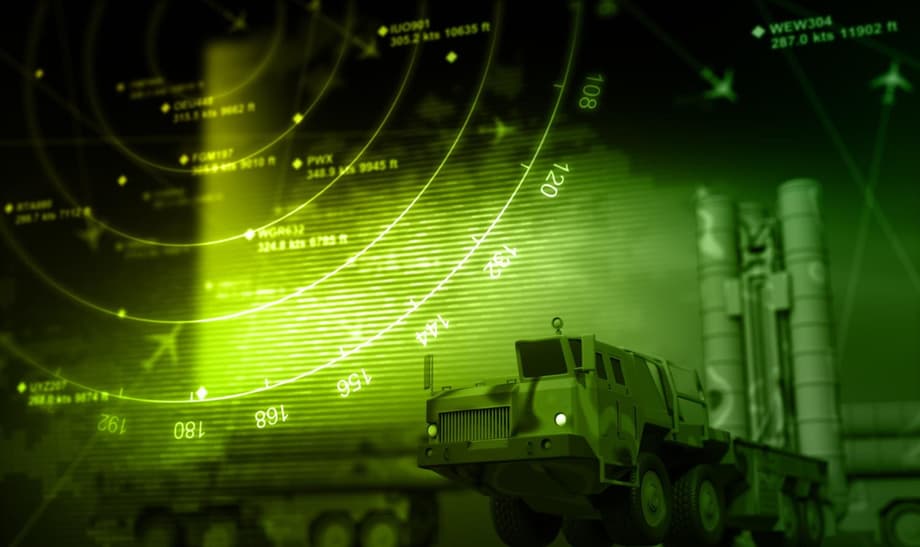
In October 2025, Taiwanese President William Lai unveiled an ambitious plan to construct the Taiwan Dome, or T-Dome, a multi-layered air defense system designed to protect the island against escalating threats from the People’s Liberation Army. Announced during Taiwan’s National Day celebrations, the proposal includes a special defense budget of NT$1.25 trillion (approximately US$40 billion) spread over eight years, with the goal of raising defense spending to 5 percent of GDP by 2030. The initiative represents Taipei’s most significant attempt to date at creating a comprehensive missile shield, drawing inspiration from Israel’s Iron Dome and the United States’ proposed Golden Dome. However, military analysts and regional experts have rapidly identified significant vulnerabilities in the concept, questioning whether the system can withstand the specific nature of a potential Chinese military campaign.
The T-Dome proposal emerges amid deteriorating cross-Strait relations and accelerating PLA modernization. Beijing has explicitly refused to renounce the use of military force to achieve reunification, with Chinese military capabilities expanding to include advanced stealth aircraft, aircraft carriers, and an extensive missile arsenal. President Lai’s vision centers on integrating artificial intelligence with existing air defense architectures to create what Defense Minister Wellington Koo described as a “sensor-to-shooter” network, linking radar detection systems directly to missile batteries for faster response times.
Chinese officials have reacted sharply to the announcement. Foreign Ministry spokesperson Guo Jiakun characterized President Lai’s defense initiatives as dangerously provocative.
He peddles the separatist fallacy of Taiwan independence. This once again exposes his stubborn nature as a troublemaker, creator of danger and a war-maker.
Despite the technological ambition, critics argue that the T-Dome concept misunderstands the fundamental differences between Taiwan’s strategic environment and the conflicts that inspired it. While Israel’s Iron Dome has achieved recognition for intercepting short-range rockets, the threat landscape facing Taiwan involves vastly different scales, technologies, and tactical doctrines. The PLA operates one of the world’s largest and most advanced militaries, with capabilities extending far beyond the non-state actors that Israeli systems typically confront.
Why the Iron Dome Comparison Misleads
The T-Dome’s conceptual framing as an analogue to Israel’s Iron Dome has drawn particular skepticism from defense specialists. The Israel Defense Forces operate within a sophisticated layered air and missile defense architecture where the Iron Dome serves merely as one component among several integrated systems. The Iron Dome specifically targets short-range projectiles employed by non-state armed groups such as Hamas and Hezbollah, utilizing Tamir interceptor missiles costing approximately US$50,000 each. For longer-range threats, Israel relies on the Arrow 2 and Arrow 3 systems, while David’s Sling bridges the gap to engage short-range ballistic and cruise missiles.
Even this advanced multi-layered network has demonstrated limitations under sustained pressure. During Iranian attacks in 2025, the IDF reported interception rates of 86 percent, notably lower than the usual 90-plus percent success rate, when facing saturation attacks involving large quantities of drones alongside cruise and ballistic missiles. In April 2024, Israel required assistance from the United States, United Kingdom, France, and Jordan to counter intense Iranian strikes, highlighting how even technologically superior networks strain under massed attacks.
Mainland defense publications have been equally critical of Taiwan’s proposal. An analysis published in Ordnance Industry Science Technology, a Chinese military magazine, concluded that the T-Dome exhibits fundamental structural weaknesses against PLA capabilities. The analysis suggests Taiwan’s system would likely center on existing assets including US-made Patriot PAC-2 and PAC-3 systems, indigenous Tien Kung II through IV interceptors, and National Advanced Surface-to-Air Missile Systems (NASAMS), supplemented by Avenger systems and Stinger missiles for low-altitude defense. While this represents a technically diverse portfolio, the report questions whether integration can achieve the seamless coordination necessary to counter a coordinated PLA campaign.
The PLA’s Multi-Domain Saturation Challenge
The fundamental threat facing Taiwan differs qualitatively from Israel’s security environment. The PLA possesses the capacity to conduct combined missile and drone salvos at scales that would overwhelm point-defense systems. Military intelligence suggests that any opening phase of a conflict would likely involve decoy deployments designed to saturate air defense assets before transitioning to precision strikes against specific targets. Beyond the Dongfeng series ballistic missiles, China maintains extensive rocket artillery capabilities including Weishi multiple rocket launcher systems capable of delivering massive volumes of fire against Taiwanese positions.
Contemporary PLA doctrine emphasizes “intelligentization,” the integration of artificial intelligence into distributed sensing and rapid decision-making processes. This evolution extends into autonomous warfare systems specifically designed for urban combat scenarios. Research from PLA-linked institutions indicates development of lethal autonomous drone swarms capable of operating in communication-degraded environments through self-organizing algorithms. These systems can execute “find and kill” missions against key leaders while maintaining operations even when jammed or disconnected from command networks.
The implications for missile defense are stark. Traditional interceptors designed for ballistic trajectories face new complexities when confronting autonomous swarms that can dynamically reprioritize targets without human intervention. Furthermore, the PLA’s cyber and electronic warfare capabilities present existential risks to the integrated command networks required for T-Dome functionality. China’s military AI investments, projected between US$84 billion and US$98 billion in 2025, suggest sophisticated capabilities to target the algorithmic core of Taiwan’s proposed defense network.
Geographic constraints compound these challenges. Taiwan’s status as an island creates resupply difficulties during blockade scenarios. Once interceptor stockpiles are depleted, replenishment becomes nearly impossible under contested conditions. Analysis from the Foundation for the Defense of Democracies suggests that a PRC blockade would deplete Taiwan’s liquefied natural gas reserves within eleven days, while electricity production would drop to 20 percent capacity by the eighth week, crippling the economic foundation necessary to sustain prolonged defense operations.
Budget Realities and Technical Hurdles
Financial constraints present perhaps the most immediate obstacle to T-Dome realization. Israel’s annual defense budget stands at US$33.7 billion, while Taiwan’s current allocation reaches only US$18.9 billion. The cost differentials between interceptor types reveal the economic challenges of sustained defense. While Iron Dome’s Tamir missiles cost approximately US$50,000 each, the Stunner missiles employed by David’s Sling run roughly US$1 million per unit. During the April 2024 Iranian attack alone, Israel expended an estimated US$1 billion in defensive munitions over a relatively short engagement period.
Taiwan’s proposed NT$1.25 trillion special budget, while substantial, must cover not merely the T-Dome but also broader asymmetric capabilities including drone production, mobile missile systems, and naval mine inventories. President Lai’s administration aims to increase drone production capacity to 15,000 units monthly by 2028, requiring significant supply chain reorientation away from Chinese components. The financial burden extends beyond procurement to encompass maintenance, personnel training, and the continuous software updates necessary to counter evolving PLA capabilities.
Technical integration poses additional complications. Achieving genuine interoperability between diverse systems, radar arrays, and command infrastructure demands extended testing periods. Israel required years of refinement before achieving full integration of its comparable architectures. For Taiwan, questions persist regarding whether military personnel possess the requisite capabilities to operate these highly complex integrated systems under combat conditions, particularly when facing multi-domain attacks simultaneously targeting air, maritime, cyber, and space domains.
Political Gridlock and Domestic Opposition
Domestic politics further complicate implementation. President Lai’s Democratic Progressive Party holds only 51 of the 113 seats in the Legislative Yuan, creating a hung parliament where opposition parties can block budgetary measures. Legislators from opposition parties have argued that the T-Dome proposal lacks adequate specificity regarding technical requirements and operational parameters. Critics warn that disproportionate spending on the missile shield could necessitate reductions in education, social welfare, and other critical government functions.
Recall campaigns targeting 31 Kuomintang legislators are currently underway, with the DPP forecasting potential seat flips that could alter legislative dynamics. However, until such political realignments occur, the special defense budget remains mired in procedural delays. This legislative deadlock occurs against a backdrop of escalating PLA exercises around the island, including recent carrier operations by the Liaoning aircraft carrier in the East China Sea and continued illegal border crossing incidents that Taiwan’s Coast Guard Administration describes as potential cognitive warfare operations designed to undermine confidence in coastal defenses.
The Coast Guard has requested additional funding for AI-enhanced surveillance networks to detect small craft, noting that rubber dinghies carrying potential infiltrators are almost impossible to detect by conventional radar. These incidents, coinciding with politically significant dates such as the anniversary of President Lai’s inauguration, suggest coordinated efforts to test Taiwan’s defensive readiness while legislative debates over funding continue.
Rethinking Defense: Asymmetric Alternatives
Defense specialists increasingly argue that Taiwan should prioritize survivability, dispersion, and sustained resistance over technologically ambitious standalone systems. This approach, often termed the “porcupine strategy,” emphasizes making invasion prohibitively costly rather than attempting to match China’s military scale. Former Taiwanese Chief of General Staff Lee Hsi-min characterized this doctrine as utilizing “a large number of small things,” cheap mobile systems that enhance survivability while imposing high costs on adversary assets.
The 2025 National Defense Report outlines priorities consistent with this philosophy, emphasizing mobile anti-ship and anti-air batteries alongside massed drone procurement. Wellington Koo has indicated that Taiwan will eliminate outdated units and replace them with drone units in 2026, transforming tank and artillery battalions into unmanned systems formations. This shift acknowledges that static, high-value targets such as major air defense batteries remain vulnerable to PLA first strikes, whereas distributed, mobile forces can absorb attacks and maintain combat effectiveness.
Strategic alternatives also emphasize civil defense integration. The T-Dome proposal includes hardened shelters and evacuation protocols, reflecting recognition that Taiwan’s dense urban populations and concentrated infrastructure require protection beyond mere missile interception. The “Whole-of-Society Defense” concept distributes resilience across civilian infrastructure, ensuring continuity of governance, communication, and medical services under sustained attack. This societal fortification may prove more decisive than technical interception rates in determining Taiwan’s ability to endure prolonged conflict.
A wiser approach, according to regional analysts, would emphasize integration, sustainability, and cost-effective capabilities that complicate PLA operations across multiple domains while ensuring political consensus and institutional readiness to endure a prolonged high-intensity conflict. Rather than investing in expensive, technically ambitious systems as standalone solutions, policy efforts should focus on capabilities that can survive initial strikes and continue operating under degraded conditions.
Regional Security Implications
The T-Dome initiative inevitably shapes regional security dynamics through the classic security dilemma, where defensive enhancements by one party prompt offensive countermeasures by another. Beijing has already criticized the US Golden Dome project while simultaneously expanding its own space-based military capabilities. President Xi Jinping has specifically warned that American missile defense initiatives pose serious strategic challenges, suggesting that China interprets Taiwanese defensive upgrades as part of a broader containment architecture.
Militarily, the PLA may accelerate development of hypersonic glide vehicles, electronic warfare systems, and anti-radiation missiles specifically designed to penetrate layered defenses. Diplomatically, Beijing intensifies pressure on regional partners, particularly those supporting Taiwan’s defensive initiatives, while framing Taipei’s preparations as provocations orchestrated by foreign influence. This dynamic risks accelerating arms competition across the Taiwan Strait, potentially undermining the very stability the T-Dome seeks to preserve.
Washington’s perspective complicates these calculations. Bipartisan congressional support for Taiwan’s defense manifests in legislation such as the PORCUPINE Act and the Taiwan Assurance Implementation Act. Yet American strategic planning underscores the complexity of defending Taiwan against a determined PLA campaign. The T-Dome represents Taipei’s attempt to demonstrate self-reliance, but its success depends ultimately on integration with broader regional defense architectures and the deterrent effect of potential US intervention.
Quick Facts
- Taiwan’s T-Dome proposal, announced October 2025, envisions an NT$1.25 trillion (US$40 billion) multi-layered air defense system inspired by Israel’s Iron Dome.
- The system aims to integrate Patriot missiles, indigenous Tien Kung interceptors, NASAMS, and AI-enhanced command networks to counter aircraft, drones, and missiles.
- Chinese military analysis identifies “critical vulnerabilities” in the proposed architecture, particularly against saturation attacks involving massive drone and missile salvos.
- Israel’s defense budget of US$33.7 billion significantly exceeds Taiwan’s US$18.9 billion, while a single major interception operation can cost approximately US$1 billion.
- President Lai’s Democratic Progressive Party holds only 51 of 113 legislative seats, creating gridlock over the special defense budget and delaying implementation.
- Defense experts recommend prioritizing asymmetric “porcupine strategy” capabilities, including mobile missile systems and massed drone units, over expensive integrated missile shields.
- The PLA is developing autonomous drone swarms and AI-enabled targeting specifically designed to overwhelm traditional air defense systems through saturation tactics.