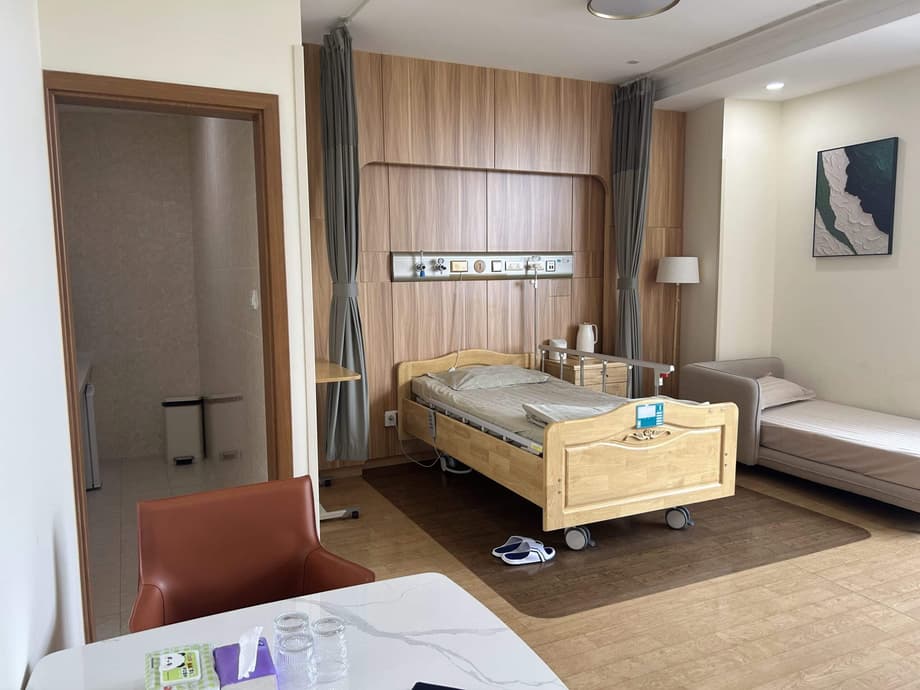
The Viral Diagnosis That Sparked a Movement
Amie, a British content creator, faced persistent stomach pain and an indefinite wait for specialist care within the United Kingdom’s National Health Service. Rather than remaining on a months-long waiting list, she boarded a flight to Beijing, where she had previously resided. Within thirteen days, she received a complete diagnosis of gastric ulcer, underwent treatment, and paid approximately 2,800 yuan, or roughly $400. Including her airfare, the total expense remained below what she would have paid at a private hospital in Britain. Her video testimonial, shared across Chinese social media platforms, ignited a firestorm of similar accounts from international visitors who discovered that China’s healthcare system could deliver speed and affordability without sacrificing clinical standards.
This single narrative crystallized a growing phenomenon that industry observers now call “reverse medical tourism.” For decades, affluent Chinese patients traveled to Western nations for advanced treatments unavailable at home. Today, the directional flow is shifting. Foreign patients from the United Kingdom, the United States, Southeast Asia, and the Middle East are increasingly booking appointments at Chinese hospitals, attracted by costs that often run 30% to 70% lower than those in Western Europe or North America, combined with waiting periods measured in hours rather than months.
From Social Media Buzz to Hard Data
The trend has evolved from isolated viral moments into measurable market movement. Short form video platforms now overflow with content tagged “medical tourism,” showing foreign visitors navigating the gleaming corridors of Beijing and Shanghai hospitals. These travelers document same-day consultations, $19 X-rays, and $15 dental cleanings, creating a digital archive of healthcare experiences that function as both travelogue and consumer guide.
Official statistics validate the social media momentum. In 2024, major hospitals throughout China treated approximately 1.28 million international patients, representing a 73.6% increase compared with figures from three years prior, according to the National Health Commission. Shanghai alone recorded nearly 270,000 visits by foreign patients across thirteen designated hospitals, marking a 15% year-on-year rise. Shenzhen registered approximately 770,000 medical service visits by overseas patients, including roughly 640,000 from Hong Kong and Macao, with the remainder coming from the United States, Canada, and Japan.
Solving Healthcare’s Impossible Triangle
The appeal rests upon what medical economists describe as healthcare’s “impossible triangle”: the theoretical inability to simultaneously achieve high quality, low cost, and rapid accessibility. Wang Jian’an, an academician with the Chinese Academy of Sciences, asserts that China has found an equilibrium within this trilemma.
China has found a balance in the global healthcare impossible triangle of high quality, affordability, and short wait times.
The cost differentials are stark. A comprehensive cardiac examination costing approximately $75 in China might generate bills between $10,000 and $20,000 for uninsured patients in the United States. Emergency care involving ambulance transport, blood analysis, and treatment frequently totals under $150 in major Chinese cities, whereas a single ambulance ride in some American municipalities can cost tens of thousands of dollars. These disparities create powerful appeal for middle-income patients from nations where high out-of-pocket expenses or lengthy queues for specialist appointments create barriers to timely care.
Clinical outcomes at top tier facilities match or exceed international benchmarks. Oscar Chalupsky, a former captain of South Africa’s Olympic kayaking team, was diagnosed with high risk multiple myeloma six years ago. After physicians in South Africa, Portugal, and Germany declared his condition too difficult to treat, he utilized artificial intelligence tools to identify Ruijin Hospital in Shanghai as a global leader in hematology. The hospital’s team administered CAR-T cell therapy, a sophisticated treatment involving the reprogramming of a patient’s own immune cells to attack cancer.
I did not come to this Shanghai hospital to just have a try. I have high expectations for Chinese healthcare.
Chalupsky’s successful outcome illustrates a broader pattern where foreign patients now seek China specifically for complex interventions rather than routine checkups.
Hubs of Healing: Hainan and Beyond
While Beijing and Shanghai attract patients seeking specialized oncology and surgical care, the tropical island province of Hainan has emerged as a dedicated medical tourism destination. The Boao Lecheng International Medical Tourism Pilot Zone, established in 2013 and located fifteen minutes from a high speed railway station, functions as a special regulatory sandbox where international medications and medical devices gain fast track approval for clinical use before receiving broader national authorization.
This policy framework enabled Alexander, a Greek engineer residing in Hainan, to access Vorasidenib, an experimental drug for glioma treatment recently approved in the United States but unavailable in his home country. He became one of the first patients in Asia to receive this therapy.
I was afraid of the side effects of radiation and chemotherapy. However, I read about this new drug and felt it could give me a better chance. I am lucky China made it available so quickly. From the moment we arrived, everything was smooth. The staff were kind, the equipment was modern, and it felt hopeful. Most importantly, my condition has remained stable.
The zone has collaborated with over 180 pharmaceutical companies from more than twenty countries, introducing more than 470 drugs and devices not yet approved elsewhere in China. The area now welcomes patients from Central Asia, Southeast Asia, and North America, with Indonesian medical tourism groups reporting per capita spending exceeding 12,000 yuan ($1,650) for comprehensive packages including checkups, rehabilitation, and cosmetic care.
The Hainan model integrates traditional Chinese medicine with advanced technology. Visitors receive acupuncture, cupping therapy, and herbal consultations alongside modern screening. Indonesian vlogger Novi Basuki described the facilities as feeling more like scenic attractions than conventional hospitals, while Russian patient Lina Panovkina praised the professional integration of traditional and modern medical approaches.
Elsewhere, foreign investment is entering the market. Perennial Holdings, a Singapore hospital operator, opened China’s first fully foreign-owned tertiary general hospital in Tianjin earlier this year. The $139 million facility aims to derive 30% of its first-year revenue from international patients traveling from Russia, the Middle East, and Southeast Asia, signaling confidence that China can compete with established regional destinations such as Thailand, Singapore, and Japan.
Navigating Language Barriers and Legal Risks
Despite the growth, medical tourism in China presents significant challenges that require careful navigation. Language barriers represent the most immediate obstacle. While international departments at major hospitals typically employ English-speaking staff, general hospital settings operate primarily in Mandarin. Miscommunication can lead to reduced satisfaction or potential errors in diagnosis and medication management. Patients are advised to utilize professional medical translators or Chinese-speaking companions for complex discussions, and to rely upon translation applications when necessary.
Quality standards vary substantially between institutions. Although top tier hospitals hold Joint Commission International accreditation and maintain protocols comparable to Western facilities, lesser-known clinics may lack equivalent oversight. The legal landscape presents additional complications. China’s civil code provides frameworks for medical malpractice, but litigation across international jurisdictions involves complex questions of applicable law and enforcement of judgments. Patients should secure comprehensive private health insurance before travel, as many Chinese public hospitals require full upfront payment in cash and do not recognize all foreign insurance plans.
Ethical concerns also surround experimental treatments. China leads in areas such as stem cell therapy, but some clinics market unproven interventions to desperate patients. These stem cell tourism offerings may lack scientific validation and carry risks of complications without adequate follow-up care. Patients must verify regulatory approval and scientific validation for any cutting-edge therapy. Additionally, travelers should install virtual private networks before arrival if they require access to international websites or communication platforms restricted within China’s internet ecosystem.
Visa Policies and Digital Infrastructure
Government policy is actively removing friction from the medical tourism pathway. In January 2026, the United Kingdom and China announced a 30-day visa-free arrangement for British citizens, eliminating a significant bureaucratic barrier for patients like Amie. China also offers specific “M-visas” for medical treatment, alongside 240-hour visa-free transit policies that allow patients to combine treatment with travel.
Digital infrastructure improvements are addressing practical obstacles that previously deterred visitors. New guidelines from the Cyberspace Administration of China target the bottlenecks that foreign visitors encounter when attempting to use mobile payment systems, purchase high speed rail tickets, or obtain telecommunications services. The initiative promotes multilingual interfaces for transportation applications, acceptance of international bank cards for urban rail systems, and simplified SIM card acquisition at major airports.
For medical tourists, these changes mean easier navigation between appointments. Mobile payment platforms such as WeChat Pay and Alipay now accommodate international credit cards more smoothly. Hospital administrators view international services as a supplemental revenue stream, operating independently from public insurance systems and capped at no more than 10% of total service capacity to ensure domestic patients retain priority access.
The Bottom Line
The convergence of advanced medical technology, cost efficiency, and streamlined visa policies is positioning China as an increasingly significant player in the global medical tourism market. While challenges regarding language, legal recourse, and quality consistency remain, the sector is evolving from a niche curiosity into a structured component of international healthcare options.
- A British patient’s viral video documenting $400 ulcer treatment in Beijing catalyzed global interest in Chinese healthcare alternatives.
- China treated 1.28 million international patients in 2024, a 73.6% increase over three years, with major growth in Shanghai and Shenzhen.
- Medical costs in China typically range 30% to 70% lower than in the United States or Western Europe, with shorter waiting times for specialist care.
- Hainan’s Boao Lecheng Pilot Zone offers fast track access to experimental drugs and devices unavailable elsewhere in China, combining modern medicine with traditional Chinese therapies.
- Singapore’s Perennial Holdings opened China’s first fully foreign-owned hospital in Tianjin, targeting 30% international patient revenue.
- New visa-free arrangements for British citizens and 240-hour transit policies facilitate medical travel, while digital infrastructure improvements ease payment and transportation logistics.
- Patients must navigate language barriers, verify hospital accreditation, secure comprehensive insurance, and exercise caution regarding experimental treatments.