The Youth Pivot
Singapore is sharpening its focus on a specific demographic that promises to shape the future of global tourism. The Singapore Tourism Board (STB) has launched a comprehensive campaign titled “We Don’t Wait for Fun” that specifically targets travellers between the ages of 25 and 39. This initiative represents a strategic bet on a generation that combines immediate spending power with decades of future travel potential.
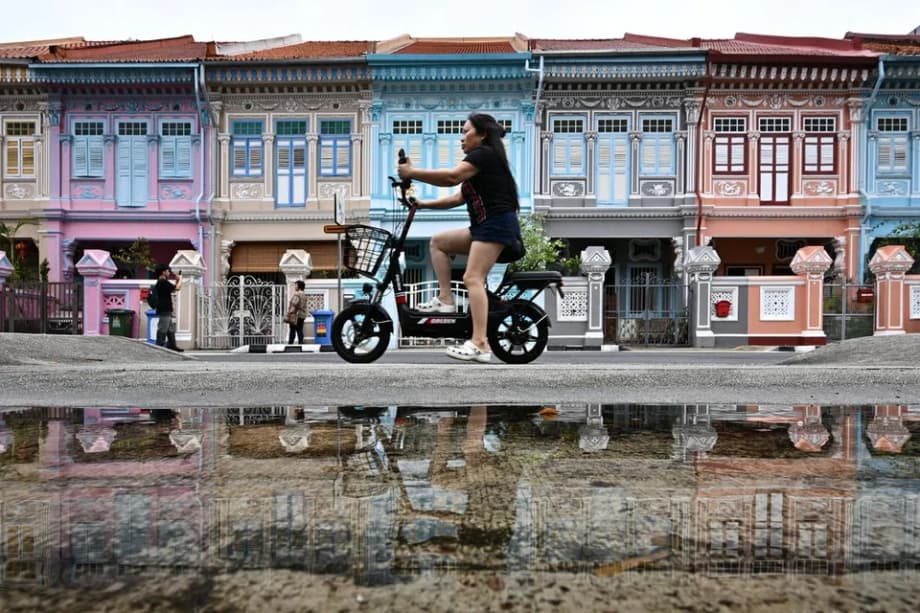
The campaign will roll out across nine key markets: China, Indonesia, India, Japan, Malaysia, South Korea, the Philippines, Thailand and Vietnam. Rather than simply promoting familiar landmarks like Marina Bay Sands or Gardens by the Bay, the strategy deliberately spotlights lesser-known destinations. Hidden gems such as New Bahru, a creative lifestyle hub housed in a converted heritage school building, and Joo Chiat, a district celebrated for its Peranakan heritage and local charm, feature prominently in the marketing materials.
STB chief executive Melissa Ow explained the rationale behind this demographic focus with concrete data. Travellers aged 25 to 34 and 35 to 44 together accounted for more than 40 per cent of international arrivals to Singapore in 2025. This translates to approximately seven million visitors out of a total of 16.9 million. “We’re focused on deepening our appeal within this market and converting more of these travellers to choosing Singapore as their preferred destination,” Ow told The Straits Times.
The campaign leverages a multi-platform approach that reflects how young consumers actually engage with content. Creative assets appear across digital platforms alongside content from key opinion leaders and content creators. Branded entertainment partnerships, building on previous collaborations with global pop star Lady Gaga and Chinese singer-dancer Xin Liu, form a core component of the strategy. STB is also working with major platforms including Skyscanner, Grab and Spotify to reach early-career travellers in digital spaces where they are most active.
Why This Demographic Matters
Industry experts view this focus on young professionals as a calculated long-term investment. Benjamin Cassim, senior lecturer for lifestyle and consumer experience at Temasek Polytechnic’s School of Business, noted that these travellers will likely retain both the financial and physical capacity to travel over the next 20 to 30 years. “This makes it timely and strategic to capture their attention now, and to build positive brand equity and loyalty by curating meaningful, experience-led engagements over the course of the current decade,” he said.
Associate Professor Lau Kong Cheen, who heads the marketing programme at the Singapore University of Social Sciences, characterized this age segment as being driven by the novelty of experience. “This makes cultural, gastronomical and historical experiences attractive to them,” he explained. “This is why districts like Joo Chiat, with their local and unique charms, fit well into the factors that excite this segment.”
This targeting aligns with STB’s broader segmentation strategy, which identifies five high-yield traveller categories: Active Silvers, Early Careers, Established Careers, Families with Young Kids, and Business Travellers. The board has developed data-driven audience insights that reveal 10 distinct traveller portraits globally, based on unique interests, motivations and behaviours. This granular understanding allows STB to tailor content delivery across various platforms to optimise campaign effectiveness.
Hidden Gems and Local Experiences
The emphasis on unconventional attractions represents a shift from traditional tourism promotion. Beyond New Bahru and Joo Chiat, STB’s partnerships highlight numerous off-the-beaten-path experiences designed to appeal to curious young travellers. A complementary campaign with Traveloka, Southeast Asia’s leading travel platform, launched in December 2025 under the title “A World of Experiences Await,” specifically showcases these alternative offerings.
Travellers can discover Littered with Books, an independent bookstore housed in a conservation shophouse offering carefully curated selections ranging from science fiction to non-fiction. Née Vintage provides access to secondhand luxury goods in excellent condition. For those seeking creative engagement, workshops such as The Make Pleat Bag Experience by Ginlee introduce the craft of pleating and circularity, while Mr Bucket Chocolaterie on Dempsey Hill offers DIY chocolate bar making sessions where participants learn bean-to-bar processes.
Active pursuits also feature prominently. Kayaking at Punggol Waterway allows visitors to witness the harmonious blend of nature and urban life in Singapore’s residential northeast. These experiences complement the compact nature of the city-state, where efficient public transport enables visitors to move seamlessly from cultural landmarks to neighbourhood discoveries without lengthy travel times.
Terrence Voon, STB Executive Director of Southeast Asia, described the Traveloka partnership as invaluable for highlighting different sides of Singapore. “We look forward to continuing this strong collaboration to showcase a more intimate, inspiring perspective of the city, one that encourages visitors to explore Singapore in new and unexpected ways,” he said in a statement.
Tailored Strategies Across Nine Markets
While the overarching theme remains consistent, execution varies significantly across target markets. For China, STB has developed specific partnerships with Sentosa Development Corporation, Changi Airport and Mandai Wildlife Reserve. Joint campaigns with online travel agents such as Fliggy and Tuniu aim to drive direct bookings. The board has also partnered with China-based airlines to expand reach into tier-two cities, establishing new flight connections to destinations including Lhasa, Quanzhou and Zhangjiajie.
China represents a particularly significant market. STB data indicates 3.08 million visitors from the Chinese mainland arrived in 2024, marking a 126 per cent year-on-year increase that accounted for 18.7 per cent of total international arrivals. A joint whitepaper with Ctrip Group revealed that visitors born in the 1990s increased by 136 per cent compared to 2019, while those born in the 2000s saw growth exceeding 200 per cent. Andrew Phua, STB’s chief representative and executive director for Greater China, explained that the campaign encourages travellers to go beyond typical tourism offerings and embrace spontaneous discoveries.
In India, which contributed 1.21 million visitors and S$1.17 billion in spending during the first three quarters of 2025, STB marked the 60th anniversary of diplomatic relations with a year-long campaign titled “Just Between Us Friends.” This initiative involved partnerships with airlines, travel agencies and retail players. The board also entered its first memorandum of understanding with an Indian airline, IndiGo, in July 2025 to boost connectivity from non-metro cities.
Vietnam sees a different approach entirely. STB partnered with Vietnamese singer Hoang Dung for the release of his music video “Cuoi Tuan (1825)” (Weekend), which captures Singapore experiences from well-known attractions to hidden gems. Serene Ng, STB’s area director for Vietnam, noted that the artist’s influence resonates with target audiences, presenting Singapore in a fresh and unexpected light.
Record-Breaking Tourism Performance
The campaign launch coincides with robust tourism figures that provide momentum for future growth. Tourism receipts reached a record S$23.9 billion in the first three quarters of 2025, representing a 6.5 per cent increase from the same period in 2024. This performance puts the sector on track to surpass STB’s full-year forecast of S$29 billion to S$30.5 billion.
International visitor arrivals rose to 16.9 million in 2025, a 2.3 per cent increase from 2024. China led source markets with 3.1 million arrivals, followed by Indonesia (2.44 million), Malaysia (1.28 million), Australia (1.27 million) and India (1.21 million). Growth in receipts was led by sightseeing, entertainment and gaming as well as food and beverage categories, which each posted 15 per cent growth.
Several major attractions opened during 2025, contributing to these figures. Rainforest Wild and Curiosity Cove launched at Mandai Wildlife Reserve. Jurassic World: The Experience opened at Gardens by the Bay’s Cloud Forest. The Singapore Oceanarium reopened at Resorts World Sentosa with immersive marine exhibits. The culinary landscape expanded with new dining concepts from established groups such as The Lo & Behold Group and Jigger & Pony Group.
The MICE (meetings, incentives, conventions and exhibitions) sector also contributed significantly. Singapore ranked third worldwide and first in Asia-Pacific according to the International Congress and Convention Association. Major events including the Milken Institute Asia Summit and HealthTechX Asia 2025 drew substantial business traveller spending.
What’s Coming in 2026 and Beyond
STB expects international visitor arrivals in 2026 to reach between 17 million and 18 million, with tourism spending projected between S$31 billion and S$32.5 billion. Several major developments are expected to help maintain Singapore’s tourism mindshare throughout the year.
The Disney Adventure, the first Disney cruise ship featuring three exclusive new rides, will set sail from Singapore in December 2026, marking Disney Cruise Line’s first Asian home port. K-pop group BTS will bring their world tour to Singapore. The Formula 1 Singapore Grand Prix will introduce a new sprint race format. Cirque du Soleil’s Kooza will return for its only South-east Asia stop.
At Mandai Wildlife Reserve, phase two of Rainforest Wild will expand offerings. The new Science Centre will open its doors. These additions join recently opened attractions such as Bird Paradise, where visitors can see endangered species and Asian songbirds, and various immersive dining concepts.
DBS Bank senior economist Chua Han Teng noted that to power the next phase of tourism growth, STB must maintain focus on its Tourism 2040 road map, which aims for tourist receipts of between S$47 billion and S$50 billion by 2040. “A notable high-quality segment of target will be MICE visitors, who have deep wallets, spending twice as much as leisure travellers,” he said. “Cultivating a vibrant MICE sector will generate positive spillovers into other economic sectors by continuing to foster international business connections.”
Engaging Every Generation
While young professionals currently command significant attention, STB continues to engage other growth segments. Families with children are drawn to educational experiences that create lasting memories. New offerings such as Curiosity Cove, Exploria and Rainforest Wild at Mandai Wildlife Reserve, alongside the new Science Centre and Singapore Oceanarium, cater specifically to multigenerational travel.
Active silvers, comprising retirees and seniors who prioritise safety and convenience, represent another target group. Cruises offer these travellers the chance to explore multiple destinations with ease. STB will work with cruise lines to promote diverse itineraries. The cruise industry already showed strong growth in 2025, with 375 ship calls representing a 10 per cent increase, and throughput exceeding two million passengers.
For the MICE segment, STB is enhancing capabilities of local trade associations to help grow business events tourism. This includes supporting associations to build capabilities in bidding for and hosting international conferences. “We also continue to build future MICE venue capacity, while driving productivity gains through technology adoption and skills upgrading,” Ow said.
Associate Professor Lau Kong Cheen emphasized that Singapore should continue promoting its hawker culture, which was added to the UNESCO Representative List of the Intangible Cultural Heritage of Humanity in 2020. “This is an important anchor to demonstrate authenticity of Singapore’s food heritage,” he said. “The combination of heritage, international and contemporary cuisine will give our tourism sector another dimension of attraction for gastronomic tourism.”
Key Points
- Singapore Tourism Board launched the “We Don’t Wait for Fun” campaign targeting travellers aged 25 to 39 across nine markets including China, India, Indonesia and Vietnam
- The 25-39 age demographic accounted for over 40 per cent of Singapore’s 16.9 million international visitor arrivals in 2025
- Campaign spotlights hidden gems such as New Bahru and Joo Chiat rather than traditional tourist landmarks
- Singapore recorded record tourism receipts of S$23.9 billion in the first three quarters of 2025
- Major 2026 openings include Disney Cruise Line’s first Asian home port, BTS world tour, and new Science Centre
- STB projects 17 to 18 million visitor arrivals and S$31 to S$32.5 billion in tourism spending for 2026
- Complementary partnerships with platforms like Traveloka, Skyscanner and Grab target young travellers through digital-first approaches
- Market-specific strategies include music video partnerships in Vietnam, tier-two city expansion in China, and airline collaborations in India