A journey home with fewer wages and fewer options
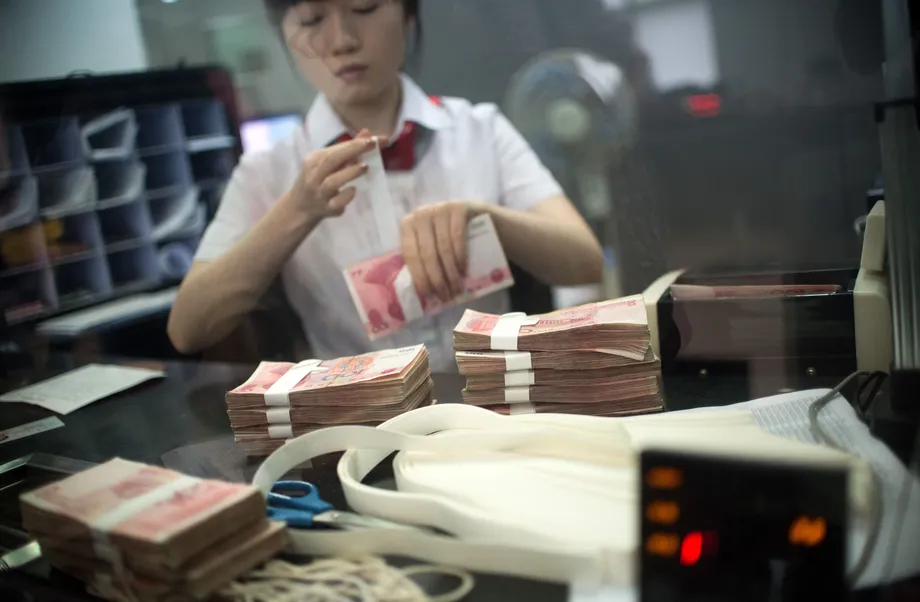
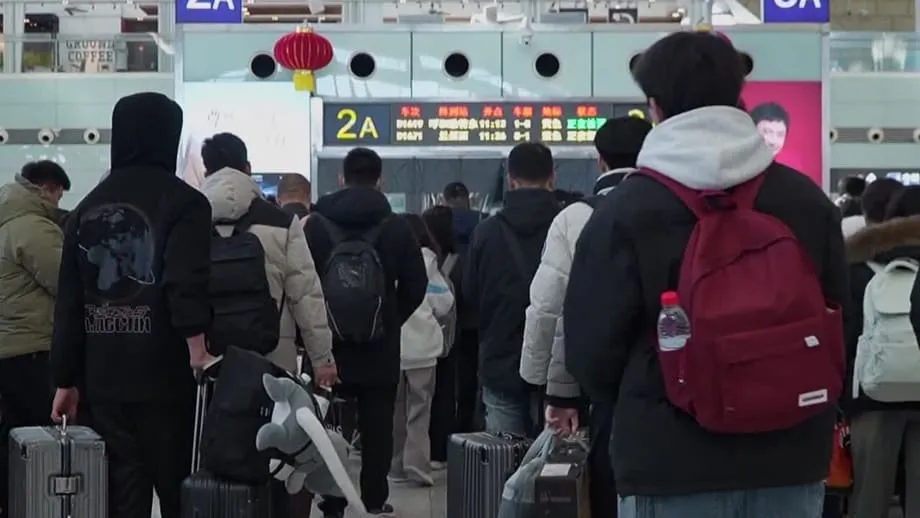
Zhao, a 60-year-old tile layer who worked in Nanjing, was heading home to Henan province a full month before the Lunar New Year holiday. Construction work had dried up, and his monthly income had fallen from 9,000 yuan to 5,000 yuan. That is a loss of 4,000 yuan a month, or about 44 percent of his former earnings.
Contents
- A journey home with fewer wages and fewer options
- Returning workers find mostly temporary jobs
- Why rural joblessness is difficult to count
- A familiar migration, with different pressures
- Building sites and factories lose their old role
- Technology success meets household caution
- Robots, graduates and the competition for work
- Beijing turns to businesses and training
- The countryside has less room to absorb the shock
- Key Points
At a railway station in eastern China, Zhao said he expected to return to Nanjing after the holiday. For millions of other rural migrants, however, the central concern is whether a city job will be waiting when the celebrations end.
China's rural affairs ministry expressed that concern in November, warning of a potentially large movement of workers back to villages without a corresponding return to urban employment. Officials said the government must "prevent a large-scale" problem of migrants "sticking around" in their home villages. Such direct language about labour market distress is unusual in official Chinese communications.
The Lunar New Year normally brings hundreds of millions of people onto trains, buses and planes in the world's largest annual human migration. Factory workers and construction crews return to their families with savings and gifts. As of February 4, 2026, that familiar journey carries an additional worry: the countryside may have to support people whose livelihoods in the cities have weakened or disappeared.
Construction and manufacturing, two industries that have long employed rural workers, are under pressure from the property crisis and weakening export demand. The consequences reach beyond an individual pay packet. Lower earnings leave families with less money to spend, while a prolonged stay in a village can make finding the next job harder.
Returning workers find mostly temporary jobs
Zhoukou, a midsized city near Zhao's village in Henan, has opened a job office in a shopping mall to help returning migrants find employment. Staff reported a surge in people seeking work over the preceding month, as factories along the coast closed early for the holiday.
Most positions available through the office were temporary jobs in delivery services or local maintenance. Such work can provide immediate income, but offers a different prospect from a continuing factory or construction job in a larger city.
China's central government has encouraged towns to attract industries and bring skilled migrants back inland. The aim is to create employment closer to workers' families, reducing the need to depend on distant coastal centres.
Local economies can absorb only a limited number of returning workers, however, and wages remain lower than in coastal megacities. A job office can connect a worker with an existing vacancy. It cannot, by itself, create the businesses and steady demand needed to employ everyone who comes home.
Why rural joblessness is difficult to count
China's household registration system, known as hukou, ties access to services to a person's registered place of origin. Inherited from the Maoist period, it affects healthcare, pensions, education and other public benefits.
Rural migrants may work in cities for decades without obtaining urban hukou status. They consequently face restrictions on access to the welfare and social protections available to registered urban residents. Losing a job can therefore mean losing earnings without having the same support available to a local urban household.
The unemployment measurement problem becomes especially acute when workers return to the countryside. The urban figures described in this account focus on registered urban residents, while rural inhabitants are treated as having farming available to them. Joblessness among returning migrants can disappear from the picture even when they have lost the work that supported their families.
Scott Rozelle, co-director of the Stanford Center on China's Economy and Institutions, explained that assumption in a 2023 interview:
Do you know how many rural people are unemployed? Zero: By definition, rural inhabitants are never unemployed, because in theory, every rural family in China owns a small plot of farmland.
Nearly 40 percent of rural households now lease out their land instead of farming it themselves. For those families, moving home does not necessarily provide an immediate replacement income from agriculture.
Rozelle's team visited more than 100 rural families in June and July 2023. Average earnings among working family members had fallen to 60 percent of their levels before the pandemic, equivalent to a decline of 40 percent.
Rozelle described the scale of the problem and its effect on families' expectations:
We're facing a problem of massive unemployment and underemployment among rural inhabitants, which undermines confidence in the future,
The problem affects many more people than urban youth unemployment.
Underemployment means having work that provides too few hours or too little income. A worker can therefore remain employed while struggling to cover household expenses. With 295 million rural migrant workers among China's 780 million workers, migrants represent roughly 38 percent of the workforce. Their economic circumstances matter to both national employment and the reliability of the statistics used to describe it.
A familiar migration, with different pressures
China experienced a similar return to the countryside during the global financial crisis of 2008. Falling demand abroad pushed millions of rural migrants out of urban employment. When the economy recovered, some urban industries then faced labour shortages.
Economists call unemployment that rises and falls with economic conditions cyclical unemployment. Industrial workers without the protections available to registered urban residents are particularly exposed when orders fall and employers reduce their workforce.
The current pressures extend beyond a temporary collapse in overseas demand. The property crisis has continued for years without a clear timetable for recovery. Weak domestic consumption and the escalating trade war with the United States have added to the strain.
The chronology shows how several pressures have accumulated:
- In 2008, the global financial crisis drove millions of rural migrants back to the countryside before an economic recovery brought renewed demand for workers.
- In 2013, China's working age population peaked at 1 billion and subsequently began declining.
- In June and July 2023, Rozelle's team visited more than 100 rural families and found earnings at 60 percent of their levels before the pandemic.
- In April, factories experienced their sharpest monthly slowdown in more than a year, while shipments to the United States fell 21 percent from a year earlier.
- In November, the rural affairs ministry warned about migrants remaining in their home villages.
The April figures underline why export demand offers an uncertain route back to stronger employment. At the same time, the decline in the working age population has weakened the demographic dividend, the economic advantage China gained when a large working population supported growth.
China also faces a mismatch between available workers and available jobs. University graduates struggle to find positions suited to their education, while some industries lack skilled technical workers. This is structural unemployment: vacancies and job seekers exist at the same time, but their skills, locations or requirements do not match. It can continue after a temporary downturn ends and requires changes beyond a simple increase in spending.
Building sites and factories lose their old role
Property development still contributes roughly 17 percent of China's gross domestic product, the value of goods and services produced in the economy, even after a sharp slowdown. Its difficulties therefore affect a substantial part of national activity.
Developers defaulting on debts and projects stalling have reduced opportunities for people who lay tiles, pour concrete and install windows. Zhao's fall in earnings illustrates how the property crisis reaches workers whose livelihoods depend on building activity rather than property ownership.
Manufacturing faces a parallel change. China remains the world's factory, but industries that employ large numbers of people are moving some production to countries with lower wages or automating their production lines. Tariffs associated with the trade war have accelerated decisions about where companies operate.
Former Premier Li Keqiang said in 2020 that foreign trade directly or indirectly accounted for the employment of 180 million Chinese people. Direct employment includes people making goods for export; indirect employment includes jobs supported by that activity. A sustained export downturn therefore reaches beyond the factories shipping products overseas.
Construction and traditional manufacturing have historically offered rural migrants a route to higher earnings without requiring a university education. When those industries reduce hiring, workers need another employer, another skill or another place to live. The temporary vacancies in Zhoukou show how limited the immediate alternatives can be.
Technology success meets household caution
DeepSeek, BYD and Huawei represent a different face of China's economy. The artificial intelligence startup, electric vehicle giant and technology company sit alongside national strengths in electric vehicles, solar panels and drones.
China also has more industrial robots per manufacturing worker than any country except South Korea and Singapore. Those advances support its ambitions in technology and global manufacturing, even while many households contend with sluggish consumer spending, rising joblessness and insecure incomes.
This contrast is sometimes described as "Two Chinas": one associated with technological success, the other with the financial strain experienced by rural migrants, older workers and many other households. Hundreds of millions of people see little immediate benefit from the country's industrial achievements.
A former university librarian in southern China, who lost his job because of budget cuts at a leading institution, described how unemployment changed his spending:
I've become even more cautious with spending. I weigh every penny.
His experience illustrates the connection between jobs and consumption. A household worried about its next income has reason to spend less. When many households do the same, businesses serving them face weaker demand, adding another difficulty to the task of creating employment.
Robots, graduates and the competition for work
China installed 300,000 industrial robots on production lines in the annual figures cited in this account, more than all other countries combined. The comparable figure for the United States was 34,000, meaning China's installations were nearly nine times as numerous.
Automation supports China's drive for technological independence and manufacturing leadership. It also puts pressure on the jobs requiring large amounts of manual labour that have helped rural families escape poverty. A production line can grow more productive while needing fewer people for particular tasks.
Artificial intelligence creates another employment pressure, extending into office work and positions sought by young university graduates. Recent urban youth unemployment stood at 18.9 percent among people aged 16 to 24 who were not in school.
A record 12.22 million university graduates were expected to enter the job market in 2025. That expectation formed part of the employment pressure described in the 2025 policy agenda, alongside the difficulties facing migrants in construction and manufacturing.
Rural young people face an additional disadvantage when education in their home villages does not equip them for emerging technology jobs. Traditional work that once depended mainly on physical stamina may now require technical knowledge, or may disappear as production changes.
Dr. Chen Bo, a senior research fellow at the National University of Singapore, described the imbalance between people seeking work and people creating businesses:
Right now, we have too many potential employees looking for jobs, but too few potential entrepreneurs creating jobs,
Migrants losing manual jobs and graduates seeking professional positions consequently face pressure at different points in the labour market. Training can help people move into new occupations, but employers must also have enough vacancies to turn new skills into reliable earnings.
Beijing turns to businesses and training
Chinese leaders regard employment as closely linked to social stability. Economic distress can trigger protests, making a large rise in unemployment politically sensitive as well as economically damaging.
Rural demonstrations are easier for authorities to suppress than urban movements because participants have more limited media access and resources for organising. Even so, widespread financial hardship in villages presents a governance challenge.
The government's 2025 agenda included a pledge to create more than 12 million new urban jobs and maintain employment for more than 300 million people previously lifted out of poverty. Those were policy commitments; this account gives no final results for their delivery.
Minister of Human Resources and Social Security Wang Xiaoping announced plans to make conditions more supportive for entrepreneurs and expand loan support for startups. Encouraging new businesses is intended to create jobs while supporting technological development.
President Xi Jinping also urged private entrepreneurs to serve the country's ambitions at a rare February meeting with technology leaders, including DeepSeek's Liang Wenfeng and Alibaba's Jack Ma. The private sector accounts for more than half of China's economy and provides most urban employment, giving business confidence a central role in the hiring outlook.
Vocational training is another part of the response. It aims to prepare workers for manufacturing and service industries that lack suitable staff. With potentially millions of people displaced from construction and traditional manufacturing, programmes would need to operate on an exceptional scale to prevent prolonged unemployment or low earnings in rural areas.
The countryside has less room to absorb the shock
China's policy challenge is to pursue leadership in technology while providing basic economic security for workers whose existing jobs are shrinking. The gains from a more advanced factory do not arrive automatically in the household budget of a displaced construction worker.
The government has tolerated wasteful investment in selected industrial initiatives. In the electric vehicle sector, hundreds of startups failed after receiving state support. At the same time, it has been reluctant to fund the rural pensions and health insurance that could support displaced workers and encourage domestic consumption.
Rural pensions and healthcare support matter because families must plan for more than their immediate food and housing expenses. Greater protection against those costs could leave households better able to spend even when employment becomes uncertain.
For now, villages continue to absorb some of the distress generated by weaker urban employment. Their capacity is constrained by leased farmland, lower local wages and a limited supply of stable jobs. Returning home provides family support and a place to live, but increasingly leaves the question of income unresolved.
Zhao's planned return to Nanjing captures the decision facing many migrants. The journey back to a city depends on work being available there. Beijing's response must connect its employment pledges, support for businesses and training programmes with jobs that households can actually rely on.
Key Points
- The rural affairs ministry warned in November about large numbers of migrants remaining in villages as urban job opportunities weaken.
- Zhao, a tile layer working in Nanjing, saw monthly earnings fall from 9,000 yuan to 5,000 yuan and returned to Henan early.
- China has 295 million rural migrant workers among a total workforce of 780 million, while returning workers face gaps in employment measurement and access to support.
- Nearly 40 percent of rural households lease out their land, limiting farming as an immediate fallback.
- The property crisis, weaker exports, automation and mismatches between skills and vacancies are squeezing traditional sources of employment.
- China installed 300,000 industrial robots in the annual figures cited, compared with 34,000 in the United States.
- The 2025 policy agenda pledged more than 12 million new urban jobs, alongside support for entrepreneurship and vocational training.
- Temporary local jobs and lower inland wages leave many returning families without a stable replacement for city earnings.