The Scale of Import Reliance
Children in Merthyr Tydfil schools are eating chicken that has traveled nearly 6,000 miles from Thailand and China, with imported poultry constituting 99.35% of all chicken served in the area’s educational institutions. This stark figure emerged from a comprehensive Freedom of Information investigation conducted by the Countryside Alliance, which surveyed all 22 local authorities in Wales regarding the origins of chicken products used in school meals.
The investigation revealed widespread reliance on frozen poultry transported across vast distances. Out of 20 councils that provided responses, three reported sourcing more than 85% of their school meal chicken from countries outside the European Union. Conwy Council acknowledged that 94% of its chicken comes from Thailand and Brazil, while Caerphilly previously reported 87.32% from non-EU sources. Even in areas like the Vale of Glamorgan and Newport, significant portions of the chicken supply chain stretch across continents, with 68% and 53% respectively coming from Asian suppliers.
Only two councils, Anglesey and Bridgend, confirmed they source 100% of their school chicken from within the United Kingdom. Ceredigion stated it was unknown whether any chicken came from outside the EU. The findings expose a fragmented procurement landscape where the origin of children’s food varies dramatically depending on which side of a council boundary a school sits.
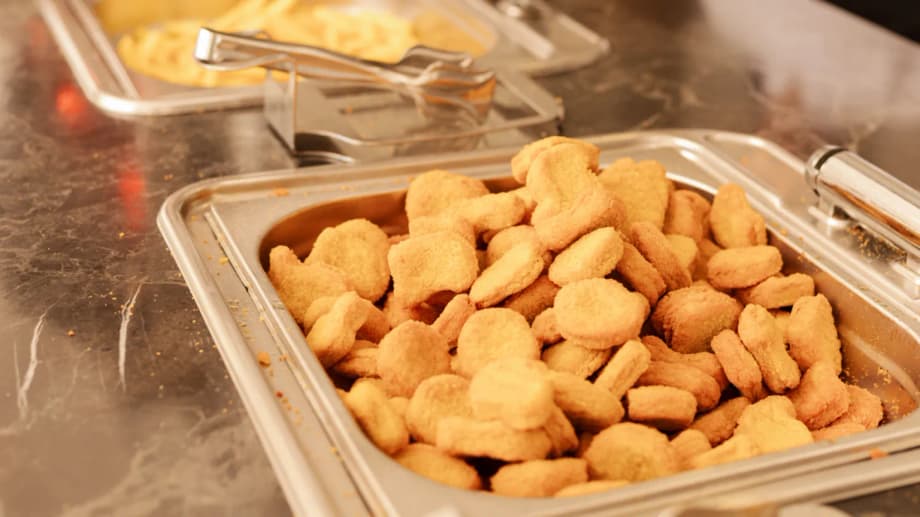
The investigation covered all chicken products served in schools, including processed items such as nuggets, burgers, and roast chicken portions. Data was requested for the most recent academic year available, revealing patterns that have persisted despite growing public awareness of food miles and carbon footprints. The Countryside Alliance sent detailed FOI requests asking for percentages of chicken produced and reared in Wales, the wider UK, the EU, and outside the EU, with most councils unable to specify Welsh-origin proportions specifically.
Professor Roberta Sonnino, who studies sustainable food systems at the University of Surrey and previously taught at Cardiff University, described the practice as common across the United Kingdom. She noted that proving the full extent of import reliance in public canteens remains difficult due to inconsistent record-keeping and transparency standards across different local authorities.
How Procurement Frameworks Drive Overseas Sourcing
Councils in Wales procure food for school meals through formal public sector contracts that often prioritize cost savings over local provenance. These frameworks typically operate at scale, requiring large volumes of standardized products that can be challenging for smaller domestic producers to supply consistently. The Welsh Local Government Association explained that imported chicken appears in some schools due to availability pressures and tight budgets, particularly where local supply proves insufficient to meet demand at prices councils can afford.
The chicken arriving from Thailand and China typically arrives frozen, having been processed and packaged weeks before reaching Welsh school kitchens. This long supply chain offers cost advantages that fresh, locally sourced poultry struggles to match. Professor Sonnino observed that councils purchase this distant chicken primarily to save money, creating a race to the bottom where environmental impact and support for local agriculture are secondary considerations to the per-unit price on contract spreadsheets.
Structural barriers prevent Welsh and small-scale poultry producers from supplying local schools effectively. Complex tendering processes, large minimum volume requirements, and inflexible contracts often exclude small and medium-sized farms, even where strong local demand for Welsh produce exists. More flexible, regional procurement models could enable local supply chains to play a greater role, keeping money within rural communities and strengthening food resilience. Years of squeezed farm margins, labour shortages, and rising input costs have reduced the resilience of the British poultry sector, making it harder for producers to invest and plan for the future.
Merthyr Tydfil Council defended its procurement practices by stating it works with local suppliers and follows criteria aligned with Welsh government regulations. Conwy Council similarly noted it uses Welsh produce when viable, sustainable, and offering best value. However, the Countryside Alliance investigation found that procurement frameworks often lock councils into multi-year agreements that favor large-scale importers over regional farmers, effectively shutting Welsh poultry producers out of the public sector market they help fund through taxation.
The WLGA emphasized that all chicken served in schools, regardless of origin, must meet strict UK food safety and hygiene standards. A spokesperson stated that councils are working to improve sustainability and support local supply chains where possible, while ensuring school meals remain safe, affordable and consistently available. However, the data suggests these efforts have not reversed the trend toward distant sourcing in the majority of Welsh local authorities.
Local Reactions and Parental Concern
Parents across Wales expressed shock upon learning that school meals they assumed were locally produced actually contain meat from the other side of the world. Leah Wright, whose eight-year-old attends school in Merthyr Tydfil, described her surprise at discovering the origin of the chicken served to her child. She had assumed that something as important as school meals would involve locally sourced ingredients, particularly given current economic concerns about supporting local businesses and maintaining community stability.
Megan Ellis, also from Merthyr Tydfil and mother to a two-year-old, stated she would choose packed lunches for her daughter rather than accept free school meals if the import situation continues. She believes the country should provide school meals from within Wales rather than relying on foreign imports. Her sentiment reflects growing frustration among families who discover that public money is being spent to support agricultural industries abroad while local farmers face mounting economic pressures.
Hefin Jones, a Conwy farmer and father of three, articulated the frustration felt within the agricultural community. He questioned the logic of reducing high quality domestic food production while accepting lower quality alternatives shipped halfway around the world. He pointed out that this approach makes no sense for food security, animal welfare, or climate action goals.
“As a Welsh farmer, I am deeply disappointed and frustrated to learn that 94% of the chicken Conwy County Borough Council use to feed all primary school kids is imported from places like Thailand and Brazil. At the same time as high quality food production here in Wales is being reduced, we are apparently expected to accept lower quality food being shipped halfway around the world. That makes no sense for food security, animal welfare, or the climate.”
Rachel Evans, director of Countryside Alliance Wales, called for urgent government intervention to reform procurement practices. She highlighted the contradiction of serving chicken shipped from across the world when Welsh farmers maintain some of the highest welfare standards globally. The organization contends that public money spent on school meals should support Welsh farming communities rather than overseas producers operating under different regulatory frameworks.
The Environmental Cost of Cheap Chicken
The transportation of frozen chicken from Thailand and China to Welsh schools generates substantial greenhouse gas emissions that undermine local climate action efforts. Professor Sonnino emphasized that this frozen chicken travels very long distances, creating a carbon footprint that conflicts with Wales’ stated environmental commitments. The food miles accumulated through this trade route represent a hidden environmental tax that does not appear on council budget sheets but contributes to global climate disruption.
The environmental impact extends beyond transportation emissions. A significant portion of chicken imported into the United Kingdom relies on soy feed grown in regions linked to deforestation. A recent report from environment groups Size of Wales and WWF Cymru established connections between Amazon rainforest destruction and pollution in Welsh rivers such as the Wye. The study identified soy imported from vast overseas plantations, used as livestock feed, as a hidden link to poor water quality in Wales.
About 80% of soy brought into Wales serves as livestock feed for poultry and dairy operations. This soy, high in phosphorus, becomes a pollutant when animal manure spreads on agricultural land and runs off into river systems. The River Wye has experienced severe phosphate pollution issues, with approximately 23 million chickens raised in its catchment area contributing to nutrient overload. Several other protected Welsh river networks, including the Usk and Cleddau, also fail to meet phosphate pollution targets.
Barbara Davies-Quy of Size of Wales explained that purchasing decisions in Wales affect forests and communities thousands of miles away. Every transaction involving cheap chicken fed on soy, or corned beef from South American countries linked to deforestation risk, contributes to destruction of the Amazon and Atlantic Forests while harming indigenous peoples. The Ava Guarani people in western Parana, Brazil, have lost ancestral lands to soy plantations, with community leader Karai Okaju stating that agribusiness destroyed their rivers, forests, and food sources.
Shea Buckland Jones of WWF Cymru noted that Wales’ reliance on imported soy has left a trail of destruction stretching from Brazilian forests to Welsh waterways. The report calls for governments and local councils to influence the situation by changing their food purchasing policies, avoiding goods that may have contributed to deforestation, and supporting domestic agriculture that does not rely on imported feed stocks.
A Widespread Pattern Beyond Poultry
The chicken import data fits within a broader pattern of reliance on foreign food sources across Welsh public sector catering. Previous investigations have revealed similar procurement practices in other parts of the United Kingdom. In 2017, a BBC investigation uncovered councils in Scotland importing chicken from Thailand and turkey from Brazil for school dinners, suggesting this is not a Wales-specific problem but a structural feature of UK public sector food procurement.
The issue extends beyond meat products. Data from Food Sense Wales indicates that only 6% of vegetables served in Welsh schools are actually grown in Wales, with the remainder imported from various sources. This charity is currently working to increase local sourcing to 10% organically grown Welsh vegetables by 2028, warning that climate change and global instability are pushing up prices of food from abroad. Katie Palmer of Food Sense Wales noted that current Welsh businesses only grow enough vegetables to provide every person in Wales with a quarter of a portion.
Traceability remains a significant obstacle to reform. Not one council responding to the Countryside Alliance investigation could report the specific proportion of Welsh chicken they procured for school meals. Several councils, including Cardiff, provided percentages for non-EU imports but could not specify the countries of origin. Others like Carmarthenshire acknowledged using frozen chicken from outside the EU but provided neither country names nor percentages. This opacity prevents parents, taxpayers, and policymakers from assessing whether public procurement aligns with government commitments regarding local sourcing and sustainability.
Jenny Rathbone, Labour Member of the Senedd for Cardiff Central, raised these concerns during a Plenary session in September 2025. She called on her own Welsh government to work on cleaning up public procurement of food to support Welsh companies feeding children rather than importing chicken from Thailand and processed food laden with palm oil. Her intervention highlights growing political recognition that current procurement frameworks contradict environmental and economic policy goals.
Breaking the Import Cycle
Despite the bleak overall picture, some Welsh councils have demonstrated that change is possible. Caerphilly Council, which previously reported 87.32% of its school chicken coming from outside the EU, announced that as of September 2025, no chicken used in school meals is produced and reared outside the UK and EU. This shift proves that councils can redirect supply chains toward domestic sources when procurement priorities align with local sourcing goals.
Monmouthshire Council has taken even more comprehensive action, becoming Wales’ first Deforestation Free Champion council following lobbying by local school pupils. The authority has scrutinized school meal provision across the county, reduced palm oil usage, and sourced all beef from Wales. A deforestation-free chickpea korma has replaced chicken curry on school menus. A delegation of Monmouthshire school pupils has been invited to speak at the COP30 climate summit via video link to share their achievements in influencing council procurement policies.
Caerphilly has also implemented mandatory deforestation-free criteria for food procurement, reducing ultra-processed foods and sourcing higher welfare and organic meat and dairy alongside Fairtrade coffee and cocoa. These examples demonstrate that procurement frameworks can be reformed to prioritize environmental responsibility and local economic support without compromising nutritional standards.
Food wholesaler Castell Howell, based in Cross Hands, Carmarthenshire, currently supplies ingredients for 700,000 school meals weekly at 1,000 Welsh schools. The company is working to shorten supply chains by connecting with local growers. Group manager Edward Morgan explained that harvesting vegetables quickly and transporting them rapidly to schools helps retain nutritional value while reducing food miles. The Welsh Veg in Schools project, coordinated by Food Sense Wales with government funding, aims to develop capability and capacity among local growers to supply the public sector.
The Countryside Alliance has issued specific recommendations for reform. They are calling for mandatory transparency and reporting on food provenance in public sector catering, requiring all local authorities to publish clear, standardized data on the origin of food procured for school meals. The organization also urges review of procurement frameworks to prioritize Welsh and British produce, ensuring that high animal welfare standards, environmental considerations, and food miles carry weight alongside price in contract decisions.
Government Policy and Agricultural Support
The Welsh government maintains that it is committed to increasing the use of locally produced Welsh food in schools. A spokesperson stated that officials are working with local authorities, producers, and wholesalers to shorten supply chains, reduce food miles, and support Welsh growers, farmers, and manufacturers. The administration has set an ambition to boost public sector spending on Welsh food by 50% by 2030, suggesting recognition that current levels are insufficient.
Recent funding changes have attempted to address cost barriers to local sourcing. The Welsh government increased funding for Universal Primary Free School Meals by £8 million, raising the per-meal rate to £3.40. However, the Countryside Alliance notes that this rate does not fully reflect the higher costs of sourcing Welsh and British chicken produced to high welfare and environmental standards. If public procurement is to support domestic food production, funding levels and procurement frameworks must align with that ambition rather than forcing councils to choose between fiscal responsibility and supporting local agriculture.
Policy tensions exist between agricultural support mechanisms and procurement practices. The Sustainable Farming Scheme launched on 1 January 2026 could reduce livestock numbers by 5%, raising questions about how reduced domestic production capacity aligns with goals to increase local food consumption. Rachel Evans of the Countryside Alliance highlighted this contradiction, noting that public bodies are importing chicken from overseas while domestic farming faces constraints.
Wales’ Future Generations Commissioner Derek Walker has called for a deforestation-free public sector by 2028. When questioned about the affordability of moving away from cheap imported food during times of squeezed budgets, he responded that the cost of not making these changes is huge in terms of the climate emergency. He suggested that reform could help the Welsh economy by increasing purchases of locally-produced products while doing the right thing globally.
The Welsh government stated it recognizes the importance of playing its part in reducing deforestation-linked impacts, particularly through supply chains and international partnerships. However, officials acknowledge this requires a whole Wales effort that must be faced together to protect the planet for future generations. The challenge now lies in translating these stated commitments into procurement contracts that consistently favor Welsh poultry over imports from Thailand and China.
The Essentials
- Merthyr Tydfil serves 99.35% imported chicken from Thailand and China in school meals, the highest rate in Wales
- Conwy and Caerphilly previously served 94% and 87% non-EU chicken respectively, though Caerphilly has now switched to UK and EU sources only
- Only Anglesey and Bridgend councils source 100% of school chicken from within the UK
- No Welsh council could specify what proportion of chicken came specifically from Wales
- The Countryside Alliance is demanding procurement reform, mandatory transparency on food origins, and prioritization of Welsh produce
- Environmental groups link imported chicken feed to Amazon deforestation and Welsh river pollution
- The Welsh government aims to increase public sector spending on Welsh food by 50% by 2030