Thailand Takes the Lead With 51.4 Tonnes
Thailand bought 51.4 tonnes of gold bars and coins in 2025, overtaking Vietnam as Southeast Asia's largest market for these investment products as purchases across the region reached their highest level in nine years. World Gold Council figures put the value of Thailand's purchases above $6 billion and its share of regional demand at approximately 36%.
Contents
- Thailand Takes the Lead With 51.4 Tonnes
- Vietnam's Shortage Limits Purchases
- New Producers and a Proposed Gold Exchange
- Singapore Leads Growth as Indonesia Holds Third Place
- Thai Buying Builds Through the Quarters
- Trading Networks and Currency Shape Thailand's Market
- Jewelry Buyers Spend More on Less Gold
- Global Demand Passes 5,000 Tonnes
- Gold Funds Rise While Singapore Reduces Reserves
- How the Shift Unfolded
- Key Points
Thai purchases reached their highest level in seven years, ending a period in which Vietnam had held the regional lead for several years. The shift came during an extraordinary rise in gold prices, with investors continuing to buy physical metal even as each purchase became more expensive.
Vietnam moved in the opposite direction. Its gold bar and coin demand fell from 42.1 tonnes in 2024 to 36.1 tonnes in 2025, a decline of 14%. It was the only one of the five major Southeast Asian markets to record a fall, while Thailand, Indonesia, Malaysia and Singapore all expanded.
The five markets together bought 139 tonnes of bars and coins, more than 15% above the previous year. Thailand and Vietnam accounted for roughly two thirds of regional purchases, keeping both countries central to the market despite their sharply different results.
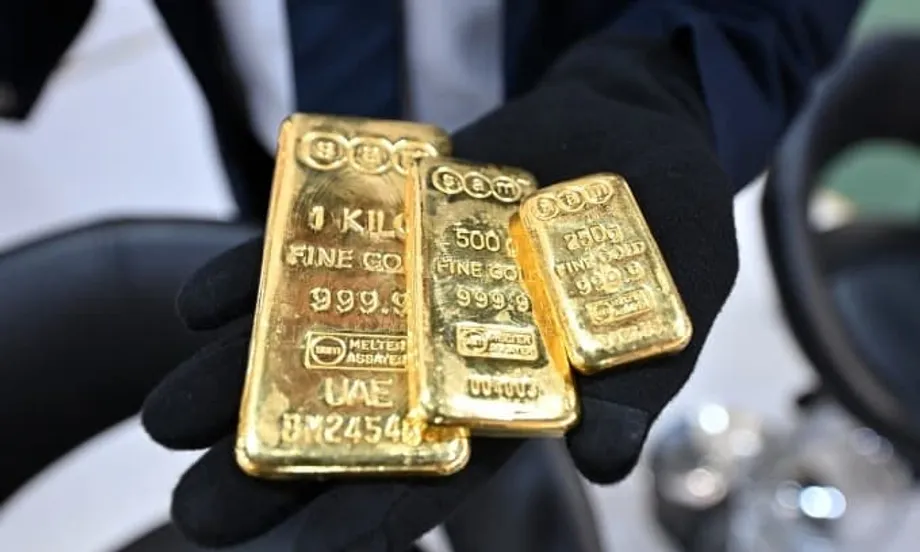
Gold bars and coins are physical investment products. Buyers can hold the metal themselves, unlike investors who buy a financial product tied to gold. Their purchases also differ from jewelry demand, which combines the value of the metal with its use as something to wear.
Thailand's rise and Vietnam's retreat show how access to gold shaped the regional market. Thai trading networks accommodated stronger buying, while Vietnamese consumers faced shortages, restrictions on imports and domestic prices far above international levels. Across Southeast Asia, investors increasingly treated gold as an asset to hold during uncertainty rather than a purchase they could easily postpone.
Vietnam's Shortage Limits Purchases
Vietnam recorded six consecutive quarters of contracting gold trading through the final quarter of 2025. By that quarter, activity had fallen to its lowest level in nearly five years. The decline continued throughout all four quarters of 2025, even as neighboring markets drew more investment.
The State Bank of Vietnam has repeatedly said that the country lacks domestic gold production capabilities and depends almost entirely on imports to meet consumer demand. Access to foreign currency therefore matters directly to the amount of gold that can reach local buyers.
Vietnam prioritizes its foreign currency reserves for essential goods and other economic necessities. That leaves limited capacity for gold imports, creating a bottleneck in the supply of bullion. People wanting to buy gold could encounter unavailable products even when they were prepared to pay rising prices.
Demand for gold rings containing 24 karat gold added pressure to the shortage of bars. These rings offered another form of physical gold that consumers wanted to buy, putting further strain on an already restricted supply.
Vietnamese domestic bullion prices rose 81% in 2025 and another 13.5% in early 2026. At times, the gap between local and international prices reached about 20 million Vietnamese dong, approximately $760, per tael, the unit used for these local price comparisons.
That gap is called a premium: the extra amount a buyer pays above the comparable international price. In Vietnam, the combination of limited supply and strong buying interest pushed the premium sharply higher. Some investors were priced out, while others faced queues outside gold shops and difficulty finding products despite their willingness to pay.
Vietnam's falling purchase volume therefore developed alongside strong interest in owning gold. Import restrictions, limited domestic production and scarce stock prevented that interest from becoming completed transactions on the scale seen elsewhere in the region.
New Producers and a Proposed Gold Exchange
Vietnam's government announced plans in 2025 to allow private gold producers to operate domestically if they met specified capital requirements. The change was intended to address a market in which access to physical bullion had become a persistent constraint.
As of February 4, 2026, regulatory authorities had issued no licenses under the new framework. The supply restrictions remained unresolved, and no date had been given for the first licenses.
Some lawmakers also proposed a national gold exchange. Under that proposal, citizens could deposit physical gold and receive electronic certificates representing their holdings. The idea was to bring an estimated 55 tonnes of gold sitting idle in private safes into a system that could help finance infrastructure and economic development.
The proposal would change how stored household gold could be used. Instead of remaining entirely outside the financial system, deposited metal could be represented by a certificate while supporting wider economic activity. The national exchange remained a proposal, separate from the government's announced framework for private producers.
Singapore Leads Growth as Indonesia Holds Third Place
Singapore recorded Southeast Asia's fastest growth in gold bar and coin demand in 2025. Purchases rose 48% to 9.6 tonnes, a record for the city state, as investors sought assets they regarded as protection against global economic uncertainty and currency fluctuations.
Indonesia remained the region's third largest market by volume, behind Thailand and Vietnam. Its purchases climbed 29% to 31.6 tonnes, the highest level in 12 years.
Malaysia ranked fourth, with demand increasing 37% to 10.3 tonnes. That matched a high last reached in 2013, also a span of 12 years. Singapore's faster percentage growth left it below Malaysia in total tonnes purchased because it was expanding from a smaller market.
Improved economic conditions and greater awareness of gold as a way to spread investment risk helped buying in Malaysia and Indonesia. Portfolio diversification means dividing savings among different assets rather than relying on a single investment. Gold attracted investors seeking that protection during a period of uncertainty.
The regional rankings and growth rates tell different parts of the story. Thailand led in the amount purchased, Singapore led in the pace of expansion, and Vietnam remained second by volume despite its contraction. Strong gains outside the two largest markets helped push the regional total to 139 tonnes.
Thai Buying Builds Through the Quarters
Thailand's quarterly figures showed buying strength developing across 2025. In the first quarter, Thai gold demand rose 17% from a year earlier to 9.1 tonnes, giving Thailand the strongest growth among the Southeast Asian markets described for that period.
Singapore, Malaysia and Indonesia recorded first quarter growth of between 5% and 8%. Vietnam's demand fell 15% to 12 tonnes, establishing the early contrast between its shrinking market and rising purchases elsewhere.
Within Thailand's first quarter figures, investment specifically in gold bars and coins increased 25% to 7.4 tonnes. That pointed to a strong preference for physical bullion, with investors seeking tangible assets during currency volatility.
Thailand's demand reached 10 tonnes in the second quarter, a rise of 38% from the same period in 2024. Buying continued beyond the opening months of the year, helping build the annual total that eventually displaced Vietnam.
Shaokai Fan, head of Asia-Pacific at the World Gold Council, said Thai consumers responded strategically to price corrections during the quarter. They used temporary falls in the gold price as opportunities to buy before prices resumed their upward movement.
Thai investors therefore combined sustained buying with attention to price changes. High annual prices did not remove opportunities to purchase during shorter periods of decline. Vietnam, meanwhile, continued to face scarce supplies and unavailable products through the final quarter.
Trading Networks and Currency Shape Thailand's Market
Thailand's more developed and liberalized gold trading infrastructure helped it accommodate demand. Established networks of importers, refiners and retailers could source and distribute bullion as purchases increased.
The Thai regulatory environment allowed smoother importation and distribution than the restrictions affecting Vietnam. A consumer's decision to buy could more readily become an actual transaction, supporting Thailand's rise in the regional rankings.
Weakness in the Thai baht against the dollar during 2025 also increased gold's attraction as a store of value. Thai investors sought protection against currency depreciation and inflationary pressures, supporting purchases of both bars and jewelry.
Currency depreciation means a currency loses value against another currency. For investors worried about that change, gold can be appealing as an alternative place to keep part of their savings. Currency fluctuations also affected interest in gold elsewhere in Southeast Asia, although Vietnam's supply restrictions limited completed purchases despite changes in the dong's value.
Thailand also had a resilient jewelry market entering this period. Jewelry demand rose 12% to 2 tonnes in the second quarter of 2024, running against the global pattern of declining jewelry purchases as prices increased.
That earlier result reflected a cultural attachment to gold beyond its use as an investment. Jewelry buying provided a base of demand alongside purchases of bars and coins, contributing to a market supported by both personal use and financial motives.
Thailand and Vietnam's contrasting results show the practical importance of supply networks and regulation. Thai businesses could respond to demand with available metal. Vietnamese buyers encountered shortages and large premiums, leaving a gap between their desire to own gold and the amount they could purchase.
Jewelry Buyers Spend More on Less Gold
Singapore's jewelry demand declined 13% as high prices discouraged purchases. Across Southeast Asia, the physical amount of jewelry bought also fell, yet the total value of jewelry demand increased because the metal had become more expensive.
The same pattern appeared globally. Worldwide jewelry demand fell 18% by volume in 2025, while its value rose 18% to $172 billion. Consumers bought less gold by weight but spent more money in total.
Higher prices can produce that result without an increase in the amount purchased. Buyers who continued shopping accepted higher prices or selected items with greater value, while the rise in the gold price increased expenditure even as physical volumes declined.
Investment demand followed a different course. Bars, coins and gold funds attracted buyers seeking protection during uncertainty, helping gold demand grow despite the pressure that expensive metal placed on jewelry purchases.
Global Demand Passes 5,000 Tonnes
Total global gold demand exceeded 5,000 tonnes in 2025 for the first time. Investment demand for bars and coins reached 1,374 tonnes, worth $154 billion, placing Southeast Asia's growth within a much larger movement into gold.
China and India remained the world's two largest gold markets. Together, they accounted for more than half of global bar and coin demand. Chinese purchases grew 28%, while Indian purchases increased 17%.
Gold prices broke records during 2025 and continued rising into January 2026. The price crossed $3,000 per ounce in the first quarter of 2025, exceeded $5,000 in late January 2026 and moved above $5,500 within days.
Those milestones belong to different periods. The annual demand figures describe buying during 2025, while the moves above $5,000 and $5,500 occurred in January 2026, before the February 4 publication date.
High prices usually discourage physical purchases because the same budget buys less metal. During this period, uncertainty encouraged investors to keep accumulating gold, making protection of savings a powerful reason to buy despite the cost.
Louise Street, senior markets analyst at the World Gold Council, described the conditions surrounding the first quarter of 2025. She identified trade disruption, unpredictable United States policy announcements, geopolitical tensions and renewed fears of recession as reasons investors faced an uncertain environment:
It has been a bumpy start to the year for global markets as trade turmoil, unpredictable U.S. policy announcements, sustained geopolitical tensions and a return of recessionary fears have created a highly uncertain environment for investors.
First quarter global demand reached its highest level since 2016. The same concerns that unsettled financial markets helped draw money toward gold, even at prices that might have discouraged purchases during calmer conditions.
Gold Funds Rise While Singapore Reduces Reserves
Gold exchange-traded funds recorded global inflows of 801 tonnes, reversing outflows seen in earlier periods. These funds give investors a way to hold an investment linked to gold through a traded financial product rather than keeping bars or coins themselves.
Asian gold ETFs saw holdings increase 97% from the previous year and attracted $25 billion in inflows. A broader investor base across the region supported that expansion, adding financial market participation to the physical buying seen in Thailand and other countries.
ETF growth and demand for bars and coins represented different routes into the same metal. Their simultaneous strength showed that the movement toward gold extended beyond customers purchasing physical products from retailers.
The Monetary Authority of Singapore moved in a different direction with its own reserves. It sold 15 tonnes of gold in 2025, bringing its holdings to 205 tonnes, while Singapore's private market for bars and coins reached a record.
Globally, central banks continued accumulating gold, though at a slower pace than in the previous three years. During each of those years, their annual purchases had exceeded 1,000 tonnes. Official reserve decisions therefore varied even while investment demand expanded.
How the Shift Unfolded
The change in Southeast Asia's rankings developed over several periods, from Vietnam's lead in 2024 to Thailand's stronger buying through 2025. Gold's subsequent price surge in January 2026 added to the cost pressures facing consumers.
- Second quarter of 2024: Thailand's jewelry demand rose 12% to 2 tonnes.
- Full year 2024: Vietnam led Southeast Asia's gold market with 42.1 tonnes of bar and coin demand.
- First quarter of 2025: Thai gold demand rose 17% to 9.1 tonnes, including 7.4 tonnes of bars and coins, while Vietnamese demand fell 15% to 12 tonnes. Gold crossed $3,000 per ounce.
- Second quarter of 2025: Thailand's demand reached 10 tonnes, up 38% from a year earlier.
- During 2025: Vietnam announced plans to permit private gold producers that met capital requirements.
- End of 2025: Thailand led annual bar and coin purchases with 51.4 tonnes. Vietnam finished at 36.1 tonnes after six consecutive quarters of contracting trading.
- Late January 2026: Gold exceeded $5,000 per ounce and rose above $5,500 within days.
- February 4, 2026: Vietnam had issued no licenses under its new producer framework, and its supply constraints remained unresolved.
Thailand's annual lead brought together strong investor interest, buying during price corrections and trading networks able to supply the metal. Vietnam's decline occurred amid sustained consumer interest but restricted access, while growth in Indonesia, Malaysia and Singapore lifted the wider regional market.
Key Points
- Thailand led Southeast Asia's gold bar and coin market in 2025 with 51.4 tonnes, worth more than $6 billion and its highest volume in seven years.
- Vietnam's purchases fell 14% to 36.1 tonnes, making it the only declining market among the region's five major buyers.
- Regional purchases rose more than 15% to 139 tonnes, the highest total in nine years.
- Indonesia bought 31.6 tonnes, Malaysia 10.3 tonnes and Singapore 9.6 tonnes. Singapore recorded the fastest growth at 48%.
- Vietnam faced import constraints, scarce bullion and domestic price increases of 81% in 2025 and 13.5% in early 2026.
- Global gold demand exceeded 5,000 tonnes in 2025. China and India accounted for more than half of worldwide bar and coin demand.
- Gold rose above $5,500 per ounce in January 2026, while Vietnam's new producer licenses remained pending as of February 4.