A Unique Career Change for Thoroughbreds
Deep within the bustling heart of Tokyo, on the grounds of the Imperial Palace, a group of retired athletes enjoys a quiet retirement. They are not former sumo wrestlers or baseball stars, but thoroughbred horses that once competed on Japan’s racetracks. Today, these animals perform a new and dignified service. They carry members of the Imperial Guard and escort carriages bearing foreign diplomats. This practice highlights a remarkable and enduring bond between Japan’s Imperial family and the equine world, a connection that spans ancient rituals, modernization efforts, and international diplomacy.
The transition from the high-speed adrenaline of racing to the disciplined, ceremonial duties of the Imperial Guard is a significant career change for these animals. It requires a specific temperament and extensive retraining. Yet, this second life offers a noble path for horses that might otherwise face uncertain futures. The Imperial stables provide a sanctuary where these animals continue to serve the nation with dignity.
Selecting the Perfect Diplomatic Escort
The selection process for an Imperial Guard horse is rigorous and focuses less on physical prowess and more on mental stability. Mitsuru Sato, an official in charge of the escort horses, has spent decades training these animals. He explains that the ideal candidate must possess a calm, even temperament and be reliable. The horse must not spook easily, a crucial trait when navigating the busy streets of Tokyo during official ceremonies.
Sato, who has worked with the Imperial horses for 35 years, notes that while physical appearance is not a primary concern, the stables do pay attention to traditional lore. For instance, long-held beliefs suggest that a single white sock on the hind left leg indicates a fine horse, while a double whorl on the forehead might point to a nervous disposition. However, Sato clarifies that these sayings are not taken verbatim but kept in mind during the selection process. Ultimately, the horses are chosen for their ability to remain composed under pressure and their familiarity with human interaction, traits often developed during their racing careers.
Training for the Streets of Tokyo
Once a horse arrives at the Imperial stables, often around the age of four or five after retiring from racing, the training begins immediately. The first step involves helping the animal adjust to its new surroundings. The environment of the Imperial Palace is vastly different from the noisy racetrack. It is quiet, serene, and steeped in history. The horses go through various training phases to acclimate to this new life.
No riding takes place until the trainers deem it safe. Sato emphasizes the importance of this gradual introduction. A horse that is easy to ride gives new guards confidence and helps them improve quickly. In this way, the horses serve as teachers for the human members of the guard. Being an instructor for new recruits is considered just as essential a role as participating in state ceremonies.
The daily regimen is demanding. The horses are led out every morning to a nearby riding arena where they walk, canter, and jump. Jumping obstacles is included in their training not because they need to jump during ceremonies, but to ensure they follow instructions precisely. When they return to the stables, they are showered and their hooves are cared for. This routine continues until the horses are well into their twenties, providing them with a long and secure career.
The Ceremonial Role
The primary duty of these horses is to escort the carriages carrying newly appointed ambassadors from Tokyo Station to the Imperial Palace. This tradition, which resumed in 1952 after World War II, is a rare spectacle in the modern world. When the ambassador heads to the Imperial Palace to present credentials to the Emperor, the horse-drawn carriage rolls through the streets of Tokyo, flanked by mounted guards.
Kazuhiko Akinaga, a curator at the Equine Museum of Japan, notes that apart from Japan, only a few countries, such as the United Kingdom and Spain, maintain this traditional mode of transport for diplomats. The choice between a car and a carriage is often left to the ambassador, but most opt for the carriage, viewing it as a unique and prestigious introduction to Japanese culture.
This journey is not without challenges. The horses must navigate a stark contrast to their peaceful palace grounds. They find themselves surrounded by tall buildings, large crowds, and unexpected noises. A plastic bag blowing in the wind or a sudden siren could potentially spook a less trained animal. The ability to follow the rider’s instructions amidst these distractions is a testament to the horse’s intrinsic character and the quality of their daily training.
Spotlight on the Horses
Among the current residents of the Imperial stables is Yukikaze, an 11-year-old male horse with a notable pedigree. His father was Special Week, a legendary racehorse that won four Grade 1 races, including the Emperor’s Cup in 1999. Yukikaze, formerly known as Yukino Dream during his racing career, had a modest track record with eight races and no wins. He joined the Imperial barn at the age of five.
“He’s timid and docile,” says Mitsuru Sato.
During a training session observed in December, Yukikaze demonstrated his cautious nature. When Sato raised an obstacle bar, Yukikaze initially skirted it. On his second attempt, with encouragement, he cleared the jump. This carefulness, rather than being a drawback, makes him perfectly suited for his role. His primary duty involves trotting steadily alongside the ambassador’s carriage, a task that requires patience and steadiness rather than speed.
Another notable horse is Shōyū, a 16-year-old veteran of the Imperial Guard. Sato recalled the moment he knew Shōyū was right for the job. He saw the horse at a riding club owned by an acquaintance and rode him immediately.
“I knew immediately that he was the horse for the job,” Sato said.
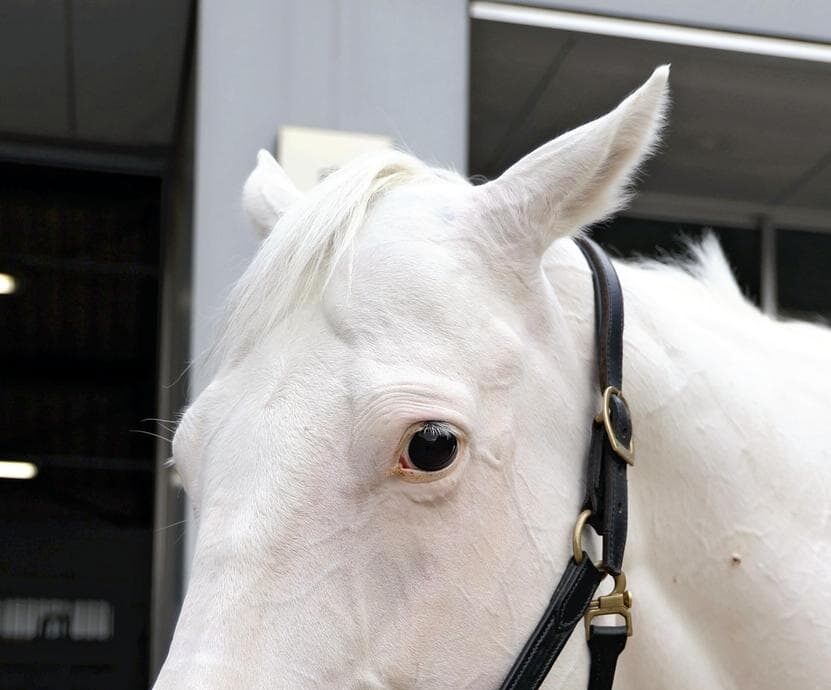
Shōyū joined the guard after retiring from racing at age four and has been a reliable member of the team ever since. The stable also houses Hakurei, a 9-year-old white horse formerly known as Maillot Blanc, and Aokaze, a 23-year-old son of the Imperial Cup winner Bubble Gum Fellow.
The Imperial Family’s Personal Affection
The connection between the Imperial family and these horses extends far beyond official duties. The Emperor and Empress have a well-documented fondness for horses, often displaying detailed knowledge of individual animals. At an Imperial garden party held in the autumn of 2025, the Imperial couple conversed with star jockey Yutaka Take. During the conversation, they mentioned the names of many racehorses, showcasing their familiarity with the racing world.
The discussion turned to Hakurei, the white horse in the Imperial Guard. Take noted that many white horses can be rough by nature. The Empress responded that Hakurei “goes pretty much his own way,” to which the Emperor added, “Every horse is different.” Take was reportedly amazed by how smoothly the Imperial couple recalled the names of the horses.
“I felt that they really love horses,” Take said after the party.
Emperor Naruhito has spoken publicly about his appreciation for the animals. At a press conference in February, he mentioned looking forward to seeing the horses during his regular walks around the palace grounds. This personal interest is not new to the current reign. The Emperor Emeritus served as the captain of his school’s equestrian society during his youth, and the current Emperor and Crown Prince Akishino have been familiar with horses since childhood.
Historical Roots of the Bond
The relationship between the Imperial family and horses is deeply rooted in Japanese history. Horses have been used in rituals and events at the Imperial court since ancient times. However, the modern era saw a shift in how horses were utilized, particularly during the Meiji era (1868-1912), a period of rapid modernization in Japan.
Emperor Meiji adopted horses as a primary mode of transport, traveling by horse to inspect various regions of the country. In March 1874, Emperor Meiji witnessed a horserace for the first time at a temporary Imperial residence in Akasaka. This experience marked the beginning of a royal engagement with Western-style racing. He subsequently attended more than 50 racing-related events.
This enthusiasm culminated in the establishment of the Emperor Cup horserace in 1905. Emperor Meiji gifted a vase bearing the Imperial chrysanthemum crest to a racing course in Yokohama’s Negishi district as a trophy. The race continues to this day, remaining one of the most prestigious events in the Japanese racing calendar.
According to Kazuhiko Akinaga, Emperor Meiji’s patronage of horse racing was a deliberate political act. By embracing a part of Western culture, the Emperor demonstrated to both domestic and international audiences that Japan had modernized. Furthermore, the Imperial family used equestrian events to entertain diplomatic delegations, utilizing horses as a tool to foster international friendships.
The Broader Context of Retired Racehorses
While the horses in the Imperial Guard enjoy a privileged second career, the fate of most retired racehorses in Japan is far less certain. The racing industry is vast, with nearly 8,000 foals born annually. Racehorses typically retire between the ages of three and six, yet their natural lifespan is 25 to 30 years. Finding a place for these animals after their track careers end is a significant challenge.
Statistics indicate that about 6,000 racehorses retire each year. Due to the high cost of upkeep, which can exceed 100,000 yen per month, and a shortage of riding clubs compared to Europe, few are able to transition to riding or breeding roles. As a result, many retired racehorses are sent to abattoirs, their meat becoming a delicacy in some circles.
Efforts are underway to address this issue. Organizations like Thoroughbred Aftercare and Welfare have been established to provide temporary care and retraining for retired horses. However, these facilities can only handle a small number of animals. There are also sanctuaries, such as Horse Trust in Kagoshima Prefecture, which provide a permanent home for about 150 retired horses. These sanctuaries aim to allow horses to live in herds and enjoy freedom of choice in their daily activities.
The adoption of former racehorses by the Imperial Guard represents a high-profile example of successful retraining. It highlights the potential for these animals to lead useful and dignified lives beyond the racetrack. The horses’ familiarity with people and their disciplined training make them excellent candidates for roles that require calmness and reliability.
Cultural Impact and Modern Media
The fascination with racehorses and their stories permeates Japanese culture beyond the Imperial Palace. The public adores horses that capture the imagination, regardless of their win-loss records. A famous example is Haru Urara, a racehorse that became known as the “shining star of losers” after failing to win a single race in 113 starts. Her resilience endeared her to the nation, and she eventually inspired a character in the popular game and anime franchise “Uma Musume: Pretty Derby.”
This media franchise, which anthropomorphizes famous racehorses as horse girls, demonstrates the deep cultural integration of horse racing into Japanese entertainment. The franchise has seen collaborations with various media, including a recent partnership with a television drama about the racing world. This blending of reality and fiction keeps the stories of these horses alive in the public consciousness.
Even the Imperial family’s international trips reflect this enduring interest. During a visit to Mongolia, Emperor Naruhito and Empress Masako attended the Naadam festival, where they watched traditional horse racing on the prairie. Using binoculars to follow the race, the Imperial couple showed appreciation for equestrian traditions in other cultures, further cementing their image as devoted patrons of the horse.
The Bottom Line
The story of the Imperial Guard horses is a multifaceted narrative that intertwines tradition, diplomacy, animal welfare, and royal affinity. It is a testament to the adaptability of the thoroughbred and the enduring symbolism of the horse in Japanese society.
- Fourteen horses currently serve in the Imperial Guard, and twelve of them are retired racehorses.
- The horses escort carriages carrying new ambassadors from Tokyo Station to the Imperial Palace.
- Selection for the guard is based on a calm temperament and docility rather than racing success or physical appearance.
- Emperor Naruhito and Empress Masako are known for their personal knowledge of and affection for the horses.
The tradition of using horse-drawn carriages for diplomatic credentials resumed in 1952 after World War II.
The practice dates back to the Meiji era, when horse racing was used to showcase Japan’s modernization to the world.