Taiwan Stands Firm as China Concludes High-Stakes Military Drills
Tensions across the Taiwan Strait reached a fever pitch as President Lai Ching-te delivered a defiant New Year’s address, vowing to defend the island’s sovereignty just days after China concluded its largest-ever military exercises encircling the democratically governed island. The drills, codenamed “Justice Mission 2025,” involved dozens of rockets fired toward Taiwan and the deployment of a massive fleet of warships and aircraft, simulating a full-scale blockade and precision strikes. These maneuvers forced the cancellation of dozens of domestic flights and placed Taiwan’s military on high alert, highlighting the fragile state of peace in the region.
In a speech broadcast live from the presidential office in Taipei on Thursday, President Lai addressed the international community and the Chinese government with equal measures of diplomacy and determination. He emphasized that Taiwan would not be intimidated by the show of force, urging the nation to prepare for the worst while hoping for the best. His remarks come at a critical juncture, following a US report suggesting China could be positioning itself to win a conflict over Taiwan by 2027, a timeline Lai acknowledged as a pressing concern.
“As president, my stance has always been clear: to resolutely defend national sovereignty and strengthen national defense,” Lai stated, addressing the nation. “Whether China can achieve its goals on schedule is one thing.”
The Chinese exercises, which began on December 29 and concluded late on Wednesday, were the broadest by area and the closest to Taiwan’s shores ever conducted by the People’s Liberation Army (PLA). They represented a stark escalation in the long-standing dispute, integrating naval, air, and rocket forces to rehearse the sealing off of key ports and the interception of external support. Analysts note these drills were not merely routine but a calculated response to recent geopolitical moves, particularly a record $11.1 billion arms sales package from the United States to Taiwan announced earlier in December.
A Dangerous New Threshold in the Taiwan Strait
Military analysts and regional observers have pointed out a disturbing shift in the tactics employed during the “Justice Mission 2025” drills. While previous exercises often skirted the edges of Taiwan’s territorial waters, this iteration saw a significant encroachment into the island’s contiguous zone. This zone extends 24 nautical miles from the coast, acting as a vital buffer where a coastal state can enforce customs, fiscal, immigration, and sanitary laws.
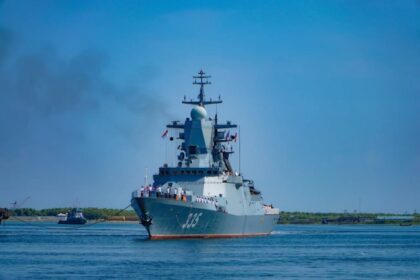
According to reports, the PLA Navy and China Coast Guard vessels entered this buffer zone in significant numbers, with one Chinese destroyer reportedly withdrawing only after a Taiwanese naval vessel applied a radar lock, a signal of imminent firing. The steady normalization of military activity within this space marks a subtle but consequential shift that lowers the threshold for conflict. By eroding the significance of the contiguous zone, China risks blurring the line between coercive posturing and actual acts of war, increasing the potential for miscalculation during future encounters.
The simulation of a blockade was particularly telling. Chinese forces concentrated efforts on the north and southwest of the Taiwan Strait, targeting critical infrastructure and maritime choke points. Drills focused on the port of Keelung to the north and Kaohsiung to the south, Taiwan’s largest container port. These actions serve as a rehearsal for cutting off the island’s lifelines, effectively isolating Taiwan from the rest of the world in the event of a real conflict. The disruption to commercial aviation, affecting over 100,000 passengers, offered a small glimpse of the economic chaos a full blockade would unleash.
Beijing’s Message of Punishment and Unification
Beijing framed the exercises as a necessary measure to safeguard national sovereignty and unity. The Chinese Foreign Ministry and the Eastern Theater Command issued stern statements condemning “separatist forces” in Taiwan and warning against “external interference.” The drills were explicitly described as a punishment for what Beijing perceives as Taiwan’s collusion with foreign powers to undermine Chinese territorial integrity.
Following President Lai’s address, a spokesperson for China’s Taiwan Affairs Office unleashed a barrage of criticism, accusing the Taiwanese leader of deceit. The official statement, reported by state broadcaster CCTV, characterized Lai’s speech as being “riddled with lies and reckless assertions, hostility and malice.” This rhetoric reflects the deep distrust Beijing holds for Lai, whom they have previously labeled a “troublemaker” and a “separatist.” The Chinese government maintains that Taiwan is a renegade province that must eventually be reunified with the mainland, by force if necessary.
Chinese President Xi Jinping struck a similar chord in his own New Year’s address, repeating warnings that reunification is inevitable. He asserted that no one could stop China from achieving this goal, reinforcing the narrative that the military drills were a legitimate expression of state power. The mention of deterring “outside intervention” was a specific signal to Washington and its allies, emphasizing that any attempt to aid Taiwan during a conflict would be met with fierce resistance. This aligns with Beijing’s broader strategy of “anti-access and area denial,” designed to keep US carrier groups at bay.
The Battle Over Budgets and Defense Capabilities
President Lai used the heightened tension to push a critical domestic agenda: bolstering Taiwan’s defense capabilities. In his speech, he noted that China had specifically targeted Taiwan’s newly added combat capabilities as a “hypothetical adversary” during the drills. He argued that this targeting provided clear evidence of the need for increased defense procurement and modernization.
At the heart of this effort is a controversial proposal to boost Taiwan’s defense spending by approximately $40 billion. Lai urged opposition parties to support this plan, warning that the security landscape is deteriorating rapidly. However, the proposal faces a political deadlock in the opposition-controlled parliament, where it has been stalled alongside other legislative priorities. The political gridlock poses a challenge to Taiwan’s ability to respond quickly to the evolving threat, leaving the island vulnerable as China accelerates its own military modernization.
Taiwan’s military response to the drills involved scrambling fighter jets and deploying naval assets to monitor the Chinese movements. The Ministry of National Defense released videos showcasing weapons systems, including US-made High Mobility Artillery Rocket Systems (HIMARS), which have a range capable of reaching coastal targets in China. These displays are intended to serve as a deterrent, signaling that while Taiwan is small, it is capable of inflicting significant damage on an invading force. Lai emphasized that raising the cost of aggression is the best way to prevent war, a strategy often referred to as the “porcupine doctrine.”
International Alliances and the Flow of Arms
The situation in the Taiwan Strait is not merely a local dispute but a focal point of global geopolitics. The United States, despite lacking official diplomatic ties with Taipei, remains Taiwan’s most significant international partner and arms supplier. The recent $11.1 billion arms package, which includes advanced weaponry and maintenance support, was the largest of its kind and drew immediate condemnation from Beijing.
The US State Department responded to China’s military drills by urging restraint. A spokesperson stated that China’s military activities “increase tensions unnecessarily” and called on Beijing to halt military pressure against the island. This follows a pattern of US support that has grown more explicit under recent administrations. While the US maintains a policy of “strategic ambiguity” regarding whether it would intervene militarily, President Biden has previously stated the US would defend Taiwan, walking back those comments slightly to align with the Taiwan Relations Act.
Beyond the US, other Western allies have voiced concern. The European Commission and Britain expressed worry over the drills, while Japan’s recent statements regarding potential intervention in a Taiwan contingency have further agitated Beijing. China’s foreign ministry warned that any schemes to obstruct reunification are doomed to fail and that external forces attempting to use Taiwan to contain China are pushing the region toward a perilous situation. The complex web of alliances and the flow of advanced weaponry ensure that any conflict over Taiwan would likely draw in major powers, making the stability of the strait a matter of global security.
Historical Roots of a Modern Standoff
Understanding the current crisis requires looking back at the complex history of cross-strait relations. The roots of the conflict date back to the Chinese Civil War, which ended in 1949 with the victory of the Communist Party on the mainland. The defeated Nationalist government, led by Chiang Kai-shek, retreated to Taiwan, establishing a separate government that claimed to be the legitimate ruler of all China. For decades, both sides claimed to be the sole representative of China, but a distinct Taiwanese identity has since flourished on the island.
Taiwan is now a vibrant democracy with its own constitution, military, and elected leaders. The vast majority of Taiwanese people reject the idea of unification under the “one country, two systems” model proposed by Beijing, especially following the crackdown on civil liberties in Hong Kong. Public opinion polls consistently show that residents identify primarily as Taiwanese rather than Chinese and support maintaining the status quo of de facto independence without a formal declaration that might trigger a war.
The diplomatic landscape is equally complicated. Most countries officially recognize the People’s Republic of China and do not have formal relations with Taiwan. However, many maintain robust unofficial economic and cultural ties. The United States’ “One China policy” acknowledges that Beijing claims Taiwan is part of China but does not accept this claim as its own position. This delicate balance has kept the peace for decades, but it is now under severe strain as China’s military power grows and its patience with the status quo wanes.
The Path Ahead: 2027 and Beyond
Looking forward, the timeline for potential conflict is a subject of intense speculation among security analysts. CIA Director William Burns has stated that intelligence suggests China’s leader Xi Jinping has instructed his military to be ready to invade Taiwan by 2027. This date coincides with the centenary of the PLA and is viewed as a symbolic deadline for military modernization. President Lai acknowledged this timeline in his remarks, calling the coming years “crucial” for Taiwan’s survival.
However, experts disagree on whether 2027 represents a hard deadline for an invasion or simply a target for capability development. Some argue that an invasion would be extraordinarily difficult and costly for China, given Taiwan’s natural defenses as an island and the potential for US involvement. Others believe that as China’s military strength grows relative to the US and its internal economic challenges mount, the temptation to act forcefully may increase.
In the meantime, both sides are engaged in a dangerous dance of posturing and preparation. China uses “gray zone” tactics, such as regular incursions into Taiwan’s air defense identification zone and large-scale drills, to wear down the island’s defenses and normalize its military presence. Taiwan, for its part, is investing in asymmetric warfare capabilities and seeking to deepen ties with democratic partners worldwide. The ultimate outcome remains uncertain, but the recent “Justice Mission 2025” drills have undeniably brought the prospect of conflict one step closer to reality.
Key Points
- Taiwanese President Lai Ching-te pledged to defend sovereignty and increase defense spending by $40 billion following China’s “Justice Mission 2025” military exercises.
- China fired dozens of rockets and deployed ships and aircraft around Taiwan in drills described as the largest by area and closest to the island to date.
- The exercises simulated a full maritime blockade of Taiwan and targeted key ports like Keelung and Kaohsiung.
- Chinese forces incursed into Taiwan’s contiguous zone, a critical 12-nautical-mile buffer, raising the risk of miscalculation.
- The drills were a direct response to a record $11.1 billion US arms package to Taiwan and statements by Japanese officials regarding potential intervention.
- Beijing condemned Lai’s New Year’s speech as “riddled with lies” and reiterated that reunification with Taiwan is inevitable.
- Analysts view 2027 as a critical deadline for China’s military readiness regarding Taiwan, though an invasion is not guaranteed.