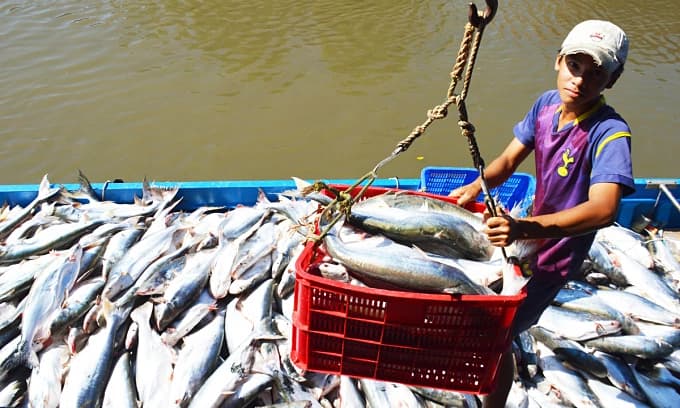
A Surge in Seafood Dominance
Vietnam has rapidly ascended the ranks of seafood exporters to Singapore, securing the position of the city-state’s third-largest supplier in the first nine months of 2025. This achievement marks a notable progression from sixth place in 2023 to fifth place in 2024, and briefly holding fourth place in the first quarter of 2025. According to data from Singapore’s Accounting and Corporate Regulatory Authority, this climb reflects not only increasing volume but also growing confidence among Singaporean buyers regarding the quality and branding of Vietnamese products.
The upward trajectory of Vietnamese seafood highlights the effectiveness of recent trade strategies and the strengthening economic ties between the two nations. Vietnam has leveraged free trade agreements and active export promotion policies to gain a competitive edge. The coordination between government ministries, local authorities, and industry associations has created a supportive environment for seafood enterprises to thrive. This collective effort has allowed Vietnamese businesses to meet the stringent standards required by the Singaporean market.
Broader Trade Expansion
The success in the seafood sector is part of a larger picture of robust economic engagement between Vietnam and Singapore. Bilateral trade relations have shown strong momentum throughout 2025, with Vietnam remaining Singapore’s 10th largest trading partner. Statistics indicate that total bilateral trade reached SGD 29.1 billion in the first nine months of the year, representing a 25.5 percent increase compared to the same period in 2024.
During this period, imports from Vietnam to Singapore surged by 38.3 percent to SGD 8.6 billion. This growth contributed to a trade surplus of nearly SGD 3.1 billion for Vietnam based on goods originating from each country. While seafood has been a standout performer with a 14.5 percent increase, other sectors such as electrical machinery and optical instruments have also seen significant gains. This diversification underscores the complementary nature of the two economies and the deepening integration of supply chains within the region.
Understanding the Singaporean Appetite
Singapore presents a unique and lucrative opportunity for agricultural exporters due to its specific demographic and economic conditions. The city-state produces very little of its own agricultural output, forcing it to import approximately 90 percent of its food supply. This heavy reliance on imports makes Singapore a critical market for seafood-producing nations like Vietnam.
High per capita income levels in Singapore drive a strong demand for premium quality food products. Consumers are willing to pay for superior taste, safety, and presentation. Furthermore, Singapore’s relatively small but diverse population serves as an ideal test market for new products. Companies often use Singapore as a launching pad to refine their offerings before introducing them to wider global markets. Success in Singapore often signals that a product is ready for the international stage.
Building Trust Through Direct Engagement
The relationship between Vietnamese exporters and Singaporean importers has evolved significantly over the last two decades. Kenneth Chia, president of the Seafood Industries Association Singapore, noted that many Singaporean companies now view Vietnam as a key sourcing market. Rather than relying solely on intermediaries, several firms have stationed their own staff in Vietnam to procure products directly.
This direct engagement has fostered stronger business relationships and mutual trust. Singaporean consumers have demonstrated a consistent trust in Vietnamese products, largely because Vietnamese companies have met their rigorous requirements effectively.
“Singaporean consumers use and trust Vietnamese products. Many Vietnamese companies have met their requirements very well,” said Chia.
The presence of Singaporean staff on the ground in Vietnam ensures better quality control and smoother logistics, further solidifying the trade partnership.
Key Products and Market Segments
Within the seafood category, certain products have performed exceptionally well. Data shows that frozen and chilled fish fillets and meat recorded the highest import value from Vietnam, reaching 45.4 million SGD in the first nine months of 2025. This category saw an 8.1 percent increase year-on-year and continues to dominate the Singaporean market, representing 30.3 percent of total imports in this segment.
Other notable export groups include processed and unprocessed crustaceans and molluscs. These categories experienced even sharper growth, with import values rising by 22.7 percent and 99.3 percent respectively. Despite this success, Vietnamese exporters face stiff competition from other regional players. Malaysia and Indonesia remain the top two suppliers, while China, Japan, and India also pose competitive challenges, particularly in the crustacean and mollusc sectors. Vietnamese firms must maintain high standards to protect and expand their market share against these rivals.
Strategic Advice for Future Growth
To maintain this momentum, industry leaders and government officials have emphasized the need for continuous improvement in quality and technology. Cao Xuan Thang, Vietnam’s trade counsellor in Singapore, pointed out that Singapore is an open market that pursues supply diversification to ensure food security. He advised Vietnamese exporters to strengthen quality management across the entire value chain.
“To remain competitive, he advised Vietnamese exporters to strengthen quality management across the entire value chain, from aquaculture and processing to traceability and sustainable farming, while adopting advanced technologies,” said Thang.
Thang also highlighted the importance of digital transformation. He urged businesses to adopt e-commerce platforms and modern payment solutions to improve productivity and reduce costs. Embracing these technological advancements is essential for modernizing the industry and meeting the evolving demands of international buyers.
Singapore as a Logistics Gateway
Beyond being a consumer market, Singapore plays a pivotal role in global logistics. As a key ASEAN partner and a global transshipment gateway, Singapore offers advanced port facilities, warehousing, logistics services, and financial infrastructure. These advantages make it an attractive partner for Vietnam looking to expand its reach beyond Southeast Asia.
Strengthening cooperation with Singapore can help Vietnamese seafood enterprises sustain stable export growth. By utilizing Singapore’s logistical capabilities, Vietnam can more efficiently distribute its products to regional and global markets. This strategic positioning reduces shipping times and costs, making Vietnamese seafood more competitive on a global scale. Chia suggested that Vietnam should also invest in research and development to create value-added seafood products specifically tailored to Singapore’s restaurant and food service sector, further benefiting trade relations.
At a Glance
- Vietnam became Singapore’s third-largest seafood supplier in the first nine months of 2025.
- Seafood imports from Vietnam reached 88.6 million SGD, a 14.5 percent year-on-year increase.
- Total bilateral trade between the two nations hit SGD 29.1 billion in the first nine months of 2025.
- Frozen and chilled fish fillets are the top export category, valued at 45.4 million SGD.
- Singapore imports approximately 90 percent of its food supply, creating high demand for quality seafood.
- Vietnamese exporters are advised to focus on traceability, sustainable farming, and digital transformation.